

Language Settings
Select Website Language

Latest

Emma Navarro Reaches US Open Quarter-Finals, Faces Pegula Next

American Emma Navarro beat Anna Kalinskaya 6-4, 6-2 to reach the US Open last eight and will play compatriot Jessica Pegula next. American Emma Navarro reached the US Open quarter-finals on Sunday, beating Russia's Anna Kalinskaya 6-4, 6-2 at Arthur Ashe Stadium in New York. The 26th seed will now meet fellow American Jessica Pegula for a place in the semi-finals. Navarro, 25, came through her fourth-round match in straight sets. The win returns her to the final eight in New York, where she also advanced in 2024 before going on to reach the semi-finals that year. The run is her first at a Grand Slam quarter-final stage since the 2025 Australian Open. It follows a lengthy absence from the tour earlier this year, when she stepped away for health reasons. "It feels good to be back on Ashe," Navarro said after the match. "It's been a couple years, and I missed it a ton. I love playing out here." Her victory rounded off a strong day for American players. Ben Shelton, Jessica Pegula and Frances Tiafoe had all won earlier in front of the home crowd, setting up Navarro's all-American quarter-final against Pegula. Emma Navarro, US Open, Jessica Pegula, Anna Kalinskaya, US Open quarter-finals, Arthur Ashe Stadium, American tennis, Grand Slam tennis

Debris in Basement, Wall Removed Before Delhi Collapse Killed 7

A probe into the Satya Niketan building collapse that killed seven found debris dumped in the basement and a ground-floor wall removed. An investigation into the building collapse in south-west Delhi's Satya Niketan has traced the disaster to two changes made during renovation work, officials said. The five-storey structure fell on Sunday, killing seven people, five of them students. Officials said renovation had been underway for more than a week before the collapse. Water had been pooling in the basement of the 50-year-old building, weakening it, and the owners decided to do away with the basement by filling it to the level of the ground floor. To do this, three truckloads of construction debris were dumped into the basement. At the same time, a wall on the ground floor was pulled down to open up more space for a shop. Investigators concluded that the extra weight in the basement, combined with the removal of the wall, badly undercut the building's stability and played a major role in bringing it down. Labour contractor Sanoj Kumar, who has been arrested, told police he was hired for the job by Mahesh Gupta, the son of one of the building's owners, Hariram Gupta. Kumar said he was paid Rs 2,800 a day. The First Information Report states that Hariram Gupta and his brother added extra floors to the ageing building even though they knew it was already weak. They had turned over its day-to-day operations to others, including Sudhanshu Gupta, who ran it as a paying guest accommodation branded 'Hostel Daze'. Rooms were rented mainly to students, drawn by the building's location close to Delhi University. On Wednesday, the Patiala House Court granted police two days' custody of Mahesh Gupta, contractor Sanoj Kumar and PG operator Sudhanshu. Delhi building collapse, Satya Niketan, Hostel Daze PG, Delhi University students, Mahesh Gupta, Delhi police FIR, Patiala House Court, building collapse investigation

Meta Still Running AI Child Abuse Ads in India, Report Finds

The Tech Transparency Project says it found 332 ads with AI-generated child abuse imagery on Facebook and Instagram, 84 of them running in India. Meta approved and ran hundreds of paid advertisements containing artificial intelligence-generated child sexual abuse imagery over the past 10 months, with dozens of them appearing in India, according to a new report from US-based campaigners. The Washington-based Tech Transparency Project (TTP) said it counted 332 such adverts across Facebook and Instagram, with the bulk of them - 274 - surfacing in August alone. The findings, published Tuesday, land roughly two months after India's government instructed Meta to strip all advertising and content promoting child sexual abuse material (CSAM) from Instagram. That directive followed a BBC Eye investigation that exposed paid Instagram ads promoting such material to Indian users. Of the 332 ads TTP documented, 84 - about a quarter - ran in India. Seventy-eight of those Indian ads went live after New Delhi issued its removal order and held talks with senior Meta executives, the report said. The remaining advertisements reached audiences in the United States, the United Kingdom, the European Union and Australia. TTP said more than a dozen of the ads stayed active on Meta's platforms even after the group flagged them directly to the company. Researchers reported every advert they identified to the National Center for Missing and Exploited Children (NCMEC), the global clearing house for reports of online child exploitation. The report describes a recurring pattern in how the ads were built. Nearly all began with a genuine photograph of a child that was then altered with AI tools. TTP said it traced several of the source images to real children, among them a member of a European royal family. Asked about the findings, Meta said it does not permit such material on its services. "We don't tolerate nudify apps or any kind of child exploitation, whether real or AI-generated," the company said in a statement. "These criminals constantly shift tactics to evade detection, which is why we keep strengthening our detection and enforcement." Meta added that when it identifies apparent child exploitation, it refers the case to NCMEC to meet its legal reporting duties. The company's own advertising rules bar any ad that sexually exploits or endangers children. In India, distributing CSAM is a criminal act. Supreme Court petition and government scrutiny Child protection advocates in India argue that reporting cases to a US-based body falls short of what the law demands. Bhuwan Ribhu, who founded Just Rights for Children - a coalition of more than 250 organisations working against violence targeting children in India - said platforms are sidestepping their obligations. "Social media companies are clearly flouting Indian laws by not reporting child sexual abuse content to Indian law enforcement agencies as mandated by our child protection laws," Ribhu said. Just Rights for Children has taken the issue to India's Supreme Court, filing a petition that draws on the BBC's earlier reporting. The group is asking the court to order social media firms to make reporting mandatory and to identify the people behind CSAM promotion. Several government bodies have also begun looking into the matter following the BBC investigation, including the National Commission for Protection of Child Rights and the National Human Rights Commission. Who compiled the findings The Tech Transparency Project operates as a research arm of the non-profit Campaign for Accountability, which focuses on scrutinising major technology firms. Its latest count covers ads spanning five markets - the US, UK, EU, Australia and India - and the group says it has passed all 332 advertisements to NCMEC. The report keeps pressure on Meta at a moment when Indian regulators and courts are already weighing how far the company must go to keep such content off Facebook and Instagram, and whether reporting to a foreign agency satisfies domestic legal requirements. Meta CSAM ads, Tech Transparency Project, Instagram India, AI-generated child abuse, Just Rights for Children, NCMEC, child protection India, Facebook advertising

Royal Enfield GTR 750 Spied in Chennai, Launch Nears

Royal Enfield GTR 750 Spied in Chennai, Launch Nears A faired Royal Enfield Continental GTR 750 has been spied testing in near-production form in Chennai, with a possible launch by late 2026 or 2027. Royal Enfield is testing a faired version of its Continental cafe racer built on an all-new 750cc platform, and the motorcycle has been spied on public roads in near-production form. The bike, unofficially referred to as the Continental GTR 750, has been caught testing multiple times, and the rising frequency of test mules points to a launch drawing closer The company has not confirmed the name or a firm timeline, but a launch is expected by the end of 2026 or in 2027. The GTR 750 is one of two variants under development: the faired model carrying the GTR badge, and a version without any fairing that is likely to be called the Continental GT 750. Both have been spotted testing, though neither name has been made official. The project is part of Royal Enfield's push to widen its multi-cylinder range. Test mules and official teasers have already surfaced, and the new bikes will use a 750cc engine expected to be a bored-out version of the current 650cc unit. The first model to reach the market could be either a Himalayan 750 or the Continental GT 750, with the faired GTR following. What the spy shots show Unlike the current Continental GT 650, the new cafe racer gets a fairing. It does not fully enclose the engine bay, as is common with faired cafe racers, but it wraps around the circular headlight to form an integrated flyscreen for improved wind protection. The latest test mule shares the same features seen in earlier sightings. The GTR 750 is expected to run clip-on handlebars for a committed, sporty riding position. The spied unit also carries bar-end mirrors and alloy wheels. The engine bay and the exhaust pipes are finished in matte black for a sportier look, and the bike uses a twin-exhaust layout with one pipe on each side. A key point of difference over the 650 is braking. The 750 gets a dual-disc setup at the front, which is visible on the test unit. That marks it out from the single front disc of the current cafe racer. Engine and equipment The all-new 750cc parallel-twin is oil-cooled and is expected to be a big-bore version of the existing 650cc parallel twin. The current 650cc engine produces around 47 bhp and 52 Nm and is paired with a six-speed gearbox. The 750cc unit is likely to push output to roughly 50-55 bhp and more than 60 Nm. On equipment, the Continental GTR 750 is expected to offer dual-channel ABS, a slipper clutch and all-LED headlights shared with other Royal Enfield models. The suspension setup is expected to comprise right-side-up telescopic front forks and twin rear shock absorbers, along with tubeless tyres. The instrument cluster appears to retain the twin-pod design seen on other Royal Enfields. One of those pods could house a Tripper screen for Bluetooth connectivity and turn-by-turn navigation, though that has not been confirmed for this model. With test activity increasing and the hardware appearing close to final specification, the GTR 750 looks set to expand Royal Enfield's line-up of larger, multi-cylinder machines once it arrives. Royal Enfield GTR 750, Continental GTR 750, Royal Enfield 750cc, Continental GT 750, Royal Enfield spy shots, 750cc parallel twin, faired cafe racer, Royal Enfield Chennai

Hardik Pandya Named in India A Squad for Australia A Series

India A squads for the Australia A home series in Puducherry are out. Padikkal captains the multi-day team, Gaikwad leads the one-day side. India's Men's Selection Committee has picked the India A squads that will host Australia A in Puducherry, with Devdutt Padikkal set to lead the red-ball team and Ruturaj Gaikwad handed charge of the one-day side. The tour packs two multi-day matches and three one-day fixtures into a single venue. Play begins with the opening multi-day game from September 22 to 25, followed by the second from September 29 to October 2. The one-day matches are locked in for October 6, 9 and 11. Padikkal captains the multi-day squad, with Sai Sudharsan named as his vice-captain. The selectors handed places to batters Aman Mokhade, Ayush Pandey, Yash Rathod and Shaik Rasheed. Kumar Kushagra and N Jagadeesan provide the two wicketkeeping choices. The multi-day group also carries Shams Mulani, Tanush Kotian, Tushar Deshpande and Anshul Kamboj, alongside Praful Hinge, Nachiket Bhute and V Vyshak. Gaikwad takes over the captaincy for the one-day leg, and Padikkal drops down to serve as his deputy. That squad features Sai Sudharsan, Rajat Patidar, Priyansh Arya, Nishant Sindhu, Arshin Kulkarni and Naman Dhir. Hardik Pandya has been added to the one-day squad, though his inclusion depends on clearing a fitness check. Vyshak, who also appears in the multi-day list, faces the same fitness condition. The one-day group is rounded out by Vipraj Nigam, Arshad Khan, Prabhsimran Singh as a second wicketkeeper, Gurjapneet Singh and Yash Thakur. All five fixtures will be staged in Puducherry. Keywords: India A squad, Australia A series, Hardik Pandya, Ruturaj Gaikwad, Devdutt Padikkal, Puducherry cricket, India A vs Australia A, Sai Sudharsan  

CPIM Won't Join TVK Front or Any Alliance, Says Balakrishnan

CPI(M) leader K. Balakrishnan says the party will stay out of the TVK alliance and every other front, as Left parties plan a Tiruchi rally next month. Senior Communist Party of India (Marxist) leader K. Balakrishnan has said his party will not be part of any political alliance in Tamil Nadu and will stay away from the meetings of the Tamilaga Vettri Kazhagam (TVK) front. He was speaking to reporters in Villupuram. Balakrishnan, a former state secretary of the CPI(M), said the party had taken a firm and clear decision not to join the cabinet under any circumstances. He said the CPI(M) had extended support at an earlier stage only to make sure a government could be formed, arguing that at that time no party other than the TVK was in a position to form one. Beyond that support, the party would not join the ministry or take part in events tied to the alliance, he said. Balakrishnan stated that the CPI(M) is not a member of the front and had already made clear that it would not attend its meetings. He pointed out that the party stayed away last month when the TVK alliance parties held a gathering. Balakrishnan was equally clear about the wider political map. He said the CPI(M) is not part of the DMK alliance today, nor any other alliance. Instead, the Left parties have begun to act together, and he framed this as the direction the party intends to keep following. As part of that effort, the Left parties plan a major programme next month in Tiruchi, including a large rally, Balakrishnan announced. He said the party would carry that campaign forward. On the coming by-election, Balakrishnan struck a cautious note. He said the poll had been announced only the previous day, and that the party could take a position only after internal discussions. Whether to back a candidate, whom to support, or whether to stay out altogether were all questions that would be settled through consultation in the days ahead, he said. In a separate remark, CPI(M) leader P. Shanmugam condemned the Chief Minister, describing an act of caricature or mockery attributed to him as irresponsible. CPIM, K. Balakrishnan, Tamilaga Vettri Kazhagam, TVK, Tamil Nadu politics, Left parties, Villupuram, by-election

Daily Horoscope, September 09, 2026: Fresh Starts for All Signs

Your free daily horoscope for September 09, 2026. Read love, career and wellbeing predictions for Aries through Pisces and make the most of today's gentle energy. Today carries a steady, hopeful hum, inviting you to slow down and trust your instincts. Small choices ripple outward, so lead with kindness and a clear head. Whatever your sign, there is room to mend, to build and to breathe a little easier. Aries Your natural spark draws people in today, so lead conversations with warmth rather than urgency. In love, a soft word repairs more than a grand gesture ever could. At work, momentum builds when you finish one task before chasing the next. For wellbeing, channel restless energy into a brisk walk or a workout that leaves you clear-headed. Patience turns effort into progress you can feel. Taurus Comfort and consistency guide you now, and that grounded quality reassures those around you. Romantically, sharing a simple ritual deepens trust more than any surprise. Career-wise, your steady pace wins where others rush and stumble, so stay the course. Tend to your wellbeing by nourishing your body with real rest and honest meals. When you honour what you value, contentment quietly settles in. Gemini Curiosity opens surprising doors today, so follow the questions that light you up. In matters of the heart, honesty said gently clears any lingering fog between you and someone dear. Professionally, your gift for connecting ideas earns quiet admiration, so speak up in that meeting. For balance, unplug for an hour and let your busy mind rest. A single deep conversation may shift your whole outlook. Cancer Your caring instinct is a superpower, though remember to pour some of that tenderness back into yourself. Love flourishes when you let someone see your softer, unguarded side today. At work, trust your intuition on a decision that logic alone cannot settle. Support your wellbeing with familiar comforts, warm drinks and an early night. Protecting your peace is not selfish; it is how you keep giving. Leo Warmth radiates from you today, and generosity returns to you multiplied. In romance, celebrate your partner or a crush openly, for your enthusiasm is contagious. Careerwise, a moment in the spotlight arrives, so accept the credit graciously and share it too. Guard your wellbeing by resting your voice and your ambitions in equal measure. True confidence shines brightest when it lifts others alongside you. Virgo Your eye for detail makes today productive, but resist polishing what is already good enough. In love, a small practical act of care speaks louder than poetry ever could. At work, organising a messy situation earns you quiet respect and lasting trust. For wellbeing, loosen your grip on perfection and let one worry simply go. Progress, not flawlessness, is the goal worth chasing now. Libra Harmony feels within reach today, and your knack for fairness smooths a tense moment. Romantically, meeting someone halfway deepens the bond and eases old friction. In your career, a balanced perspective helps a divided team find its footing again. Nurture your wellbeing with beauty, music or a tidy corner that calms your mind. Choosing peace over being right leaves you lighter and freer. Scorpio Your focus is magnetic today, and quiet determination moves mountains others cannot budge. In love, vulnerability shared with the right person forges something unshakeable and true. At work, trust your instinct about who deserves your energy and who does not. Support your wellbeing by releasing a grudge that has quietly weighed you down. Letting go is not surrender; it is reclaiming your own power. Sagittarius Adventure calls, and even a small change of scene refreshes your restless spirit today. Romantically, spontaneity rekindles a spark, so suggest something unplanned and see who smiles. In your career, an optimistic pitch lands well, so aim a little higher than usual. For wellbeing, move your body and feed your mind something new and inspiring. Freedom feels sweetest when you carry your loved ones along. Capricorn Your discipline pays off today, and a long-term effort finally shows real results. In love, showing up reliably means more to your partner than any dramatic promise. Careerwise, a leadership moment suits you, so step forward with quiet, earned assurance. Tend your wellbeing by scheduling rest as firmly as you schedule work. Ambition is admirable, but you deserve to enjoy the summit too. Aquarius Original ideas flow freely today, and your unique view sparks something worthwhile. In romance, honesty about your needs invites a refreshingly real connection. At work, an unconventional solution impresses the very people you least expected to reach. For wellbeing, balance screen time with genuine human contact and fresh air. Your independence is a strength, yet letting someone close changes nothing about who you are. Pisces Your imagination and empathy run deep today, guiding you toward the right words and gestures. In love, a tender moment of understanding heals more than you realise. Careerwise, trust the creative hunch that others might dismiss too quickly. Support your wellbeing with quiet, art or a slow walk near water if you can. Dreaming is fine, but one small step turns your vision into something real. daily horoscope, horoscope September 9 2026, zodiac signs today, love horoscope, career horoscope, astrology prediction, today's horoscope, wellbeing forecast

Philadelphia Teen's Study Finds Mozart's Melodies Least Predictable

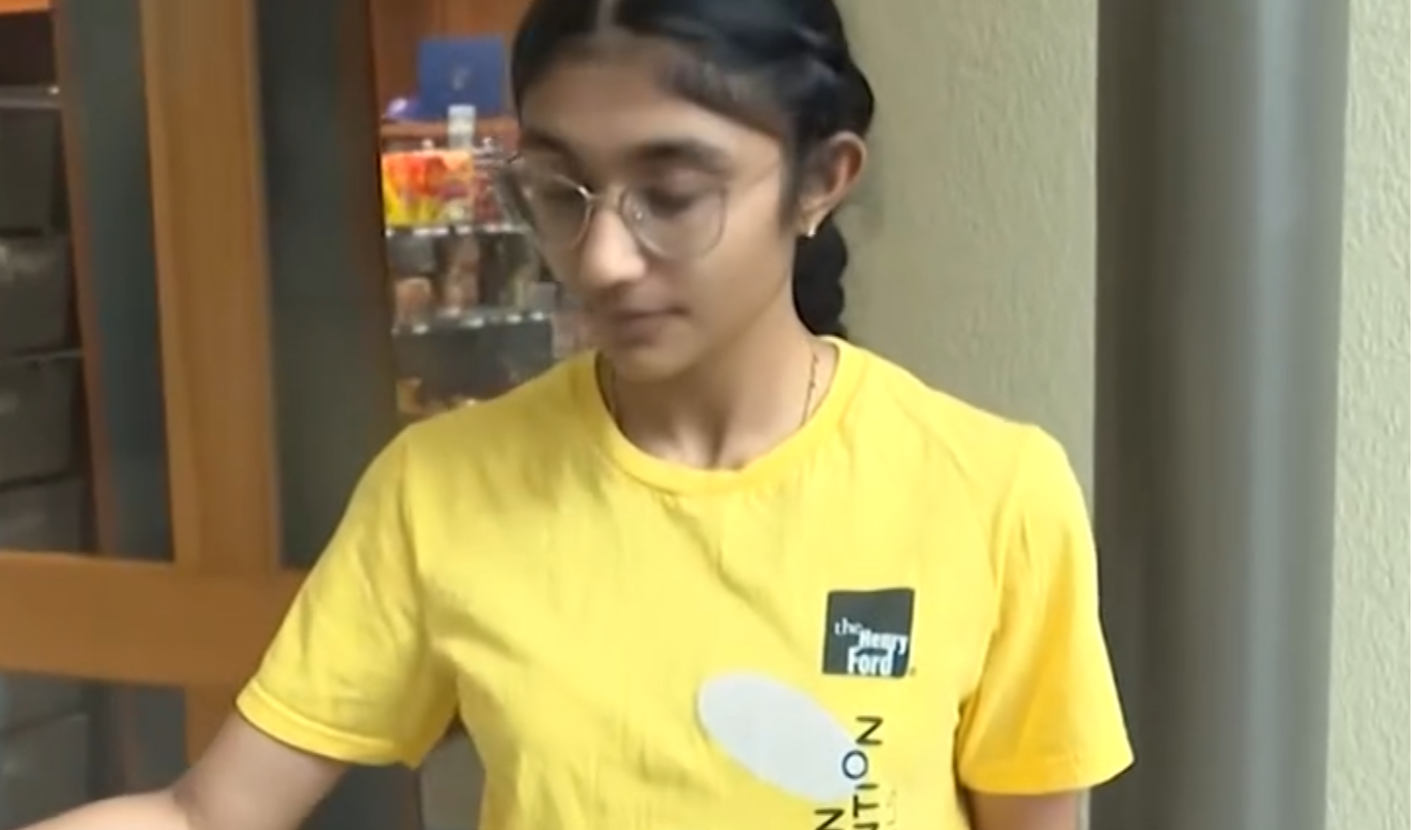
Linus Chen-Plotkin, 18, analysed 600+ classical works for a Regeneron project and found Mozart's melodies broke patterns faster than his peers. An 18-year-old from Philadelphia analysed more than 600 classical compositions and found that Wolfgang Amadeus Mozart's melodies are harder to predict than those of Joseph Haydn, Ludwig van Beethoven and Franz Schubert. Linus Chen-Plotkin built the study for the Regeneron Science Talent Search, applying statistical tools to a question musicologists have argued over for centuries. His project, titled "Predictability and Statistical Memory in Classical Sonatas and Quartets," measured how much earlier notes in a piece influence the notes that follow. Chen-Plotkin designed three statistical tests to track what he calls a melody's "memory" - the degree to which one note depends on the notes before it. High memory means earlier phrases keep shaping what comes next, making the music more predictable. Low memory means a composer changes direction quickly, keeping listeners slightly off-balance. Chen-Plotkin ran the tests across more than 600 piano sonatas and string quartets by the four composers. Mozart's music returned shorter memory across all three tests. His melodies broke their patterns faster, making them less predictable than those of his contemporaries. The finding suggests Mozart followed classical form while repeatedly slipping something unexpected past the listener's ear. The result offers a measurable angle on a debate that has long relied on words like "genius" and "innovation" without defining them. Chen-Plotkin's tests give a way to quantify what set Mozart apart: not predictability, but a controlled unpredictability that stayed within the rules of his era. From wrestling mat to research desk Chen-Plotkin is the son of Joshua Plotkin and Alice Chen-Plotkin and a student at the Germantown Friends School in Philadelphia. He is a varsity wrestler and an advanced Mandarin student, and he is not a trained conservatory musician. Instead, he approached classical music as a dataset, treating centuries of musical tradition as raw material for mathematical analysis. He argues that quantitative methods can sharpen fields that have traditionally been studied through interpretation alone, including music theory, art history and literature. Music, however, is not foreign to him. He sings and plays blues guitar at The Twisted Tail, a bourbon bar, in his spare time. He is a former member and soloist of the Philadelphia Boys Choir & Chorale, and he holds a licence as an amateur radio operator. Applying the method to Chaucer Chen-Plotkin plans to extend the approach beyond music. He is working with a Johns Hopkins professor to analyse the grammatical rules of rhyme and metre in the medieval poetry of Geoffrey Chaucer. He intends to use the same statistical method on poems from different centuries. The underlying question stays largely the same across both projects: whether it is possible to measure what makes great work great. By turning notes and verse into data, Chen-Plotkin is testing whether the qualities long described as artistic excellence can be counted rather than only felt. Mozart, Linus Chen-Plotkin, Regeneron Science Talent Search, melody predictability, classical music study, statistical memory, Germantown Friends School, Philadelphia student

Iran War Shadows Trump at Dallas Republican Convention

Republicans gather in Dallas for their midterm convention as the Iran war and $100 oil test Trump's grip ahead of November's House and Senate fights. Republicans opened their midterm convention in Dallas, Texas, on September 9, betting that President Donald Trump can still drive turnout even as his war on Iran and its effect on household costs weigh on voters. The event places Trump at the heart of the party's closing push before November, when Republicans fight to keep their majorities in both the House of Representatives and the Senate. Trump was set to headline the gathering with a keynote speech on Wednesday. Hours before he took the stage, Brent Crude, the international oil benchmark, climbed past $100 a barrel for the first time since July - a fresh signal that the conflict he began alongside Israel on February 28 continues to ripple through global markets and, with it, prices at home. Supporters who spoke at the convention described an event built around the president himself. Attendees calling themselves the "Front Row Joes" cheered through the opening day. Yet the enthusiasm sat alongside unease about the war and its consequences for affordability, an issue many voters rank at the top of their concerns. Carter Eisinger, a 27-year-old electrician who made the trip from Fargo, North Dakota, embraced the atmosphere while wrestling with the policy. He called the gathering a "Trump-a-palooza" and said he meant it as praise. "I think some people say that in a derogatory way, but I think it's very much a complimentary phrase," he said. "The reality of it is we are in a Trump Republican Party." Even so, Eisinger could not square the Iran campaign with the "America First" message that drew him to the movement. "In my opinion, I don't really see the connection of how a war in Iran helps us here in the country," he said. He added that he would accept higher fuel costs if the case for fighting were clear. "If the Iran war is justified, I'm willing to pay the gas prices, but I haven't seen that justification." He voiced the same hesitation about Washington's tight bond with Israel. "At the end of the day, I'm going to come right back to whatever is best for families, young people, anyone in America," he said. "If it's helping Israel in a way that helps us, then great... but it needs to help us first." Others judged the war more forgivingly while still calling it a mistake. Bijay Dixit, a 59-year-old photographer from Houston, praised Trump's handling of immigration and said he trusted Republicans to manage the economy in the years ahead. On Iran, though, he used the word "miscalculation." He said he accepted the administration's argument that the strike answered decades of Iranian conduct stretching back to the 1979 Islamic revolution, 47 years earlier. "Iran needed to be stopped at some point," Dixit said. His criticism, he explained, was about execution rather than intent: "When I say miscalculation, what I mean is underestimation of the capacity of the IRGC." He was referring to the Islamic Revolutionary Guard Corps. For some, the convention worked as a morale exercise regardless of the debates over foreign policy. Helen Vennett, a 65-year-old small business owner from Maryland who chairs her county's Republican Party, compared the scene to a high-school pep rally. "All of us need to have cheerleaders in our life," she said. "It just gets you fired" up. The mix of loyalty and doubt captured the party's challenge as the campaign enters its final weeks. Trump remains the figure Republicans are counting on to mobilise their base, but the war he launched - and the rising costs tied to it - has left even committed supporters searching for a rationale they can carry to the ballot box in November. Republican midterm convention, Trump Iran war, Dallas convention 2026, Brent crude oil prices, US midterm elections, IRGC, America First, November elections

Malenadu's 'Rain Stars': How Farmers Read the Monsoon

In Karnataka's Malenadu, farmers time sowing and harvest to nakshatras or 'rain stars' - each fortnight bringing its own rain, wind and rare monsoon dishes. In the hill country of Malenadu in Karnataka, the monsoon is not treated as a single long season but as a chain of distinct phases, each tied to a nakshatra, or "rain star." The name Malenadu - also called Malnad - means "land of rains," and generations of farmers here have timed their fields to the sun's passage through specific constellations. Radhika Hegde described the system in an essay in Deccan Herald, framing the rains as a succession of stars rather than one unbroken spell. The calendar farmers follow is the Panchanga, the Vedic almanac. In Malenadu it is read for the "mallay," or rain, nakshatras. Each transit of the sun through a constellation lasts a fortnight and carries its own signature of rain, temperature and wind. Around those markers, farmers begin sowing seeds or spraying their areca nut trees. The link is old: the 1923 edition of the Mysore calendar set out the five limbs of the Panchanga - tithi (lunar day), vara (weekday), nakshatra (star constellation), yoga (sun-moon alignment) and karana (half of a tithi) - and tied them to the work of crops. From Mrigashira to Swati The cycle begins around June 7, when the sun enters the Mrigashira nakshatra. Known as Mrigashira Karte in traditional calendars, it brings the first gentle rains and the right conditions for sowing millets and herbs. The sun then moves into Arudra, when the monsoon builds into heavy, non-stop downpours that fill the streams and soak the parched ground. Punarvasu follows with steady, dependable rain, the moment to transplant paddy into the fields. After that comes Pushya, marked by relentless rain and strong gusty winds, and Ashlesha, whose heavy drops one folk account compares to "pouring rice." The next month brings Magha, called "Sheetah Maghe" for its bitterly cold showers. Purva Phalguni, known locally as Pubba, arrives with thunder, lightning and rain that starts and stops without pattern. The sequence runs on until Swati, when the monsoon finally winds down. Farmers have compressed centuries of watching the sky into short, rhythmic couplets and proverbs known in Kannada as Gade Maathu. Most are compact and plain-spoken. One runs: "Ashwini male bidre, arishinake melu" - early rains in the Ashwini star give the turmeric crop a head start. Food that only the rains bring The wet months also shape the Malenadu kitchen, where cuisine and climate are closely linked. Among the region's more unusual dishes is chigli chutney, made from kempu iruve, or red weaver ants. It is eaten by tribal communities such as the Siddhis and Soligas. Someone climbs a tall tree to bring down a weaver ant's nest and drops it into a bag, which is then emptied into a pot over a fire with salt. Once cooked, the ants are ground with garlic, bird's eye chili, coconut, salt and sometimes tamarind. The protein-rich paste is believed to guard against cold and cough through the winter. Other monsoon foods lean on the season's flush of greenery. A stir fry is made from young bamboo shoots. Mara kesu, the reddish Colocasia leaves that grow on trees only during the rains, are turned into a patrode-style dish, with the batter rolled in a banana leaf and steamed. Kaalu kadubu takes the idea further: jackfruit leaves are stitched together to hold the batter, into which a range of gourds and vegetables are grated before steaming, much like idli. It is served with a ghassi, or sambar, made from pumpkins, melons and gourds. The abundance of large leaves has uses beyond the plate. Shubha Bhat, who grew up near Karkala, recalls holding giant Colocasia leaves over her head as a child to keep off the rain - a simple, ready-made umbrella from a land defined by its downpours. The account of Malenadu's rain stars and rainy-season food was drawn together by Shoba Narayan, a Bengaluru-based author who writes on art, food, fashion and travel, drawing on Hegde's essay and conversations with people from the region. Malenadu monsoon, rain stars nakshatra, Malnad farming, Panchanga calendar, Karnataka monsoon, chigli chutney, areca nut cultivation, Kannada rain proverbs

BYD Sealion 6 Plug-In Hybrid Spotted Testing In India

BYD's first plug-in hybrid for India, the Sealion 6 with DM-i tech, has been spied testing. It promises a 1,200 km total range and could launch in 2026. BYD, better known in India for its all-electric cars, has been spotted testing its first plug-in hybrid for the country. Test cars for the BYD Sealion 6, wearing camouflage and prominent decals reading "BYD DM-i" and "Super Plug-In Hybrid" along the sides, were seen on Indian roads. The rear carried further "BYD DM-i" and "World's No.1" branding, confirming the vehicle runs the company's proprietary DM-i plug-in hybrid system. The Sealion 6, sold in some markets as the Seal U, marks a departure for BYD in India, where the brand has so far offered only electric vehicles. The company has previously launched the Seal sedan and the Sealion 7, both part of its Ocean lineup, and the Sealion 6 is set to widen that range. Reports had for some time pointed to BYD preparing a plug-in hybrid for India, with both the Atto 2 and the Sealion 6 seen testing on public roads as likely candidates. The latest sighting settles which model carries the technology. The DM-i powertrain At the heart of the Sealion 6 DM-i is a 1.5-litre turbocharged petrol engine paired with two electric motors - a starter motor and a traction motor. BYD claims the engine reaches a thermal efficiency of 43.04 per cent, which it says is the highest in the world. The motors are rated at 97.5 per cent efficiency and draw power from an 18.3 kWh battery pack built with the company's Blade cells. With a full fuel tank and a fully charged battery, BYD says the Sealion 6 DM-i offers a combined range of 1,200 km. On battery power alone, the car is claimed to cover 126 km on a single charge. The same powertrain configuration is expected to reach the Indian market unchanged. Size and styling The Sealion 6 measures 4,775 mm in length, 2,085 mm in width and 1,670 mm in height, and rides on a 2,765 mm wheelbase. Its proportions place it firmly among BYD's Ocean-series models, alongside the Sealion 7 already on sale in India. Where the two differ is in character. The Sealion 6 carries sharper creases and a more upright, SUV-like silhouette, giving it a more European look and a more practical stance than the sportier Sealion 7. Inside, the model is expected to bring features seen elsewhere in BYD's range, including a rotating touchscreen, a TFT instrument cluster, advanced driver-assistance systems, high-quality cabin materials and generous boot space. Launch timing and rivals BYD India has not confirmed a launch date for the Sealion 6 plug-in hybrid, but 2026 appears to be the target year. The company is expected to bring the model in through the CBU route, importing it as a completely built unit rather than assembling it locally. In the Indian market, the Sealion 6 is set to line up against the upcoming Jetour T2 plug-in hybrid, which will be sold under the JSW brand. The arrival of the DM-i system would give Indian buyers a BYD model that runs on both petrol and electric power, a shift from the brand's electric-only presence in the country so far. BYD Sealion 6, BYD PHEV India, DM-i technology, plug-in hybrid India, BYD Seal U, Sealion 6 launch, BYD Blade battery, Ocean series

Warrington A&E Failed to Scan Man, 32, Left Paralysed

Warrington Hospital's NHS trust admits it failed to order a brain scan for Oli Coppock, 32, who is now almost fully paralysed after a cardiac arrest. Oli Coppock walked into the emergency department at Warrington Hospital in May 2024 complaining of severe headaches and dizziness. Staff examined him and ran a series of checks, but no scan of his brain was carried out before he was sent home. Within a week, fluid had gathered on his brain, and the 32-year-old suffered a cardiac arrest. He never recovered. He now lives with near-total paralysis. The hospital's operator, North Cheshire and Mersey NHS Foundation Trust, has admitted it breached its duty of care by failing to arrange a CT scan of his brain. It accepts that such a scan would most likely have revealed the fluid, opening the way to surgery that could have corrected the problem. An interim damages payment has been agreed with his family. Oli had been treated for a brain tumour only months earlier and had also recently been told he had multiple sclerosis. Despite those conditions, his father says he was in good health and looking ahead with optimism. He worked in digital marketing, was a regular at the gym and spent free time working as a DJ. His father, Stephen Coppock, says he accepts that emergency staff work under strain, but cannot grasp why nobody ordered a scan given his son's history. Stephen, who has seven children in all, says the failure has devastated the entire family, including Oli's six siblings. "The hospital didn't get the basics right and my son has paid a terrible price - it's ruined his life," he said. "It was an awful error. He trusted the health service and believed it was there to help him, not destroy him." Oli is being looked after at a neurological rehabilitation unit. His body is now rigid and twisted, and he cannot move himself. Tubes handle his breathing, his food and his toilet needs. He can respond only by blinking, though his father is convinced he takes in everything around him. "There is no worse space for a human to occupy - it's a permanent living nightmare," Stephen said. In its statement, the trust apologised. "We are deeply sorry that Mr Coppock did not receive that standard of care that should be expected and we recognise the distress and lasting impact on patients and their families when harm is caused," it said. More than two years to reach an admission The family's lawyer, Tanzeela Aslam, who heads medical negligence at Express Solicitors, says the length of the process has compounded the harm. Reaching this point took more than two years, she says, and during that time Oli was left without money for therapies and support that might have eased his condition and improved his day-to-day life. "Oli's case illustrates how preventable errors within the NHS can have devastating and life-changing consequences for individuals and their families," she said. Aslam says the case is far from isolated. She is handling a rising volume of complaints tied to emergency care, a trend she attributes to mounting strain on hospitals. She points in particular to the spread of so-called corridor care, where patients are treated in hallways rather than proper bays. A 41% rise in A&E negligence claims Oli's ordeal reflects a wider pattern across England. Analysis by the BBC found that clinical negligence claims connected to emergency care have climbed by 41% over the past five years. Doctors have linked the increase to the long waits and heavy pressures now common in A&E departments. For the Coppock family, the statistics carry a personal cost. A man who was fit, working and hopeful about the years ahead now depends on machines to survive and on a blink to make himself understood. His father says the family has been left "angry and broken" by a single missed step in a busy emergency room. clinical negligence, Warrington Hospital, A&E care, brain scan, NHS negligence claims, Oli Coppock, corridor care, medical negligence