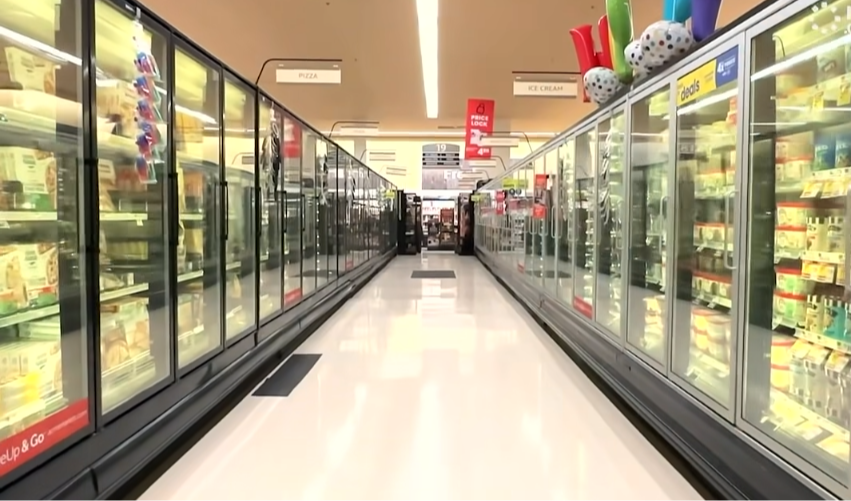
Cyberattacks disrupt supermarket refrigeration across Europe, pushing some freezer temperatures to 50°C and causing major food losses.
By News National Editorial Team
A series of unusual cyberattacks targeting supermarket refrigeration systems has disrupted food retailers across Europe, forcing businesses to discard spoiled products and raising fresh concerns about the cybersecurity of essential infrastructure.
The latest wave of incidents, reported on November 2, 2026, affected supermarkets and other food businesses in several European countries. Hackers reportedly gained remote access to refrigeration control systems and manipulated temperature settings, causing refrigerators and freezers to warm up or enter defrost mode.
In some Swedish stores, freezer temperatures reportedly reached as high as 50°C, turning equipment designed to preserve frozen food into a source of heat. Retailers were forced to remove affected products from sale and assess the financial damage.
The incidents have drawn attention to the growing risks associated with internet-connected equipment used in everyday commercial operations.
Multiple European Countries Report Disruptions
The second wave of incidents affected businesses in Belgium, Luxembourg, Sweden, Ireland and the Netherlands, according to reporting by international news agencies.
Further reports identified incidents in Estonia, Finland, Italy and Portugal, bringing the number of affected European countries to at least nine.
Several major supermarket operators and food retailers reported problems, including ICA and Coop in Sweden, Ahold Delhaize and Carrefour in Belgium, Colruyt, and Musgrave-operated SuperValu stores in Ireland.
In Belgium, approximately 40 Delhaize supermarkets and 15 Carrefour stores were among the businesses reporting refrigeration problems. In Ireland, 13 SuperValu outlets were affected, while several businesses in the Netherlands also experienced disruptions.
The exact number of affected stores varies between reports as investigations continue and retailers assess the full impact.
Hackers Manipulated Refrigeration Controls
Unlike conventional cyberattacks that primarily target customer information, payment systems or company databases, these incidents affected operational technology responsible for controlling physical equipment.
Refrigeration systems at supermarkets often use connected controllers that allow technicians and operators to monitor temperatures, compressors and defrost cycles remotely.
Investigators and industry specialists say attackers appear to have accessed these systems and changed their operating settings. In some cases, refrigeration units were switched into defrost mode, while others experienced significant temperature increases.
A Swedish supermarket employee told Reuters that all the freezers at an affected store had reportedly reached 50°C. The incident was discovered hours after the overnight disruption, by which time the frozen stock had been destroyed.
The attacks demonstrate how vulnerabilities in seemingly ordinary equipment can create serious operational consequences.
Food Losses and Financial Damage
The immediate impact has been the loss of perishable food products.
Supermarkets affected by the incidents removed chilled and frozen products from sale when they could no longer guarantee that the required storage temperatures had been maintained.
Some retailers used refrigerated vehicles or alternative storage facilities to protect unaffected products. Others had to dispose of damaged stock to prevent potentially unsafe food from reaching consumers.
In Belgium, a butcher reported losses of approximately €15,000 after refrigeration problems damaged meat products.
The total financial damage across Europe has not yet been established. However, the incidents could result in additional costs involving discarded food, equipment inspections, technical repairs and cybersecurity improvements.
A Similar Attack Had Already Hit France
The latest incidents follow a major attack on supermarket refrigeration systems in France during the night of October 11–12, 2026.
Hundreds of supermarket outlets belonging to several retail groups reportedly experienced disruptions after attackers manipulated connected cooling systems.
Some refrigeration units were reportedly pushed to temperatures of up to 50°C for several hours. The French incidents caused substantial food losses and, according to the Paris prosecutor's office, fires at some locations.
Retailers including Carrefour, Intermarché, Monoprix and other supermarket groups reported being affected.
The repeated incidents have raised questions about whether weaknesses in commonly used refrigeration equipment or remote-access systems could be exploited across multiple businesses.
However, authorities have not confirmed that all the attacks in France and other European countries were carried out by the same individuals or group.
Investigators Yet to Identify Those Responsible
As of November 3, no group had publicly claimed responsibility for the latest wave of attacks.
Authorities and cybersecurity specialists are examining the incidents, including possible weaknesses in internet-connected refrigeration controllers and remote-management systems.
The European Union Agency for Cybersecurity (ENISA) has highlighted the importance of cooperation, rapid information-sharing and coordinated responses to cyber incidents affecting retailers across several member states.
Cybersecurity researchers have also warned that outdated equipment, default passwords, exposed internet connections and unpatched software can provide attackers with opportunities to access operational systems.
There is currently insufficient public evidence to attribute the attacks to a particular country, organisation or political group.
Why These Attacks Matter Beyond Supermarkets
The incidents highlight a growing cybersecurity challenge: the increasing connection of physical infrastructure to digital networks.
Modern businesses depend on connected systems for refrigeration, heating, ventilation, electricity management, security cameras, access controls and industrial operations.
Although these technologies improve efficiency and allow remote monitoring, inadequate security can expose essential equipment to cyber interference.
A compromised supermarket refrigeration system can cause food losses within hours. Similar vulnerabilities in other sectors could potentially disrupt warehouses, manufacturing facilities, hospitals and other services that depend on temperature-controlled environments.
Security specialists recommend isolating operational technology from public internet access, replacing default passwords, installing security updates, restricting remote access and monitoring unusual system activity.
Retailers also need emergency procedures that allow staff to monitor and control critical equipment if remote systems become unavailable.
A Warning for Critical Infrastructure Security
The European supermarket incidents demonstrate that cyberattacks do not always need to steal personal information or demand ransom to cause serious damage.
By interfering with equipment that businesses depend on every day, attackers can create financial losses, operational disruption and potential risks to food safety.
Investigations are continuing, and the full extent of the damage remains unclear. The incidents have nevertheless intensified calls for stronger cybersecurity protections across Europe's retail and food supply chains.
The central concern is no longer limited to protecting computers and customer databases. Businesses must also secure the connected systems that keep essential services running.
Sources: Reuters (November 2–3, 2026), Associated Press, EFE, Euronews and European cybersecurity authorities.