

Language Settings
Select Website Language

GDPR Compliance

We use cookies to ensure you get the best experience on our website. By continuing to use our site, you accept our use of cookies, Privacy Policy, and Terms of Service.

Russia's 300-kW Plasma Engine Could Cut Mars Trips to 30–60 Days

12 hours ago

11

0

Russia's Rosatom researchers developed a 300-kW plasma engine prototype that could shorten Mars journeys, but the 30–60-day claim remains unproven.

Scientists at Russia’s Rosatom research institute have developed a laboratory prototype of a plasma propulsion system that could potentially shorten journeys to Mars. However, the ambitious travel-time estimate has not yet been demonstrated in space.

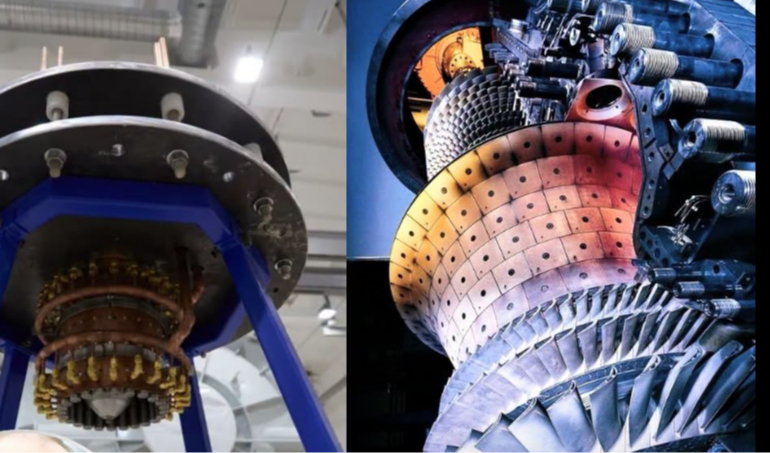
A new propulsion technology under development in Russia could one day change how spacecraft travel between Earth and Mars. Researchers at the Troitsk Institute, part of the state nuclear corporation Rosatom, announced a laboratory prototype of a high-power plasma electric rocket engine in February 2025.

The researchers say the technology could potentially reduce a journey to Mars from several months to approximately 30–60 days. The prototype reportedly operates at an average power of up to 300 kilowatts in a pulsed mode and uses a magnetic plasma accelerator to propel charged particles.

However, the announcement represents an early stage of development. The engine has not demonstrated a crewed Mars journey, and the proposed travel time remains a projection rather than a proven capability.

How does a plasma rocket engine work?

Conventional chemical rockets generate thrust by burning propellant and expelling hot gases. Plasma electric propulsion works differently.

The system developed by Rosatom researchers uses electrical energy and magnetic fields to accelerate charged particles, producing thrust. The reported design uses hydrogen as its working propellant.

Because electric propulsion can expel propellant at very high speeds, it can use fuel more efficiently than conventional chemical propulsion systems. This makes it an attractive option for some long-duration space missions.

The trade-off is that electric propulsion generally produces relatively low thrust compared with chemical rockets. A spacecraft may need to accelerate over an extended period, and the propulsion system requires a substantial supply of electrical power.

What are the reported engine specifications?

Rosatom has reported several performance figures for its laboratory prototype:

  • Power: Average operating power of approximately 300 kilowatts in pulsed-periodic mode.

  • Thrust: At least 6 newtons, according to the reported specifications.

  • Particle exhaust velocity: At least 100 kilometres per second, as reported by the developers.

  • Potential Mars travel time: Approximately 30–60 days, according to Rosatom researchers.

  • Target for a flight model: Around 2030, subject to development and testing.

These figures describe the reported prototype and its proposed performance. They should not be interpreted as proof that a complete spacecraft can already travel to Mars within the stated timeframe.

In particular, the reported 100-kilometre-per-second figure refers to the speed of particles expelled by the engine, not the speed at which the spacecraft itself would travel.

Why a shorter Mars journey matters

Mars missions present significant challenges for astronauts. Conventional mission profiles can require several months for a one-way journey, depending on the spacecraft, propulsion system and orbital positions of Earth and Mars.

Long-duration missions expose crews to space radiation and extended periods of isolation. They also require life-support systems, food, water, medical provisions and reliable equipment for prolonged operations.

A propulsion system that genuinely reduces travel time could help limit some of these risks. It could also create opportunities for faster cargo deliveries and other deep-space missions.

However, shorter travel time alone would not eliminate radiation hazards or other dangers. A crewed mission would still need adequate shielding, reliable life support, safe arrival and braking systems, and a spacecraft capable of operating throughout the journey.

What testing remains?

Developing a laboratory prototype is only one step towards a working space propulsion system.

The technology must undergo extensive ground testing to evaluate thrust, efficiency, stability, heat management and operating life. Engineers must also determine whether the system can operate reliably under conditions representative of space.

A practical spacecraft would require much more than the engine itself. It would need a sufficiently powerful electrical source, thermal-control equipment, propellant storage, navigation systems and structures capable of withstanding launch and deep-space conditions.

Rosatom’s published announcement described plans for a large experimental facility featuring a vacuum chamber approximately 14 metres long and four metres in diameter. Such a facility is intended to help researchers test the engine under simulated space conditions.

The proposed flight-model target of 2030 is a development milestone, not a confirmed launch date or a guarantee of operational readiness.

Has the 30-day Mars journey been proven?

No publicly available independent evidence establishes that this prototype has completed a spaceflight or demonstrated a 30-day Earth-to-Mars trajectory.

The central travel-time claim comes from Rosatom’s researchers and has been reported by outlets including World Nuclear News and Interesting Engineering. The published reporting does not establish independent, peer-reviewed verification of the full performance claims under flight conditions.

The actual duration of a Mars mission would depend on factors including spacecraft mass, available electrical power, propulsion-system weight, propellant capacity, trajectory, acceleration and the ability to slow down near Mars.

Consequently, it would be premature to describe the technology as ready to transport astronauts to the Red Planet.

What could this mean for future space exploration?

If the technology can be developed into a reliable flight system, high-power plasma propulsion could become a useful option for deep-space transportation. Potential applications include cargo missions, space tugs and other spacecraft operating beyond Earth orbit.

The project also highlights a wider international effort to improve space propulsion. Researchers around the world are investigating electric thrusters, nuclear-powered systems and other advanced technologies to make future missions more efficient.

For now, Rosatom’s engine is a promising research project rather than a proven shortcut to Mars. Its significance will depend on what testing demonstrates, whether a flight-ready system can be built, and whether the proposed journey times can be achieved by a complete spacecraft.

By News National Editorial Team

Click here to Read More
Previous Article
Burkina Faso Teachers Receive Villas Through BOA Education Awards
Next Article
Serbia Student List Wins Election as Vučić Concedes Defeat

Related World Updates:

Are you sure? You want to delete this comment..! Remove Cancel

Comments (0)

    Leave a comment