

Language Settings
Select Website Language

GDPR Compliance

We use cookies to ensure you get the best experience on our website. By continuing to use our site, you accept our use of cookies, Privacy Policy, and Terms of Service.

Filters

Channels
Topics
Other Filters

Sabalenka Edges Pegula in Tens US Open Semi-Final

Aryna Sabalenka took a tight first set 7-5 against Jessica Pegula in their US Open women's semi-final, part of a line-up featuring the top four seeds. Aryna Sabalenka took a tightly contested opening set 7-5 against Jessica Pegula in their US Open women's semi-final and moved ahead early in the second, leading 2-1, as the two-time defending champion pushed to reach another final in New York. Sabalenka, from Belarus, is chasing her first major title of the year. The American third seed Pegula has run into the same opponent at the sharpest end of this tournament before, losing to Sabalenka in the semi-finals last year and in the 2024 final. On current form she was again second best in the clutch moments that decide Grand Slam matches. The numbers told the story of a high-quality but uneven performance from the top seed. By early in the second set Sabalenka had struck 18 winners against 16 unforced errors, mixing brilliant shot-making with loose errors. A sensational backhand down the line stood out, but so did a lazy drop shot that flopped into the net, a slice sent long and a third double fault of the match that drew a theatrical shrug. Against that, Pegula played within herself. She took too few risks, and her caution left the often intimidating Arthur Ashe crowd unusually subdued. A rare drop shot from the American drew Sabalenka forward, but Pegula mistimed the passing shot that followed - the kind of small margin that separates the two players at this level. 'Fear in her eyes' Sabalenka's intensity was central to the first set. Annabel Croft, the former British number one working on BBC Radio 5 Sports Extra, said Sabalenka was "playing like a woman who is possessed" and described "fear and terror" in her expressions through the closing stages of the set. According to Croft, the more possessed Sabalenka looked, the harder she hit the ball - and that energy appeared to unsettle Pegula. Despite the pressure, Pegula continued to hold serve into the second set, staying in touch as Sabalenka pressed for a decisive break. The top seed also held her own service games, including a hold to 30, keeping her nose in front. Top four seeds in the last four The match forms part of a semi-final line-up made up of the tournament's top four seeds. The winner will face either Coco Gauff, the 2023 champion, or second seed Elena Rybakina in the final. Rybakina is set for a landmark of her own regardless of the semi-final result: she will become world number one for the first time on Monday. The occasion carries added weight in New York. The day after the semi-finals marks the 25th anniversary of the 9/11 terrorist attacks, and a run to the final by an American player would resonate with local fans. For now, though, it was Sabalenka setting the tone, banking the first set and edging ahead in the second as she looked to end her wait for a title in 2025. US Open semi-finals, Aryna Sabalenka, Jessica Pegula, women's tennis, Arthur Ashe Stadium, Elena Rybakina, Coco Gauff, US Open 2025

Jefferies Space, Chips, Data Centres to Drive India's Leap

A Jefferies report says space, semiconductors, data centres, solar and electronics will drive India's next industrial revolution, backed by policy and private capital. Emerging sectors including space, data centres, solar energy, semiconductors and electronics are poised to power India's next phase of industrial growth, according to a report by global investment bank Jefferies. The report, released from New Delhi, said a large domestic market is pulling in private participation across these industries. Supportive government measures are central to the outlook. Jefferies pointed to tax holidays for setting up data centres, sizeable incentive schemes for semiconductor production, electronics and solar cells, and steps to open the space sector to greater private involvement. The report said India's next industrial revolution rests on an existing manufacturing base in steel, cement, automobiles and oil refineries, describing the mix of scale, domestic demand, manufacturing capability and policy support as a strong foundation for new growth engines. Space startups multiply India is among a small group of spacefaring nations with what the report called "global competitive capabilities." The government is targeting close to a fivefold expansion of the space economy, to $40-50 billion over 2023-30. The number of space startups has jumped from just one in 2014 to more than 400 in 2026. Cumulative private investment in the sector reached $600 million by 2025-26, and Jefferies said Indian space startups are moving from early-stage innovation toward commercial execution. Chip fab under construction In semiconductors, the report said India is shifting from policy intent to execution, with nearly $20 billion of investments committed, including a chip fabrication plant now under construction. A new $13 billion incentive plan is expected to widen the ecosystem and lift value addition, including chip design. Data centres are emerging as a strategic piece of digital infrastructure. Colocation capacity has grown five times over the past five years to 2 gigawatts. Jefferies expects another fivefold rise, to nearly 10 gigawatts, over the next five years, driven by favourable cost economics, policy support and rising demand from hyperscale operators. India industrial revolution, Jefferies report, India space economy, India semiconductors, data centres India, solar energy India, electronics manufacturing, private investment India

9/11 Imagery Story Trends in India on Attacks Anniversary

A feature exploring the vast photographic record of the September 11 attacks - and one image its subject has never seen - is drawing readers across India. A feature centred on the photographic record of the September 11, 2001 attacks is drawing attention among Indian readers, surfacing on Google Trends in India with more than 100 searches. The piece carries the headline "He's Seen Images of 9/11 From Just About Every Angle. Except This One." The attacks on the World Trade Center in New York remain among the most heavily documented events in modern history, captured by professional photographers, television crews and bystanders. The story frames its subject as someone deeply familiar with that visual archive - a person who has viewed the day from nearly every recorded vantage point, save for a single image. Interest in the article is rising on September 11, 2026, the 25th anniversary of the attacks. The date each year prompts renewed searches, remembrance events and media coverage revisiting how the day was seen and recorded. The surge in Indian search traffic points to the continued global reach of 9/11 as a subject, more than two decades after the event. The trending term "picture" reflects readers seeking out the imagery referenced in the coverage. Further details from the article were not available beyond its headline and framing around one photograph its central figure has yet to see. 9/11, September 11 attacks, 9/11 images, World Trade Center, Google Trends India, 9/11 anniversary, 9/11 photographs

Guyana Amazon Warriors Make It Five in Five in CPL 2026

Rahmanullah Gurbaz's fifty guides Guyana Amazon Warriors to an eight-wicket win over Jamaica Kingsmen, extending their CPL 2026 streak to five. Guyana Amazon Warriors extended their perfect start to CPL 2026 on Friday, beating Jamaica Kingsmen by eight wickets to make it five wins from five matches. Rahmanullah Gurbaz top-scored with 54, and four other batters chipped in as the Warriors chased down 160 with ease. The Warriors reached 160 for 2 in 17.2 overs. Gurbaz and Mavendra Dindyal put on 46 off 27 for the opening wicket before Dindyal fell in the fifth over. A 17-run sixth over lifted the total to 65 for 1, keeping the chase well ahead of the required rate. Gurbaz and Shai Hope then steadied the innings, taking the Warriors to 98 for 1 at the halfway mark. The Afghanistan opener reached his half-century in the 11th over but was dismissed in the 12th. Hope remained unbeaten on 34. Shimron Hetmyer arrived with intent and struck a 17-ball 30 not out. He got going with a six off Vitel Lawes in the 15th over and attacked Jediah Blades in the 16th. Alongside Hope, he closed out the win in the 18th over. The result was built on a tight bowling effort. Khary Pierre and Dwaine Pretorius combined for figures of 41 for 4 across seven overs. Each took a wicket in the Powerplay and another in the middle overs, reducing the Kingsmen from 83 for 4 to 87 for 6 and threatening to leave them with a modest total. Pretorius finished with 2 for 20 and Pierre with 2 for 21. Hassan Khan rescued the Kingsmen with an unbeaten 62. He shared a 54-run stand with Odean Smith, contributing 41 of those runs. In the 19th over he hit a hat-trick of sixes off Imran Tahir to take 21 from the over, then reached his fifty off 25 balls. Khan took 16 from the final over to push Jamaica to 159 for 7. The target proved comfortable for the Warriors, who maintained their unbeaten record at the top of the CPL 2026 standings. CPL 2026, Guyana Amazon Warriors, Jamaica Kingsmen, Rahmanullah Gurbaz, Shimron Hetmyer, Hassan Khan, Caribbean Premier League, T20 cricket

Seahorse 'Father and Sons' Photo Wins Ocean Photographer 2026

French diver Julien Anton won Ocean Photographer of the Year 2026 for his image of a male seahorse and two newborns in French Polynesia. A single frame of an adult male seahorse trailed by two of its newborn young has taken the top honour at the Ocean Photographer of the Year 2026 awards. French underwater photographer Julien Anton made the picture in the shallows off Mo'orea, French Polynesia, capturing the three animals suspended against dark Pacific water. Organisers Oceanographic Magazine and Swiss watchmaker Blancpain announced the result on Thursday. Anton's photograph first claimed the Wildlife category before judges elevated it to the overall grand prize. The competition drew more than 15,000 entries from across the world, spread over categories that included Wildlife, Fine Art, Conservation and Ocean Unseen. Anton found his subjects only after long stretches of searching alongside local naturalists, combing through underwater seaweed beds where the animals shelter. He shot the scene on a rebreather dive, lighting the trio with specialised equipment. Seahorses have grown scarce throughout French Polynesia, and encounters are hard to predict, which made the sighting unusual. The biology of the moment gives the image its charge. Male seahorses hold fertilised eggs in a pouch and deliver live offspring, so the picture reads as a father setting his young loose into open water. In the frame, the two juveniles appear to swivel back toward the adult. "Winning Ocean Photographer of the Year is an immense honour - one I'm proud to share with my family, and with the local residents, naturalists and fishermen of Tahiti and Moorea whose knowledge made this image possible," Anton said in a statement on the competition platform. He added: "We spent countless hours searching in difficult conditions, with no guarantee of finding a single seahorse. That is what made the moment so extraordinary - when the juveniles turned back towards the adult, it felt like something far beyond what I had dared to hope for." A silent judging room Will Harrison, who founded and directs the awards, said the entry stopped the panel cold. "When Julien Anton's image first appeared on screen, the judging panel fell silent," he said in the announcement. "It is an image that demands reflection, pause for thought, and it certainly got that from us. The image is full of quiet energy, even if some of that comes from us humans imprinting our own emotions on the photograph: the bow of the father's head, the juveniles turning back towards him, the generational gap and the unknown futures of the newborns. What kind of ocean are we leaving for those who come after us?" Winners from four continents British photographer Jenny Stock took the Female Fifty Fathoms Award, which recognises women working in ocean photography. "To be nominated by fellow ocean photographers means more to me than I can easily express - this community is everything," she said. The Ocean Unseen category, new this year, went to Japanese photographer Mitsuna Kawai for a blackwater shot of a ribbonfish off Japan. Australian Matty Smith won Fine Art with a black-and-white study of a nurse shark ringed by remoras moving in formation. In the Adventure category, Sydney-based Gergo Rugli captured wild dolphins sharing a wave with surfers at Tamarama Beach in Sydney. Spain's Miguel Serrano Ruiz won Portfolio for a month-long documentary series on olive ridley sea turtle conservation in Baja California Sur, Mexico. The winning and shortlisted pictures go on public view at the Australian National Maritime Museum in Sydney from November 19, the opening stop on the competition's global tour. Ocean Photographer of the Year 2026, Julien Anton, seahorse photograph, French Polynesia, Oceanographic Magazine, Blancpain, underwater photography, Australian National Maritime Museum

IMD Issues Yellow Alert for Jharkhand, Heavy Rain in Odisha

The India Meteorological Department has issued a yellow alert for Jharkhand and warned of very heavy rain in Odisha for the coming day. The India Meteorological Department (IMD) has issued a yellow alert for Jharkhand and warned of very heavy rain over Odisha for the coming day. The yellow alert applies to Jharkhand, while the IMD flagged the risk of very heavy rain for Odisha. Both eastern states are covered by the department's latest forecast for the day ahead. A yellow alert is the IMD's advisory to stay updated and watch for changing conditions. It sits below the department's orange and red categories, which signal more serious weather. The IMD did not, in the details available, specify the districts affected, the expected rainfall totals or the duration of the wet spell. Residents across Jharkhand and Odisha have been placed on notice as the forecast points to a period of unsettled, rainy weather. The warning covers the day immediately following the forecast. The IMD typically updates its regional bulletins as systems develop, and further advisories for the two states may follow. For now, the guidance stands: a yellow alert for Jharkhand and a warning of very heavy rain for Odisha. People in both states have been advised to keep track of official updates from the weather agency as conditions unfold. IMD, yellow alert, Jharkhand weather, Odisha rain, very heavy rain, India Meteorological Department, weather forecast, monsoon

Tata Punch Tops India's Sub-4m SUV Chart in August 2026

India's sub-4 metre SUV market jumped 40.88% to 121,391 units in August 2026, led by Tata Punch at 21,320 units, with Fronx and Nexon close behind. India's market for compact SUVs measuring under four metres surged in August 2026, with the segment moving 121,391 vehicles across 14 models. That figure marked a 40.88% rise over the 86,169 units sold in the same month a year earlier, and a 4.15% gain on the 116,552 units recorded in July 2026. The Tata Punch, sold in both petrol and electric forms, held on to first place with 21,320 units. Its nearest rivals were the Maruti Fronx and the Tata Nexon range, which rounded out the top three. Only two nameplates on the list, the Maruti Jimny and the Renault Kiger, sold fewer cars than they had a year ago. The Punch's performance stood out for its scale of growth. Deliveries nearly doubled year on year, climbing 99.18% from 10,704 units to 21,320. The model claimed a 17.56% slice of the segment. Against July's 21,313 units, however, sales were essentially unchanged. Maruti's Fronx took second spot with 18,730 units, a 50.78% jump from 12,422 a year earlier. The car slipped 3.82% from its July tally of 19,473. The Nexon, covering conventional and electric variants, was not far behind at 18,431 units, up 31.61% on the year and 5.49% on the month. Between them, the Punch and Nexon delivered 39,751 vehicles, underlining Tata's grip on the class. Brezza and Exter climb month on month The Maruti Brezza took fourth with 15,288 units. Its yearly gain of 12.25% was modest, but the month-on-month rise of 26.82% from 12,055 units was among the sharpest in the group. The Hyundai Venue registered 11,365 units, a 40.15% annual increase and a 2.43% monthly one. The Kia Sonet came next at 9,048 units, up 16.88% on the year and 1.51% on July. Mahindra's XUV 3XO, offered with a combustion or electric powertrain, reached 8,302 units. That represented a 50.37% annual gain, though it dropped 11.95% from July's 9,429. The Hyundai Exter was one of the livelier performers, posting 8,157 units on a 61.17% yearly rise and a 19.78% monthly one. Lower in the rankings, the Skoda Kylaq sold 3,590 units, up 15.84% over the year but down 3.68% from July. The Toyota Taisor managed 2,863 units, growing 6.71% annually and 15.91% monthly. Kia Syros leads on percentage growth The steepest proportional rise belonged to the Kia Syros, which now offers an electric option. Its sales leapt from just 308 units in August 2025 to 1,742 last month, a gain of 465.58%. It also led the pack on a monthly basis, growing 33.69%. The Nissan Magnite recorded 1,495 units, an 8.02% yearly improvement. The two models that lost ground sat at the bottom. The Maruti Jimny eased 2.82% to 586 units, while the Renault Kiger closed at 474 units, its 47.91% drop the largest annual decline on the chart. Grouped by manufacturer, Tata finished clearly ahead with 39,751 units and a 32.75% share, its total swelling 60.88% year on year as it added more than 15,000 vehicles on the back of the Punch and Nexon. Maruti followed with 34,604 units and a 28.51% share, growing 29.87%. Hyundai placed third on 19,522 units and a 16.08% share, up 48.23%. Mahindra logged a 50.37% annual gain but its 6.84% share trailed Kia's 8.89%. Every brand in the segment except Renault expanded over the year. With Tata and Maruti combined accounting for more than 61% of all sales, the two Indian carmakers continue to shape a class that grew 40.88% to 121,391 units. sub-4m SUV sales, Tata Punch August 2026, Maruti Fronx, Tata Nexon, compact SUV India, Kia Syros, Hyundai Venue, Indian car sales

2027 Yamaha Crosser Gets LED Lights, Bluetooth in Brazil

Yamaha refreshes the 2027 Crosser adventure bike in Brazil with full LED lighting, app connectivity and a safety switch, as Bajaj readies a rival ADV. Yamaha has rolled out the revised 2027 Crosser dual-sport motorcycle in Brazil, with pricing that opens at BRL 22,890, or about Rs 4.27 lakh. The mechanical package carries over unchanged, but the updated bike gains fresh features and added safety kit. It arrives at a notable moment: Bajaj is gearing up to introduce its first adventure motorcycle in the same market before the close of 2026. Buyers again get a choice of two variants, the Crosser S and the Crosser Z. The Crosser S ABS Connected is listed at BRL 22,890 (roughly Rs 4.27 lakh), while the Crosser Z ABS Connected carries a slight premium at BRL 23,090 (about Rs 4.30 lakh). The gap between the two is mainly about looks rather than hardware. The headline change for the model year is a complete LED lighting setup. The earlier version already used an LED projector headlamp and LED daytime running lights, and Yamaha has now extended that to LED turn signals front and rear plus an LED tail lamp. The other major addition is smartphone pairing through the Yamaha Motor On app. Once linked, the rider can pull up details such as average mileage, past routes, service reminders and where the bike was last connected. The digital display also shows incoming calls and messages, along with the paired phone's battery status. Standard readouts include a gear-position indicator, a tachometer and an ECO indicator. On the safety front, Yamaha has fitted a side-stand cut-off switch that stops the engine if the stand is left down. Crosser S and Crosser Z The two trims are separated largely by styling. The Crosser S pairs a standard front fender with a smaller raised mudguard, and its engine and rear swingarm wear a matte black finish. It comes in Black Eclipse and Fire Red. The Crosser Z leans harder into the off-road look with a larger raised front fender. Its engine is finished in silver, and it offers Pure Grey as a variant-exclusive shade. Fire Red is available here too. 149cc flex-fuel engine Nothing significant changes under the skin. The Crosser sticks with a 149cc air-cooled flex-fuel single mated to a five-speed gearbox. Output stands at 11.4 hp on gasoline and 11.7 hp on ethanol, while peak torque holds at 12.75 Nm regardless of fuel. In testing meant to mimic city use, the bike managed 43.1 km/l. With its 12-litre tank, that translates to a possible range beyond 500 km. The Crosser runs a 19-inch front wheel and a 17-inch rear, shod with 90/90 and 110/90 rubber. Suspension uses telescopic front forks and a linkage-type monocross unit at the back. Braking is handled by a 245 mm front disc and a 203 mm rear disc, with ABS included. Bajaj's Brazil plans The Crosser may not have the segment to itself much longer. Bajaj Brazil executive director Waldyr Ferreira recently hinted that shoppers keen on an on-road/off-road Bajaj can look forward to a "big Christmas present" before the end of 2026. Ferreira said units of the new adventure bike are already in the country, with teams in Manaus handling parts development and homologation. Brazil ranks among the company's priority markets, though Bajaj has not said whether the model will make its global debut there. Test mules have been photographed heavily in India as well, showing a front beak, wire-spoke wheels, a high-set exhaust and the same 19-inch front, 17-inch rear wheel pairing. Bajaj has not disclosed the final name or engine details. The firm has registered the Trekker trademark, and a 250cc unit taken from the Pulsar N250 is one of the likely options. Whether the Bajaj ends up as a straight competitor to the Crosser will hinge on its displacement, price and market positioning. The Yamaha runs a comparatively small 149cc engine, while the Bajaj prototype is tipped to sit in a higher performance class should it launch with the 250cc motor. There is an Indian angle to both machines. Yamaha had earlier looked at bringing the Crosser to India, but there has been no fresh word on any such plan. The Bajaj adventure bike, by contrast, has already been caught testing on Indian roads and is expected to go on sale in the country as well. 2027 Yamaha Crosser, Yamaha Crosser ADV, Bajaj ADV Brazil, Yamaha Crosser price, 149cc flex-fuel motorcycle, Bajaj Trekker, adventure motorcycle Brazil, Yamaha Crosser S Z

Nebraska Volleyball Open Home State Thursday vs New Mexico

Nebraska volleyball returns to the Bob Devaney Sports Center Thursday to host New Mexico at 6:30 p.m., opening a three-game home week in Lincoln. The Nebraska volleyball team returns to the Bob Devaney Sports Center in Lincoln on Thursday, Sept. 10, to host New Mexico in its home opener. First serve is set for 6:30 p.m., with the match airing on BIG+. The game begins a busy three-match home week for Nebraska. After facing New Mexico on Thursday, the team stays at Bob Devaney to play Baylor on Friday, Sept. 11, at 7 p.m., then closes the stretch against Georgia Tech on Saturday, Sept. 12, at 2 p.m. The schedule packs three opponents into three days, giving fans in Lincoln a full slate of college volleyball across the week. All three matches are scheduled at the same venue. Beyond Nebraska's own games, three additional volleyball matches are set to take place at the Bob Devaney Sports Center through Saturday, spread across the same Thursday, Friday and Saturday dates. The home stand marks Nebraska's return to its own court after opening the season on the road. Thursday's matchup against New Mexico is the first chance for supporters to see the team compete at the Devaney Center this season. Interest in the team's plans has been high, with searches for the Nebraska volleyball schedule trending online ahead of the home opener. The run of three matches in three days offers a compact window for fans following the program. Nebraska's week tips off Thursday evening against New Mexico, continues Friday against Baylor and wraps Saturday afternoon against Georgia Tech, all at the Bob Devaney Sports Center. Nebraska volleyball, Nebraska volleyball schedule, Bob Devaney Sports Center, New Mexico volleyball, Baylor volleyball, Georgia Tech volleyball, Nebraska home opener, college volleyball

Raghav Chadha Calls AAP an 'Ex-Girlfriend' Over Delhi Voter Roll Row

BJP MP Raghav Chadha mocked the AAP as a spurned lover after the party questioned how his name entered Delhi's Rajinder Nagar draft voter roll. BJP MP Raghav Chadha has dismissed the Aam Aadmi Party's questions about his place on Delhi's voter list with a sharp personal jibe, comparing his former party to a jilted romantic partner. Speaking to reporters, Chadha said the AAP now behaves "like an ex-girlfriend whose boyfriend dumped her and moved on with his life, yet she remains madly in love with me." The remarks followed a challenge from AAP Delhi president Saurabh Bharadwaj, who asked how Chadha's name came to appear on the electoral roll for the Rajinder Nagar assembly seat. Chadha, who left the AAP for the BJP, said the party had reached a point where he haunts them. "The AAP has reached a state where I appear in their dreams as a ghost," he said. He pressed the mockery further, saying he feared for the party's wellbeing. "I worry that, like a heartbroken lover, she might one day slit her wrists for me. I am deeply concerned about them," Chadha added. Bharadwaj had framed the matter as a documented discrepancy rather than a claim. He said the draft roll released on August 31, covering the first phase of the Special Intensive Revision, listed 746 voters at the Rajinder Nagar booth where Chadha once lived. Chadha's name, he said, later surfaced as voter number 747 at a booth in the same area. "This is not merely an allegation; it is a fact," Bharadwaj said. He called on both Chadha and the Election Commission to explain the entry. "We want to know from both the Election Commission and Raghav Chadha how this happened. If there is a specific procedure involved, please let us know," he said. The Office of the Chief Electoral Officer, Delhi, addressed the dispute in a statement on Thursday. It said Chadha's name had been entered on the roll for Assembly Constituency-39, Rajinder Nagar, in line with the required process. The note referred to an AAP press conference on September 8, 2026, at which the party alleged that the Rajya Sabha MP had been added to the Delhi rolls without due procedure being followed. The exchange is the latest in a running feud between Chadha and the AAP since his shift to the BJP. Raghav Chadha, AAP, Delhi voter roll, Rajinder Nagar, Saurabh Bharadwaj, BJP MP, electoral roll, Chief Electoral Officer Delhi

Taiwan's Defense Push Aimed at Washington, Not Beijing, Analyst Says

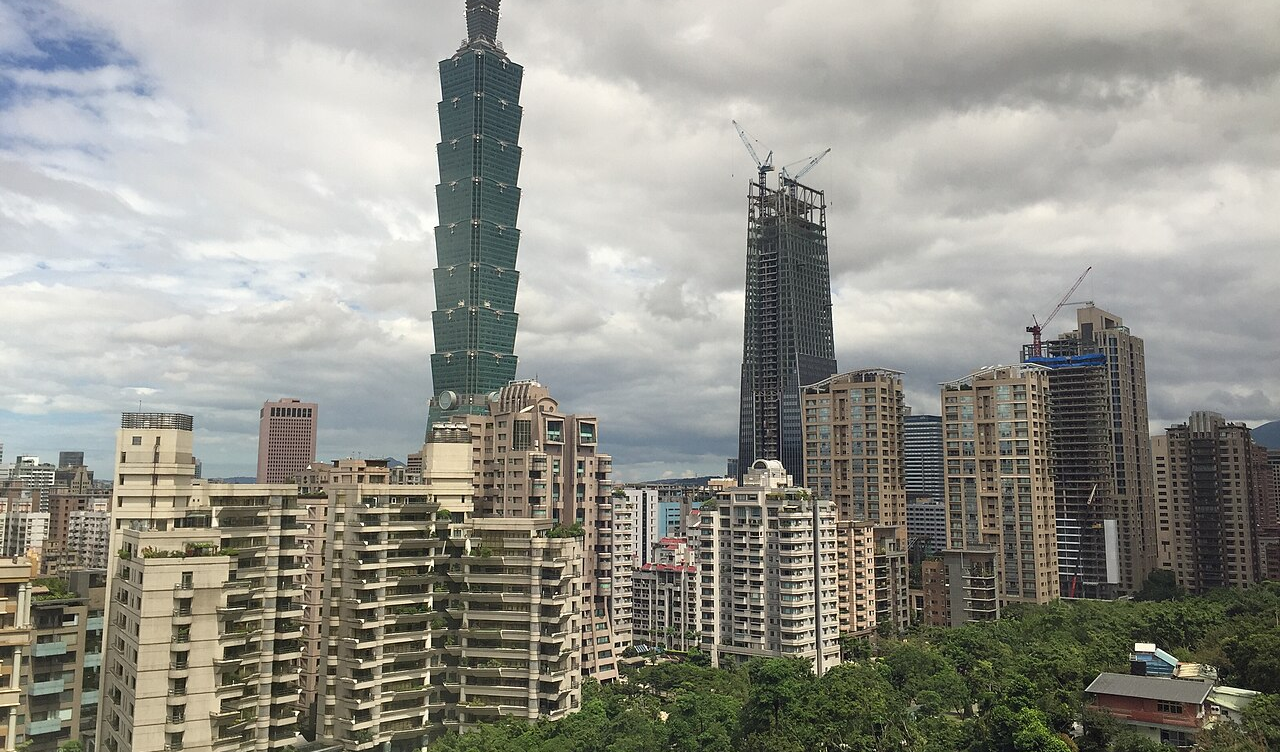
At a Taipei Security Dialogue panel, Stanford fellow Oriana Skylar Mastro said Taiwan's defense buildup mainly reassures the US, while China stays unmoved. Taiwan's expanding military preparations may be speaking more loudly to Washington than to Beijing, a US security scholar told a panel in Taipei yesterday, arguing that Taipei should split its message and target each capital differently. Oriana Skylar Mastro, a fellow at Stanford University's Freeman Spogli Institute for International Studies, made the assessment during the Taipei Security Dialogue. The panel examined what Taiwan can learn from the conflicts in Ukraine and the Middle East. Mastro said she was struck by Taiwan's higher defense budget, its shift toward asymmetric weapons and its work to ready the wider public for a possible war. But she questioned who is actually watching those moves and changing their behavior in response. When she pressed senior Chinese officials and analysts on whether Taiwan's stronger defenses were making Beijing think twice, Mastro said the replies came down to indifference. Their attitude, she recounted, was essentially that they had no clear read on it, were not tracking it closely, and did not consider it relevant to their planning. The real recipient of Taiwan's signaling, she said, is the United States. By demonstrating it can hold out on its own, Taiwan is chiefly telling Washington that it is serious about its own survival. Mastro called that a sound approach, because it eases American doubts about Taipei's willingness to fight. Even so, she said Taiwan needs a distinct playbook if it wants its arsenal to weigh on Chinese decision-making. Mastro was blunt about the limits of self-reliance. "There's no situation under which Taiwan can defend itself without direct US military intervention," she said. Rather than treating that as a reason to stop, she urged Taipei to explain its new capabilities to Beijing far more clearly, so the same investments both draw the US closer and give China pause. Signals to Beijing and Washington Chen Ping-Kuei, a professor in the Department of Diplomacy at National Chengchi University, backed Mastro's reading. He said the broad public sense is that Taiwan has gotten its point across to the US, while the deterrent message meant for Beijing has largely failed to land. Chen pointed to US weapons transfers as a central marker of American commitment. In his view, the political weight of each sale often counts for more than how large the package happens to be. He warned that the process itself carries meaning: if Washington ever started clearing proposed arms deals with Beijing beforehand, it would tell Taipei something deeply alarming about where it stands. That concern is not hypothetical. Chen was responding to unease sparked after US President Donald Trump acknowledged raising the subject of arms sales to Taiwan with Chinese President Xi Jinping during their meeting in Beijing in mid-May. Consulting China on such sales cuts against one of the "six assurances," a long-standing US pledge not to coordinate arms decisions with Beijing. Trump appeared to wave off the commitment. Asked about it after the meeting, he said he was not going to refuse to discuss the matter simply because of a document signed back in 1982. Keeping Taiwan running under pressure Wolfgang Muller, a senior research fellow at the German Institute for Defence and Strategic Studies, widened the discussion beyond hardware and messaging. He argued that Taiwan must be able to keep functioning if China tries to cut it off from the outside world. Such isolation would not necessarily take the form of a declared blockade, Muller said. Simply raising the perceived danger could be enough to change how shipping firms, insurers, suppliers and repair providers behave, choking off the island without a shot. "Do not ask only how China would invade Taiwan. Ask also how China could make an invasion unnecessary," he said. Muller advised against chasing full self-sufficiency. Instead, he said, Taiwan should figure out exactly how long its essential services could keep going if outside supplies stopped arriving. He also called on planners to map the weak points where infrastructure systems depend on one another, and to stockpile hard-to-source items in advance, naming transformers, medicine, chemicals, communications gear and machine parts. The goal, he said, is resilience rather than invincibility. "Taiwan cannot make its critical infrastructure invulnerable, but it can make failure more temporary," Muller said, adding a phrase that framed endurance as a weapon in itself: "Recovery capacity is combat power." Taiwan defense, Oriana Skylar Mastro, Taipei Security Dialogue, US arms sales Taiwan, China deterrence, six assurances, Trump Xi Jinping, asymmetric warfare

Iran War Shadows Trump at Dallas Republican Convention

Republicans gather in Dallas for their midterm convention as the Iran war and $100 oil test Trump's grip ahead of November's House and Senate fights. Republicans opened their midterm convention in Dallas, Texas, on September 9, betting that President Donald Trump can still drive turnout even as his war on Iran and its effect on household costs weigh on voters. The event places Trump at the heart of the party's closing push before November, when Republicans fight to keep their majorities in both the House of Representatives and the Senate. Trump was set to headline the gathering with a keynote speech on Wednesday. Hours before he took the stage, Brent Crude, the international oil benchmark, climbed past $100 a barrel for the first time since July - a fresh signal that the conflict he began alongside Israel on February 28 continues to ripple through global markets and, with it, prices at home. Supporters who spoke at the convention described an event built around the president himself. Attendees calling themselves the "Front Row Joes" cheered through the opening day. Yet the enthusiasm sat alongside unease about the war and its consequences for affordability, an issue many voters rank at the top of their concerns. Carter Eisinger, a 27-year-old electrician who made the trip from Fargo, North Dakota, embraced the atmosphere while wrestling with the policy. He called the gathering a "Trump-a-palooza" and said he meant it as praise. "I think some people say that in a derogatory way, but I think it's very much a complimentary phrase," he said. "The reality of it is we are in a Trump Republican Party." Even so, Eisinger could not square the Iran campaign with the "America First" message that drew him to the movement. "In my opinion, I don't really see the connection of how a war in Iran helps us here in the country," he said. He added that he would accept higher fuel costs if the case for fighting were clear. "If the Iran war is justified, I'm willing to pay the gas prices, but I haven't seen that justification." He voiced the same hesitation about Washington's tight bond with Israel. "At the end of the day, I'm going to come right back to whatever is best for families, young people, anyone in America," he said. "If it's helping Israel in a way that helps us, then great... but it needs to help us first." Others judged the war more forgivingly while still calling it a mistake. Bijay Dixit, a 59-year-old photographer from Houston, praised Trump's handling of immigration and said he trusted Republicans to manage the economy in the years ahead. On Iran, though, he used the word "miscalculation." He said he accepted the administration's argument that the strike answered decades of Iranian conduct stretching back to the 1979 Islamic revolution, 47 years earlier. "Iran needed to be stopped at some point," Dixit said. His criticism, he explained, was about execution rather than intent: "When I say miscalculation, what I mean is underestimation of the capacity of the IRGC." He was referring to the Islamic Revolutionary Guard Corps. For some, the convention worked as a morale exercise regardless of the debates over foreign policy. Helen Vennett, a 65-year-old small business owner from Maryland who chairs her county's Republican Party, compared the scene to a high-school pep rally. "All of us need to have cheerleaders in our life," she said. "It just gets you fired" up. The mix of loyalty and doubt captured the party's challenge as the campaign enters its final weeks. Trump remains the figure Republicans are counting on to mobilise their base, but the war he launched - and the rising costs tied to it - has left even committed supporters searching for a rationale they can carry to the ballot box in November. Republican midterm convention, Trump Iran war, Dallas convention 2026, Brent crude oil prices, US midterm elections, IRGC, America First, November elections

Brent Crude Tops $100 After US-Iran Tanker Strike

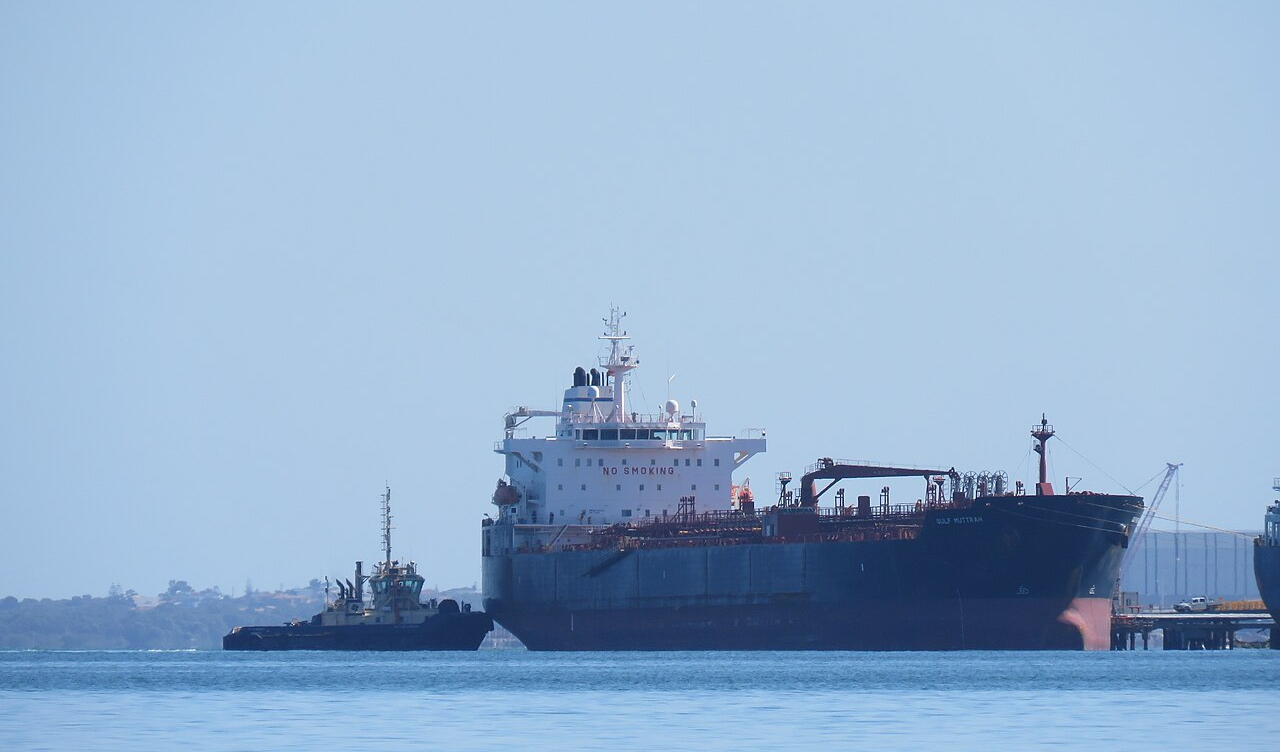
Brent crude reached $100.70 a barrel Wednesday, its highest since July, after US and Iranian tanker strikes and Houthi attacks on Saudi oil sites. The price of Brent crude climbed to $100 a barrel on Wednesday, its highest mark since late July, after a fresh round of attacks on shipping and energy sites across the Gulf region and Yemen. By Wednesday afternoon a barrel of the global benchmark traded at $100.70, a gain of 2.83% on Tuesday's level. The jump followed overnight strikes in which the United States said it hit five Iranian tankers, while Iran's Revolutionary Guards claimed to have struck eight tankers and two warships, along with an American base in Jordan. Iran-backed Houthi forces, meanwhile, reported dozens of Saudi strikes inside Yemen, a day after drones and missiles set several Saudi oil facilities ablaze. US Central Command, or Centcom, said early Wednesday that its operation destroyed four Iranian oil tankers tied to the Islamic Revolution Guard Corps in the Gulf of Oman - named as the Kaviz, Charminar, Horizon 1 and Riesco. A fifth vessel, the Derya, was struck near Kharg Island in the northern Gulf, the site of Iran's principal oil export terminal. Centcom said American forces ordered each crew to leave their ship before the strikes were carried out. According to Centcom, the tanker strikes were a response to the IRGC firing ballistic missiles at a US warship on two separate occasions over two days. The command said the warship dodged the incoming fire and that no American personnel were hurt. Missiles over Jordan Iran's account of the night differed. The IRGC said its Aerospace Force targeted maintenance buildings, hangars and aircraft at Muwaffaq Salti Air Base in Jordan in retaliation for the American action. Jordan's armed forces said they shot down 20 Iranian missiles, with two more coming down in unpopulated areas. No casualties were recorded. The Guards went further, stating that their navy had also hit two US Navy destroyers and eight oil tankers in the Strait of Hormuz and inflicted "heavy damage." Centcom rejected part of that account, describing the claim that two of its warships had been struck as false. The Revolutionary Guards also announced plans for a new "prohibited zone" for vessels, one that would reach past the Strait of Hormuz and into the Arabian Sea. A waterway shut down The surge in prices reflects months of mounting pressure on the region's energy routes. Before fighting between Iran and a US-Israeli coalition began in February, Brent had sat at roughly $70 a barrel. Since then, Iranian missile and drone strikes on commercial ships, combined with an American naval blockade of Iranian ports, have effectively sealed off the Strait of Hormuz. Around 20% of the world's oil and liquefied natural gas cargoes normally move through that passage. The latest peak matched levels last seen in late July, when Iran and the United States restarted hostilities following a month-long pause in fighting. Yemen has added a second front to the crisis. The Houthis have been striking Saudi energy sites and tankers in the Red Sea since July, when a four-year ceasefire in the country started to fall apart. Their reported attacks this week caused fires at multiple Saudi oil installations before Saudi forces launched dozens of strikes in return. Merchant shipping is feeling the effects directly. The UK Maritime Trade Operations agency said it had logged reports of several commercial vessels in the northern Gulf and the Gulf of Oman coming under "disabling fire" amid the continuing military activity. It also flagged a vessel positioned 24 nautical miles, or 45km, north-west of a port in the area. Centcom released footage it said showed the Iranian tanker Riesco burning and going under, one of the vessels named in its strike report. The higher crude prices are already reaching drivers. The climb has pushed up petrol costs for motorists in many countries, extending the reach of a conflict centred on the Gulf far beyond the region itself. Brent crude oil price, Strait of Hormuz, US Iran tanker strikes, Houthi Saudi oil attacks, IRGC Centcom, Gulf of Oman, oil price $100, Muwaffaq Salti Air Base

Jawa 42 All Stars Launched at Rs 1.85 Lakh With 60+ Updates

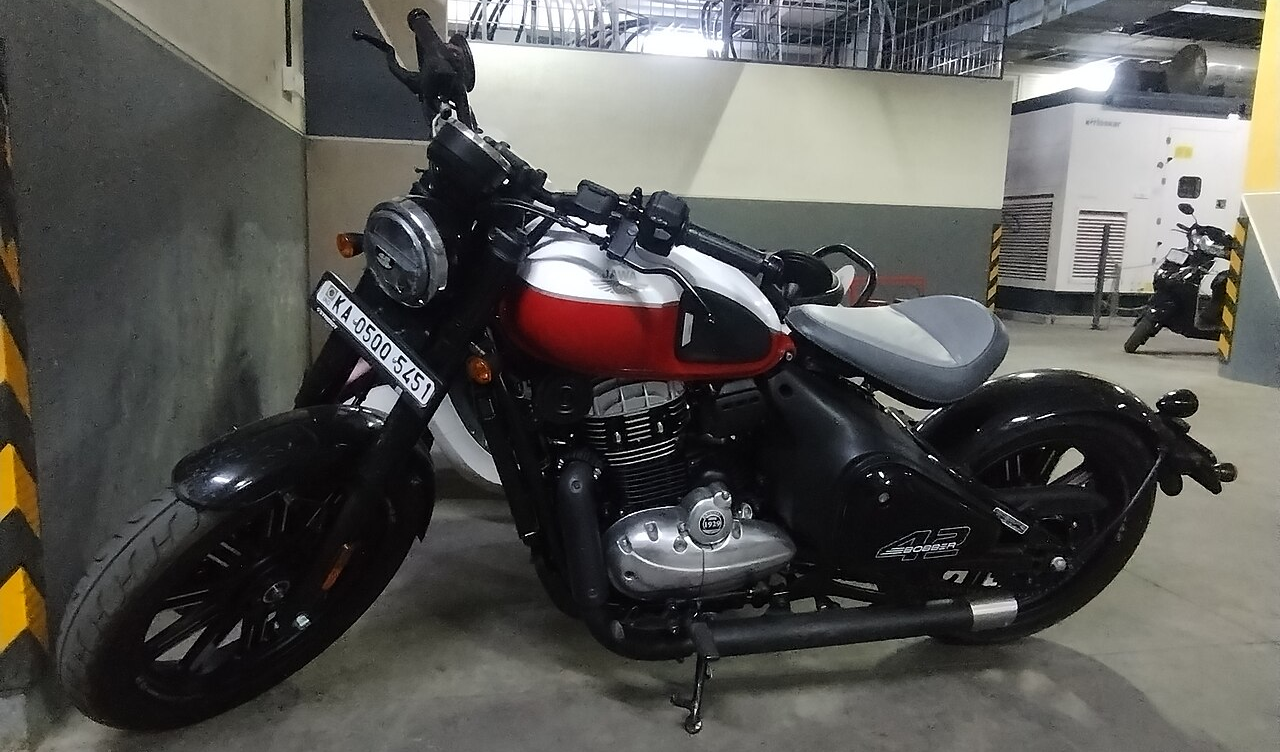
Classic Legends has launched the Jawa 42 All Stars from Rs 1.85 lakh, with five colours, 60+ changes and deliveries starting 14 September. Classic Legends has launched the Jawa 42 All Stars in India at a starting price of Rs 1.85 lakh (ex-showroom), with the final figure depending on the colour buyers select. Bookings are open, and deliveries are scheduled to begin on 14 September to coincide with the start of the festive season. The launch completes the company's All Stars line-up. Classic Legends first rolled out the Jawa 42 FJ, badged First Strike, followed by the Jawa 42 Bobber, or Second Strike. The Jawa 42 All Stars closes the chapter and continues the brand's push against established classic motorcycle names such as Royal Enfield. Buyers can choose from five shades: All Stars Ivory, All Stars Moss Grey, All Stars Battle Green, All Stars Nebula Blue and All Stars Black. The Black option sits at the top of the range at Rs 1.9 lakh (ex-showroom), making it the most expensive of the five. A standard Jawa 42, without the All Stars treatment, remains on sale in Black and Ivory at Rs 1.8 lakh (ex-showroom). What the 60+ changes cover According to Classic Legends, the All Stars model carries more than 60 enhancements over the previous version. The bike gets a revised stance and proportions, along with a reworked rear section and new side body panels. The company describes the result as bolder and more muscular than the outgoing model. The motorcycle now comes with upswept exhausts and rides on alloy wheels as standard. The alloys allow the use of tubeless tyres, which the company positions as an advantage for daily commutes and longer trips. A wider rear fender and a new 150-section rear tyre give the bike a broader look at the back. Engine and hardware Power comes from the J-Panther engine, a 294cc single-cylinder, liquid-cooled unit with a DOHC four-valve head. It is paired with a six-speed gearbox. Several components carry over from the earlier Jawa 42, including dual-channel ABS, a 13.2-litre fuel tank, an 18-inch front wheel and a kerb weight of 175 kg. Anupam Thareja, co-founder of Classic Legends, framed the launch around the character of the brand's riders. "The most interesting communities are built by people who share a way of conducting themselves even when there is no audience. That is what we have come to understand about the Jawa rider," he said. "The codes of character, conduct and courage we see in places as different as defence and sports. We live by it by launching new formats for rider needs, motorcycles with a distinct design, and recognising those who live by these codes every day." Thareja also tied the new model back to the original Jawa 42, which he credited with helping establish India's modern classic segment. "The All Stars 42 carries that same instinct forward, not by abandoning what made the Jawa 42, but by asking what it should mean to the rider of today," he said. With bookings live and deliveries set for mid-September, the Jawa 42 All Stars enters the market at the start of a period when two-wheeler demand typically climbs. Its pricing places it directly against rivals in the classic and retro-styled commuter space. Jawa 42 All Stars, Classic Legends, Jawa 42 price, J-Panther engine, Jawa motorcycle India, Royal Enfield rival, 294cc motorcycle, Jawa 42 launch

Warrington A&E Failed to Scan Man, 32, Left Paralysed

Warrington Hospital's NHS trust admits it failed to order a brain scan for Oli Coppock, 32, who is now almost fully paralysed after a cardiac arrest. Oli Coppock walked into the emergency department at Warrington Hospital in May 2024 complaining of severe headaches and dizziness. Staff examined him and ran a series of checks, but no scan of his brain was carried out before he was sent home. Within a week, fluid had gathered on his brain, and the 32-year-old suffered a cardiac arrest. He never recovered. He now lives with near-total paralysis. The hospital's operator, North Cheshire and Mersey NHS Foundation Trust, has admitted it breached its duty of care by failing to arrange a CT scan of his brain. It accepts that such a scan would most likely have revealed the fluid, opening the way to surgery that could have corrected the problem. An interim damages payment has been agreed with his family. Oli had been treated for a brain tumour only months earlier and had also recently been told he had multiple sclerosis. Despite those conditions, his father says he was in good health and looking ahead with optimism. He worked in digital marketing, was a regular at the gym and spent free time working as a DJ. His father, Stephen Coppock, says he accepts that emergency staff work under strain, but cannot grasp why nobody ordered a scan given his son's history. Stephen, who has seven children in all, says the failure has devastated the entire family, including Oli's six siblings. "The hospital didn't get the basics right and my son has paid a terrible price - it's ruined his life," he said. "It was an awful error. He trusted the health service and believed it was there to help him, not destroy him." Oli is being looked after at a neurological rehabilitation unit. His body is now rigid and twisted, and he cannot move himself. Tubes handle his breathing, his food and his toilet needs. He can respond only by blinking, though his father is convinced he takes in everything around him. "There is no worse space for a human to occupy - it's a permanent living nightmare," Stephen said. In its statement, the trust apologised. "We are deeply sorry that Mr Coppock did not receive that standard of care that should be expected and we recognise the distress and lasting impact on patients and their families when harm is caused," it said. More than two years to reach an admission The family's lawyer, Tanzeela Aslam, who heads medical negligence at Express Solicitors, says the length of the process has compounded the harm. Reaching this point took more than two years, she says, and during that time Oli was left without money for therapies and support that might have eased his condition and improved his day-to-day life. "Oli's case illustrates how preventable errors within the NHS can have devastating and life-changing consequences for individuals and their families," she said. Aslam says the case is far from isolated. She is handling a rising volume of complaints tied to emergency care, a trend she attributes to mounting strain on hospitals. She points in particular to the spread of so-called corridor care, where patients are treated in hallways rather than proper bays. A 41% rise in A&E negligence claims Oli's ordeal reflects a wider pattern across England. Analysis by the BBC found that clinical negligence claims connected to emergency care have climbed by 41% over the past five years. Doctors have linked the increase to the long waits and heavy pressures now common in A&E departments. For the Coppock family, the statistics carry a personal cost. A man who was fit, working and hopeful about the years ahead now depends on machines to survive and on a blink to make himself understood. His father says the family has been left "angry and broken" by a single missed step in a busy emergency room. clinical negligence, Warrington Hospital, A&E care, brain scan, NHS negligence claims, Oli Coppock, corridor care, medical negligence