Indian diaspora groups protest across Europe, the US and Australia, demanding CEC Gyanesh Kumar’s resignation and changes to voter-roll revision.
Indian Diaspora Protests Across Europe, US and Australia Against CEC Gyanesh Kumar
Subtitle: Demonstrations under the “Jantar Mantar Is Everywhere” banner demand electoral accountability, changes to voter-roll revision and protection of voting rights in India.
By News National Editorial Team
NEW DELHI, October 23, 2026: Members of the Indian diaspora and their supporters have held demonstrations across several cities in Europe, the United States, Canada and Australia, expressing solidarity with protests in India over electoral-roll revisions and demanding the resignation of Chief Election Commissioner Gyanesh Kumar.
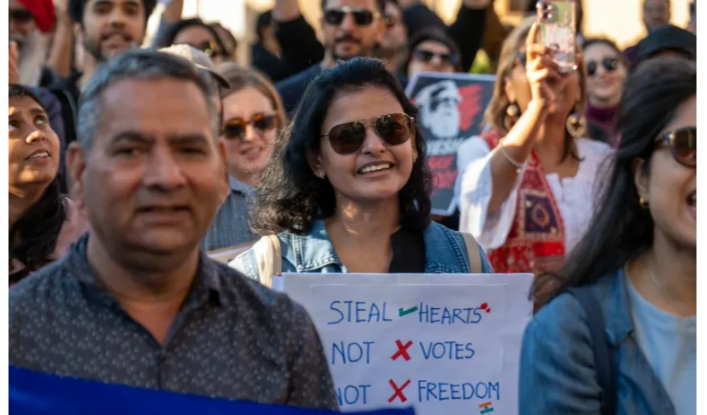
The international demonstrations took place under the banner “Jantar Mantar Is Everywhere” during October 16–19, 2026. Participants called for changes to the Election Commission of India’s Special Intensive Revision (SIR) of electoral rolls, restoration of eligible voters’ names that they allege were deleted, and greater accountability in the electoral process.
Reports published by Hindustan Times, The Quint and The News Minute documented gatherings in several countries. The protests involved diaspora organisations, student groups, civil-society organisations and other supporters.
Demonstrations Across Multiple Countries
According to media reports, demonstrations were held in London, Berlin, Göttingen, Dublin, The Hague, Gothenburg, Helsinki, Barcelona and Prague, among other European locations.
In the United States, solidarity gatherings were reported in cities including New York, Austin, Philadelphia, Los Angeles and Chicago. Demonstrations were also reported in Canadian cities such as Toronto, Vancouver and Montreal.
In Australia, protests were announced or reported in Sydney, Melbourne and Brisbane during the same period.
The scale of participation varied between locations. Organisers and participating groups shared photographs, videos and statements describing the gatherings as an international show of support for people protesting in India.
The demonstrations were not organised by a single worldwide authority. Different diaspora associations, student organisations and civil-society groups participated in or coordinated events under the common campaign banner.
Why Are Protesters Demanding the CEC’s Resignation?
The demonstrations centre on concerns about the Special Intensive Revision of electoral rolls, an exercise undertaken by the Election Commission of India to review and update voter lists.
Protesters have alleged that the revision process risks excluding eligible voters and have questioned whether the process is being implemented transparently and fairly. They have called for the restoration of names they believe were wrongly removed and demanded that Chief Election Commissioner Gyanesh Kumar step down.
The concerns have also been linked to wider questions about access to voting, freedom of peaceful assembly and the treatment of demonstrators in India.
However, allegations that the revision exercise has improperly disenfranchised voters on a large scale should not be treated as independently established facts without supporting evidence. Individual cases, official voter-roll data and the Election Commission’s responses need to be examined to establish the extent and causes of any wrongful deletions.
‘Jantar Mantar Is Everywhere’: The Campaign’s Message
The campaign slogan reflects the organisers’ intention to extend the visibility of protests beyond India.
Jantar Mantar in New Delhi is a recognised site for public demonstrations. By using its name in an international campaign, participating groups sought to connect overseas solidarity gatherings with the protests taking place in India.
The events included speeches, placards, songs, poetry and readings from the Preamble to the Indian Constitution. Some gatherings featured Indian flags and calls for democratic accountability.
In London, student groups organised demonstrations near the Indian High Commission and Parliament Square. In Dublin, more than 70 people reportedly gathered at the Spire on October 17, according to The News Minute.
The Quint reported that solidarity demonstrations took place in at least 14 cities across 10 countries over the weekend. Other reports described a broader network of events involving more than 20 cities. These figures reflect different reporting scopes and should not be treated as a single definitive count of all protests.
Election Roll Revision at the Centre of the Dispute
The SIR exercise has become a contentious issue because electoral rolls determine who is eligible to vote in elections.
The Election Commission’s stated rationale for revising electoral rolls is to maintain accurate voter lists, including identifying deceased voters, duplicate entries, people who have moved and other entries that do not meet eligibility requirements.
Critics, however, have raised concerns about whether the procedures provide adequate safeguards for eligible voters whose names may be omitted or whose records require correction.
The central question is how to balance the need for accurate electoral rolls with the obligation to protect every eligible citizen’s right to vote.
Resolving that question requires transparent procedures, accessible correction mechanisms, reliable documentation and scrutiny of complaints. Claims of wrongful deletion should be investigated on the basis of verifiable records rather than political assertions alone.
Protests in India and Concerns Over the Right to Demonstrate
The overseas demonstrations followed protests in New Delhi on October 10, when authorities detained large numbers of demonstrators attempting to participate in a rally demanding the CEC’s resignation.
Reuters reported that more than 2,000 protesters were detained during the operation and that security restrictions were imposed in parts of the capital. The protest was associated with the youth-led Cockroach Janata Party movement and its campaign over electoral-roll revisions.
The restrictions and detentions generated further criticism from protest organisers and opposition voices, who raised concerns about the ability to demonstrate peacefully.
The authorities’ handling of public demonstrations, the legality of specific detentions and allegations concerning police conduct are separate issues that require assessment against official records and independently verified evidence.
The overseas campaign has brought these concerns to international audiences, with participants arguing that voting rights and peaceful dissent deserve protection.
Political Reactions and the Question of Accountability
The demand for Gyanesh Kumar’s resignation is a political demand made by the protesters; it is not an established finding that he or the Election Commission committed wrongdoing.
The controversy has brought the Election Commission’s responsibilities, the implementation of electoral-roll revisions and the handling of public demonstrations into sharper focus.
For the Election Commission, maintaining accurate electoral rolls is an essential part of election administration. For citizens and civil-society groups, confidence in that process also depends on transparency, fair procedures and effective remedies when mistakes occur.
The international demonstrations do not, by themselves, establish whether the allegations concerning voter-roll revisions are correct. They do show that concerns about electoral administration in India have prompted organised responses among sections of the Indian diaspora and their supporters abroad.
What Happens Next?
The principal demands voiced by participating groups include reversing the SIR exercise, restoring eligible voters’ names that they say were wrongly deleted, improving electoral transparency and securing the resignation of the Chief Election Commissioner.
Whether these demands lead to changes in policy or election administration remains to be seen. The issue will require examination of the relevant electoral rules, official data, complaints from affected voters and responses from the Election Commission.
For voters, the practical priority is to check their electoral-roll status through official channels and follow the prescribed process for correcting omissions or errors.
The demonstrations across Europe, North America and Australia have extended the debate over electoral accountability beyond India’s borders. The underlying issues—accurate voter registration, transparent election administration and the protection of peaceful dissent—remain matters of public interest.
News National will continue to follow verified developments, official responses and documented evidence concerning the SIR exercise and the demands raised by protesters.
Sources: Hindustan Times, The Quint, The News Minute, ThePrint/PTI and Reuters, reporting published in October 2026.
Imagesource: millattimes