

Language Settings
Select Website Language

GDPR Compliance

We use cookies to ensure you get the best experience on our website. By continuing to use our site, you accept our use of cookies, Privacy Policy, and Terms of Service.

Filters

Channels
Topics
Other Filters

Coorg, Karnataka Coffee Estates, Waterfalls and Misty Ghats

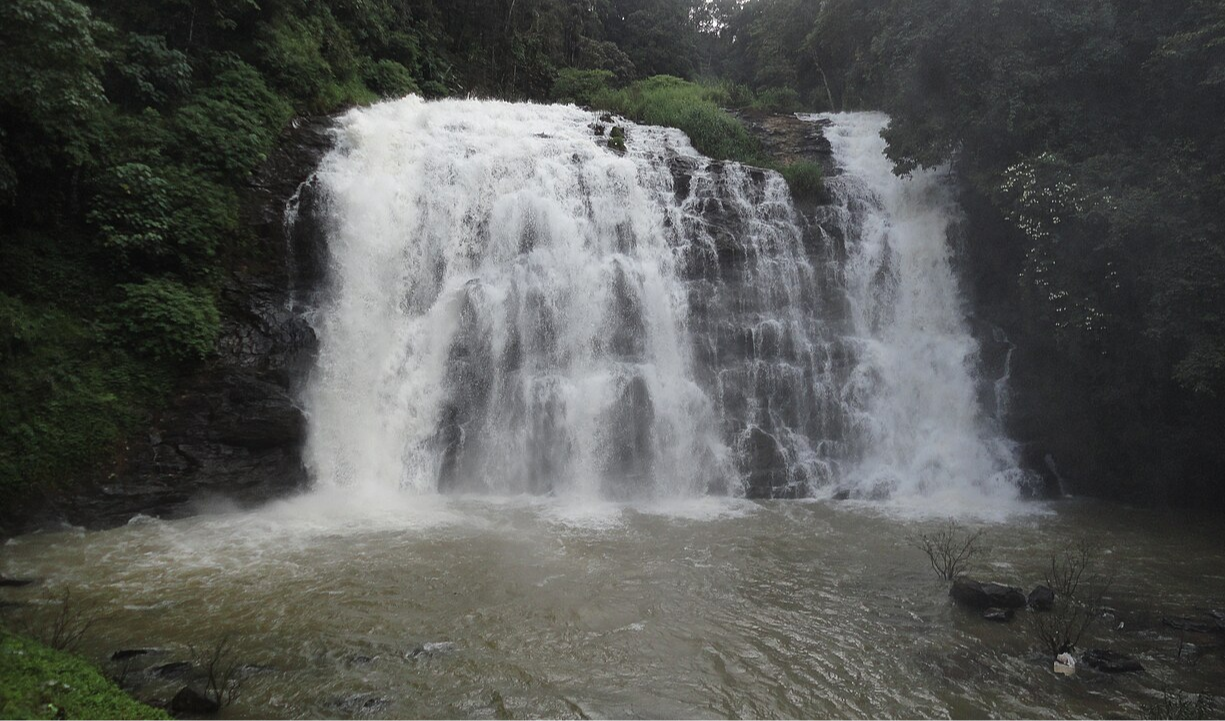
A practical guide to Coorg (Kodagu): coffee plantation stays, Abbey Falls, Talakaveri, Kodava pork curry, when to go and how to reach the hills. Tucked into the Western Ghats of southern Karnataka, Coorg (officially Kodagu) is a district of steep green hills where coffee grows in the shade of tall silver-oak trees, streams tumble off rock ledges, and mornings often start under a lid of mist. It is one of India's largest coffee-growing regions, home to the proud Kodava people, and an easy few hours from Bengaluru, Mysuru and the Kerala coast. If you want cool air, plantation walks and slow food rather than crowds and monuments, this is the corner of the south to aim for. Why this hill country is different Coorg isn't built around a single sight - it's a landscape you settle into. Estates of Arabica and Robusta coffee spill down the slopes, interplanted with pepper vines, cardamom and oranges, so the air carries a distinct spice-and-blossom smell. The district capital, Madikeri, sits on a ridge around 1,200 metres up, cool enough to need a light jacket after dark. Because so much of the land is private plantation and reserve forest, the pace is unhurried: this is a place for walking, birdwatching, and long lunches rather than ticking off a list. Top things to see and do Start in Madikeri, where Raja's Seat is the classic sunset viewpoint over layered valleys, and the small Madikeri Fort and the domed Omkareshwara Temple anchor the old town. A short drive away, Abbey Falls drops through coffee and cardamom estates and is reached by a footbridge - most photogenic just after the rains. For mist and views, head to Mandalpatti, reached by rugged jeep track, or take on Tadiandamol, Coorg's highest peak at around 1,750 metres and a rewarding day hike. Nature lovers should visit Dubare Elephant Camp on the banks of the Kaveri, the river island of Nisargadhama with its bamboo groves, and, for wildlife, the forests of Nagarhole National Park on the district's edge. Two spots capture Coorg's spiritual side. Talakaveri, high on the Brahmagiri hills, marks the source of the sacred Kaveri river, with Bhagamandala and its river confluence nearby. Very different in mood is the Namdroling Monastery at Bylakuppe - the "Golden Temple" of a large Tibetan settlement, its main hall filled with towering gilded Buddha statues. And no visit is complete without a coffee estate tour, where growers walk you through picking, drying and roasting. When to go The sweet spot is October to March, after the monsoon has passed. The hills are green, the waterfalls still full, and days are mild while nights turn crisp. March to May is warmer but fine, and it overlaps with the coffee blossom, when estates briefly turn white and fragrant. The June-to-September monsoon brings heavy, sustained rain - the scenery is at its lushest and waterfalls thunder, but trekking trails get slippery, leeches appear, and some viewpoints close in cloud. If chasing waterfalls like Abbey or Iruppu, aim for the tail of the rains around September-October. Getting there and around Coorg has no airport or railway of its own, so you arrive by road. The nearest airports are Mysuru (roughly 120 km) and Mangaluru (about 135 km), with Kannur in Kerala also close; most long-haul travellers fly into Bengaluru's Kempegowda International Airport, around 250 km away, and drive or bus in. The most common route is via Mysuru along NH 275 to Madikeri. The nearest major railheads are Mysuru and Mangaluru, both well connected to Bengaluru and beyond. Once in Coorg, distances are short but roads are winding, so a hired car with a driver or a self-drive vehicle is by far the easiest way to reach estates, viewpoints and waterfalls scattered across the hills. Where to stay The most memorable choice is a homestay or estate stay on a working coffee or spice plantation - you wake to birdsong, walk among the trees, and often eat home-cooked Kodava meals with the family. These cluster around Madikeri, Virajpet, Kushalnagar and the Pollibetta/estate belt. Madikeri town itself has the widest range of guesthouses and resorts and works well as a base, while quieter valleys suit those wanting to disconnect. Local tips worth knowing Eat Kodava food while you can: pandi curry (pork simmered dark with the region's sour *kachampuli* vinegar) is the signature dish, best mopped up with kadambuttu (steamed rice dumplings) or noolputtu (rice noodles); vegetarians can try bamboo-shoot curry and *akki roti*. Bring home estate-fresh coffee, wild honey, pepper and cardamom straight from growers rather than roadside stalls. Mornings are for views - mist often burns off by mid-morning, so climb Mandalpatti or reach Talakaveri early. Carry warm layers even in summer, keep cash for small estates and viewpoints, and if you hike in the wetter months, pack leech socks and grippy shoes. Coorg travel guide, Kodagu Karnataka, Coorg coffee plantations, Abbey Falls Coorg, things to do in Coorg, Madikeri, Coorg best time to visit, Kodava cuisine

India Draw 1-1 With World No. 44 Panama in Bengaluru

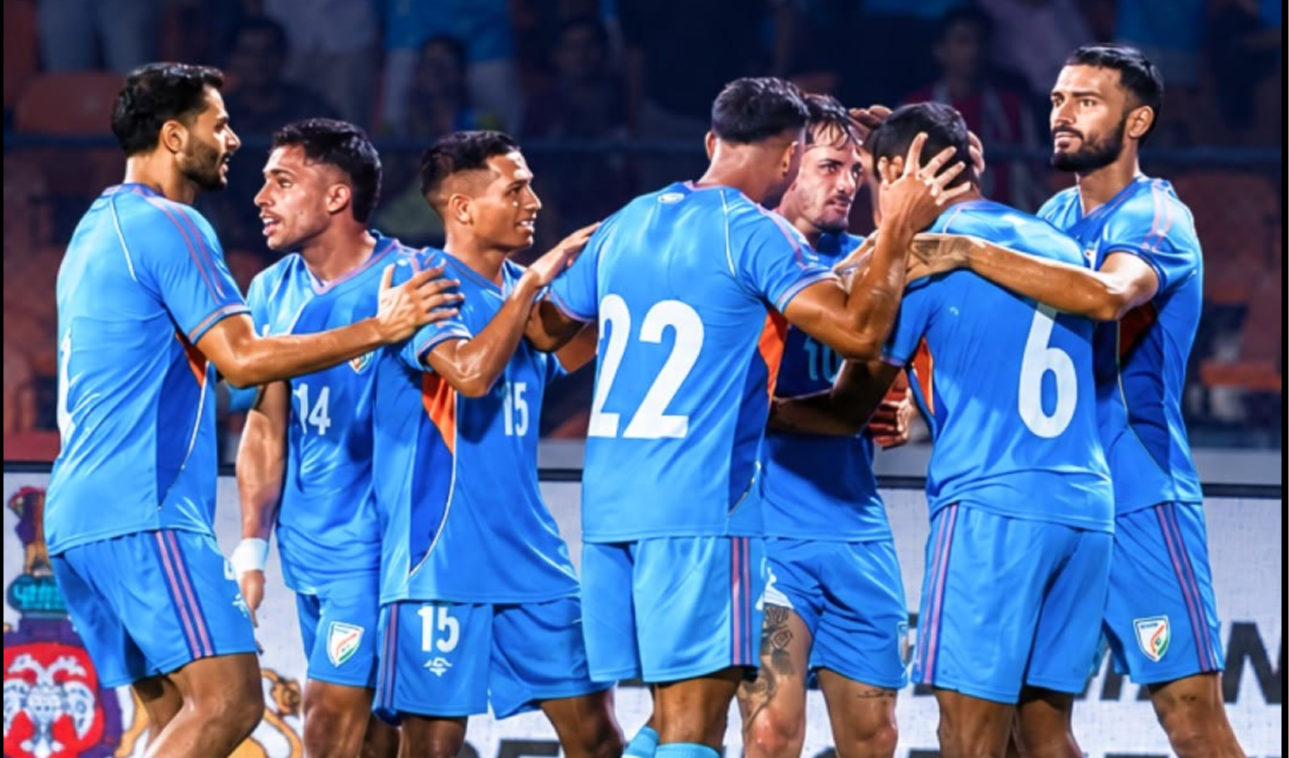
Ryan Williams struck before the break as India held Panama to a 1-1 draw in Bengaluru, with Omar Valencia levelling. Brazil and Uruguay are next. India shared the points with Panama in a 1-1 friendly in Bengaluru on Friday, matching a nation sitting 94 places above them in the FIFA rankings and fielding several players from a recent World Cup squad. Forward Ryan Williams put the hosts in front late in the opening half, but Omar Valencia's second-half strike from distance pulled the world No. 44 side level. The outcome was a boost for coach Khalid Jamil, whose team is ranked 138th. It was India's first outing in Bengaluru since they lifted the SAFF Championship at the same ground in 2023. Two much harder assignments now follow: a meeting with five-time champions Brazil in Kolkata on October 3, then two-time winners Uruguay at the same venue on October 6. Panama controlled the ball in the early exchanges, yet India stayed organised and grew sharper on the counter-attack, unbothered by opponents who had featured at the World Cup only months before. Their first real sight of goal arrived in the eighth minute, when Akash Mishra's pull-back reached Williams inside the area, though the striker could not get his effort off. Williams then steered a shot just wide 10 minutes later, and Ashique Kuruniyan struck the side-netting as the pressure built. The reward came in the 41st minute. Akash launched the ball forward, Williams read the flight to slip behind Panama's back line, and he stayed calm to beat goalkeeper Marcos Reyes, handing India a 1-0 advantage four minutes before the break. Panama returned after the interval with sharper intent and quickly probed India's rearguard. Gurpreet Singh Sandhu answered the first serious threat, keeping out Giovany Herbert five minutes into the half. The leveller landed in the 68th minute, Valencia driving in from outside the box to reset the scoreline at 1-1. India refused to sit back. Ashique whipped a low ball across the six-yard box in the 79th minute, but Edmund Lalrindika could not connect cleanly. Two minutes on, Edmund cut inside from the right and teed up Manvir Singh, who tried an ambitious backheel and squandered the chance. The visitors then hunted a winner, rattling the frame of the goal and drawing another crucial stop from Gurpreet. Carlos Harvey, among Panama's World Cup contingent, also forced the goalkeeper into action, but India held firm through the closing spell. Manvir threatened once more after substitute Edmund found him, while Abhishek Singh Tekcham dragged a shot off target from a corner as the hosts kept probing. For Jamil's side, the value of the night lay less in dodging a loss than in how they went toe-to-toe with a far higher-ranked opponent. Williams' finish gave them a lead worth defending, Panama eventually found the response, and India still fashioned enough openings to feel they might have claimed the win. The tests against Brazil and Uruguay will be steeper, but the Bengaluru display leaves the Blue Tigers with genuine momentum heading into them. India football, Panama draw, Ryan Williams, Khalid Jamil, Blue Tigers, India vs Brazil, India vs Uruguay, Bengaluru friendly

Japan Face Do-or-Die Test Against Unbeaten Nepal in Nisshin

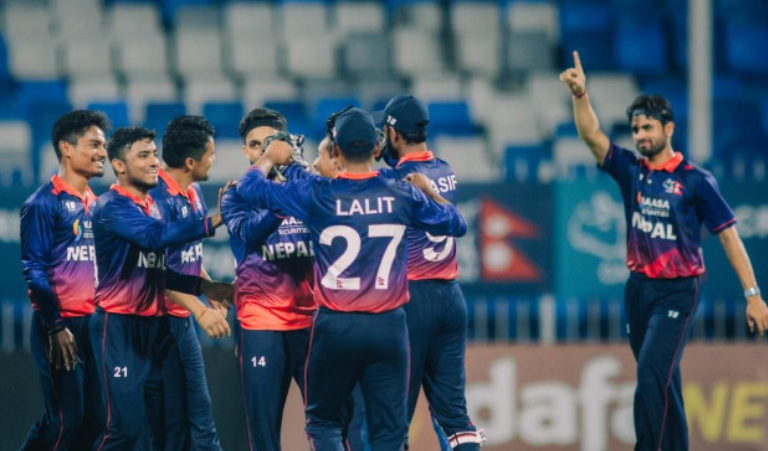
Japan must beat Nepal by a big margin at Korogi Sports Park on September 26 to stay in the Asian Games 2026 quarterfinal race. Nepal already sit second in Group A. Hosts Japan take on unbeaten Nepal on the final day of the Group A stage at the Asian Games 2026, with a quarterfinal place on the line for both sides. The match, the fifth of the tournament, is scheduled for September 26 at the Korogi Sports Park in Nisshin. Japan enter the game in a precarious position after losing their opener to Afghanistan by 48 runs. That defeat pushed their net run rate down to -2.4 and left captain Kendel Kadowaki-Fleming and his team needing not just a win, but a win by a large margin, to climb into the top two of Group A. Anything short of a heavy victory will end their campaign. Nepal come in with momentum. They beat Afghanistan by five wickets in their first match, a result that lifted them to second place in the group. A second win would carry them to the top of the table and secure direct passage to the quarterfinals. The two nations have met only once at international level, last year, and Nepal won that encounter by five wickets. Kadowaki-Fleming scored 60 in that game and remains Japan's most reliable batter at the top of the order. Japan need runs across the order For Japan to swing the net run rate back in their favour, their batting will have to fire as a unit and their bowlers will have to keep Nepal's total in check. Alongside Kadowaki-Fleming, the home side will look to Lachlan Yamamoto-Lake, Reo Sakurano-Thomas and Charlie Hara-Hinze for runs. Much of Japan's hope rests on all-rounder Ibrahim Takahashi. He can strike big shots lower down the order and bowls off spin, giving the captain options with both bat and ball. A strong contribution from him in either discipline would go a long way toward the kind of dominant performance Japan require. Nepal lean on Bhurtel and Airee Nepal's win over Afghanistan showed a side clicking with both bat and ball. Their batting is built around Kushal Bhurtel, Aasif Sheikh, Rohit Paudel and skipper Dipendra Singh Airee. Bhurtel remains the team's batting mainstay despite a duck in the opening match. He has scored more than 500 runs across his last 10 T20I innings, and Nepal will expect him to return to form against a Japan attack under pressure to take early wickets. The middle order also carries weight. One Nepal batter made a useful 34 in the win over Afghanistan before being run out, and his role again looms as important in the middle overs. Kushal Malla adds power to the line-up, while all-rounders Sompal Kami and Karan KC lend balance between bat and ball. Leg-spinner Sandeep Lamichhane leads the bowling attack. The equation is clear for both teams heading into Nisshin. Nepal need only to avoid a heavy defeat to top the group, while Japan must produce a commanding, high-margin win to keep their quarterfinal dream alive on home soil. Asian Games 2026 cricket, Japan vs Nepal, Nepal cricket team, Kendel Kadowaki-Fleming, Kushal Bhurtel, Korogi Sports Park Nisshin, Group A cricket, Dipendra Singh Airee

3 BJP Allies Press Election Commission to Break Silence on SIR

LJP(RV), RLM and TDP urge the Election Commission to clarify the SIR row and rebuild public trust, splitting with the BJP's stance. Three partners in the National Democratic Alliance broke from the government's line on Friday and called on the Election Commission to publicly explain its handling of the electoral process and the special intensive revision (SIR) of the electoral rolls. Chirag Paswan's LJP(RV), Upendra Kushwaha's RLM and Chandrababu Naidu's Telugu Desam Party each said the poll body needed to clear up the doubts spreading among voters. Paswan, who leads the LJP(RV) and serves as Union food processing industries minister, spoke to reporters in Patna. He said that as part of the government he did not intend to "defend what is a constitutional body," but he wanted the Commission to speak to public concerns directly. "If questions are being raised about its conduct, it is the responsibility of EC, especially the chief election commissioner (Gyanesh Kumar), to present its side firmly," he said. Paswan drew a line between the opposition's attacks and the worries of ordinary voters. He said he had nothing to do with the opposition's statements, arguing that levelling allegations and politicising the matter was their role, while the common people needed to be taken into confidence. "If people start losing trust in the electoral system, that will not augur well for democracy and, therefore, I think the EC must come out with its clarification more forcefully," he said. "It need not respond to what Rahul Gandhi and his associates are saying. But it must dispel misgivings in the minds of the people." Kushwaha, the RLM president, made the same demand in a social media post. "There is considerable confusion among the public regarding the controversy surrounding SIR," he wrote. "This issue needs to be addressed. The EC should immediately clarify the situation to dispel this confusion." TDP wants greater transparency Naidu's Telugu Desam Party added its voice, calling for a clarification against the backdrop of reports of internal differences at the Commission and protests by opposition parties. The party's parliamentary leader, Lavu Sri Krishna Devarayalu, said the revision had been a success in Andhra Pradesh, where the TDP is in office, but still pressed for openness. "The EC is a constitutional institution entrusted with a crucial responsibility in our democracy," Devarayalu said. "Therefore, whenever questions are raised by anyone, providing appropriate clarification and maintaining transparency will only help strengthen public confidence in the institution." He said the SIR in Andhra Pradesh had been carried out transparently, with voters given enough opportunity and time to raise concerns. Reports of dissent inside the Commission The three allies spoke out after reports in The Indian Express that two senior election officials had objected several times to decisions taken without their knowledge or agreement. Those reports have fuelled opposition demands that Chief Election Commissioner Gyanesh Kumar be removed from office and that the SIR process be stopped. The Election Commission addressed the matter on Wednesday, saying that differing views among its members were normal and that its final decisions had been reached unanimously. The interventions expose a gap between the NDA's smaller partners and the BJP. Bihar BJP spokesperson Manoj Sharma played down the remarks, saying of Paswan and Kushwaha, "They head their own parties and hold the right to talk about this issue." Another BJP functionary, who did not want to be named, said the party's alliance with the LJP(RV) and the RLM was "limited only to Bihar and was not on the all-India level." Election Commission, SIR electoral rolls, Chirag Paswan, LJP RV, Chandrababu Naidu TDP, Gyanesh Kumar, Upendra Kushwaha RLM, NDA allies

Jaisalmer Inside the Golden Fort and Onto the Thar Sands

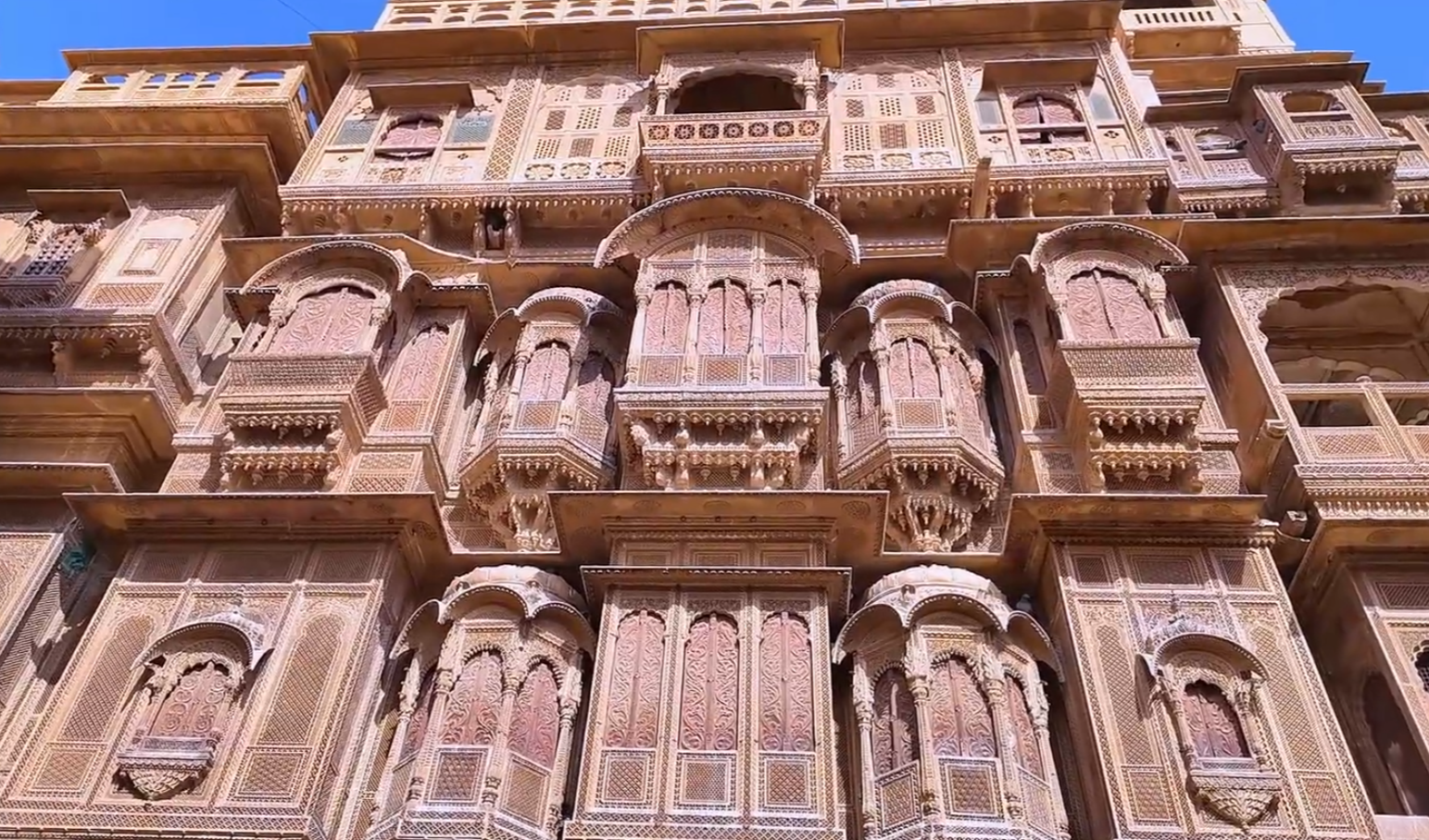
A practical Jaisalmer travel guide: the living Golden Fort, Patwon ki Haveli, Thar desert camel safaris, best season to visit and how to reach this Rajasthan gem. Rising out of the Thar like a sandcastle that decided to stay, Jaisalmer is India's westernmost city and one of its most cinematic. Built almost entirely from local golden-yellow sandstone, the town glows amber at dawn and deepens to honey at dusk - which is exactly how it earned the nickname the Golden City. Once a wealthy caravan halt on the trade route between India and Central Asia, Jaisalmer today rewards travellers with a rare combination: a genuinely inhabited medieval fort, a cluster of jaw-dropping merchant mansions, and the great sand sea of the Thar right on its doorstep. Why Jaisalmer earns a place on your route Most of Rajasthan's famous forts are museums you visit and leave. Jaisalmer Fort - locally called Sonar Quila - is different: roughly a quarter of the old city still lives inside its walls. You walk through the four massive gates into a warren of lanes where families cook dinner, children play cricket, and shops sell mirror-work textiles beneath 12th-century bastions. That living quality, set against the emptiness of the surrounding desert, gives the town an atmosphere you won't find in the bigger tourist hubs of Jaipur or Udaipur. Top things to see and do Start with Jaisalmer Fort itself, one of the very few forts in the world still occupied. Inside, seek out the intricately carved Jain temples, a group of seven interconnected shrines famous for their filigree stonework and thousands of sculpted figures. Climb to the ramparts for a rooftop view over the sea of flat brown roofs stretching to the horizon. Down in the lower town, the havelis - the mansions of long-gone merchant families - are the other essential stop. Patwon ki Haveli, a cluster of five houses, has the most elaborate carved facades and latticed windows. Nearby, Nathmal ki Haveli and Salim Singh ki Haveli, with its distinctive peacock-shaped upper storey, are worth the short walk. For a change of pace, head to Gadisar Lake on the edge of town, a man-made reservoir ringed by small shrines and pavilions - beautiful in the soft light of early morning when migratory birds gather. On the outskirts, the abandoned village of Kuldhara, said to have been deserted overnight by its Paliwal Brahmin inhabitants generations ago, makes an atmospheric half-day trip. Into the Thar: the desert safari No visit is complete without heading into the dunes. The classic base is the Sam Sand Dunes, about 40 km west of town, where ripple-patterned sand rises in soft ridges. Quieter and less crowded are the dunes near Khuri, to the southwest, which many travellers now prefer. A camel safari at golden hour is the signature experience - plodding out to watch the sun sink over the sand, then spending the night at a desert camp. Camps range from simple tented setups to elaborate 'luxury' operations with folk musicians, Rajasthani thali dinners and Kalbelia dancers around a fire. If camel-back feels too slow, jeep safaris cover more ground and reach remoter dunes. Whatever you choose, book through your accommodation or an established operator rather than a street tout, and confirm exactly what the overnight includes before you set off. Best time to visit This is a desert, so timing matters more than in most of India. The comfortable window runs from roughly October to March, when days are warm and nights cool - pack a jacket for after dark and for the desert camp, where temperatures drop sharply. The famous Jaisalmer Desert Festival, with camel races, turban-tying contests and folk performances, takes place in winter. Avoid the peak of summer (April to June), when daytime heat becomes genuinely punishing. Getting there Jaisalmer sits in the far west of Rajasthan, so it takes some effort to reach - part of its charm. The town has a small airport with seasonal domestic flights. More reliably, overnight trains connect it to Jodhpur, Jaipur and Delhi; the sleeper journey across the darkening desert is part of the experience. Many travellers pair Jaisalmer with Jodhpur (roughly five to six hours by road or rail) as part of a wider western Rajasthan loop. Within town, the old city is best explored on foot, with auto-rickshaws for longer hops. Local tips Try the regional specialities: ker sangri, a tangy dish of desert berries and beans, and dal baati churma, the baked-wheat-and-lentil classic of the region. For shopping, Jaisalmer is known for mirror-embroidered textiles, leather goods and camel-wool blankets - polite bargaining is expected in the fort lanes. One practical note travellers debate: sleeping inside the fort is romantic, but the extra water load from guesthouses has raised conservation concerns, so many now choose atmospheric heritage havelis in the lower town instead. Finally, carry cash for the desert, where card machines are scarce, and reserve your last evening for a sunset from the ramparts - it's the image of Jaisalmer you'll remember. Jaisalmer travel guide, Golden Fort Jaisalmer, Thar desert safari, Sam Sand Dunes, Rajasthan tourism, Jaisalmer Fort, camel safari Rajasthan, Patwon ki Haveli

Amritsar Awakening Golden Temple, Wagah Roar and Punjabi Feasts

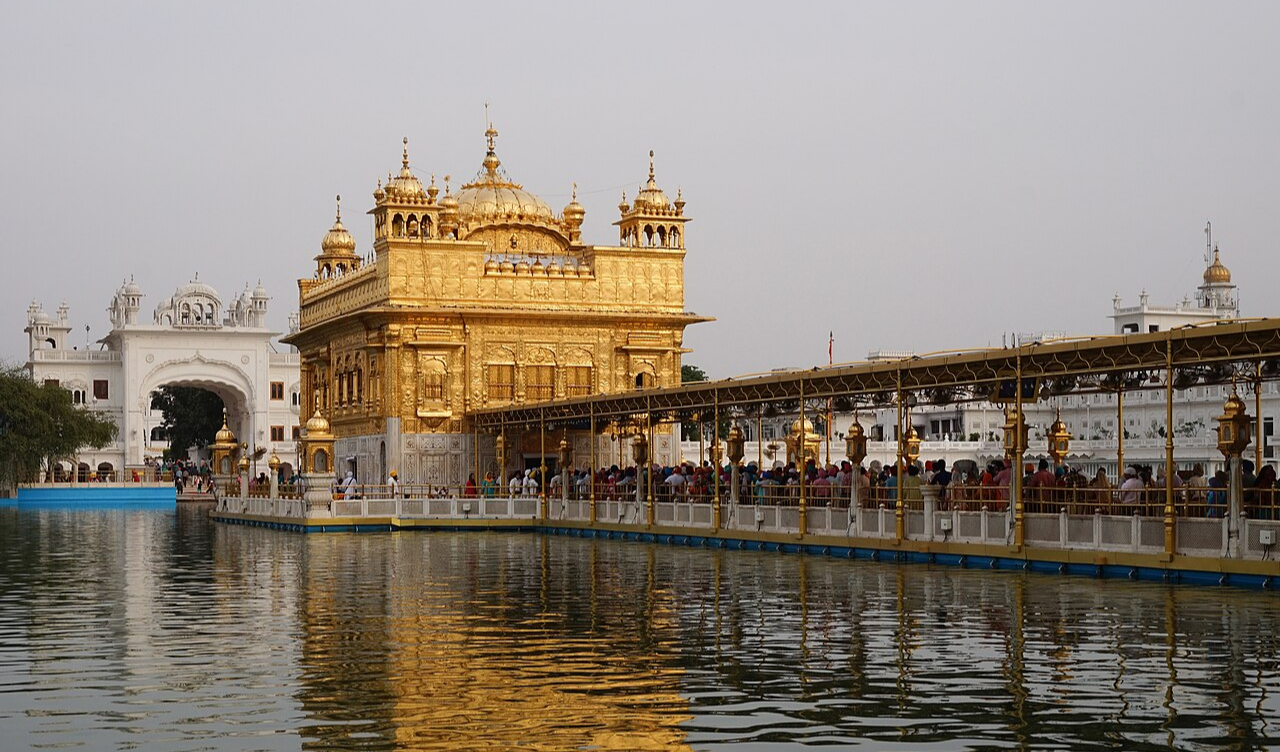
Plan a trip to Amritsar, Punjab: the Golden Temple's langar, the Wagah border ceremony, kulcha and lassi, best seasons and how to arrive. Few Indian cities hit all your senses at once the way Amritsar does. In the space of a single day you can watch dawn break over a temple sheathed in gold, eat a free meal shoulder-to-shoulder with thousands of strangers, stand in silence at the site of a colonial massacre, and then join a roaring, flag-waving crowd at the India-Pakistan frontier. This is the spiritual heart of Sikhism and the beating soul of Punjab, and it rewards travellers who slow down enough to taste it properly. Why Amritsar gets under your skin Amritsar grew up around the Harmandir Sahib, the Golden Temple, founded in the 16th century by the Sikh Gurus. The name means "pool of nectar," a reference to the sacred tank that mirrors the shrine. But the city is more than one landmark. Its walled old town is a maze of narrow lanes, its history carries deep scars and deeper pride, and its Punjabi hospitality is not a marketing slogan - it is a way of life you feel the moment someone insists you eat more. Top things to see and do Start, always, with the Golden Temple. Cover your head, remove your shoes, wash your feet at the entrance, and walk the marble parikrama around the glowing shrine. Go once before sunrise for the calm and again after dark, when the gilded dome throws its reflection across the water. Don't miss the langar at the adjoining community kitchen, where volunteers serve a simple vegetarian meal to anyone, free of charge - sitting on the floor in a long row is one of the most humbling experiences in India. A short walk away is Jallianwala Bagh, the walled garden where British troops opened fire on unarmed crowds in 1919. The bullet-marked walls and the martyrs' well make it a sombre but essential stop. In the late afternoon, head roughly 30 km west to the Wagah-Attari border for the daily Beating Retreat ceremony. Soldiers from India and Pakistan perform a high-kicking, theatrical lowering of the flags while patriotic crowds on both sides cheer. Arrive early for a seat. Back in town, wander the restored Heritage Street, the pedestrian approach to the temple, and the bustling bazaars around Hall Bazaar for phulkari embroidery, juttis (traditional leather shoes) and papad. Where to eat and what to order Amritsar is a food pilgrimage in its own right. The signature dish is the Amritsari kulcha - a crisp, stuffed flatbread baked in a tandoor, torn open and drowned in butter, served with chole (spiced chickpeas) and a fiery onion pickle. Old-town institutions in and around Lawrence Road and the Katra Ahluwalia lanes are the places to try it. Other must-eats: Amritsari fish (batter-fried river fish crusted with ajwain), rich butter chicken, and a thick, sweet lassi served in a heavy steel tumbler. For breakfast, look for kadhi chawal or aloo-poori at a dhaba. End with jalebi pulled hot from the pan. Come hungry and pace yourself - portions are generous. Best time to visit Aim for the cool, dry months roughly between October and March, when days are pleasant and evenings crisp - ideal for temple visits and standing out at Wagah. Winter mornings can be foggy but atmospheric. Summers (April to June) are intensely hot, often uncomfortable for daytime sightseeing, while the July-September monsoon brings humidity and rain. If you can time your trip with festivals such as Baisakhi in April or the illuminated celebrations of Guru Nanak Jayanti, the temple and city are especially magical, though far busier. Getting there and getting around Amritsar is well connected. Sri Guru Ram Dass Jee International Airport receives domestic flights from Delhi, Mumbai and other cities, plus some international routes. The Amritsar Junction railway station links the city to Delhi and beyond, including fast trains. By road, Amritsar sits on the highway network via the busy Delhi-Amritsar corridor. Within the city, autos, cycle-rickshaws and app-based cabs are easy to find; the old town around the temple is best explored on foot. Local tips Stay close to the Golden Temple if you want to slip in for the pre-dawn hush - several guesthouses and the temple's own accommodation cluster nearby, while more comfortable hotels line the wider city. Two small things that improve any visit: carry a scarf or bandana, since covered heads are required inside the shrine (free head coverings are also available), and keep some socks handy for the sun-warmed or cold marble around the tank. For Wagah, factor in traffic and security checks, and travel light - large bags are restricted at the ceremony. Amritsar travel guide, Golden Temple, Wagah border ceremony, Punjab tourism, Amritsari kulcha, Jallianwala Bagh, things to do in Amritsar, best time to visit Amritsar

Hamida Banu The Woman Who Challenged Men and Became the “Amazon of Aligarh”

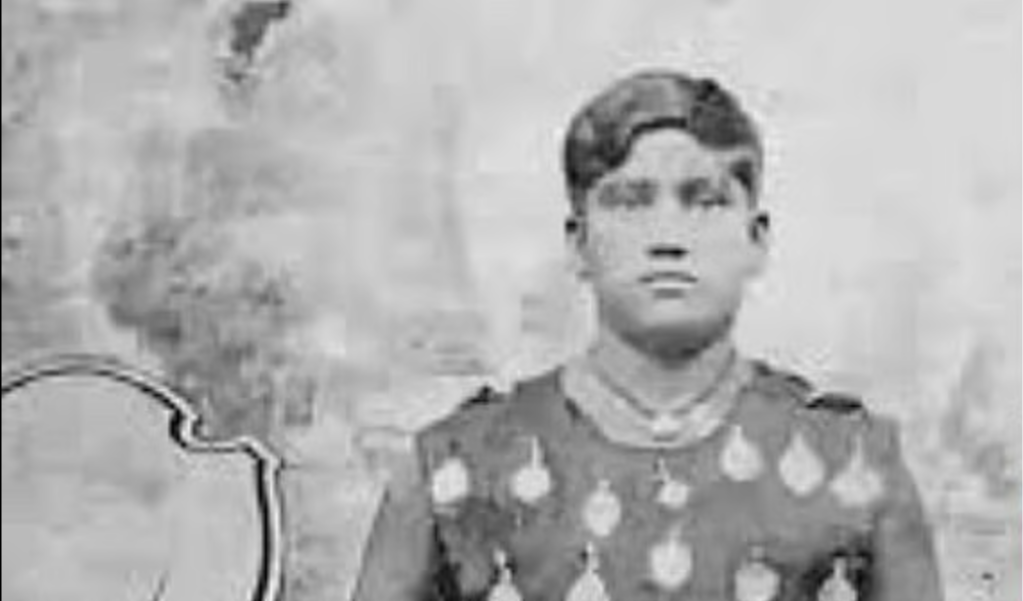
Discover the incredible story of Hamida Banu, India’s pioneering woman wrestler known as the “Amazon of Aligarh,” her victories and legacy. Hamida Banu The Woman Who Challenged Men and Became the “Amazon of Aligarh” Hamida Banu was a woman who entered one of India's most traditionally male-dominated sports at a time when women were rarely allowed to participate in public wrestling. She challenged male wrestlers, defeated some of them, attracted huge crowds and became known as the “Amazon of Aligarh.” Her remarkable story began in the early 20th century and continued through the 1940s and 1950s, when she became one of India's most famous female wrestlers. Today, Hamida Banu is remembered as a pioneer of women's wrestling in India. Google described her as widely considered India's first professional woman wrestler and honoured her with a Google Doodle on May 4, 2024. Who Was Hamida Banu? Hamida Banu was born in the early 1900s near Aligarh, Uttar Pradesh, into a family associated with wrestling. She developed an interest in wrestling from an early age and trained in the traditional Indian wrestling style known as kushti. But the society in which she grew up did not generally consider wrestling an appropriate profession for women. Women were strongly discouraged from participating in athletics, particularly sports such as wrestling. Banu refused to accept those restrictions. She entered the wrestling arena and began competing publicly. Her determination soon attracted attention from both spectators and newspapers. The Woman Who Challenged Male Wrestlers Banu's career became particularly unusual because she did not restrict herself to women's competitions. She challenged male wrestlers. According to Google's historical account, Banu issued an open challenge to male wrestlers and reportedly offered marriage to the first man who could defeat her in the wrestling arena. At a time when many male wrestlers were reluctant to compete against a woman, the challenge itself became a sensation. Her name began appearing in newspapers, and crowds gathered to watch her matches. She eventually became famous as the: “Amazon of Aligarh” The nickname reflected the public fascination with her strength, courage and unusual career. Hamida Banu vs Baba Pahalwan One of the most famous matches of Hamida Banu's career took place in 1954. Her opponent was the well-known wrestler Baba Pahalwan. The match did not last long. In fact, according to Google's official account, Banu defeated Baba Pahalwan in just: 1 minute and 34 seconds Following the defeat, Baba Pahalwan reportedly retired from professional wrestling. The victory became one of the defining moments of Banu's career and helped give her international recognition. Thousands Came to Watch Her Hamida Banu's matches attracted enormous public attention. People did not come only to watch wrestling. They came to see a woman challenge the traditional image of the Indian wrestler. Her matches became events. Newspapers reported her victories, her training and even her diet. Her fame spread beyond Aligarh and eventually beyond India. Hamida Banu and Vera Chistilin Banu's wrestling career eventually reached the international arena. In 1954, she faced a Russian woman wrestler named Vera Chistilin. According to Google, Banu defeated Chistilin in less than two minutes. The victory added to Banu's international reputation and demonstrated that her career was not simply a local curiosity. She had become a recognised name in wrestling circles of the period. Her Extraordinary Training and Diet The public was fascinated not only by Banu's wrestling matches but also by the way she prepared herself. Newspaper reports from the period discussed her training routine and substantial diet. Reports described foods including: Milk Eggs Meat Butter Almonds Bread Rice Fruit Fruit juice Soup The exact quantities reported in historical accounts vary, so these figures should be treated as period newspaper reports rather than modern, independently verified nutritional records. Her physical preparation nevertheless became part of the legend surrounding her career. Opposition to a Woman in the Wrestling Arena Banu's success did not mean that everyone welcomed her. Women's participation in public wrestling was considered unacceptable by many people at the time. Some spectators opposed her matches, while others questioned the idea of women competing against men. Historical accounts describe hostile reactions at some events. In some cases, crowds reportedly became angry after Banu defeated male opponents. This opposition highlights the social barriers she faced in addition to the physical challenge of wrestling. A Career of More Than 300 Competitions Google's official biography states that Hamida Banu won more than 300 competitions during a career that spanned the 1940s and 1950s. Different later accounts sometimes give different numbers, so the safest description is that she was reported to have won more than 300 wrestling competitions. At a time when women's professional sporting records were not maintained in the same systematic way as they are today, reconstructing her complete career is difficult. Nevertheless, the number of reported victories demonstrates the extraordinary reputation she developed. The Feroze Khan Story One of the other famous episodes associated with Hamida Banu concerns wrestler Feroze Khan, who was reportedly from Lahore. Accounts of Banu's early career describe her defeating male opponents and using her strength and technique to throw them to the ground. Some accounts place a Banu-Feroze Khan contest in the 1930s. However, detailed official records of many of her early matches are not readily available today. For that reason, individual early-match claims are best treated as historical reports rather than modern sporting records with complete documentation. The Goonga Pahalwan Episode Another famous story concerns Goonga Pahalwan. Reports say that a large crowd gathered in anticipation of a match involving Banu and Goonga Pahalwan. The contest, however, did not take place. Different versions of the story give different explanations for the cancellation or withdrawal. The episode nevertheless added to Banu's reputation and demonstrated the enormous public interest surrounding her career. What Happened After Her Wrestling Career? The later years of Hamida Banu's life were very different from the period when she was appearing in newspapers and wrestling arenas. At some point, she withdrew from professional wrestling. Her public profile gradually disappeared. Reports about her later personal life are less certain than the accounts of her major wrestling victories. Some later accounts connect her with a wrestler named Salam Pahalwan, but details concerning their relationship and marriage have been disputed. There are also later reports alleging that Banu experienced physical abuse. Such claims come from later accounts and should therefore be distinguished from the better-documented details of her wrestling career. From Famous Wrestler to Selling Milk One of the most striking aspects of Banu's story is the contrast between her fame and her later life. According to later accounts, she eventually supported herself through ordinary work, including selling milk. The woman who had once attracted huge crowds had moved far away from the world of professional wrestling. Her name gradually disappeared from public attention. Hamida Banu's Death Hamida Banu died in 1986. By then, the wrestling world had changed considerably and the woman once known as the “Amazon of Aligarh” had largely faded from popular memory. Her story survived through newspaper archives, historical research and the memories of people who knew about her career. Google Doodle Brings Her Story Back On May 4, 2024, Google celebrated Hamida Banu with a special Google Doodle. The date was significant because it marked the anniversary of the famous 1954 match in which Banu defeated Baba Pahalwan in just 1 minute and 34 seconds. Google's Doodle described her as widely considered India's first professional woman wrestler and highlighted her more than 300 reported victories and international wrestling career. The Doodle was illustrated by Bangalore-based artist Divya Negi, who researched the traditional Indian wrestling arenas and visual culture of Banu's period while creating the artwork. Why Hamida Banu's Story Still Matters Hamida Banu's story is not only about wrestling victories. It is also about a woman entering a profession that society considered unsuitable for women. She faced social resistance but continued competing. She challenged men at a time when women were rarely permitted to participate in public wrestling. She became famous throughout India and eventually received international recognition. Her story also illustrates how easily sporting pioneers can disappear from public memory. Decades after her career ended, a new generation began rediscovering her achievements. Hamida Banu: Key Facts Detail Information Name Hamida Banu Nickname The “Amazon of Aligarh” Born Early 1900s, near Aligarh, Uttar Pradesh Sport Wrestling / Kushti Main career period 1940s–1950s Reported victories More than 300 Famous opponent Baba Pahalwan Famous match 1954 Baba Pahalwan match duration 1 minute 34 seconds International opponent Vera Chistilin Death 1986 Google Doodle May 4, 2024 The Legacy of the “Amazon of Aligarh” Long before women's wrestling became an established part of India's sporting culture, Hamida Banu was already stepping into the wrestling arena. She competed when women faced significant social restrictions. She challenged male wrestlers. She attracted huge audiences. She became famous in newspapers. She reportedly won more than 300 competitions. And decades later, her story was rediscovered by millions through Google's tribute. Hamida Banu's life remains one of the extraordinary chapters in the history of Indian sport. She did not simply challenge wrestlers. She challenged the idea that a woman did not belong in the wrestling arena. That is why the name Hamida Banu — the “Amazon of Aligarh” — continues to be remembered. Historical Note Some details of Hamida Banu's early career and private life are based on historical newspaper reports and later recollections, and surviving records are incomplete. The most firmly documented modern source is Google's official 2024 Doodle biography, which confirms her association with Aligarh, her career in the 1940s and 1950s, the Baba Pahalwan match, the Vera Chistilin victory and the report of more than 300 competitions.

Lawyers Protest Against EVMs Ban In India?

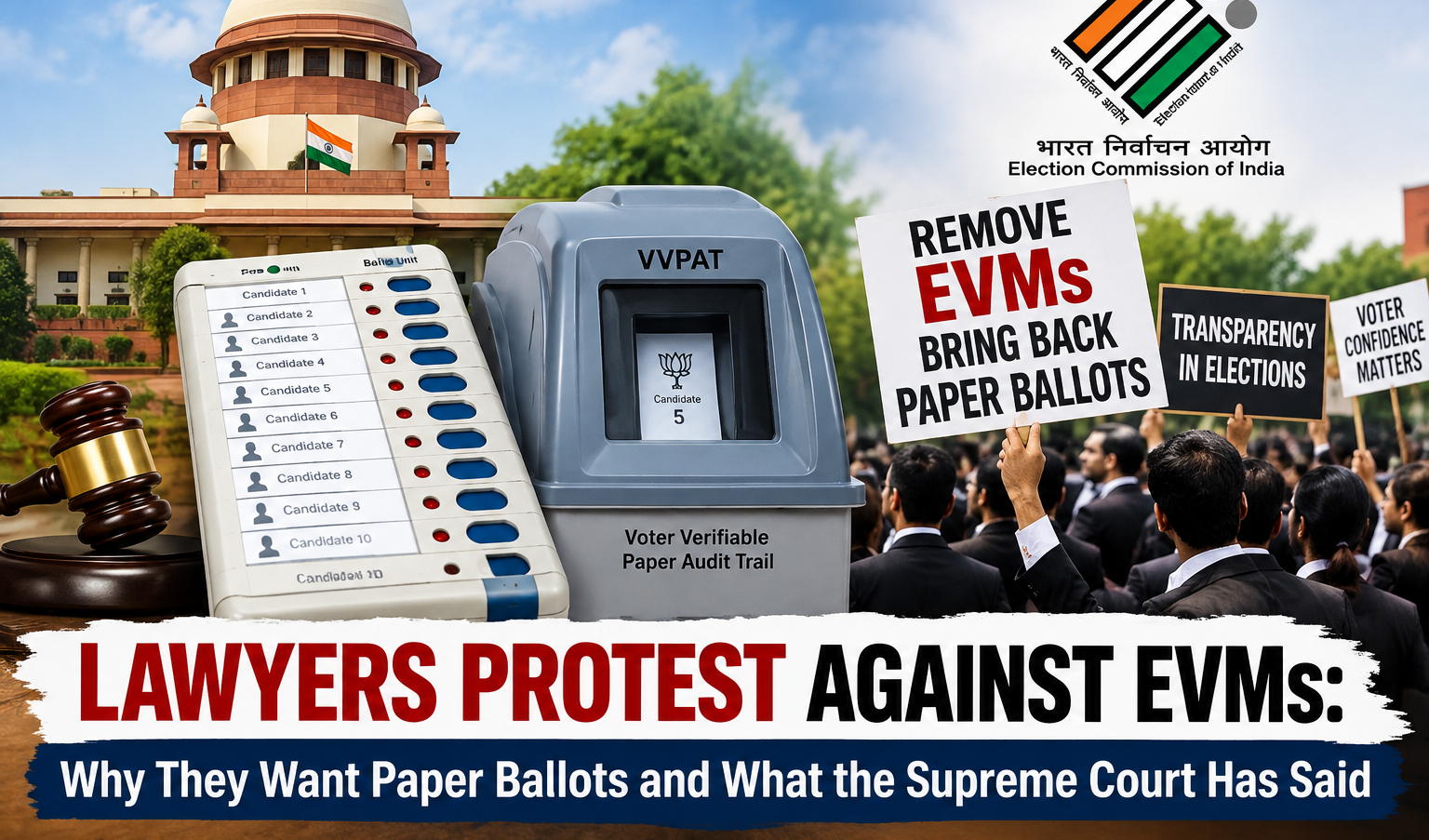
Why They Want Paper Ballots and What the Supreme Court Has Said New Delhi: The debate over Electronic Voting Machines (EVMs) has returned to the national spotlight after a group of lawyers led by Supreme Court advocate Mahmood Pracha launched a campaign demanding that India return to the paper-ballot system. The lawyers' group recently approached the Election Commission of India and submitted a memorandum raising concerns about the existing EVM-based election system. The protesters are demanding that EVMs be removed from elections and that future elections be conducted using paper ballots. The development has renewed a long-running debate over election transparency, voter confidence, EVMs, Voter Verifiable Paper Audit Trail (VVPAT), vote verification and the role of technology in India's electoral system. However, it is important to distinguish between a protest by a group of lawyers and a nationwide lawyers' strike. Current reports describe a protest campaign rather than a nationwide stoppage of court work. Lawyers Submit Memorandum to Election Commission According to reports published in September 2026, a group of lawyers reached the Election Commission's office and submitted a memorandum opposing the use of EVMs. Mahmood Pracha was reported to have led the group and spoken to the media outside the Election Commission. The lawyers' principal demand is the return of paper ballots for elections. They have also called for greater transparency and an open discussion involving Election Commission officials, engineers and technical experts on questions concerning EVMs. The protesters have said that their campaign is focused on the election system rather than any individual. What Are the Lawyers Demanding? The main demand of the protesting lawyers is: EVMs should be removed from the election process and paper ballots should be brought back. Their broader concerns include: Greater transparency in elections Stronger verification of votes Greater public confidence in the electoral process Discussion of EVM-related technical questions Greater scrutiny of election procedures A physical ballot system that can be directly counted These are the demands and arguments of the protesting group. They should not be presented as a finding by the Supreme Court that EVMs are fraudulent or that election results have been manipulated. Is There a Nationwide Lawyers' Strike? This is an important distinction for news reports. The current reports describe a group of lawyers protesting against EVMs. They do not establish that all lawyers in India have gone on strike or that courts across the country have stopped functioning because of the EVM issue. The protest should therefore be described as a lawyers' EVM campaign, protest or demonstration, unless a particular Bar Association separately announces a strike or court boycott. The Supreme Court has previously dealt with the broader issue of lawyers' strikes and court boycotts. In Ex-Capt. Harish Uppal v. Union of India, the Court held that lawyers do not have a general right to strike or boycott court proceedings. That legal position is separate from a peaceful demonstration concerning election policy. What Is Mahmood Pracha Saying? According to the reports, Pracha has argued that the Election Commission should consider removing EVMs and restoring paper ballots. He has also called for an open discussion involving election officials, engineers and technical experts. The protesters' argument centres on the principle that voters should have confidence that their votes have been properly recorded and counted. The campaign also raises wider questions about election transparency and the public's ability to independently understand and verify the voting process. September 17 Protest and October 10 Plan Reports said the campaign included a planned march in Delhi on September 17, 2026, followed by a proposed larger protest at Jantar Mantar from October 10. The organisers have described the October action as an indefinite protest unless their demands are addressed. The exact form and duration of any future demonstration can depend on administrative permissions and subsequent developments. Why Are Lawyers Opposing EVMs? The protesters' central concern is verification and public confidence. With an electronic voting system, a voter presses a button on the Ballot Unit and the vote is electronically recorded. VVPAT provides a paper trail associated with that vote. Those opposing EVMs argue that a paper ballot provides a physical voting record that can be directly handled and counted. They therefore believe returning to paper ballots would provide another form of transparency in the election process. However, this remains a policy position of the protesters, rather than an established judicial finding that India's EVM system is unreliable. What Is VVPAT? VVPAT stands for Voter Verifiable Paper Audit Trail. It is designed to provide a paper record corresponding to a vote cast through an EVM. After a voter presses the appropriate button, the VVPAT system generates a paper slip containing the relevant information. The voter can briefly view the slip through the designated viewing window before it falls into a sealed compartment. The purpose of VVPAT is to provide a physical trail that can be used for verification under election procedures. What Has the Supreme Court Said About EVMs? The Supreme Court considered petitions challenging aspects of India's EVM-VVPAT system in its April 2024 judgment. The petitions included requests for a return to paper ballots and demands for 100% counting of VVPAT slips in addition to electronic counting. The Supreme Court did not order India to return to paper ballots or require 100% VVPAT counting in every election. The Court retained the existing EVM-VVPAT framework while issuing directions concerning verification and safeguards. This is an important distinction when reporting the current lawyers' campaign. The fact that lawyers are now demanding paper ballots does not mean that the Supreme Court has ordered an EVM ban. Did the Supreme Court Declare EVMs Fraudulent? No such conclusion should be attributed to the 2024 judgment. The Court considered concerns about possible manipulation and the need for voter confidence, but the judgment did not establish that India's EVM system had been proven to manipulate election results. Therefore, news reports should distinguish between: Allegation:A protester or organisation raises concerns about EVMs. Demand:The protesters want paper ballots. Judicial finding:What the Supreme Court actually decided. Official position:What the Election Commission says about its procedures and safeguards. These are four different things. Why Is the Paper Ballot Debate Important? Paper ballots and electronic voting involve different administrative systems. A paper-ballot system produces a physical ballot that can be counted manually. However, large elections also require the printing, transportation, storage, security and counting of large quantities of ballot papers. EVMs were introduced to electronically record votes and facilitate election administration and counting. The debate therefore involves several competing considerations, including: Verification Security Transparency Counting procedures Cost and logistics Voter confidence Accessibility Election administration The current lawyers' campaign places particular emphasis on the first three issues. What Does the EVM-VVPAT Debate Really Mean? The controversy is not simply about a machine. At its centre is a larger question: How should a democratic election provide both secure voting and public confidence in the accuracy of the result? Those supporting the existing system point to EVM-VVPAT safeguards and established election procedures. Those campaigning against EVMs argue that paper ballots would provide a more directly observable physical record. The two positions should be reported separately rather than presenting either side's argument as an established fact. Is There an EVM Ban in India? No nationwide EVM ban is currently in force. EVMs remain part of India's electoral system. The current lawyers' movement is demanding that this system be changed and that paper ballots be restored. Their protest therefore represents a demand for a change in election policy, not an existing nationwide EVM ban. What Happens Next? The proposed October 10 protest at Jantar Mantar could bring the EVM issue back into national public discussion. The response of the Election Commission and any future court proceedings will also be important. Possible areas of discussion include: EVM verification VVPAT counting Paper ballots Election transparency Voter privacy Technical safeguards Preservation and verification of election records Whether the campaign expands beyond the current group of lawyers will depend on future participation and developments. EVM Protest: Key Facts Issue Current information Main issue Use of EVMs in elections Lawyers' demand Return to paper ballots Protest leader reported Supreme Court advocate Mahmood Pracha Election Commission Lawyers' group submitted a memorandum September 17 Reported Delhi protest/march October 10 Proposed Jantar Mantar protest Nationwide lawyers' strike Not established by current reports VVPAT Provides a paper trail associated with an EVM vote Supreme Court 2024 Did not order a return to paper ballots 100% VVPAT counting Not ordered for every election Nationwide EVM ban No Main debate Transparency, verification and voter confidence Conclusion The latest EVM controversy has brought election technology and paper ballots back into public debate. A group of lawyers led by Mahmood Pracha is demanding that EVMs be removed from India's electoral process and that paper ballots be restored. The group has approached the Election Commission and announced further protest plans. At the same time, India's existing election system continues to use EVMs along with VVPAT, and the Supreme Court's 2024 judgment did not order a return to paper ballots. The key issue going forward will be how India balances electoral security, transparency, independent verification and public confidence. For readers and voters, it is important to distinguish between a political or legal demand to change the voting system, a protest against EVMs, and an actual legal decision to prohibit their use. The EVM debate is continuing, and further developments around the proposed protests, Election Commission response and any new legal proceedings could shape the next stage of the discussion.

Lok Sabha Data Shows ₹9.75 Lakh Crore in Large Industry and Services NPAs!

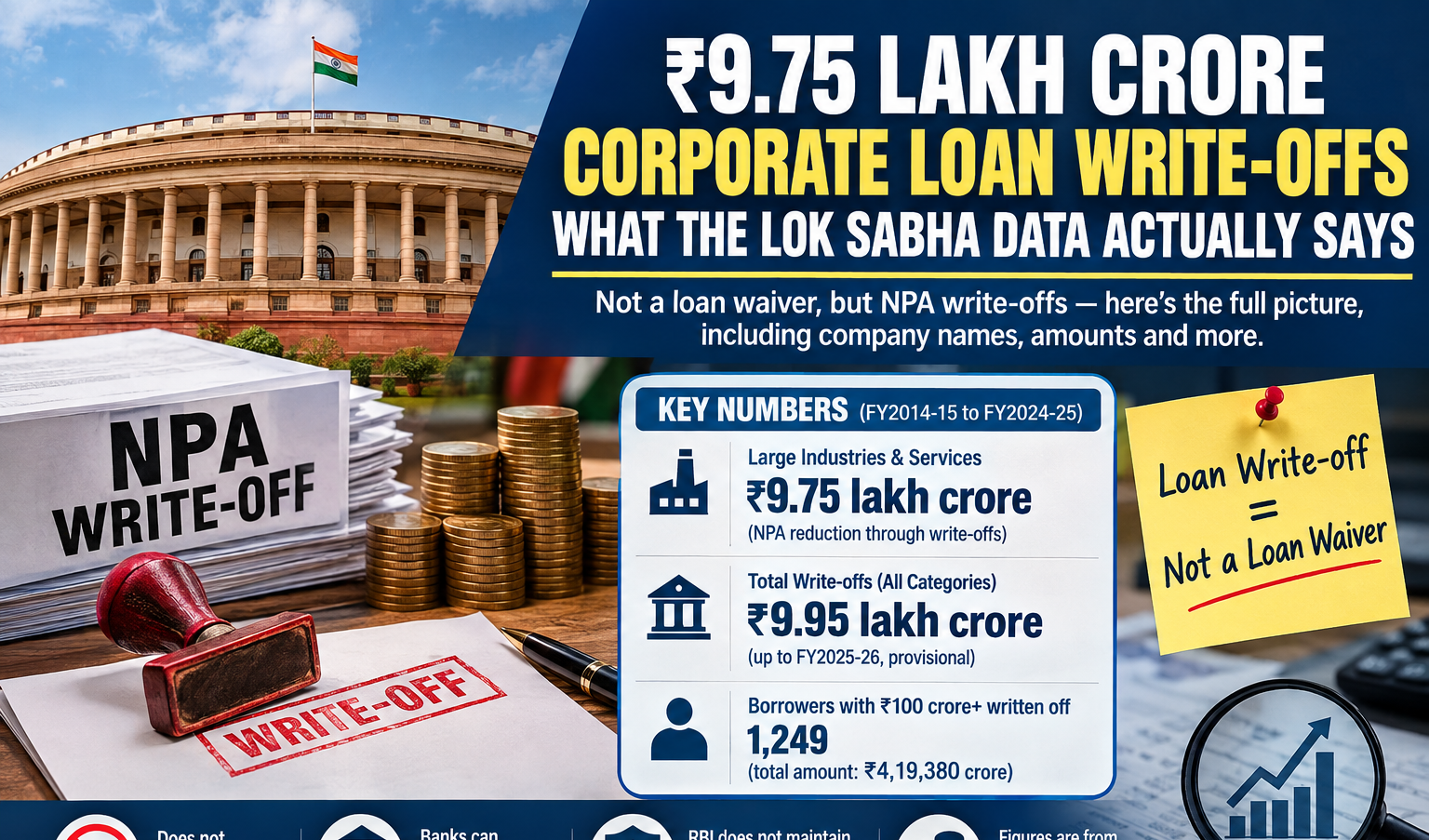
How Much Corporate Debt Was Written Off in India?  New Delhi: The issue of bank loan write-offs for large companies and industries has once again come into focus after the Government provided detailed data in the Lok Sabha on loans written off over the last 11 financial years. According to a Lok Sabha reply dated March 16, 2026, loans classified under “Large – Industries & Services” saw a total reduction in non-performing assets (NPAs) of approximately ₹9.75 lakh crore through write-offs between financial years 2014-15 and 2024-25. However, the Government has made an important clarification: a loan write-off is not the same as a loan waiver. A write-off does not automatically release the borrower from repayment liability. Banks can continue recovery proceedings against borrowers even after an NPA has been written off. What Did the Lok Sabha Ask? The question was raised in the Lok Sabha by Shri Abhishek Banerjee under Unstarred Question No. 3748. The Government was asked to provide: The total amount of loans written off over the previous 11 financial years. Category-wise and year-wise details. The amount written off for large industries and services. Company-wise details. The names of the ten largest companies whose loans were written off. The amounts and reasons for those write-offs. The Ministry of Finance, through the Department of Financial Services, provided the data based on information from the Reserve Bank of India (RBI). How Much Was Written Off for Large Industries and Services? According to the Lok Sabha reply, the amount of reduction in NPAs through write-offs in the Large – Industries & Services category was: Financial Year Amount Written Off / Reduction in NPAs 2014-15 ₹31,723 crore 2015-16 ₹40,416 crore 2016-17 ₹68,308 crore 2017-18 ₹99,132 crore 2018-19 ₹1,48,753 crore 2019-20 ₹1,59,139 crore 2020-21 ₹1,27,050 crore 2021-22 ₹69,532 crore 2022-23 ₹1,14,528 crore 2023-24 ₹68,366 crore 2024-25 ₹47,568 crore Total ₹9,74,515 crore The figures are from RBI data reproduced in the March 2026 Lok Sabha answer. That total works out to approximately ₹9.75 lakh crore. Is ₹9.75 Lakh Crore the Amount Given as a “Loan Waiver”? No. This is one of the most important points when reporting the figures. The Government explicitly states that banks write off NPAs according to RBI guidelines and their board-approved policies. Such a write-off does not result in waiver of the borrower's liability. The borrower can still be liable for repayment, and banks can continue recovery actions. Therefore, the headline should not say: “Government waived ₹9.75 lakh crore of corporate loans.” That would be misleading. A more accurate description is: “Banks reported ₹9.75 lakh crore in NPA write-offs in the Large Industries and Services category over FY2014-15 to FY2024-25.” Why Do Banks Write Off Loans? According to the Government's explanation, banks write off NPAs in accordance with RBI guidelines and their own board-approved policies. The Government has previously stated that NPAs can be written off, including cases where full provisioning has been made after the applicable period. A write-off is primarily an accounting/balance-sheet treatment. It does not automatically mean that the bank has stopped trying to recover the money. What Happens to the Borrower After a Write-Off? The Government says recovery efforts can continue even after a loan has been written off. Banks may use mechanisms including: Civil courts Debt Recovery Tribunals Proceedings under the SARFAESI Act Insolvency proceedings under the Insolvency and Bankruptcy Code Negotiated settlements or compromise arrangements Sale of non-performing assets The Government has specifically stated that recovery from written-off loans remains an ongoing process. How Much Was Written Off in Other Categories? The same Lok Sabha answer provides data for several categories. For the 11 financial years from 2014-15 to 2024-25, the figures reported by the RBI were: Agriculture and Allied Activities The total was approximately ₹1.46 lakh crore over the period. The annual amount increased from ₹6,845 crore in 2014-15 to ₹21,882 crore in 2024-25. Industries The Industries category recorded approximately ₹9.20 lakh crore in write-offs over the 11-year period. The highest annual figure in this category was ₹1,51,678 crore in 2018-19. Services The Services category recorded approximately ₹4.05 lakh crore during the same period. The highest annual figure was ₹61,813 crore in 2022-23. MSMEs The MSME category recorded approximately ₹2.67 lakh crore in write-offs during the 11-year period. The figure was ₹28,587 crore in 2024-25. Retail Loans Retail loan write-offs totalled approximately ₹2.11 lakh crore during the period. The figure reached ₹45,404 crore in 2024-25. How Many Companies Got Their Loans Written Off? This is where the Government's answer is particularly important. The Lok Sabha specifically asked for the names of the ten largest companies whose loans were written off. The Government responded that the RBI does not maintain the names of the ten largest companies whose loans were written off in the requested form. Similarly, the Government said that RBI does not maintain the company-wise information requested for the Large Industries and Services category in the manner sought in the question. Therefore, there is no official number in this Lok Sabha answer saying “X number of companies received loan waivers.” That distinction is essential. Why Isn't a Company-Wise List Available? The Government has previously explained that RBI's borrower-level credit information is subject to confidentiality provisions. In a March 2025 Lok Sabha answer, the Ministry of Finance said RBI is prohibited from disclosing borrower-wise credit information under Section 45E of the Reserve Bank of India Act, 1934. As a result, government aggregate data can show how much was written off in particular categories, but that does not necessarily provide a complete public list of every company and its individual write-off. Does a Write-Off Mean the Bank Lost the Entire Amount? Not necessarily. A written-off loan can still generate recoveries later. The Government has stated that recovery of written-off loans is an ongoing process and that banks continue pursuing recovery through available legal and financial mechanisms. Therefore, the amount initially written off and the amount ultimately recovered are not necessarily the same. What About Wilful Defaulters? A wilful default is a separate issue from an ordinary NPA write-off. The Government has stated that it has not formulated a policy to write off loans specifically for wilful defaulters. It has also stated that banks continue recovery actions against borrowers and use legal mechanisms where applicable. Therefore, a news report should not automatically describe every written-off corporate loan as a loan belonging to a wilful defaulter. What Does the Latest Lok Sabha Data Actually Show? The latest data establishes several things: First, large industries and services recorded approximately ₹9.75 lakh crore in NPA reductions through write-offs between FY2014-15 and FY2024-25. Second, this figure represents write-offs, not a government announcement that ₹9.75 lakh crore of loans were simply forgiven. Third, borrowers can remain liable for repayment after a write-off. Fourth, banks can continue recovery proceedings. Fifth, the Government says RBI does not maintain the requested list of the ten largest companies whose loans were written off. Why Is the Issue Politically and Economically Important? Large corporate loan write-offs have become an important subject in discussions about India's banking system. Banks must deal with bad loans because large NPAs can affect their balance sheets and their ability to lend. At the same time, questions are often raised about: Why large loans became NPAs How banks assessed the borrowers before lending Whether adequate collateral was available How much money was recovered How much remained outstanding Whether borrowers were classified as wilful defaulters How insolvency proceedings affected recovery Whether write-offs improved bank balance sheets These questions involve banking regulation, recovery law and financial management. Government Position on Loan Write-Offs The Government's position is that writing off an NPA is not the same as forgiving the debt. In its parliamentary replies, the Finance Ministry has repeatedly stated that banks continue to pursue recovery after write-offs. The Government also says that banks take credit decisions under their board-approved policies and applicable regulatory guidelines. The Bigger Picture The numbers show that NPA write-offs have been significant across India's banking system. For the Large Industries and Services category alone, the 11-year figure reported by the Government is nearly ₹9.75 lakh crore. But the figure should be understood correctly. It does not mean that the Government handed ₹9.75 lakh crore to companies and then cancelled the loans. Nor does it establish that every company whose loan was written off escaped repayment. Instead, it represents the reduction in NPAs through write-offs reported in RBI data, while recovery proceedings can continue against borrowers. Key Facts Question Government's reported position Period covered FY2014-15 to FY2024-25 Large Industries & Services write-offs ₹9,74,515 crore Approximate amount ₹9.75 lakh crore Is this a loan waiver? No Does borrower liability automatically end? No Can banks continue recovery? Yes Does RBI maintain the requested list of 10 largest companies? Government says no Source of category data RBI Parliamentary source Lok Sabha, March 16, 2026 Conclusion The latest Lok Sabha data provides a clear picture of the scale of NPA write-offs in India's banking sector. Between FY2014-15 and FY2024-25, the RBI data cited by the Government shows approximately ₹9.75 lakh crore in write-offs under the Large Industries and Services category. However, these figures should not be described simply as “₹9.75 lakh crore of corporate loans being waived.” The Government's official position is that a write-off is different from a waiver. Borrowers can remain liable, and banks can continue recovery proceedings. The Government also says that RBI does not maintain the requested company-wise list of the ten largest companies whose loans were written off. For readers, the key distinction is therefore simple: Loan write-off ≠ loan waiver. The latest parliamentary data shows the scale of write-offs, while the actual amount eventually recovered from individual borrowers can be different.

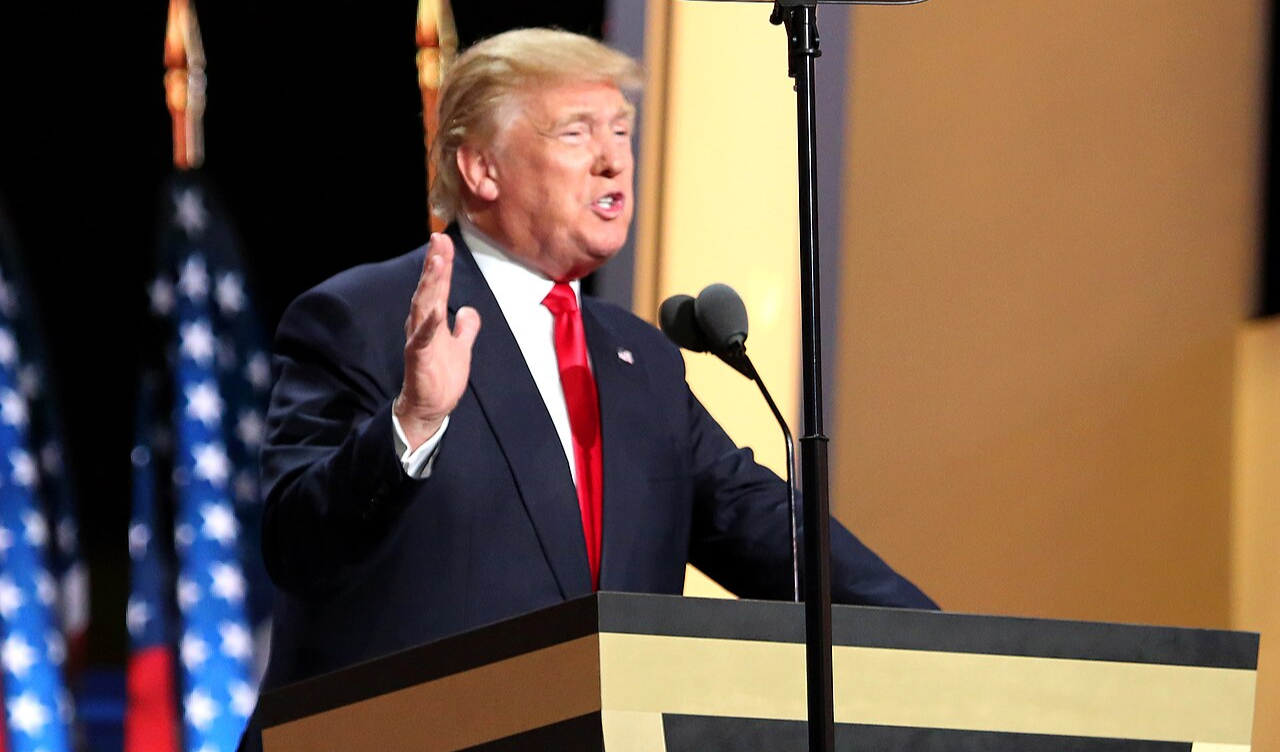
Trump's Board of Peace Unveils $2.45bn Gaza Recovery Plan

Trump's Board of Peace announced a $2.45bn Gaza recovery plan at the UN General Assembly, funding 66 programmes as reconstruction stalls. US President Donald Trump's Board of Peace has set out a $2.45bn (£1.85bn) plan to begin repairing Gaza, announcing the figure at a board meeting held on the margins of the UN General Assembly in New York. The money is to be split among 66 separate programmes and spent over a six-month window, targeting housing, diesel-powered electricity and the clearing of waste, alongside other pressing shortages. Board members acknowledged the sum falls far short of what is needed. Donors have promised roughly $18bn, but only $280m has actually been transferred. The board puts the price of rebuilding Gaza in full at about $71bn spread across the coming decade, and it offered no timetable for when physical reconstruction might start. The announcement lands almost a year after Israel and Hamas reached a ceasefire, and with Trump's wider plan to end the war largely frozen. The central obstacle remains the question of Hamas's weapons. The group has said it will surrender its arms in return for a staged Israeli pullback from the 60% of the territory its forces still hold. Israel has taken the opposite position, demanding that Hamas disarm completely before any withdrawal takes place. While the two sides remain locked in disagreement, fighting has not stopped. Israeli strikes hit Gaza on an almost daily basis, and conditions for the 2.1 million residents remain severe. Kushner concedes 'delays on different things' Jared Kushner, who sits on the Gaza Executive Board and is Trump's son-in-law, was candid about the programme's slow pace, telling the meeting it had run into "different delays on different things, for whatever reason". He framed the gathering as a signal of intent rather than a report of results. "The goal of today was really just to show you that we're really fully committed to doing it," he said. US envoy Steve Witkoff, also in New York, struck a more upbeat note, pointing to what he called "real progress" over the past year. "All of the hostages are home. There is a ceasefire, imperfect as it may be, but it still exists," he said. "Humanitarian efforts have achieved historic results, with billions of dollars donated and pledged to meet urgent needs and support the long work of recovery." Beyond raising money, the board faces a stack of unresolved problems: protecting the people who would carry out the work inside Gaza, rebuilding the territory's internal administration, and bridging the gap between Israeli and Palestinian officials. Speaking at a separate briefing on Wednesday, US Secretary of State Marco Rubio said several governments had come forward with financial commitments and that the board was "looking for more that will participate in that". Ordnance and tunnels before rebuilding Michael Eisenberg, an Israeli-American member of the Board of Peace, laid out the practical steps he expects to come first. Speaking to the BBC's Newshour, he said the ground has to be made safe before anything can be built. "Because it's a war zone, you need to remove unexploded ordnance. And then there are still hundreds of kilometres of tunnels underneath Gaza which need to be destroyed as well," he said. Only after that, he added, could residents turn to "housing, or better sanitation, or other things". Warnings about the fragility of the truce have already come from within the board itself. In August, its high representative for Gaza, Nickolay Mladenov, took aim at both Israel's continued air strikes and the conduct of Hamas. He cautioned that if the ceasefire agreed last October were to fall apart, it would mark "a point of no return" for the region. The human cost since the truce took hold underscores those concerns. According to the Hamas-run health ministry in Gaza, at least 1,408 Palestinians, among them more than 300 children, have died in Israeli attacks in the period since the ceasefire began. For now, the $2.45bn package represents an opening move rather than a rebuilding effort under way. With pledges outpacing actual payments by a wide margin, no start date fixed, and the core dispute over Hamas's disarmament unresolved, the board's central message was one of commitment rather than concrete progress on the ground. Gaza recovery plan, Board of Peace, Trump Gaza, Jared Kushner, Gaza reconstruction, Hamas disarmament, UN General Assembly, Gaza ceasefire

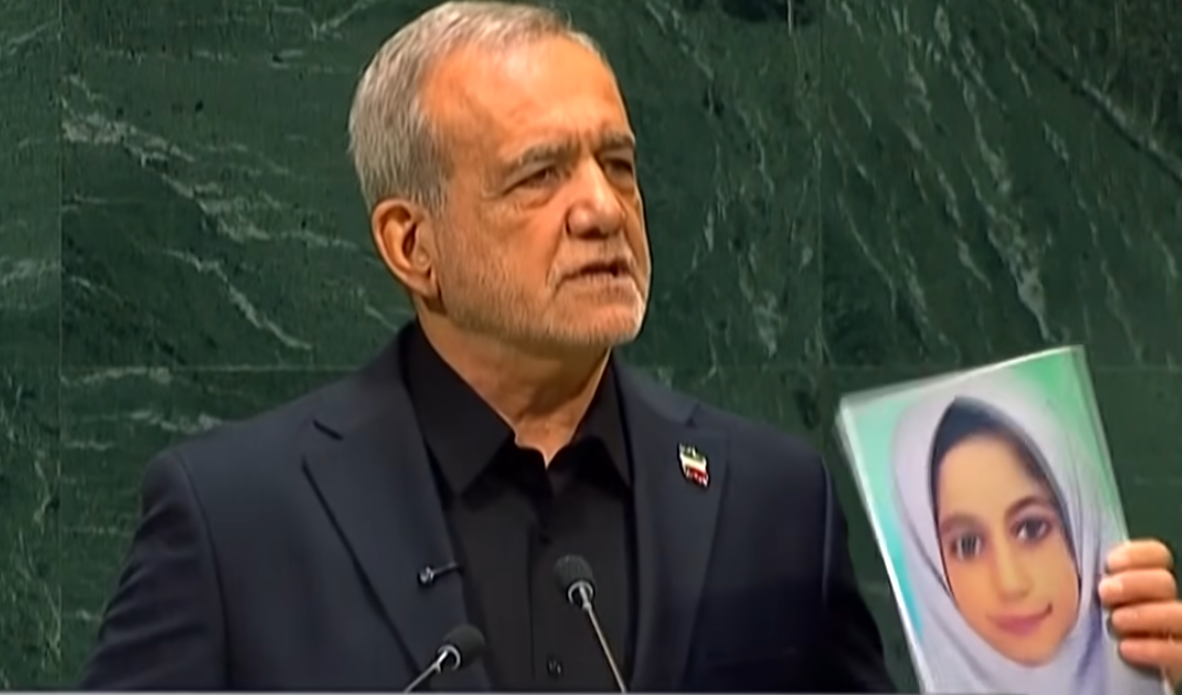
US Clears Iran Delegation for UN Assembly as War Enters Seventh Month

Washington has granted visas to President Masoud Pezeshkian and Foreign Minister Abbas Araghchi for next week's UN General Assembly in New York. Washington has issued visas to a group of senior Iranian officials, clearing them to travel to the United Nations General Assembly in New York next week, even as the conflict between the two countries stretches past the six-month mark and into a seventh month. The permitted group is led by Iranian President Masoud Pezeshkian and Foreign Minister Abbas Araghchi, according to information obtained by the BBC. A US State Department spokesman confirmed the visa approvals on Thursday, adding that the visitors will operate under tight limits during their stay and will be blocked from buying a defined list of American goods. "Consistent with our host country obligations, the core delegation from the Iranian regime will be able to attend UN General Assembly High Level Week," the State Department spokesman said. The official noted that the officials would be subject to movement restrictions and barred from purchasing luxury and other items, and pointed out that this year's group is smaller than the one sent in the previous session. The curbs echo measures imposed a year earlier. During the last assembly, Iranian diplomats were kept out of membership warehouse retailers such as Costco. They also had to obtain clearance from US authorities before buying high-end products, a category that covered jewellery, alcohol and vehicles. State Department spokesman Tommy Pigott framed the restrictions as a way to stop the visiting officials from indulging in what he called "shopping sprees" while ordinary Iranians contend with shortages of water and electricity, "brutal repression" and rapidly rising prices. Writing on X, he said Washington would not permit "the Iranian regime's elites" to turn the assembly into "a luxury retail splurge paid for by the Iranian people's suffering, all while the regime funnels Iran's wealth to support its terrorist proxies." He urged New York retailers to "be on guard" against selling to the delegation, but did not say whether officials had learned of any actual purchasing plans. The decision lands with no resolution to the fighting in sight. The war opened on 28 February, when the United States and Israel carried out joint strikes on Iran. Since then, the conflict has pushed global energy prices higher and spilled across into surrounding countries. Iran has struck repeatedly at American military bases and at allied governments in the Gulf, as well as launching attacks on Israel. The visa approvals come against a backdrop of growing demands, both from the public and within the political system, for the White House to bring the confrontation to a close. A packed speaking schedule The 81st session of the General Assembly is already in progress, with the General Debate - the annual gathering's central event - set to open on Tuesday. That opening day is due to feature addresses from US President Donald Trump, UK Prime Minister Andy Burnham and French President Emmanuel Macron. Iran's turn at the podium is expected the following day. Wednesday's line-up is anticipated to include the leaders of Ukraine, Syria and Iran, placing Tehran's representatives on the world stage within days of their arrival. Last year, Pezeshkian was photographed at the assembly shaking hands with UN Secretary General Antonio Guterres, an image that underscored the diplomatic access the annual meeting affords even to governments at odds with the host nation. Palestinian officials turned away The approvals for Tehran contrast sharply with a separate visa decision. The BBC has established that the United States refused entry to Palestinian President Mahmoud Abbas and the wider Palestinian delegation seeking to take part in the assembly. It marked the second consecutive year that the group was denied visas. The White House, which rejects the Palestinian delegation's standing, again declined to grant them the documents needed to attend. The two contrasting outcomes highlight how the United States, as the country that hosts the United Nations, exercises control over which foreign officials can reach the New York gathering - clearing a delegation from a government it is actively fighting while shutting out another it does not recognise. Iran UN delegation, Masoud Pezeshkian, Abbas Araghchi, UN General Assembly, US Iran war, State Department visas, UNGA 81st session, travel restrictions

Burnham Renews Push to Let Football Fans Drink in Their Seats

PM Andy Burnham backs scrapping the 1985 ban on drinking in view of the pitch, as Scotland and the WSL run alcohol trials. Prime Minister Andy Burnham used a trip to the United Nations in New York to restate his view that supporters should be allowed to drink alcohol in their seats at football grounds, telling reporters on 24 September 2026 that the current restriction should go. A lifelong Everton fan, Burnham said the four-decade-old rule treats football crowds unfairly compared with spectators at other sports and events. "I do believe there is a case to remove that discrimination," Burnham said, arguing that supporters are singled out. He has held the position for years and repeated it when the topic came up unexpectedly during the UN visit. Despite the prime minister's stance, there is no indication the government plans to change the law. Last year, MPs voted down a Conservative amendment to the Football Governance Bill that would have obliged ministers to open a formal consultation on ending the rule. That vote came before Burnham returned to Downing Street, leaving open the question of whether the issue might resurface under his leadership. The 1985 Act and where it applies Restrictions on drinking at grounds in England and Wales date to the Sporting Events (Control of Alcohol etc.) Act, passed in 1985 to tackle the crowd violence that had grown through the 1970s and early 1980s. Under the law, clubs may sell beer, but supporters cannot drink it anywhere with a view of the pitch. The rule covers every division from the Premier League down to the National League. The line falls just below that level. Supporters of clubs in the National League North and South, and in the tiers beneath, are permitted to drink pitchside. The gap means fans at some smaller grounds enjoy freedoms denied to those watching top-flight matches. Scotland operates a tighter regime. A law introduced in 1981 confined alcohol sales to hospitality areas, keeping it away from ordinary supporters. The measure followed disorder at the 1980 Scottish Cup final between Rangers and Celtic at Hampden, when the match ended in a riot. Trials in Scotland and the women's game That long-standing position has begun to soften. A pilot scheme launched last season allowed several Scottish clubs to sell alcohol in marked-off, supervised zones inside their stadiums. The experiment began at lower-league grounds before reaching the Premiership. The national side has also taken part. Scotland offered alcohol at friendlies against Japan and Curacao earlier this year, and the arrangement now covers the fixtures against Switzerland on 29 September and Slovenia the following month. England's women's game has moved further still. After two seasons of trials that organisers judged a success, WSL Football scrapped the rule barring drinking in the stands across the Women's Super League. The competition was able to act on its own because the women's game sits outside the scope of the 1985 Act, giving its organiser the authority to decide. Support within English football's leadership remains uncertain. Premier League chief executive Richard Masters said in August that the competition had not "got a specific view" on the matter and that officials "would need to give it some really careful thought." His comments suggested no rush toward a decision at the top of the men's game. Whether supporters themselves want the change is a further open question, and one that goes beyond safety concerns. The Scottish and WSL trials offer early evidence, but the men's professional game in England and Wales continues to operate under the framework put in place in 1985. Andy Burnham football alcohol, Sporting Events Control of Alcohol Act, drinking at football matches, Premier League alcohol ban, Scotland alcohol pilot, Women's Super League alcohol trial, Football Governance Bill, Richard Masters

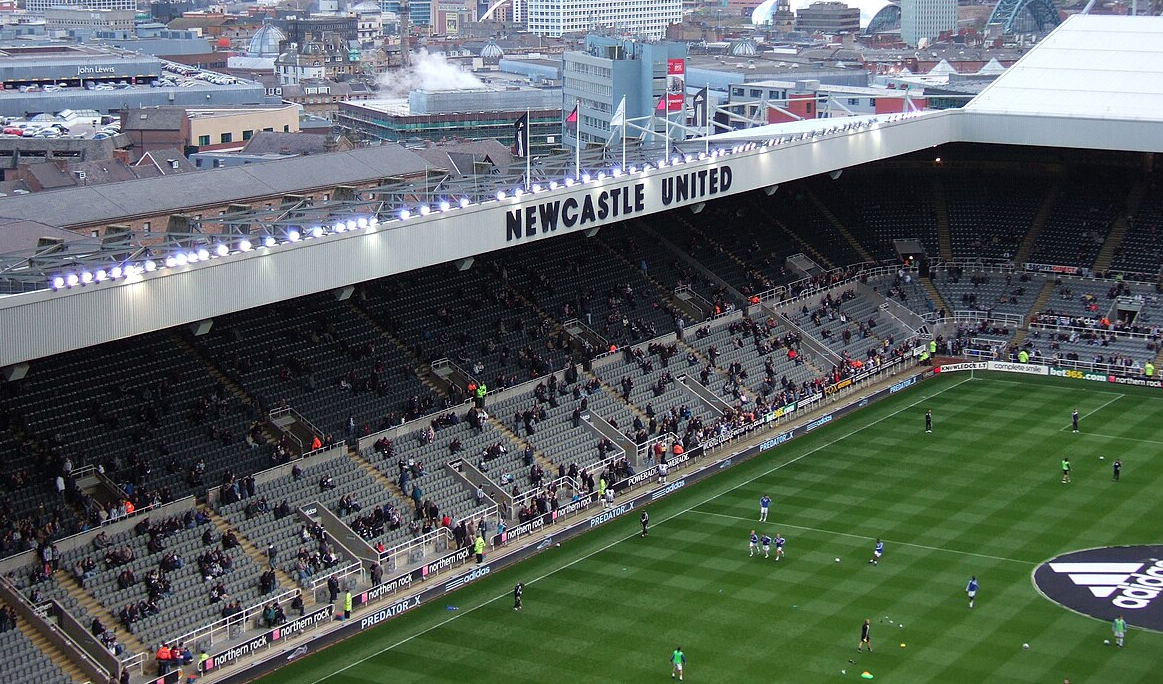
Andy Carroll Says He Was Sexually Assaulted at His Home in 2021

Ex-England striker Andy Carroll reveals in his autobiography 'Owning It' that he was sexually assaulted in 2021 by a man later jailed for three years. Former England striker Andy Carroll has said publicly for the first time that he was sexually assaulted by a man at his home in 2021, during his second stint with Newcastle United. The 37-year-old, who was automatically given anonymity as a victim of sexual assault, chose to disclose what happened in his new autobiography, 'Owning It'. Carroll writes that the man responsible was convicted of sexual offences, sentenced to three years in prison and added to the sex offender register. The player, who was capped nine times by England and spent time in the Premier League with Liverpool, West Ham, West Brom and Reading, gave evidence at the trial. He describes the court process as humiliating, embarrassing and horrendous. According to Carroll, the attacker was a friend of a former partner. She was away at the time, and the man had come to the house to watch a boxing match and was due to stay the night. Carroll says the assault happened while he was asleep. He threw the man out and then knocked him unconscious when the man tried to get back inside. Carroll called the police afterwards. He recounts breaking down in tears in the arms of his children's nanny in the aftermath. Deciding to speak The decision to put the account in the book came late. Carroll says he settled on including it "at the very last minute" after long conversations with his girlfriend, hairstylist Lou Teasdale. He admits he dodged his publisher for a stretch, to the point that they may have thought he was backing out of the project altogether. "I was sexually assaulted, there I said it," Carroll writes. "Scary to even think about and only a few people knew about it before now." He adds that opening up frightens him but has shaped who he is "as much as any of the good stuff," and that speaking out will be worth it if it helps even one other person. Carroll also describes the lasting toll. He says the experience touched every part of his life, occupied his thoughts daily and made it hard to concentrate on anything, football included. The trauma, he writes, has not left him. Back on the pitch Carroll has since moved into the non-league game. He joined National League South side Dagenham & Redbridge in July 2025 as a player and co-owner, and has turned out six times for the club this season. His arrival at the Daggers came around the same time as the involvement of online figure KSI. Over his career Carroll also played abroad, featuring for French clubs Amiens and Bordeaux, before returning to the English pyramid. The move into ownership marks a new chapter for a striker who broke through at his boyhood club on Tyneside. Anyone affected by the issues raised in Carroll's account can find help through support services such as the BBC Action Line. Andy Carroll, Andy Carroll sexual assault, Owning It autobiography, Newcastle United, Dagenham & Redbridge, England striker, sexual assault survivor, Lou Teasdale

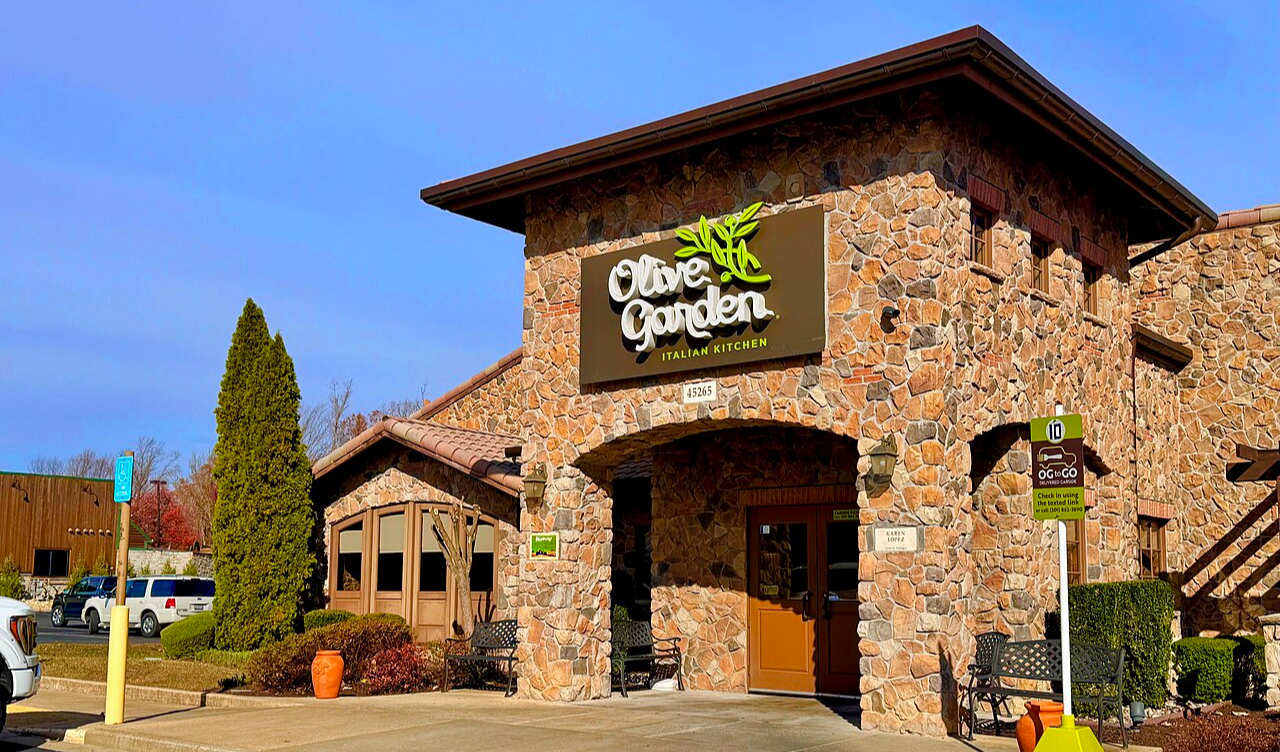
Darden Slips as Olive Garden Growth Cools LongHorn Leads

Darden posted a slight earnings miss for the quarter ended Aug. 30 as Olive Garden's sales rose just 1.1% and LongHorn Steakhouse led with 6.2% growth. Darden Restaurants fell short of Wall Street forecasts for both profit and sales in its latest quarter, the company said Thursday, as its flagship Olive Garden chain posted only modest sales gains. The stock dropped as much as 5% before the opening bell, then trimmed the decline to roughly 2% by mid-morning after executives sought to calm investors during the earnings call. For the fiscal first quarter, which ended Aug. 30, the company earned $233.4 million, or $2.04 a share. That was down from $257.8 million, or $2.19 a share, in the same period a year earlier. Net sales climbed 5.1% to $3.20 billion. Comparable-restaurant sales across the group rose 3.1%, with every division posting growth. Chief Executive Rick Cardenas pointed to a pair of temporary drags on demand. Diner unease over cyclospora, a foodborne illness linked to fresh produce this summer, and a soccer World Cup that kept some customers at home both bit into sales during the period. Cardenas said trends have picked up in September, and he told analysts that prices for important commodities such as beef should ease in the back half of the fiscal year. Chief Financial Officer Raj Vennam said the tournament alone cut the company's comparable sales by 80 basis points, or 0.8%, early in the quarter. LongHorn overtakes Olive Garden LongHorn Steakhouse was again the standout, with same-store sales up 6.2%. The steak chain has now surpassed Olive Garden as the group's fastest grower, though it still brings in a smaller portion of total revenue. Olive Garden itself managed a 1.1% rise. It remains the largest brand in the portfolio by both location count and sales, but its momentum has faded as customers grow more selective about where they spend. The chain also felt the summer's produce scare. Cardenas said the brand had been ready to promote one of its best-known draws - its bottomless soup, salad and breadsticks - but shelved that marketing push after public worry about lettuce spread. That campaign has been pushed into the current quarter instead. To lift traffic, Olive Garden plans to focus on weekday lunch, a slower part of the day. Cardenas said the team is developing "several opportunities" built around value to draw more midday diners. Fine dining and Yard House Darden's upscale segment, home to The Capital Grille and Ruth's Chris, recorded same-store sales growth of 1.6%. Executives said guest counts at those restaurants remain under pre-pandemic marks, though the direction is improving, and the fine-dining brands have raised prices less aggressively than the rest of the company. "We are seeing that business spending is still low," Cardenas said, adding that private dining is beginning to expand. The remaining brands, bundled into an "other business" unit, grew comparable sales 3.8%. Within that group, Yard House jumped 10%, the single Darden chain to gain from the World Cup rather than lose from it. Cardenas called the beer-focused concept a "high potential growth brand" and said it became the company's third billion-dollar brand as of last week. Yard House is set to open 13 new locations in the fiscal year. Darden Restaurants, Olive Garden, LongHorn Steakhouse, Yard House, Rick Cardenas, restaurant earnings, same-store sales, cyclospora outbreak

McDonald's Chief Weak Traffic, Sticky Inflation Are New Normal

CEO Chris Kempczinski says McDonald's expects flat customer traffic and persistent inflation to define the restaurant industry going forward. McDonald's Chief Executive Chris Kempczinski said on Wednesday that the company no longer views weak customer traffic and stubborn inflation as a passing storm, but as the standard conditions the restaurant industry should plan around. Speaking on CNBC's "Squawk on the Street," he said he has urged his own leadership team to drop the language of hardship entirely. "One of the things I've talked to our team about is we need to stop talking about that being a difficult environment, and just say that is the environment," Kempczinski said. "Because I think, as we look out forward, we're not expecting things to change." The comments mark a shift in tone for an executive who has spent years describing the market for burgers and fries as a "challenging environment" in his updates to investors and analysts. The pressure shows up in the company's numbers. McDonald's posted growth of only 0.8% in U.S. same-store sales during its latest quarter, with fewer people visiting its restaurants across the country. Customers are dining out less often and resisting steeper menu prices as their household budgets absorb rising bills for fuel, food and other essentials. The softness runs well beyond a single chain. Restaurant operators polled by the National Restaurant Association reported falling customer counts in all but one month between August 2025 and July 2026. To pull people back through the doors, McDonald's and competing chains have relied heavily on discounting. Beef Costs Nearly Double Guests are not the only ones squeezed by higher prices. Operators, including McDonald's franchisees, have watched the cost of key ingredients climb sharply. Kempczinski said the price of beef has almost doubled over the past five years in the company's largest markets. Spending on wages and on building new locations has also risen, cutting into profit margins. "Across the board, we're seeing that inflation is sticky," he said. "It's sticky, not just in the U.S., but around the world." Chasing Rivals' Customers With the operating backdrop unlikely to ease, the company's strategy centers on winning business away from competitors rather than waiting for demand to recover. "The biggest thing that you need to do in an environment like this is you have to be able to earn share," Kempczinski said. "You have to be able to actually grab growth from your competitors." He acknowledged that McDonald's may still need to raise prices, but said it would move cautiously to avoid pushing diners toward other options. Kempczinski repeated the company's view that it lifted prices too aggressively in the years following the Covid pandemic, a mistake it does not want to repeat. Kempczinski and other senior leaders were set to lay out more of the chain's plan to expand its market share at an investor day scheduled for Wednesday. McDonald's, Chris Kempczinski, restaurant industry inflation, same-store sales, beef prices, fast food traffic, McDonald's investor day, menu price increases