

Language Settings
Select Website Language

GDPR Compliance

We use cookies to ensure you get the best experience on our website. By continuing to use our site, you accept our use of cookies, Privacy Policy, and Terms of Service.

Filters

Channels
Topics
Other Filters

Swiss Alps for First-Timers: Interlaken, Jungfrau and Scenic Trains

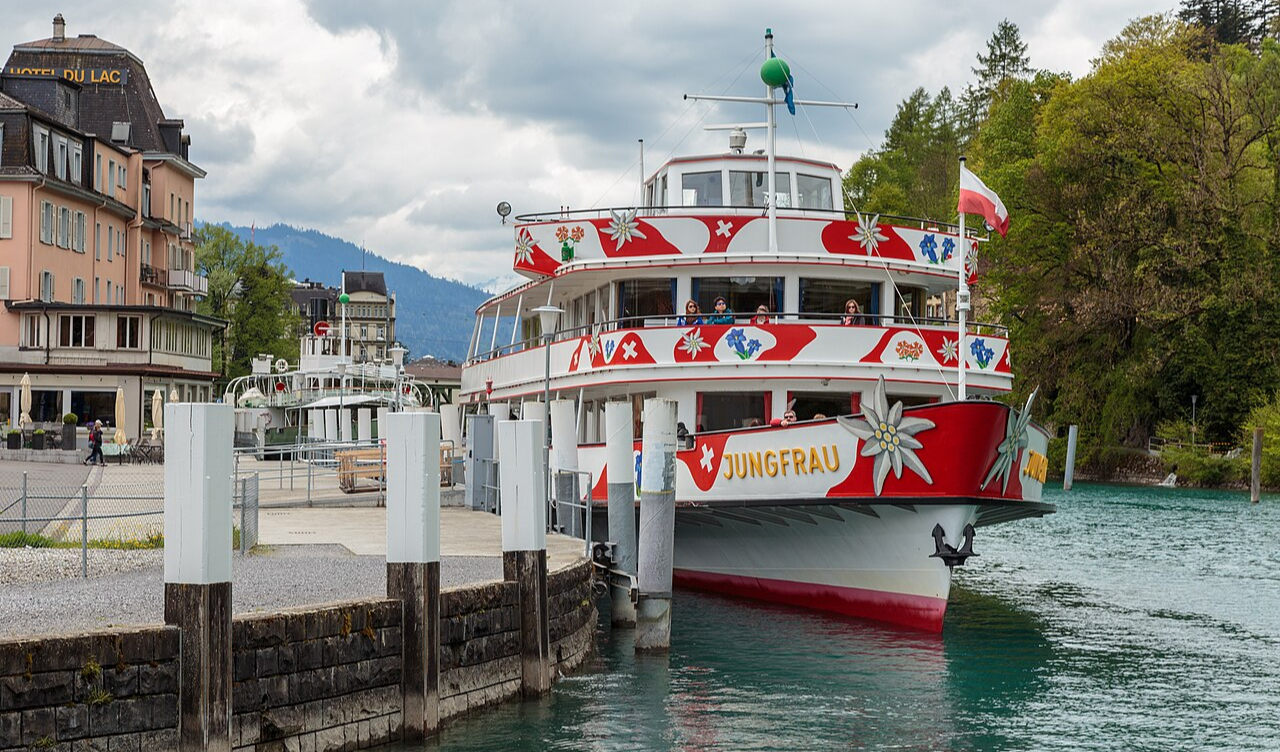
A first-timer's guide to the Swiss Alps: base yourself in Interlaken, ride to Jungfraujoch and the Lauterbrunnen valley, plus scenic rail tips and rösti. The Bernese Oberland is where most people picture Switzerland before they ever arrive: turquoise lakes, cowbells drifting across pastures, and a wall of glaciated peaks led by the Eiger, Mönch and Jungfrau. For a first trip it is refreshingly easy to organise, because one small town - Interlaken - sits between two lakes and acts as the hub for nearly everything. You do not need a car, a guide or fluent German. You need a rail pass, a light jacket and a rough plan, and the mountains do the rest. Why the Bernese Oberland works for beginners Interlaken means "between lakes," and it lies on the flat isthmus separating Lake Thun and Lake Brienz, both an unreal glacier-milk blue. From here, narrow-gauge trains and cable cars fan out into the high valleys, so you can sleep at a comfortable low altitude and take day trips up to the snow line and back. The region is compact, signposting is excellent, and English is widely spoken. It is the classic soft landing into Alpine travel - dramatic scenery without the logistics of a remote trek. What gives the area its particular postcard-perfect look is the contrast: emerald meadows and wooden chalets in the foreground, and behind them the near-vertical north face of the Eiger. That single view, from around Grindelwald and Kleine Scheidegg, is the one most visitors remember. Top things to see and do The headline trip is Jungfraujoch, the "Top of Europe," reached by cog railway through a tunnel bored inside the Eiger. At the top you get a glacier station with ice tunnels, viewpoints over the vast Aletsch Glacier, and, often, real snow underfoot even in summer. It is expensive and busy, so treat it as a splurge and go early. For scenery closer to the ground, take the train to Lauterbrunnen, a valley of seventy-two waterfalls where cliffs rise sheer on both sides. Staubbach Falls plunges nearly 300 metres straight off the rock; it reputedly helped inspire Goethe. From Lauterbrunnen, ride the cable car and train up to Mürren, a car-free village with a jaw-dropping outlook toward the Jungfrau. On the other side, Grindelwald is the base for First, a ridge with a cliff-edge walkway (the First Cliff Walk) and gentle high trails. And do not overlook the lakes themselves: a boat across Lake Brienz to the storybook village of Iseltwald or the town of Brienz is a slow, cheap counterpoint to the mountain crowds. Scenic trains worth the ride Switzerland treats its railways as attractions in their own right. Beyond the Jungfrau line, the region connects to two of the country's famous panoramic routes. The GoldenPass Line runs west from Interlaken toward Montreux on Lake Geneva, climbing through Zweisimmen and Gstaad. Further afield but easily added, the Glacier Express links Zermatt and St. Moritz over the Oberalp Pass in a slow, all-day journey past gorges and viaducts. Even ordinary regional trains here are scenic, so you rarely waste a leg of the trip. Best time to visit July and August bring the warmest weather, open mountain trails and every cable car running - but also the biggest crowds and the highest prices. June and September are the sweet spot: wildflowers or golden autumn light, thinner queues, and generally reliable transport. Winter (roughly December to March) transforms the area into ski country around Grindelwald, Wengen and Mürren. Late April and November are quieter but riskier, as some high routes and lifts close between seasons. Whenever you go, check the mountain webcams before committing to an expensive summit day - the peaks make their own weather, and a clear morning beats a clouded-in afternoon. Getting there Most travellers fly into Zurich or Geneva, both with direct train connections. From either airport, trains reach Interlaken in roughly two to three hours, usually with one easy change in Bern. Buy a ticket that suits your rhythm: a Swiss Travel Pass covers trains, boats and many buses and gives discounts on mountain railways, which adds up fast if you plan several excursions. Trains run frequently and famously on time, so tight connections generally work. Local tips For food, seek out rösti (a crisp pan-fried potato cake), älplermagronen (Alpine macaroni with potato, cheese and apple sauce) and, in cooler months, a shared cheese fondue or raclette. Meltwater from public fountains is drinkable, so carry a refillable bottle rather than buying water on the mountain. Two habits will save your trip: start summit excursions at first light for the clearest skies and shortest queues, and always keep a warm layer in your day bag. It can be a mild afternoon in Interlaken and near freezing at the top of the Jungfrau an hour later - that swing is the whole magic of the place. Swiss Alps first-timers, Interlaken travel guide, Jungfraujoch railway, Lauterbrunnen valley, Swiss scenic trains, Grindelwald First, Bernese Oberland travel, best time visit Swiss Alps

One Week in Sri Lanka Temple City, Tea Trains and Surf Coast

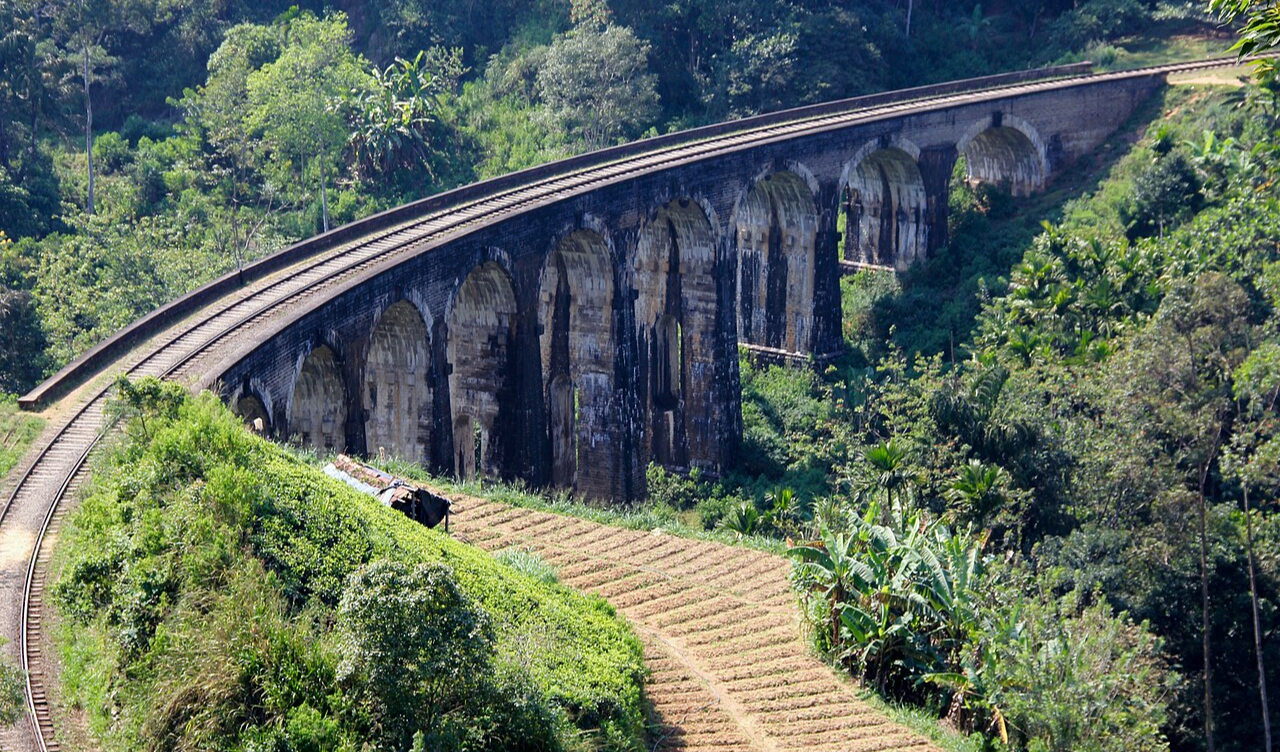
A practical seven-day Sri Lanka route linking Kandy's Temple of the Tooth, the scenic hill-country train and the palm-fringed beaches of the south coast. Sri Lanka packs an improbable amount into a small teardrop island: a sacred hill capital, cloud-wrapped tea estates threaded by one of the world's great train rides, and a warm southern coast lined with fishing harbours and old fort walls. A week is enough to trace a single clean arc - Kandy, then the hill country, then the beaches - without spending your holiday packing and unpacking. Here is how to make those seven days count. Why this route works Most first-timers try to see everything and end up on the road for hours. This itinerary moves in one direction and downhill: fly into Colombo, head straight to Kandy in the central highlands, ride the train south-east into tea country, then drop to the south coast for the last stretch. Each leg has its own character - culture, then scenery, then sand - and the transitions themselves, especially the train, are part of the trip rather than dead time. Kandy and the highlands Kandy, the last royal capital, sits around a man-made lake ringed by forested hills. Its heart is the Temple of the Sacred Tooth Relic (Sri Dalada Maligawa), which enshrines a tooth of the Buddha; time your visit for one of the daily *puja* ceremonies, when drummers play and the inner chamber opens. Walk the lake loop at dusk, browse the covered market, and set aside a half day for the Royal Botanical Gardens at Peradeniya, famous for its avenue of towering palms and a giant Javan fig. If you have an extra morning, the Buddhist cave complex and hilltop views around the area reward an early start before the heat builds. The hill country train The Kandy-Ella railway is the reason many people come to Sri Lanka at all. The line climbs through Nanu Oya (the stop for Nuwara Eliya, a misty former British hill station) and grinds slowly past emerald tea terraces, waterfalls and eucalyptus forest. Sit on the right-hand side heading south for the best valley views, and don't be shy about standing in an open doorway where locals ride the breeze. Base yourself in Ella for a night or two: hike the gentle Little Adam's Peak at sunrise, walk out to the photogenic Nine Arch Bridge to watch a train curve across it, and refuel on *kottu roti* - chopped flatbread stir-fried with vegetables, egg and spice - at a roadside spot in town. The southern beaches From the hills it is a few hours down to the coast, where the pace slows further. Anchor yourself around Galle, whose Dutch-era Galle Fort is a walled headland of cobbled lanes, cafés and ramparts made for a sunset stroll. Nearby beaches each have a flavour: Unawatuna for easy swimming, Weligama for beginner surf lessons and the iconic stilt fishermen, and Mirissa as the launch point for morning whale-watching trips in season, when blue whales and sperm whales pass offshore. For something quieter, continue east to the wide, sleepy sands around Tangalle. Best time to visit Sri Lanka has two monsoons, so the coasts trade seasons. For this west-and-south route, the drier, sunnier window generally runs from roughly December to March, which also lines up with prime whale-watching off Mirissa. The hill country is cool and can be misty year-round - pack a light layer for Nuwara Eliya and Ella even when the coast is hot. Shoulder months on either side of the peak season often mean fewer crowds and greener tea slopes. Getting there and around Most visitors fly into Bandaranaike International Airport near Colombo, well connected to India, the Gulf and Southeast Asia. From there, a hired car with driver is the most flexible way to link Colombo, Kandy and the coast, while the scenic middle leg is best done by train - book hill-country tickets in advance, as reserved seats sell out. Tuk-tuks handle short hops in every town, and app-based ride hailing works in the bigger centres. Local tips Order rice and curry at least once as locals eat it - a spread of small vegetable, lentil and coconut *sambol* dishes around a mound of rice - and try hoppers (bowl-shaped fermented pancakes) for breakfast, ideally with an egg cracked into the centre. Carry a scarf or sarong to cover shoulders and knees at temples, where you'll also remove shoes and hats. Finally, resist over-scheduling: the train runs on island time, and the best moments here - a doorway view, a fort-wall sunset, a plate of kottu - tend to be the unhurried ones. Sri Lanka itinerary, Kandy travel guide, Kandy to Ella train, Sri Lanka hill country, southern Sri Lanka beaches, Nine Arch Bridge, Galle Fort, one week in Sri Lanka

Istanbul Guide Hagia Sophia, Grand Bazaar and the Bosphorus

Plan a trip to Istanbul, Turkiye with this guide to Hagia Sophia, the Grand Bazaar, Bosphorus cruises, when to go, how to arrive and where to stay. Straddling two continents across the Bosphorus strait, Istanbul is the only major city on Earth that sits in both Europe and Asia - and it feels every bit as layered as that suggests. Once Byzantine Constantinople and then the seat of Ottoman sultans, Turkiye's largest city stacks empires on top of one another: Roman cisterns beneath cobbled lanes, imperial mosques above a shoreline of ferry horns and simit sellers. For a first-time traveller from India or anywhere else, it is a rare destination where world-famous monuments, a legendary covered market and a scenic boat ride all sit within a single, walkable core. Why go Istanbul rewards the senses more than the checklist. Mornings begin with the call to prayer echoing between minarets; afternoons drift into the smoke of grilled fish sandwiches by the Galata Bridge; evenings glow over tea gardens with the strait shimmering below. It is deeply historic yet unmistakably alive - a place where you can trace 1,500 years of art in the morning and lose yourself in a buzzing bazaar by lunch. Add warm hospitality, an easy visa process for many nationalities and short flight times from South Asia and the Gulf, and it makes an ideal introduction to where Europe and Asia meet. Top things to see and do Start in the historic Sultanahmet peninsula. Hagia Sophia, built as a cathedral in the 6th century and later a mosque, remains the city's defining structure, its vast dome and shimmering gold mosaics still breathtaking after fifteen centuries. Directly opposite stands the Blue Mosque (Sultanahmet Mosque), famous for the cascade of domes and the İznik tiles that give it its name. Nearby, the Basilica Cistern hides an eerie underground forest of columns, and Topkapı Palace opens up the private world of the Ottoman sultans, with harem chambers and treasury rooms overlooking the water. Then dive into the Grand Bazaar (Kapalıçarşı), one of the world's oldest and largest covered markets, a labyrinth of thousands of shops selling carpets, lanterns, ceramics and gold. For spice, tea and Turkish delight, the nearby Spice Bazaar (Egyptian Bazaar) is smaller and more fragrant. Save an afternoon or sunset for a Bosphorus cruise: public ferries and tour boats glide past waterfront palaces, wooden yalı mansions and the two continents on either bank. Cross to the trendy Kadıköy district on the Asian side, or walk up to the Galata Tower in Beyoğlu for the best panorama of the old city. Fuel it all with a proper Turkish breakfast, a döner or köfte, and fresh baklava. Best time to visit Spring (April to May) and autumn (September to October) are the sweet spots, with mild temperatures, thinner crowds and long, comfortable days for walking. Summer brings heat and peak tourist numbers, while winter is cool and sometimes snowy, though it lends the mosques and rooftops a quiet, atmospheric beauty. If you can, avoid the very middle of summer for outdoor sightseeing; shoulder seasons make the queues and the climate far kinder. Getting there Istanbul is superbly connected. The main Istanbul Airport (IST) on the European side is a major global hub with direct flights from Delhi, Mumbai and many Gulf cities, while Sabiha Gökçen (SAW) serves the Asian side. From IST, the metro and airport buses (HAVAIST) reach the centre, though a taxi or transfer is easiest with luggage. Once in town, buy an İstanbulkart, the rechargeable transit card that works on trams, metros, buses and the scenic ferries - the tram down to Sultanahmet is the simplest way to reach the big sights. Where to stay Sultanahmet puts you within walking distance of Hagia Sophia and the bazaars, ideal for first-timers and short trips. For a livelier, more contemporary base of cafes, rooftop bars and nightlife, choose Beyoğlu around İstiklal Avenue and Galata. Design-conscious travellers often prefer Karaköy or Cihangir for their boutique hotels and neighbourhood feel, while Kadıköy on the Asian side offers a local, less touristy stay with excellent food. Local tips Bargaining is expected in the Grand Bazaar - do it with a smile, and compare a few stalls before buying. Keep small change and consider carrying a scarf, as women should cover their heads and everyone removes shoes when entering mosques; visit outside prayer times to explore freely. Finally, skip the pricey dinner-cruise tourist boats at least once and ride an ordinary commuter ferry across the Bosphorus with a glass of Turkish tea - it is one of the great, cheap travel experiences anywhere in the world. Istanbul travel guide, Hagia Sophia, Grand Bazaar Istanbul, Bosphorus cruise, things to do in Istanbul, best time to visit Istanbul, Sultanahmet, Turkiye travel

Grand Canyon A First-Timer's Guide to Rims and Viewpoints

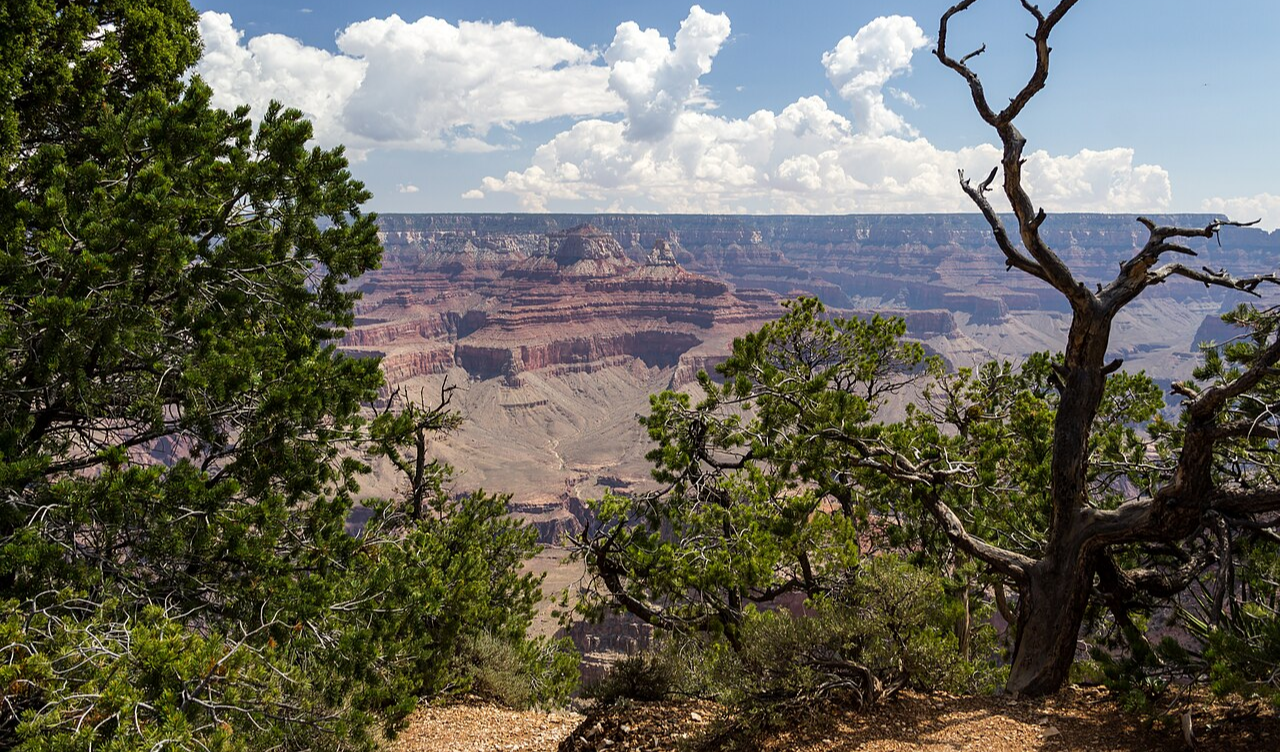
Plan your first Grand Canyon trip: South Rim vs North Rim, best viewpoints, easy trails, when to go, how to get there and smart local tips. Few landscapes flatten first-time visitors quite like the Grand Canyon. Nearly 450 kilometres long, up to 29 kilometres wide and more than 1,800 metres deep, this vast gorge in northern Arizona was carved by the Colorado River over millions of years, exposing rock layers that read like pages of Earth's history. For travellers from India or anywhere else building a US itinerary, it is one of those rare sights that genuinely lives up to the postcards. Here is how to see it well on a first trip. What makes the canyon worth the journey The scale is the headline, but the detail is what stays with you. At sunrise and sunset the rock walls shift through rust, ochre, violet and gold as shadows move across the buttes and side canyons. The Colorado River, a thin green thread far below, looks deceptively gentle from the rim. Beyond the geology there is real wildlife: elk graze near the village, California condors ride the thermals, and mule deer wander the pine forests on the rim. This is protected wilderness, so slow down and let it earn your attention rather than treating it as a photo stop. South Rim or North Rim: pick your side The canyon has two very different rims, and most first-timers should choose the South Rim. It is open year-round, easiest to reach, and packed with the classic overlooks and services around Grand Canyon Village. The North Rim sits about 300 metres higher, feels cooler and greener, draws far fewer crowds, and typically opens only from mid-May to mid-October before winter snow closes it. Though the two rims stare across at each other, driving between them takes roughly four to five hours. On a single trip, commit to one - the South Rim for convenience and iconic views, the North Rim if you want solitude and have time to spare. Viewpoints and trails worth your time On the South Rim, start at Mather Point, the sweeping overlook beside the main visitor centre, then walk stretches of the paved, mostly flat Rim Trail toward Yavapai Point, which has a geology museum with big windows. Drive or shuttle east to Desert View, where the stone Watchtower designed by architect Mary Colter frames the river's bend. To the west, Hermit Road strings together Hopi Point and Powell Point, both superb for sunset. If you want to step below the rim, the Bright Angel Trail and the South Kaibab Trail both descend into the canyon. You do not need to go far: on South Kaibab, the short hike to Ooh Aah Point delivers a huge payoff for modest effort. Crucially, going down is the easy half - turning around takes twice the time and energy, so never attempt to reach the river and climb back in a single day. On the North Rim, aim for Bright Angel Point and the drive to Cape Royal and Point Imperial, the highest overlook in the park. When to go Spring (April to May) and autumn (September to October) are the sweet spot: mild temperatures on the rim, thinner crowds and open trails. Summer brings the biggest crowds and, inside the canyon, brutal heat - inner-gorge temperatures can be dangerously higher than on the rim. Winter on the South Rim is quiet and often snow-dusted, which is beautiful, though roads can be icy. Remember the North Rim is seasonal and shuts for winter. Getting there Most visitors fly into Phoenix or Las Vegas, both roughly a four-to-five-hour drive from the South Rim, or into smaller Flagstaff, about 90 minutes away. Renting a car gives you the most freedom. A charming alternative is the Grand Canyon Railway, a vintage train that runs from the town of Williams straight to the historic depot in Grand Canyon Village. Inside the park, free shuttle buses loop between the visitor centre, viewpoints and trailheads, and some roads close to private cars in peak season, so plan to ride them. Where to stay and a couple of local tips Book well ahead for lodges inside the park, from the landmark El Tovar Hotel on the rim to the rustic cabins of Bright Angel Lodge; the gateway town of Tusayan and, further out, Flagstaff offer more options. For food, try a Navajo taco - frybread piled with beans and toppings - at Desert View or the nearby Cameron Trading Post, and cool off with prickly-pear lemonade. Two practical tips: the rim sits around 2,100 metres up, so drink far more water than you think you need and take the thin air seriously. And time one viewpoint for sunrise before the tour buses arrive - the silence, and the light spilling into the canyon, is the memory you will carry home. Grand Canyon National Park, Grand Canyon South Rim, Grand Canyon viewpoints, Grand Canyon travel guide, best time to visit Grand Canyon, Grand Canyon first visit, North Rim Arizona, Bright Angel Trail

Sentosa Island Singapore's Playground of Rides, Sand and Sea

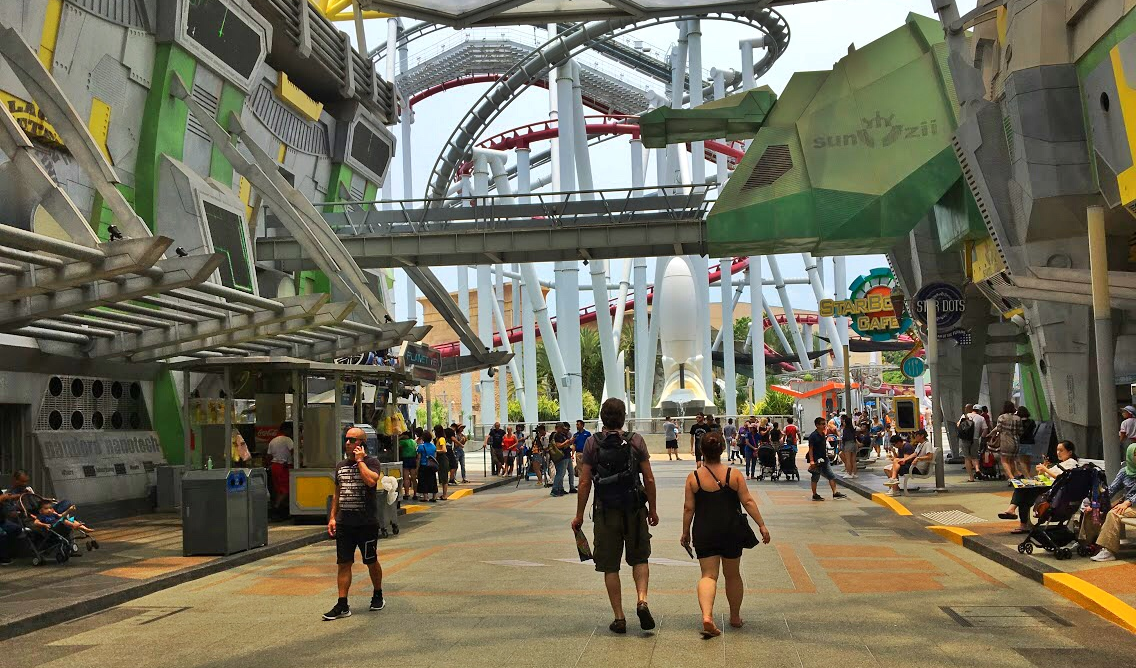
A practical Sentosa Island guide for families: theme parks, beaches, cable cars, best time to visit, how to get there and smart local tips. Just off Singapore's southern coast, Sentosa is a small island that packs in more attractions per square kilometre than almost anywhere in Asia. Once a fishing outpost and military base, it has been reinvented as a resort island where roller coasters, white-sand beaches, aquariums and hilltop gardens sit within a short walk or monorail ride of one another. For families flying in from India or anywhere else, it works as a full-day adventure or a relaxed two- or three-day base - no car required, and almost everything is reachable on foot, by shuttle or on the island's free internal transport. Why Sentosa is worth a day (or three) The appeal is variety in a tight, easy-to-navigate space. You can ride a virtual-reality coaster in the morning, snorkel-free among reef fish at an oceanarium by lunch, and watch the sun drop over the Singapore Strait from a beach bar by evening. Everything is clean, signposted in English and built with strollers and grandparents in mind. Unlike sprawling mainland trips, Sentosa lets a family cover a lot without long transfers, which makes it ideal for young children and mixed-age groups travelling together. Top things to see and do Universal Studios Singapore is the headline act - a compact but thrilling theme park at Resorts World Sentosa with zones themed around Hollywood, Ancient Egypt, Sci-Fi City and the fairy-tale world of Far Far Away. The duelling Battlestar Galactica coasters and the Transformers ride are crowd favourites. Next door, the S.E.A. Aquarium walks you through one of the world's largest oceanarium tanks, where manta rays and sharks glide overhead. For a soaking, Adventure Cove Waterpark offers slides plus a lazy river that drifts past a real reef. Inland, Skyline Luge Sentosa lets you steer a gravity go-kart down winding tracks - genuinely fun for all ages - while Mega Adventure's zipline sends you out over the treetops toward the sand. Don't miss the panoramic ride up the Singapore Cable Car from Mount Faber, and the leafy walking trails and lookout points of Imbiah for a quieter, greener side of the island. Beaches and slow afternoons Sentosa's three main beaches - Siloso, Palawan and Tanjong - form a soft golden crescent along the southern edge. Siloso is the liveliest, lined with beach clubs, volleyball nets and bars. Palawan Beach is the family pick, with calm shallow water and a rope-suspension bridge out to a small islet marketed as the southernmost point of continental Asia. Tanjong is the mellow, low-key stretch for a book and a nap. A free beach shuttle links all three, so you can hop between them without a long walk in the heat. Best time to visit Singapore is warm and humid year-round, so there's no bad season - only patterns. The drier, slightly less rainy months tend to fall between February and April, making them comfortable for beach time and outdoor rides. The wetter monsoon stretch around November to January brings short, heavy afternoon downpours, but indoor attractions like the aquarium keep the day going. To dodge the biggest crowds, avoid Singapore school holidays and major public holidays, and arrive at theme parks close to opening time. Getting there Sentosa sits minutes from downtown Singapore. The most scenic route is the Singapore Cable Car from Mount Faber. The easiest is the Sentosa Express monorail, which departs from VivoCity mall (connected to HarbourFront MRT station) and glides straight onto the island. Walkers can cross the pedestrian Sentosa Boardwalk, a sheltered, gently landscaped path from VivoCity. If you're flying into Changi Airport, HarbourFront is a straightforward MRT connection with one interchange. Where to stay Sentosa itself has resort hotels clustered around Resorts World and along the beaches, ranging from family-friendly properties to spa retreats - handy if you want to be steps from the parks. For more choice and better value, base yourself near HarbourFront on the mainland, where hotels sit above VivoCity and the monorail, putting Sentosa a five-minute ride away while keeping the city's hawker food and shopping within reach. Local tips Buy attraction tickets online in advance - bundles across multiple attractions usually cost less than separate gate entries, and you'll skip queues. Bring a refillable water bottle and reef-safe sunscreen; the humidity is relentless. For lunch beyond the theme-park counters, cross back to VivoCity's food court or head to the nearby hawker centres for Hainanese chicken rice, laksa and chilli crab at a fraction of resort prices. Finally, cap the night with the free light-and-fountain show near Palawan Beach before catching the last monorail out. Sentosa Island guide, Sentosa things to do, Universal Studios Singapore, Sentosa beaches, Sentosa family attractions, how to get to Sentosa, Singapore travel, Sentosa cable car

Lombok and the Gili Islands: Indonesia's Quieter Beach Escape

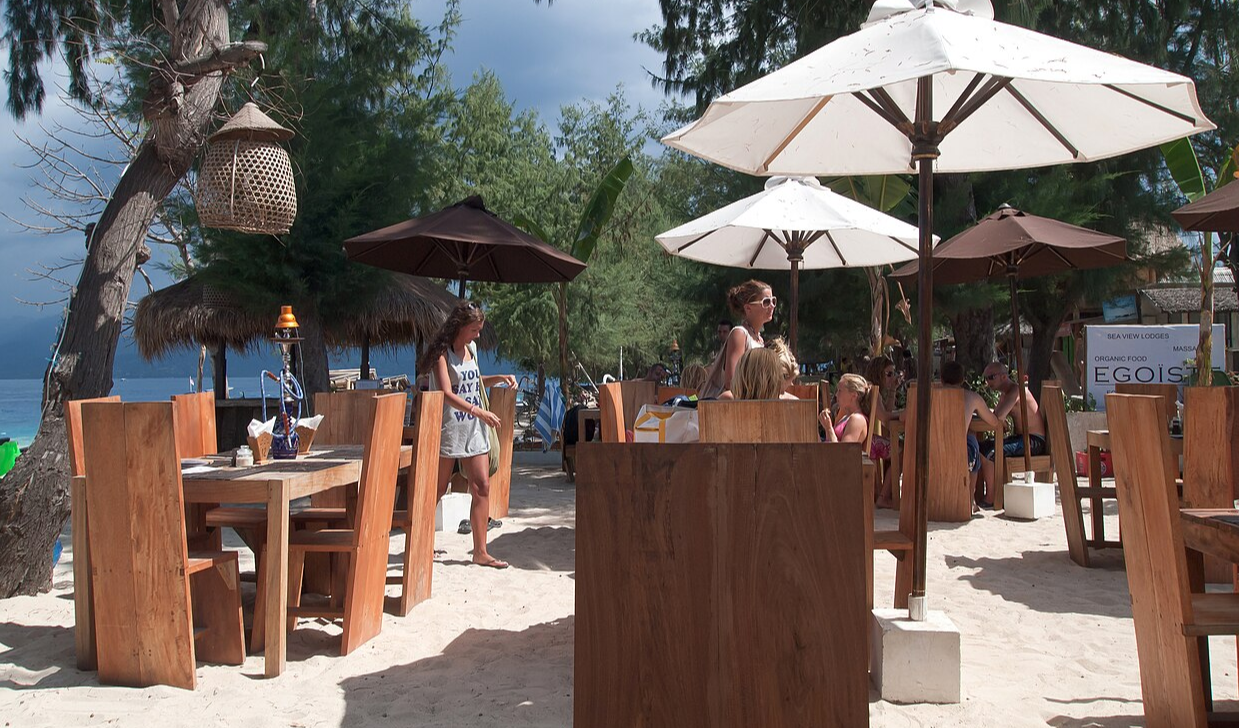
Skip the crowds and discover Lombok and the Gili Islands, Indonesia: turquoise snorkelling, Mount Rinjani treks, Sasak villages and empty white-sand bays. Just a short hop east of Bali, across the Lombok Strait, lies an island that many travellers fly straight over - and three tiny specks of sand off its northwest coast that reward anyone who slows down. Lombok and the Gili Islands offer the classic Indonesian dream of white beaches and warm reefs, but with fewer scooters, lower prices and far more elbow room. If Bali's Kuta feels like a theme park, Lombok's version of the same name is a mellow surf town facing empty bays. This is where you come to swim with turtles at dawn and still have the water to yourself. Why Lombok is worth the detour Lombok is the larger, quieter neighbour, home to the Sasak people and their own Muslim-majority culture, cuisine and weaving traditions. Its interior climbs to Mount Rinjani, Indonesia's second-highest volcano, while the south coast is a string of horseshoe bays with barely a beach club in sight. The three Gili Islands - Gili Trawangan, Gili Meno and Gili Air - sit just offshore and share one glorious rule: no cars or motorbikes. You get around on foot, by bicycle or in a cidomo, a small horse-drawn cart. The result is a rare kind of quiet, broken only by lapping waves and the clink of glasses at sunset. Top things to see and do Start in the water. The reefs around the Gilis are famous for green and hawksbill turtles; the shallows off Gili Meno and the aptly named Turtle Point on Gili Trawangan almost guarantee a sighting on a snorkel. Off Gili Meno you can also swim over the "Nest," a ring of submerged human statues that have become an artificial reef and a diver's favourite photo. On the mainland, the south coast is the surprise. Tanjung Aan is a double crescent of pale, pepper-corn-textured sand; nearby Selong Belanak is a gentle beach ideal for first surf lessons, while Mawun and Mawi draw the more experienced. Further southeast, Pink Beach (Pantai Tangsi) gets its blush from crushed red coral. Inland, serious walkers tackle multi-day treks to Mount Rinjani's crater rim and the turquoise Segara Anak lake, usually starting from the villages of Sembalun or Senaru. If a summit push sounds like too much, the twin waterfalls near Senaru - Sendang Gile and the more hidden Tiu Kelep - make a rewarding half-day. To understand the island's heart, visit the traditional Sasak village of Sade near Rembitan, where thatched homes and ikat looms show a way of life older than tourism. Best time to visit Lombok has two seasons. The dry season, roughly April to October, brings reliable sunshine and calm crossings - peak months are July and August, when the Gilis are busiest. The wet season, November to March, is greener and cheaper, with short, heavy downpours and occasionally choppy boats. Diving and snorkelling are good year-round, and if you plan to climb Rinjani, aim for the dry months, as the trekking route typically closes during the rains and around the turn of the year for safety and maintenance. Getting there Most visitors fly into Lombok International Airport (Zainuddin Abdul Madjid), near Praya in the south, with direct connections from Jakarta, Bali, Kuala Lumpur and Singapore. From Bali, fast boats are the popular route: services leave from Padangbai, Sanur, Serangan and Amed and run directly to Gili Trawangan and Gili Air. If you're starting on the Lombok mainland, boats to the Gilis leave from Bangsal harbour in the northwest. Between the three islands, cheap hopping boats shuttle back and forth through the day. Where to stay Pick your island by mood. Gili Trawangan is the liveliest, with beach bars, dive schools and a walkable strip. Gili Air strikes a balance - laid-back but with good cafés and restaurants - making it a favourite for couples and longer stays. Gili Meno is the smallest and sleepiest, best for honeymooners and hammock afternoons. On the mainland, base yourself in Kuta Lombok for easy access to the southern surf beaches, or in Senaru or Sembalun if Rinjani is your goal. Local tips Carry cash. ATMs on the Gilis are limited and unreliable, so bring enough Indonesian rupiah from the mainland or Bali. Remember that Lombok is largely Muslim: dress modestly away from the beach, especially in villages, and be considerate during Ramadan. Choose reef-safe sunscreen to protect the coral you came to see, and don't miss the food - try ayam taliwang, Lombok's fiery grilled chicken, and plecing kangkung, a punchy water-spinach salad, ideally at a warung rather than a resort. Lombok travel, Gili Islands Indonesia, beaches beyond Bali, Mount Rinjani trek, Gili Trawangan snorkelling, Kuta Lombok beaches, Sasak culture, Indonesia island guide

IMD Warns of Heavy Rain Across Bengal, Odisha, Jharkhand

A deep depression over the Bay of Bengal will drench West Bengal, Odisha, Jharkhand and more, the IMD warns, with orange and yellow alerts in place. A deep depression sitting over the Bay of Bengal is set to soak large stretches of India on Friday, with the India Meteorological Department flagging heavy to very heavy rain across Jharkhand, West Bengal, Odisha, Telangana, Uttar Pradesh, Chhattisgarh and Madhya Pradesh. Jharkhand carries an orange alert for the coming 24 hours. Forecasters expect Ranchi, Khunti, Gumla, Simdega and West Singhbhum to bear the brunt, with heavy to very heavy showers possible. A yellow alert covers 11 additional districts in the state. In West Bengal, the system is likely to drive intense rain through Saturday morning. Purba Medinipur, Paschim Medinipur, Jhargram, Darjeeling, Kalimpong, Jalpaiguri and Alipurduar have been marked for very heavy downpours. Odisha faces widespread rain, with pockets of very heavy showers. The IMD extended similar warnings to Bihar, Telangana, Coastal Andhra Pradesh and Yanam, where a few places could record extremely heavy rain. Thunder, lightning and gusty winds are forecast alongside the wet spell. Uttar Pradesh stands out among the affected states. Eastern districts may see very heavy showers on Friday and Saturday, while western parts are also lined up for heavy rain. East Madhya Pradesh, Vidarbha and Chhattisgarh are each in line for heavy rain, and some areas could tip into very heavy totals accompanied by thunderstorms and strong winds. East Rajasthan is expected to stay wet up to September 27. The northeast will not escape. Assam and Meghalaya are set for widespread rain, while the remaining states in the region may catch scattered showers. Southern India draws milder warnings. Kerala should see widespread rain, and Tamil Nadu, Puducherry and Karaikal are likely to get scattered showers. Rayalaseema could pick up rain with thunderstorms. The capital region faces a lighter picture. Delhi, Haryana and Chandigarh may get scattered rain starting Friday, a spell that could run until September 29. No heavy rain warning has been issued for Delhi-NCR on Friday. The IMD said the active rain phase is expected to persist over parts of central, eastern and southern India in the days ahead. Bay of Bengal depression, IMD rain alert, West Bengal heavy rain, Jharkhand orange alert, Odisha rainfall, India monsoon, Delhi weather

Netherlands Fight Back to Draw 1-1 With Germany in Nations League

The Netherlands battled to a 1-1 draw against Germany in the UEFA Nations League, with Ruben van Bommel among the trending names after the match. The Netherlands fought back to earn a 1-1 draw against Germany in a UEFA Nations League fixture, sharing the points after a hard-fought contest between the two European rivals. Oranje, as the Dutch national side is known, dug in to level the score and avoid defeat against Germany. The final scoreline of 1-1 reflected a match the Netherlands had to battle for rather than control, with the team grinding out the result to hold their opponents. The game drew attention well beyond Europe. Ruben van Bommel surfaced as a trending search term in India, registering more than 500 searches on Google Trends and putting his name in front of a wider international audience following the fixture. The result keeps both the Netherlands and Germany in contention within their Nations League grouping, with the draw ensuring neither side walked away empty-handed. Attention now turns to the post-match analysis, as coverage shifts to reviewing how the Netherlands recovered to secure the point against one of the continent's strongest sides. The 1-1 finish leaves the standings tight and sets up the remaining fixtures in the competition as decisive. Nations League, Netherlands vs Germany, Ruben van Bommel, Oranje, UEFA Nations League, Netherlands football, 1-1 draw

Havelock Island A Guide to Radhanagar Beach and Andaman Reefs

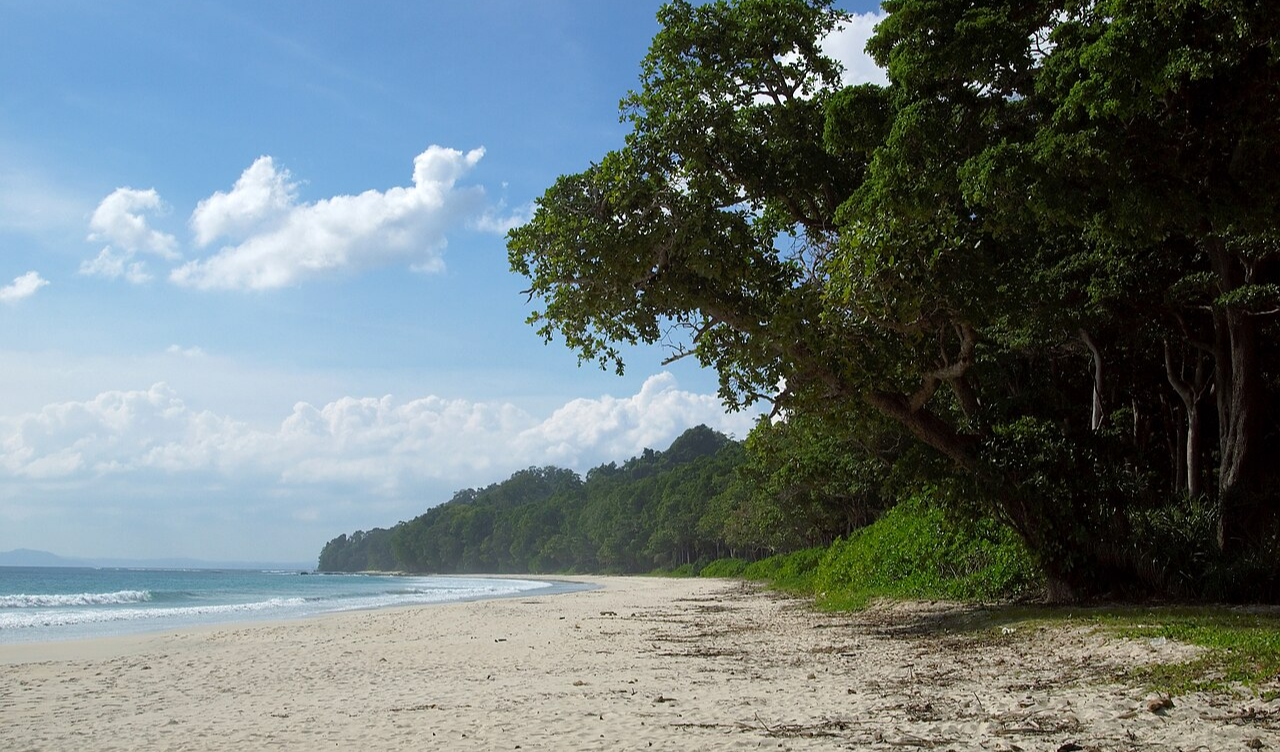
Plan a trip to Havelock in India's Andaman Islands: Radhanagar and Kalapathar beaches, snorkelling at Elephant Beach, the best season and how to get there. Roughly 1,200 km off India's east coast, the Andaman Islands sit closer to Myanmar and Thailand than to the mainland, and their star is Havelock - officially renamed Swaraj Dweep. This compact island in the Bay of Bengal trades the crowds of the mainland coast for powder-white sand, glassy shallows and some of the clearest water in the Indian Ocean. It is the kind of place where you snorkel over a coral garden before breakfast and watch the sky turn orange from a beach shack by night. Here is how to make the most of it. Why Havelock stands out Many Indian beaches are for a stroll, not a swim; Havelock is built for the water. The reefs here are alive with parrotfish, angelfish, clownfish and the occasional sea turtle, and visibility often stretches beyond 15 metres. Radhanagar Beach, on the island's west coast, is regularly ranked among Asia's finest - a long, gently curving sweep of fine sand backed by rainforest, famous for its unobstructed sunsets. Because Havelock is small and largely traffic-free, you can cover its highlights on a rented scooter in a couple of unhurried days. Top beaches to explore Start with Radhanagar Beach (Beach No. 7) for that postcard sunset and safe, shallow swimming. On the eastern side, Kalapathar Beach is quieter and framed by dark rocks and leaning palms, best in the golden light of early morning. Vijaynagar Beach (Beach No. 5) runs along the island's main hotel strip and is handy for a lazy afternoon. The headline act for wildlife is Elephant Beach, reachable by a short boat ride or a muddy jungle trek from the main road - its house reef begins just metres from the shore. Snorkelling and diving Elephant Beach is the easiest snorkelling spot, with a shallow reef shelf ideal for beginners and families; operators supply masks, fins and life jackets. Serious divers come for the coral walls and sandy plateaus off Havelock, where sites suit everyone from first-timers doing a discover-scuba session to certified divers chasing bigger marine life. Sea-walking and glass-bottom boats offer a look at the reef for those who prefer to stay dry. Whatever you choose, book with a licensed operator, never touch or stand on coral, and skip the sunscreen chemicals that damage reefs - a rash guard does the job better. Best time to visit The islands are a year-round tropical destination, but the sweet spot runs from roughly October to May, when seas are calm and skies mostly clear - prime conditions for snorkelling and diving. The southwest monsoon, broadly June to September, brings heavy rain, rough water and frequent ferry cancellations, so it is best avoided if the sea is your main reason to come. December and January are the peak, cool-and-dry months, when accommodation fills fast and booking well ahead pays off. Getting there There is no way to reach the Andamans by road or rail - everything starts with a flight to Veer Savarkar International Airport in Port Blair, the island capital, with direct services from Chennai, Kolkata, Bengaluru, Delhi and other Indian cities. From Port Blair, Havelock is a sea journey of about 1.5 to 2 hours. Air-conditioned private catamarans such as Makruzz, Nautika and Green Ocean are the fast, comfortable option and can sell out, so reserve seats in advance. Cheaper government ferries also run but are slower and harder to book from outside the islands. Note that foreign nationals no longer need a separate permit for Havelock, though rules can change - verify current requirements before you travel. Where to stay Havelock spreads its accommodation along the eastern beaches, particularly around Beach No. 3 (the jetty area) and Beach No. 5. You will find everything from simple beachfront cottages and backpacker huts to a handful of upscale eco-resorts tucked into the tree line. Staying near the jetty keeps you close to restaurants and dive shops; choosing a west-facing property gets you closer to Radhanagar's sunsets. Book early in peak season, and confirm whether your stay has reliable power and water, as both can be intermittent on the island. Local tips and what to eat Seafood is the reason to eat here: look for grilled catch of the day, fiery fish curry, tuna and coconut-laced prawn preparations at the beach shacks and small family kitchens. Two practical notes: carry enough cash, because ATMs are few and card machines unreliable, and download offline maps since mobile data is patchy. Rent a scooter to reach the quieter beaches on your own schedule, keep a torch handy for after dark, and respect the tides - lifeguards are limited, so ask locally before swimming at an unfamiliar spot. Havelock Island, Andaman Islands travel, Radhanagar Beach, Andaman snorkelling, Swaraj Dweep, Port Blair ferry, Elephant Beach Havelock, Andaman best time to visit

Hampi, Karnataka Walking the Ruins of the Vijayanagara Empire

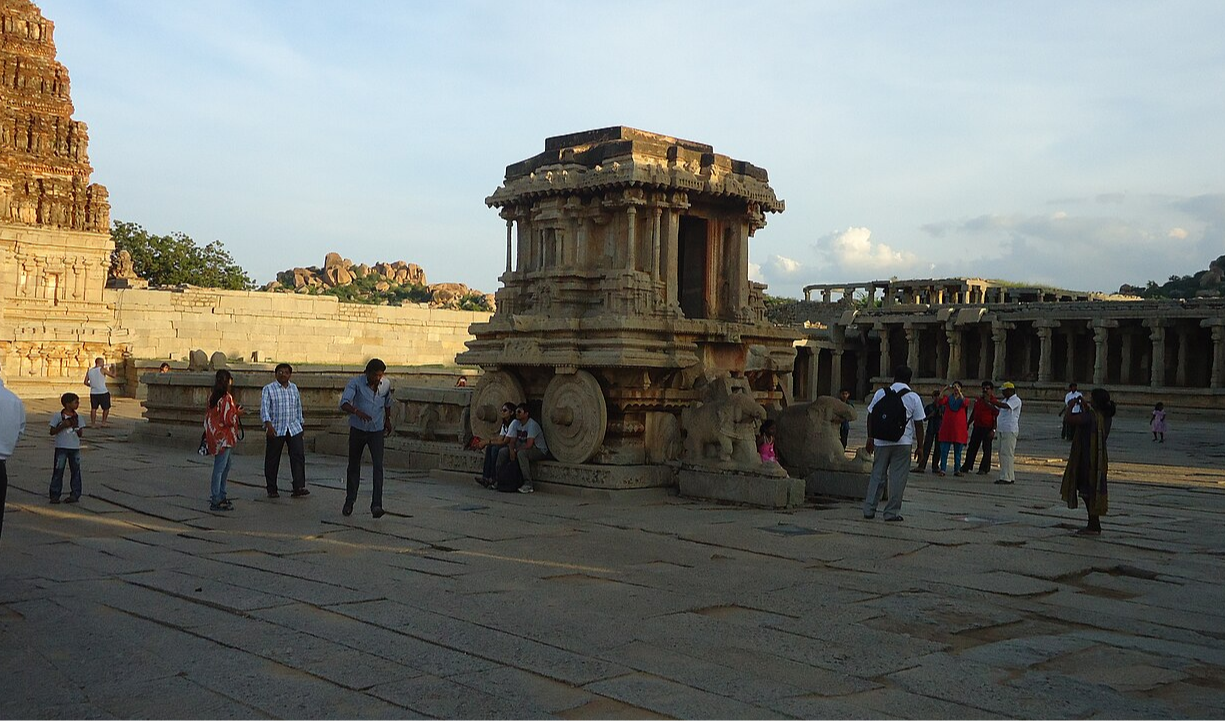
A traveler's guide to Hampi, Karnataka - its boulder-strewn ruins, top temples, best season, how to arrive and where to stay near the Vijayanagara relics. Few places in India collapse time quite like Hampi. Spread across a surreal landscape of giant granite boulders and the green ribbon of the Tungabhadra River, this UNESCO World Heritage Site in northern Karnataka was once Vijayanagara - the dazzling capital of a 14th-16th century empire that traders compared to Rome. Today its temples, bazaars, palaces and stepped tanks lie scattered over roughly 40 square kilometres, half-swallowed by rock and scrub. You can spend two days here and still feel you've only scratched the surface. Why Hampi is worth the detour Hampi rewards curiosity in a way few ruins do. There are no velvet ropes over most of it; you clamber over the same stones that once carried processions, coronations and elephant parades. The setting is the other half of the magic - sunrise turns the boulders gold, and sunset from a hilltop over the river is one of South India's great quiet spectacles. It suits history buffs, photographers, boulderers and slow travelers alike, and because the site is so vast, it rarely feels crowded once you step beyond the main temple. Top things to see Start at the Virupaksha Temple, the towering, still-active shrine to Shiva whose gopuram dominates Hampi Bazaar - it has been in continuous worship for centuries and even has a resident temple elephant. From there, head to the Vittala Temple complex, home to Hampi's signature image: the exquisitely carved Stone Chariot, and the famous musical pillars that ring when tapped. Don't miss the Sasivekalu (mustard seed) and Kadalekalu (gram) Ganesha monoliths, and the giant Lakshmi Narasimha statue nearby. Cross into the royal core to see the Lotus Mahal, a graceful Indo-Islamic pavilion, and the imposing Elephant Stables with their domed chambers. The Queen's Bath, the stepped Pushkarani tank, and the Hazara Rama Temple with its intricate mythological friezes round out the royal enclosure. For the best perspective on it all, climb Matanga Hill at dawn or Hemakuta Hill near the bazaar for sunset. A coracle (round basket boat) ride on the Tungabhadra is a lovely, low-key way to see riverside shrines. Best time to visit Hampi lies in a hot, dry region, so timing matters. The most comfortable window runs roughly from October to February, when days are warm but manageable and evenings pleasant - ideal for long hours of walking among the ruins. The monsoon months bring green to the surrounding paddies and a fuller Tungabhadra, but can interrupt outdoor plans. Avoid the peak of summer (April-May), when the exposed granite radiates fierce heat. If your dates are flexible, ask locally about the Hampi Utsav, a cultural festival that lights up the ruins with music and dance. Getting there Hampi has no station of its own; the gateway town is Hospet (Hospete), about 13 km away, well connected by train to Bengaluru, Hubballi and Guntakal, and by bus across Karnataka. The nearest airports are at Hubballi (the closest) and Bengaluru (larger, more international connections but a longer road journey). From Hospet, local buses, autos and taxis run to the site. Once in Hampi, the classic way to explore is by bicycle, moped or hired auto-rickshaw - distances between clusters are too far to cover entirely on foot, but short enough that a moped makes a full day easy. Where to stay Hampi splits into two moods. On the temple (south) side near Hampi Bazaar, you're steps from Virupaksha and the main monuments; accommodation here leans toward simple guesthouses and heritage-adjacent stays, and this area suits those who want to be inside the archaeological zone. Across the river, the Virupapur Gaddi (Hippie Island) side is greener and more laid-back, with rice fields, easygoing cafés and budget cottages - a favorite with backpackers, though river-crossing timings can limit late movement. For more hotels, restaurants and reliable transport links, many travelers base themselves in Hospet and day-trip in. Local tips Go early. The site opens with the cool of the morning, and starting at sunrise means you beat both the heat and the tour buses. Carry water, sun protection and sturdy shoes - the terrain is uneven and shade is scarce. Hiring a licensed local guide for at least the royal enclosure transforms the stones into stories; the layers of history are easy to miss on your own. For food, seek out simple South Indian staples - a crisp dosa or idli breakfast, banana-leaf thalis at midday - and note that the temple side is largely vegetarian and alcohol-free, in keeping with its sacred character. Finally, treat the ruins gently: climbing on carvings and shrines is discouraged, and Hampi's fragile beauty is exactly why it has lasted six centuries. Hampi travel guide, Vijayanagara empire ruins, Hampi Karnataka, Virupaksha Temple, Vittala Temple stone chariot, things to do in Hampi, Hampi best time to visit, Hampi Hospet

Leh and Ladakh A Guide to High-Altitude Lakes and Monasteries

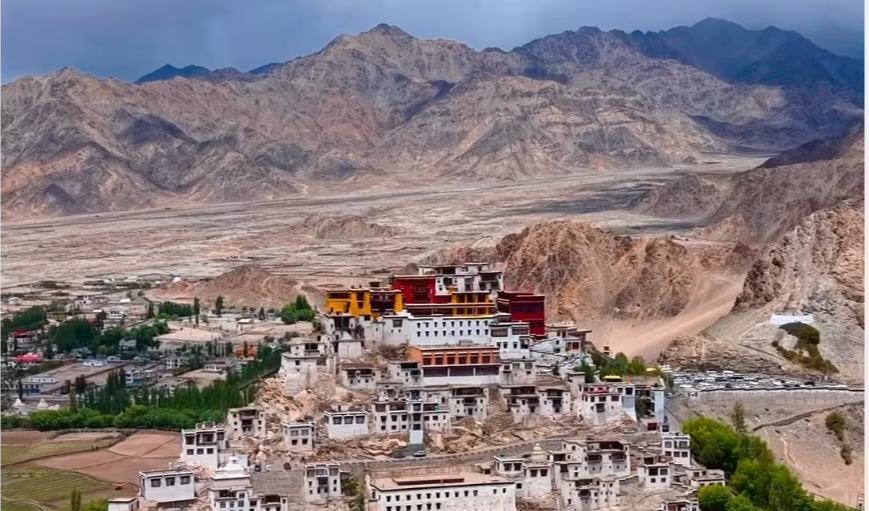
Plan a trip to Leh and Ladakh with this practical guide to turquoise lakes, cliffside monasteries, mountain passes and road-trip tips for the Indian Himalayas. Perched on the roof of India, Ladakh is a cold desert of ochre mountains, prayer-flag ridges and lakes so blue they look edited. It sits in the rain shadow of the Himalayas, which is why the sky stays cloudless and the light turns everything sharp. This is a place you feel in your lungs before you understand it with your eyes: thin air, big silence, and villages of whitewashed stupas clinging to river valleys. Whether you come for the astonishing drives, the Buddhist monasteries, or a slow reset far from crowds, Ladakh rewards travellers who take it at altitude's pace. What makes Ladakh worth the effort Ladakh is not a place you pass through; it takes days of driving between highlights, and that is the point. The region blends Tibetan Buddhist culture with dramatic geology - you can stand at a 5,000-metre pass one hour and wander a barley field the next. Leh, the main town, is the launchpad: a walkable grid of guesthouses, cafés and the old bazaar beneath the ruined Leh Palace and Namgyal Tsemo hill. Because the terrain is so remote, everything feels earned, and the payoff is scenery that ranks among the most spectacular on earth. The high-altitude lakes The lakes are Ladakh's signature. Pangong Tso, roughly 4,350 metres up and stretching into Tibet, shifts through blues and greens as the sun moves - most visitors overnight at Spangmik or Lukung to catch it at dawn. Farther south, Tso Moriri near Korzok village is quieter, ringed by nomad camps and often visited by migratory birds. Between them lies Tso Kar, a salt lake worth a detour. These sit at brutal altitudes, so treat them as day trips or single overnights rather than long stays, and carry your own water and snacks - services are minimal. Monasteries worth the climb Ladakh's gompas (monasteries) are living centres of prayer, not museums. Thiksey, a 12-storey complex often compared to Tibet's Potala Palace, houses a two-storey Maitreya Buddha and holds early-morning prayers you can quietly observe. Hemis, the largest and richest, hides in a gorge and hosts a masked dance festival. Diskit in Nubra Valley is watched over by a giant statue of the future Buddha, while Lamayuru, set against eroded "moonland" hills, is among the oldest. Dress modestly, remove shoes inside prayer halls, and walk clockwise around chortens and mani walls. Best time to visit Ladakh is a summer-and-early-autumn destination. Roughly May through September is the window most travellers choose: passes are open, guesthouses are running, and days are warm even if nights stay cold. July and August are peak, and also monsoon elsewhere in India, which can occasionally trigger landslides on approach roads. Late September brings golden poplars and thinner crowds. Winter is starkly beautiful but harsh - this is when hardy trekkers walk the frozen Zanskar River on the famous Chadar trek, though most services shut down. Getting there and getting around There are two ways in. Flying into Leh's Kushok Bakula Rimpochee Airport is fast and scenic, but it drops you straight to altitude, so plan to do almost nothing on arrival day. The overland routes - the Manali-Leh Highway and the Srinagar-Leh Highway via Kargil - are the classic road trips, crossing passes like Baralacha La, Tanglang La and Zoji La. Driving up gradually helps your body adjust. Within Ladakh, most travellers hire a car with a local driver or ride a motorcycle in a group; several inner-line areas near the borders require permits that hotels and agencies can arrange. Where to base yourself Use Leh as your hub for the first few nights while you acclimatise, then branch out. Nubra Valley (Hunder and Diskit) offers sand dunes, double-humped Bactrian camels and orchard-side homestays. The Pangong shore and Turtuk, a Balti village near the frontier, both reward an overnight. Homestays in villages such as Sumda or along the Markha Valley put you inside Ladakhi daily life. Book ahead in peak season, and don't expect constant hot water or reliable connectivity outside Leh. Local tips Altitude is the real challenge: spend two nights taking it easy in Leh, drink far more water than feels natural, skip alcohol at first, and talk to a doctor about medication before you travel. Eat local - warm thukpa noodle soup, steamed momos, and butter tea (gur gur cha) will keep you going, and apricots from Nubra are a regional treat. Finally, carry cash, since ATMs are scarce beyond Leh, and pack layers: a Ladakhi afternoon can be T-shirt warm and the same night below freezing. Leh Ladakh travel guide, Pangong Lake, Ladakh road trip, Ladakh monasteries, Nubra Valley, best time to visit Ladakh, Leh travel tips, high altitude lakes India

Hong Kong Face Must-Win Clash Against Oman at Asian Games

Hong Kong, China meet Oman in Match 3 of the 2026 Asian Games cricket event at Korogi Sports Park, Nisshin, after an opening loss to Malaysia. Hong Kong, China and Oman meet on September 24 in Match 3 of the 2026 Asian Games cricket competition at Korogi Sports Park in Nisshin, with both Group B sides carrying different pressures into the contest. Hong Kong, China arrive under strain after losing their opening game to Malaysia by eight wickets, a result that has left them needing a win to stay in the race for a quarterfinal place. Oman face a simpler equation. A victory over Hong Kong, China would be enough to book their spot in the quarterfinals. That gives the match an edge for two associate nations with plenty at stake in a single game. Despite their poor start, Hong Kong, China can point to recent history against Oman. In the Asian Games qualifier, they beat Oman by 154 runs, a heavy margin that came against a squad broadly similar to the one Oman have named for this competition. That gulf, and the head-to-head record from that meeting, sits behind a win projection that favours Hong Kong, China at 62 percent to Oman's 38 percent. Rath and Babar carry Hong Kong's hopes Hong Kong, China's batting will lean on two players who have already punished Oman's attack. Anshuman scored 140 from 56 balls the last time he faced them, an innings built on 13 fours and 10 sixes. His current form is a question mark, however, after he was bowled for a duck against Malaysia. He will be looking to return to runs in Nisshin. His opening partner in that dominant record is Babar, who made an unbeaten 63 from 19 balls against the same Oman bowlers. He struck at 331.57 in that innings. Both batters offer Hong Kong, China the chance to take the game away early if they get in. For Hong Kong, China, the path back into the tournament is clear. They need their experienced players to build partnerships and convert starts, and their bowlers to reproduce the control that dismantled Oman in the qualifier. A win would revive a campaign that began badly and keep their knockout hopes alive. Al Balushi and Sufyan lead a young Oman side Oman come into the fixture with a relatively inexperienced squad and the task of proving themselves on a large stage. Their preparation has been steady, but they lack the seasoned campaigners their rivals can call on, which makes the contest a test of resolve as much as skill. Their most reliable recent batting has come from Waheed Al Balushi, described as the side's in-form batter after scoring 171 runs across his last five T20I innings. Oman will look to him and Muzaffar Shiralkar to hold the top order together and give the innings a stable base. Sufyan adds an all-round dimension. He has made 134 runs in his last nine T20I appearances and is expected to contribute with both bat and ball, making him a key figure in Oman's plan to trouble a Hong Kong, China side still searching for form. Oman's confidence rests partly on their broader record against Hong Kong, China in this format, where they have generally had the better of the exchanges. The qualifier defeat is the outlier that Hong Kong, China will hope to repeat, and the reason Oman cannot take the projected favourites lightly. The match is the third of the 2026 Asian Games cricket event and pits two teams with immediate goals against each other. Oman can qualify with a win, while Hong Kong, China must win to stay in contention. With a quarterfinal berth on the line for both in different ways, the game at Korogi Sports Park carries weight beyond a single group fixture. Asian Games 2026 cricket, Hong Kong vs Oman, Korogi Sports Park Nisshin, Group B cricket, Anshuman Rath, Waheed Al Balushi, T20 associate cricket

Mumbai Tribunal Upholds Rs 6.92 Crore Tax Relief on Spouse Property

The ITAT Mumbai bench allowed a woman's Section 54F claim after she bought a Rs 7.5 crore Juhu property from her husband's firm using share-sale gains. The Mumbai bench of the Income Tax Appellate Tribunal has allowed a woman surnamed Motwani to keep a capital gains tax exemption of roughly Rs 6.92 crore, ruling on July 17, 2026 that her purchase of a Mumbai flat from her own husband's business did not amount to a scheme to dodge tax. The decision overturned the Income Tax Department's view that the deal was a "colourable device" arranged to cut the family's tax bill. The dispute traces back to assessment year 2021-22, when the woman sold unlisted equity shares and declared long-term capital gains of about Rs 8.31 crore. In June 2021 she paid Rs 7.5 crore for a residential property on Juhu Tara Road in Mumbai and claimed relief under Section 54F of the Income-tax Act, 1961, seeking to shield around Rs 6.92 crore of those gains from tax. One fact drew the Assessing Officer's attention. The flat belonged to her husband and was sold through HP Trading, his sole proprietorship. Completing the assessment on December 30, 2022 under Section 143(3) read with Section 144B, the officer refused the exemption and added the Rs 6.92 crore back to her taxable income. The department's family-arrangement theory The Assessing Officer tied the wife's claim to what happened on her husband's side of the transaction. He had booked short-term capital gains of roughly Rs 4.85 crore on the sale and later offset close to Rs 3.56 crore of that against business losses. Read together, the officer argued, the two moves let the couple rotate funds within the household: she secured a large exemption on the purchase, while he wiped out much of his taxable gain using his losses. The woman gave a different account. She told the authorities she had bought the flat as a long-term investment and a cushion for the future, with the option of letting it out, not as a home. She said she continues to live on her husband's ancestral property. Why the tribunal ruled for the taxpayer The tribunal focused on whether the department had shown the deal to be a sham or a pre-planned tax dodge, and found it had not. The paperwork held up: there was a registered transfer deed, stamp duty had been paid, the price had actually changed hands, and the woman had explained where the money came from. The timing undercut the department's central claim. The property changed hands in June 2021, but the business loss the officer leaned on only arose on March 31, 2022. Since that loss did not yet exist when the flat was bought, the tribunal held it could not reasonably have been foreseen, making it hard to argue the two events were choreographed from the start. On the objection that the seller was her spouse, the tribunal was direct: nothing in the law stops a taxpayer from buying a home from a family member and claiming Section 54F, as long as the provision's other conditions are met. Finding those conditions satisfied, the ITAT struck down the disallowance of about Rs 6.92 crore and allowed the claim. Chartered accountant Suresh Surana, speaking to ET, said the woman had sold unquoted shares in AY 2021-22 for gains near Rs 8.31 crore and then put Rs 7.5 crore into the Juhu flat bought from HP Trading. "A genuine transaction cannot be disregarded merely because it takes place between related parties or results in a tax benefit," he said. "Legitimate tax planning carried out within the framework of law cannot, by itself, be treated as tax evasion or a colourable device." What Section 54F offers Section 54F lets an individual or a Hindu Undivided Family avoid tax on long-term gains when the profit comes from selling a capital asset that is not a residential house, provided the money is put into a new home. The replacement property must be in India. Its successor provision, Section 86 of the Income-tax Act, 2025, carries the same relief forward. The rules set firm deadlines. The buyer must acquire the new house within one year before, or two years after, selling the original asset, and any self-built property must be finished within three years. The benefit is also lost if the gains are ploughed into two separate residential properties rather than one. Section 54F exemption, ITAT Mumbai ruling, long-term capital gains tax, colourable device, unlisted shares LTCG, Juhu Tara Road property, Income Tax Appellate Tribunal, tax planning India

Darjeeling Riding the Toy Train Through Tea and Cloud

Plan a trip to Darjeeling, West Bengal - the heritage toy train, hillside tea estates, Kanchenjunga sunrises, momos and the best season to visit. Perched at around 2,000 metres in the eastern Himalayas, Darjeeling is where West Bengal tilts up toward the snow line. The town spills down a ridge in tiers of tin roofs, colonial churches and market lanes, all of it wrapped in tea gardens and, on clear mornings, watched over by the third-highest mountain on Earth. It is a place built for slow travel: a mug of first-flush tea, a rattling narrow-gauge train, and the long wait for the clouds to part. Why Darjeeling earns the journey The name is shorthand for tea, but the appeal is broader. This was the British Raj's favourite summer escape, and the legacy shows in the Planters' Club, Gothic-spired St. Andrew's Church and the promenade of Chowrasta, the flat hilltop square where locals gather at dusk. Above all, Darjeeling offers a rare, intimate view of Kanchenjunga (8,586m), whose serrated white ridge floats above the town when the weather cooperates. Add the UNESCO-listed railway and a working tea industry you can walk into, and you have a hill station that rewards curiosity as much as rest. Top things to see and do Ride the Darjeeling Himalayan Railway, the 'toy train' that has hauled passengers up the mountain since 1881 and is a UNESCO World Heritage Site. The steam-hauled joy ride from Darjeeling to Ghum - India's highest railway station - loops through the famous Batasia Loop, where the track spirals around a war memorial with the mountains behind. For sunrise, join the pre-dawn convoy to Tiger Hill, southeast of town, where Kanchenjunga catches the first light and, on exceptionally clear days, you can pick out Everest far to the west. Back in town, tour a tea estate such as Happy Valley, one of the oldest gardens, to see plucking and processing up close. Visit the Himalayan Mountaineering Institute and the adjoining Padmaja Naidu Himalayan Zoological Park, home to red pandas and snow leopards, both on the same leafy campus. Round it off with the Peace Pagoda and the working Buddhist monasteries at Ghum, and a cable-car ride on the Darjeeling Ropeway over the valley's tea slopes. Best time to visit Darjeeling has three broad seasons. Spring (March to May) is arguably the sweetest: mild days, blooming rhododendrons and the prized first-flush tea being picked. Autumn (October to November), just after the monsoon, delivers the crispest air and the highest odds of an unobstructed Kanchenjunga. Winter (December to February) is cold and sometimes foggy but quiet and atmospheric. Avoid the monsoon (roughly June to September), when heavy rain and landslides can close hill roads and keep the peaks hidden for days. Whenever you come, pack a warm layer - mountain evenings are chilly year-round. Getting there Darjeeling has no airport or mainline station of its own; you arrive via the plains and climb. The nearest airport is Bagdogra (IXB), near Siliguri, with flights from Kolkata, Delhi and other Indian cities. The nearest major railhead is New Jalpaiguri (NJP), also at Siliguri, served by trains including the Darjeeling Mail from Kolkata. From either point it is a scenic three-to-four-hour drive up the mountain by shared jeep or taxi, following the Hill Cart Road alongside the toy-train tracks. Purists can board the narrow-gauge train for part of the ascent, though the full ride is slow - treat it as the experience, not the commute. Where to stay Base yourself near Chowrasta and the Mall, walkable to cafes, viewpoints and the market, and closed to most traffic. Options range from heritage properties like the Windamere on Observatory Hill, all fireplaces and colonial charm, to mid-range hillside guesthouses and budget lodges tucked into the lanes below. For something quieter and more scenic, several tea-estate bungalows and homestays on the outskirts let you wake up surrounded by the gardens, though you'll rely on a car for town. Local tips Eat like the hills do: momos (steamed dumplings) with fiery chilli sauce and a bowl of thukpa noodle soup are staples, and the local bakeries turn out surprisingly good cakes and cheese. Buy tea directly from an estate or a reputable town shop, and ask whether you're getting first flush, second flush or autumnal - they taste genuinely different. Mornings offer the clearest mountain views, so plan sightseeing early and save shopping for the afternoon cloud. Finally, altitude and steep lanes make the town more tiring than it looks; give yourself a day to acclimatise and walk slowly, the way Darjeeling intends. Darjeeling travel guide, Darjeeling Himalayan Railway, Darjeeling tea estates, Tiger Hill sunrise, West Bengal hill station, Kanchenjunga views, things to do in Darjeeling, how to reach Darjeeling