

Language Settings
Select Website Language

GDPR Compliance

We use cookies to ensure you get the best experience on our website. By continuing to use our site, you accept our use of cookies, Privacy Policy, and Terms of Service.

Filters

Channels
Topics
Other Filters

TVS Ronin Gains New Base+ Variant, Priced at Rs 1.42 Lakh

TVS updates its Ronin lineup for the 2026 festive season with a new Base+ variant from Rs 1,42,490, plus traction control on the Top model. TVS Motor Company has refreshed its Ronin motorcycle lineup ahead of the 2026 festive season, adding a new entry-level Base+ variant and extra features for the Mid and Top versions. The revised range is on sale at TVS dealerships across India from today. Prices start at Rs 1,42,490 for the Base+, rise to Rs 1,51,540 for the Mid and reach Rs 1,63,640 for the Top, all ex-showroom Delhi. The new Base+ becomes the starting point of the range at Rs 1,42,490. Its headline addition is Dual-Channel ABS. TVS has also given it fresh liveries, offering the variant in Sunlit Yellow and Desert Mirage. The Mid variant, priced at Rs 1,51,540, gains a connected instrument cluster that adds connected functionality to the motorcycle, along with a Type-C charging port. It comes in Glacier Silver and Charcoal Ember. The biggest changes land on the Ronin Top. From Rs 1,63,640, the updated version now gets a Traction Control System, a Type-C charging port and a new premium seat. TVS offers the Top in Nimbus Grey and Midnight Blue. Unlike a full model-year overhaul, the update focuses on safety, connectivity, convenience and variant differentiation. TVS has announced no major mechanical changes. The Ronin keeps its neo-retro styling and roadster character within the company's premium motorcycle range. TVS says the model has built a global community of more than 2 lakh customers. Vimal Sumbly, Head Business - Premium at TVS Motor Company, said the company was strengthening its premium portfolio with "thoughtful and meaningful enhancements designed to elevate the joy of ownership for our customers." He said the focus across the TVS Apache portfolio and the Ronin remained on combining performance, technology, design and riding experience, adding that TVS serves customers across 90 countries. TVS Ronin, TVS Ronin Base+ price, Ronin traction control, TVS Motor Company, Ronin festive season, neo-retro motorcycle, dual-channel ABS, TVS Ronin variants

TVS Updates Apache RTR 160, 160 4V and 200 4V for 2026

TVS refreshes its Apache RTR line-up with traction control, TFT map mirroring and adjustable USD forks. Prices begin at Rs 1,27,990. TVS Motor Company has upgraded the top-spec versions of three Apache RTR motorcycles, with the reworked variants reaching dealerships across India from September 17, 2026. The RTR 160, RTR 160 4V and RTR 200 4V each pick up fresh equipment spanning safety, rider aids and connectivity, timed for the festive buying season. Pricing for the range now opens at Rs 1,27,990 (ex-showroom Delhi) for the Apache RTR 160 in its new Dual Channel ABS with TCS trim. Alongside the dual-channel braking, this version brings a Traction Control System, hazard lamps and LED turn signal indicators. Buyers can pick from four finishes: Matte Black with red alloys, Pearl White with red alloys, Arctic Teal and Granite Grey. The RTR 160 4V leans toward the digital side. Its new variant, listed at Rs 1,41,440, carries a TFT instrument screen that mirrors Google Maps directly on the display. TVS has also fitted a Panic Brake Alert and a Type-C charging socket. Colour choices run to Arctic Teal with Champagne Gold alloys, Matte Black, Racing Red and Marine Blue. At the top of the trio, the RTR 200 4V gains a mechanical change: front adjustable USD suspension. It shares the TFT screen with Google Map Mirroring, the Panic Brake Alert and Type-C charging seen on the 160 4V. This variant is priced at Rs 1,49,990 (ex-showroom Delhi), offered in Sepang Blue with red alloys, Armoury Green, Racing Red and Matte Black TVS has confirmed that the outgoing top-spec versions of all three models will be replaced by these updated configurations. The engines carry over unchanged. Rather than reworking the powertrains, the company has spread new kit across the higher trims - connectivity on the RTR 160 4V and the adjustable fork setup on the RTR 200 4V mark the clearest points of separation between the models. TVS Apache RTR 160, Apache RTR 160 4V, Apache RTR 200 4V, TVS Motor Company, traction control system, Google Map Mirroring, adjustable USD forks, Apache price 2026

Nepal to Seek $20m From UN Climate Fund After Deadly Floods

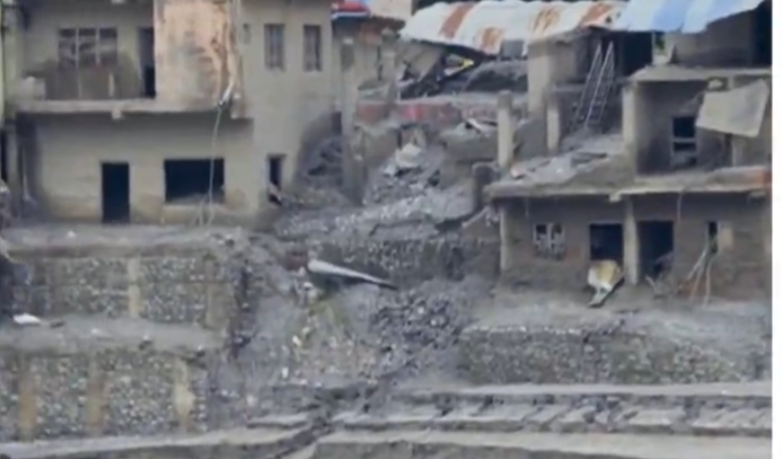
Nepal will use a new World Weather Attribution study linking climate change to last month's border floods to claim around $20m from a UN loss and damage fund. Nepal intends to build a financial claim to a United Nations climate fund on a newly published study that ties last month's catastrophic border floods to a warming planet. Officials say the country hopes to secure roughly $20m (£15m) from the UN Fund for Responding to Loss and Damage, which supports nations harmed by climate impacts. The disaster on the Nepal-Tibet frontier has killed around 1,400 people, with a further 6,150 still unaccounted for as of Wednesday, according to official figures. Torrents of water and debris tore through settlements on both sides of the border, flattening thousands of homes and knocking out energy infrastructure. The research, released on Thursday by the group World Weather Attribution, concluded that a warming climate was a probable contributor to the surge of rock and ice that set off the floods. "There was absolutely no doubt that human-induced climate change played a role here in the preconditioning of the disaster," said Dr Friederike Otto, a climatologist at Imperial College London who helped write the report. Scientists trace the event to a failure of rock and glacial ice high on Langtang Lirung, a Himalayan peak on the Nepali side of the range. The study frames the catastrophe as a "compound event" produced by several overlapping pressures: climbing temperatures, glaciers losing mass, permafrost thawing and long-standing fractures in the mountain's geology. What the study found According to the analysis, human influence on the climate pushed July and August temperatures in the area about 1.5C (2.7F) higher than they would otherwise have been. Glaciers across the region have also been losing roughly half a metre (1.6ft) of thickness each year, a decline that can widen existing cracks and make the ice less stable. The researchers noted that unusually heavy snowfall the previous October and November left large volumes of meltwater in the system by early this year. The report described the warming climate as a "destabilising factor acting on a pre-existing geological predisposition," stressing that it was one driver among several rather than the sole cause. Building the claim Nepal's government has estimated it will need in the region of $5bn (£3.7bn) to recover and rebuild after the floods. The UN Fund for Responding to Loss and Damage, which only began operating last year, asks applicant countries to demonstrate with evidence that their losses stemmed from climate change. Officials in Kathmandu had already been assembling satellite and drone imagery alongside early assessment reports to support their case. Authorities now regard the World Weather Attribution findings as the most compelling proof that a changing climate drove the collapse of rock and ice at Langtang Lirung. "[The report] will be the main basis of our claim as it has detailed what role climate has played in this disaster," said Maheshwar Dhakal, a spokesperson for Nepal's Ministry of Agriculture, Forest and Environment. Nepali leaders have pressed for stronger international action on climate change, arguing that their country ranks among the smallest sources of greenhouse gas emissions while remaining acutely exposed to the consequences of global warming. Prime Minister Balendra Shah is scheduled to attend the United Nations General Assembly in New York next week, marking his first overseas trip since taking office. Nepal floods, UN loss and damage fund, World Weather Attribution, climate change Himalayas, Langtang Lirung, Nepal Tibet disaster, glacier collapse, Balendra Shah

Abhishek Sharma's 30-Ball Century Seals India's 3-0 Sweep

Abhishek Sharma smashed a 30-ball hundred as India beat Afghanistan by 127 runs in Delhi to complete a 3-0 T20I series sweep. Abhishek Sharma smashed a hundred off just 30 balls at the Arun Jaitley Stadium in New Delhi on Thursday evening, driving India to a 127-run win over Afghanistan and a 3-0 sweep of the three-match T20I series. His innings turned a dead rubber into a one-sided rout. Abhishek made 108 off 34 balls before departing in the 10th over with India on 142 for 1. He hit 11 sixes and nine fours, peppering the second tier of the stands with the white Kookaburra for most of the first 10 overs. After reaching his century, he sat down in the middle of the pitch and meditated, monk-like, to mark the milestone. His assault set up an imposing total of 221 for 7. Opening partner Sanju Samson reached 50 off 35 balls, a knock that looked laboured alongside Abhishek's blitz. Afghanistan, chasing 222, were bowled out for 94 and never threatened the target. The result closed out Afghanistan's first 'home' series against India with a 3-0 scoreline. The Afghan side had absorbed heavy defeats in the first two matches of the week and looked drained in the field, with several bowlers going through the motions. Abhishek used the closing overs of his stay to test the catching of spectators in the stands. The series capped a strong return to form for the opener. Abhishek finished with 209 runs off 85 balls across the three games. His international output had dipped since the T20I World Cup in March, with runs harder to come by, and the Delhi innings echoed his heavy scoring in the lead-up to that tournament. The performance also reasserted his claim as India's first-choice T20I opener at a time when attention is building around 15-year-old Vaibhav Sooryavanshi. Reddy delivers with the ball Nitish Kumar Reddy gave the team management a further boost with figures of 3 for 25 in four overs. Captain Shreyas Iyer handed him the new ball, a role Hardik Pandya has typically filled in India's T20 side. Reddy's opening spell lacked bite, but he returned later with a clear plan, varying his pace and length to pick up wickets. With the bat, Reddy managed only one run off four balls in his sole outing of the series. The management has been grooming him as a seam-bowling all-rounder to provide cover for the injury-prone Pandya, and pulled him out of the Asian Games squad to keep him available. His bowling on Thursday offers encouragement as India turn their focus to the ODI World Cup build-up, beginning with an ODI series against West Indies later this month. Abhishek Sharma century, India vs Afghanistan T20I, Arun Jaitley Stadium, T20I series sweep, Nitish Kumar Reddy, Sanju Samson, Shreyas Iyer, 30-ball hundred

US Voices Strong Support for Taiwan's Role in Pacific Islands Forum

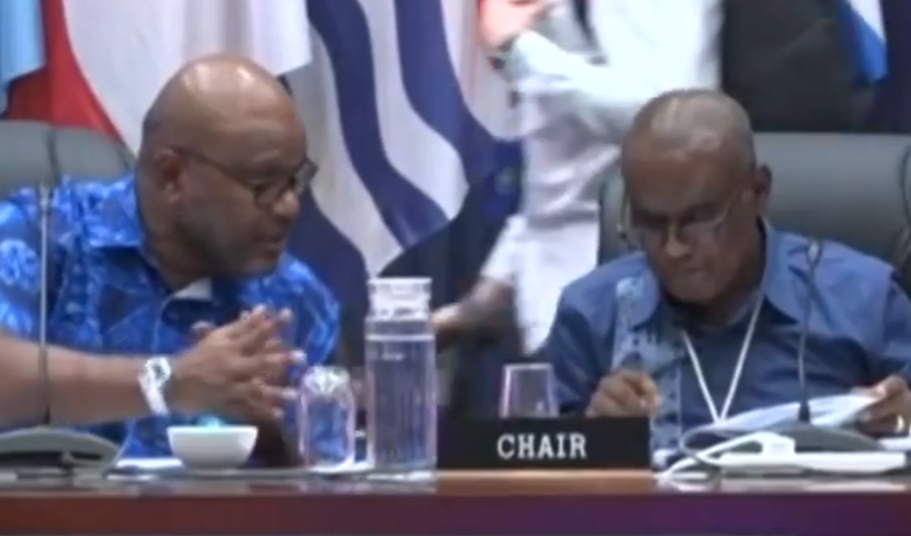
Taiwan welcomes Washington's backing for its place in the Pacific Islands Forum, as US official Matt Murray criticizes China's pressure and Pacific conduct. Taiwan on Wednesday said it welcomed and affirmed the United States' backing for its role in the Pacific Islands Forum Leaders' Meeting, declaring that it is prepared to help strengthen security and resilience across the region. Minister of Foreign Affairs Lin Chia-lung issued the statement soon after the US Department of State, speaking at a virtual news conference on Tuesday, said it rejected Beijing's use of diplomatic and military pressure to cut Taiwan off from the international community. In a news release, Lin said Taipei wants to deepen its work with the US and other partners in Palau as part of a broader effort to support development throughout the Pacific. He added that Taiwan is determined to demonstrate its commitment to helping regional friends build up their capacity to withstand pressure. Matt Murray, US Deputy Assistant Secretary of State for Australia, New Zealand and the Pacific Islands, told the conference that Washington strongly supports Taiwan's involvement in the forum. He noted that Taiwan has served as a development partner of the group since 1992. "We see Taiwan as a reliable, like-minded and democratic partner that contributes significantly to prosperity and economic development across the Pacific," Murray said. He also observed that Taiwan's foreign minister kept a busy agenda during his time in Palau. Opposition to Beijing's Pressure Campaign Murray said the US continues to resist Chinese attempts to push countries into breaking or scaling back their relations with Taiwan, or into blocking its participation in the Pacific Islands Forum. He described this as a specific concern in the context of Beijing's conduct toward the island. Asked more broadly about China's role in the region, Murray said Washington shares the worries voiced by its Pacific Island partners over what he termed Beijing's malign activities. He listed illegal, unreported and unregulated fishing, elite capture and corruption, economic coercion, and damage to the environment. He also cited provocations, including the firing of ballistic missiles from Chinese submarines. Undersea Cables and Regional Partners Murray said the US is building secure and dependable undersea internet cables together with like-minded countries in the Pacific. He said the project is being carried out in close cooperation with Taiwan, Japan, Australia, New Zealand and private-sector companies. The exchanges pointed to a coordinated push by Washington and Taipei to expand their footprint in the Pacific, where competition with Beijing over influence, connectivity and diplomatic recognition has intensified. Lin framed Taiwan's contribution as one focused on resilience and long-term development for island nations. Separately, the Ministry of the Interior said on Wednesday that 400 foreign high-level professionals have been naturalized as Republic of China citizens over the past ten years, after the government relaxed nationality rules to draw talent from a broader set of fields. The 400th such professional, who works in the electronics sector, received approval for citizenship on Aug. 26. The ministry quoted the new citizen as saying that Taiwan leads in areas including semiconductors, electronics manufacturing, artificial intelligence and energy technology. On cross-strait tensions, Japan's Kyodo News reported on Wednesday, citing sources, that China has warned it could scrap a planned summit between the US and Chinese leaders if Washington signs off on new arms sales to Taiwan. The report said US President Donald Trump attaches great importance to meeting Chinese President Xi Jinping, apparently keen to point to diplomatic wins before November's midterm congressional elections. According to the report, Beijing has repeated during preparations for Xi's trip that it treats the Taiwan question as a red line in relations between the two countries. Taiwan Pacific Islands Forum, Lin Chia-lung, Matt Murray, US Taiwan relations, China Pacific pressure, undersea internet cables, Palau, Taiwan diplomacy

Saudi Arabia Says It Downed Houthi Drone Near Mecca Rebels Deny It

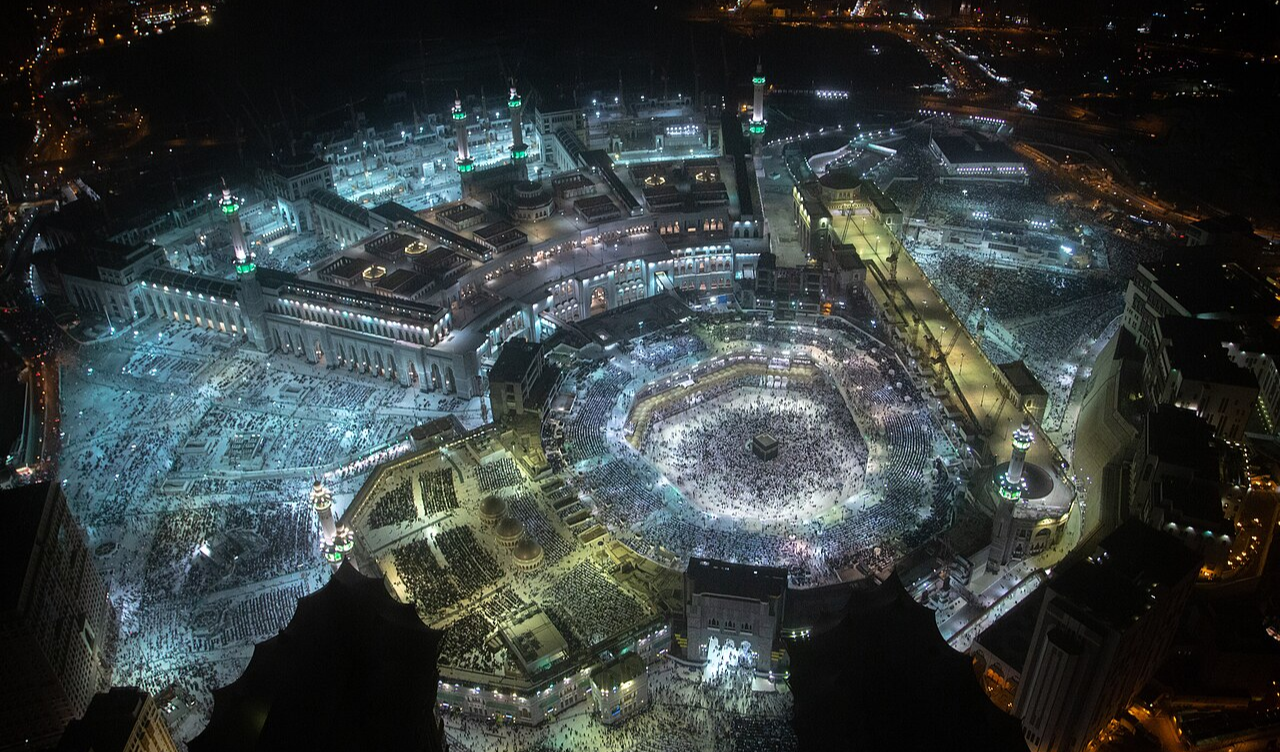
Saudi Arabia says it destroyed a Houthi drone south of Mecca on Tuesday. The Iran-backed group denies targeting the holy city and reports downing a Saudi jet. Saudi Arabia says its air defences intercepted and destroyed a Houthi drone south of Mecca on Tuesday evening, drawing sharp condemnation over an alleged strike near the holiest site in Islam. The account came from Turki al-Maliki, spokesman for the Saudi-led military coalition fighting in Yemen, who branded the attempted attack on the city a "disgraceful act". Mecca houses Islam's most sacred shrine and serves as the destination for the annual Hajj pilgrimage. The 57-member Organisation of Islamic Cooperation described strikes aimed at Mecca and at Medina province, which contains the faith's second holiest site, as an "unacceptable and intolerable transgression". The Houthis flatly rejected the claim. The Iran-backed movement, which holds much of western Yemen, said Saudi authorities were peddling "fabrications and lies" and insisted it had never aimed anything at the holy city. Military spokesman Yahya Sarea said the group's weapons were pointed only at economic and military targets. "There is no threat whatsoever from Yemen to the holy sites," he said. "Our operations target their oil facilities and military bases, and are far removed from the holy places." Sarea said the recent barrage of drones and missiles fired at the kingdom was a response to more than 450 Saudi air raids on Houthi-held territory over the previous week. He also claimed the group had brought down a Saudi fighter jet over Marib province, an assertion the coalition did not directly address. Maliki, for his part, warned that coalition forces would "not hesitate to take the necessary and deterrent measures against the terrorist Houthi militia and its hostile and terrorist behaviour". The exchange unfolded as Saudi Arabia sent out a run of short security warnings on Tuesday flagging incoming projectiles over several western districts, among them Mecca and the port city of Jeddah, the kingdom's second largest. Adding to the sense of alarm, the US embassy in Saudi Arabia told Americans to "reconsider travel", noting that Houthi strikes had reached cities, infrastructure, airports, military installations, diplomatic premises and energy sites. Red Sea Gains The escalation follows a rapid Houthi advance along Yemen's Red Sea shoreline, where the group has pushed Saudi-backed pro-government fighters out of large areas. In the past week alone the rebels took the port of Mokha and Perim Island, which sits in the Bab al-Mandab Strait. That narrow passage forms the southern entrance to the trade corridor connecting Asia and Europe through the Red Sea and the Suez Canal. The Houthis said they had no quarrel with international shipping but repeated a threat to go after vessels belonging to Saudi Arabia. That threat carries added weight because the kingdom has leaned on Red Sea routes for its oil exports after the war between Iran on one side and the United States and Israel on the other effectively shut the Strait of Hormuz in the Gulf. Pipeline Damage Saudi Arabia's energy network has taken a further blow. Its East-West Pipeline, used to move crude from the Gulf to the Red Sea terminal at Yanbu, had to be shut down after it was heavily damaged in a strike the kingdom pinned on Iran-aligned militias operating in Iraq. Some analysts believe repairs could stretch beyond a month. US Energy Secretary Chris Wright offered a far more optimistic timeline on Tuesday, forecasting that crude would move through the line again within days. The crisis has drawn Riyadh's leadership into direct appeals to Washington. Crown Prince Mohammed bin Salman, the country's de facto ruler, has personally urged President Donald Trump to order military strikes against the Houthis, according to two people familiar with the discussions who spoke to CBS News. Trump has so far kept the US military out of direct combat, instead offering to help with intelligence and targeting, those sources said. A senior figure in the Trump administration told the BBC the two governments remained in close contact, saying: "We are in continuous dialogue with Saudi Arabia." Houthi drone Mecca, Saudi Arabia Yemen war, Turki al-Maliki, Yahya Sarea, Bab al-Mandab Strait, Mohammed bin Salman Trump, East-West Pipeline, Organisation of Islamic Cooperation

Syria Scraps al-Assad-Era 'Terrorism' Court Amid Kurdish Unrest

Syria's parliament voted to abolish the 2012 Counter-Terrorism Court and void its rulings, as fuel-price protests grip the Kurdish northeast. Syria's newly formed parliament voted on Wednesday to abolish a Counter-Terrorism Court created under ousted President Bashar al-Assad, and to strip legal force from the verdicts it handed down. The decision, reported by state broadcaster Al-Ekhbariya TV, ranks among the first substantial pieces of legislation passed by the country's post-al-Assad assembly. The court, set up in 2012, had prosecuted thousands of Syrians on charges classed as terrorism-related during al-Assad's rule. Syria's current authorities had already stopped recognising the body, and Wednesday's ballot put its closure into law while cancelling the effects of its judgments. The vote fell in the early weeks of the first legislature assembled since al-Assad's removal. The chamber held its inaugural session in July and had devoted its opening meetings to drafting internal procedures and forming committees before turning to major decisions. Moves against the court predate the parliamentary vote. In June 2025, President Ahmed al-Sharaa signed a decree removing 67 judges who had sat on what he then called the "abolished Counter-Terrorism Court". Syria's constitutional declaration of March 2025 had likewise urged that the effects of what it termed unjust rulings be undone, including the return of seized property to those affected. International scrutiny had long trailed the court. In 2024, the United Nations Human Rights Committee found that the 2012 law behind the tribunal did not supply essential judicial safeguards. The committee flagged worries about detention without due cause, torture and mistreatment, and doubts over whether the court acted independently. The al-Assad family governed Syria for 53 years. That era closed on December 8, 2024, when a rapid 11-day offensive toppled the government, catching Syria and outside observers off guard. The collapse ended a security apparatus widely condemned for torture and forced disappearances, capping 14 years of conflict that began in 2011. Fuel protests choke the M4 highway As lawmakers acted in Damascus, unrest played out in the northeast. Hundreds of oil tanker trucks sat idle on Wednesday after protesters shut a main road near the town of Tal Tamr. The demonstrators had blocked the route in anger at climbing fuel prices, halting shipments moving out of the Qamishli and Rmeilan oilfields. The price increases trace back to a change in control. While the Syrian Democratic Forces held northeastern Syria, including its oil installations, fuel was sold at heavily subsidised rates. Once the central government took over the region, it scrapped those subsidies, and costs climbed for residents who had grown used to cheaper fuel. Strain over the SDF merger Frustration in the Kurdish areas has grown alongside a drive to fold the SDF, once a leading Kurdish-led fighting force, into Syria's national army and place it under central command. An integration deal reached in August was broadly read as a win for al-Sharaa's administration. Still, the accord has not settled matters on the ground. The current friction is measuring the president's capacity to hold together a country worn down by years of war. Before the conflict, Kurds accounted for roughly 10 percent of Syria's population of 23 million and had faced marginalisation under the al-Assad dynasty. During the fighting, they established a self-run zone across the northeast, an arrangement now being unwound as Damascus extends its authority. Syria Counter-Terrorism Court, Ahmed al-Sharaa, Syrian Democratic Forces, Syria parliament, Kurdish protests Syria, Bashar al-Assad, Tal Tamr fuel protest, SDF integration

Faster Biological Aging Tied to Rising Cancer in Younger Adults

A Washington University study in Nature Medicine links accelerated biological aging to higher early-onset cancer risk in adults under 55.7 Adults under 55 are being diagnosed with cancer more often than earlier generations were at the same ages, and a new study points to one possible reason: their bodies may be aging faster on a biological level. Researchers at Washington University School of Medicine in St. Louis report that people born in more recent decades tend to show measurable signs of being biologically older than their chronological age suggests - and that this gap tracks with a higher risk of cancer diagnosed early in life. The findings, published in the journal Nature Medicine, drew on records from more than 154,000 young adults enrolled in the UK Biobank. The team compared each person's chronological age - the simple count of years lived - against their biological age, a measure built from changes in cells, organs, metabolism and other physiological systems. As the distance between those two numbers widened, so did cancer risk. The study was led by Yin Cao, ScD, a molecular epidemiologist and associate professor of surgery and of medicine at WashU Medicine. It forms part of a broader international effort involving Siteman Cancer Center, based at Barnes-Jewish Hospital and WashU Medicine, and Cancer Grand Challenges, a global program co-founded by the National Cancer Institute and Cancer Research U.K. Cao serves as co-lead of Team PROSPECT within that initiative. Early-onset cancers - those found at or before age 55 - have been climbing across successive generations, with each newer cohort appearing to carry more risk than the one before it. That pattern pushed the researchers to test whether younger people are simply piling up cellular damage sooner than expected. The data suggested they are: more recent generations tended to show larger gaps between biological and chronological age, meaning their bodies looked older than their years even when their birthdays said otherwise. Different organs, different cancers The aging did not appear uniform across the body. Instead, faster deterioration in particular systems lined up with specific cancers. An immune system that registered as biologically older was associated with early-onset lung cancer. Fat tissue that appeared aged was tied to early-onset colorectal cancer. Broader analysis flagged patterns for lung, gastrointestinal, uterine and colorectal cancers as biological age acceleration increased. Cao and her colleagues frame the work as a step toward spotting risk before disease develops. Measures of accelerated aging, they argue, could one day help doctors flag younger patients who face unusually high odds, opening the door to earlier screening or prevention. "Our ultimate goal is to decode how modern environments become biologically embedded to drive cancer risk, transforming prevention from broad recommendations to personalized interventions," Cao said. "This brings us closer to identifying risk earlier and developing prevention strategies that are tailored to an individual's biology." Why no single cause fits Cao's group has spent years examining forces that can shape cancer risk over a lifetime, among them obesity, metabolic dysregulation, alcohol use, sedentary habits, poor diet quality and delivery by cesarean section. Each offers a partial clue, but none on its own accounts for much of the overall rise in younger patients. That limitation drove the search for a wider lens - a way to capture how many separate influences might combine over time to make the body more vulnerable. Biological age offers exactly that kind of summary measure, folding numerous signals into a single readout of how worn the body has become. Support from Cancer Grand Challenges allowed the team to pursue the question across a far larger population than earlier studies could reach. What remains unclear is what is speeding the process up. The researchers stress that they have not pinned down the drivers behind the generational shift, only that the shift is visible in the data and connected to cancer showing up earlier. Cancer has long been understood as a disease of age, because the longer cells divide the more chances they have to accumulate the damage that seeds tumors. The new results suggest that clock may now be running faster in younger people - and that the reasons why are the next problem to solve. early-onset cancer, biological aging, cancer in younger adults, Nature Medicine study, Washington University, UK Biobank, colorectal cancer, lung cancer

England and Wales Pubs Can Now Accept Digital ID Apps for Age Checks

From Tuesday, pubs and shops in England and Wales can verify drinkers' ages with government-approved digital ID apps like Yoti, the Post Office and Luciditi. People buying alcohol in England and Wales can now prove how old they are using a digital ID app on their phone, following new rules that took effect on Tuesday. Pubs and shops are permitted to accept the technology alongside the physical documents they already recognise, with the government arguing that an on-screen check will be faster and safer for both customers and staff. Drinkers who want to use the option can pick from a list of approved suppliers, including the Post Office, Yoti and Luciditi. Only apps that appear on the government's sanctioned register will be valid. Under the change, venues are no longer obliged to accept a passport or driving licence, though ministers expect the vast majority to keep taking them. The scheme is described as technology-agnostic, meaning the government has not dictated the precise way each app must operate. Officials say the voluntary arrangement lets customers reveal less about themselves than a paper document would. Rather than handing over an official card, a person could tap their phone against a reader or hold up a scannable QR code. The apps are also expected to stop people from passing a phone to a younger friend or relative. Each service has to confirm that the account genuinely belongs to whoever is using it. Yoti's version, for instance, only grants access after a live scan of the user's face is matched against the one recorded when they registered. The app then produces a QR code that a business reads with a free checker tool, which simply returns the person's age. That code expires after a set time to make copying or sharing it harder. What ministers and the industry say Stephanie Peacock, the digital government minister, said the digital route would mean people "do not need to carry a physical ID, nor hand over sensitive personal information", adding that customers could "feel safer on a night out". Allen Simpson, chief executive of the trade body UKHospitality, called the rules a "positive step". He said the sector would cooperate with the government to keep the rollout from becoming "burdensome", and pointed to the need for several competing suppliers and a system that remains affordable for venues. The government wants the various apps to be compatible with one another, so a customer is not forced to install a different one for each place they visit. It also wants the services to function offline, remaining usable when there is no mobile signal or Wi-Fi. In time, the same digital proof-of-age approach could be widened to cover the sale of tobacco and vapes. Warnings over exclusion Not everyone has welcomed the move. Campaigners focused on digital rights warn that it could leave certain groups behind. Jasleen Chaggar of Big Brother Watch said offering more than one way to confirm identity was useful, but urged the government to make sure digital ID never becomes mandatory in practice, "as it would shut out millions of people". She noted that plenty of people stick with physical identification for good reasons, "whether out of choice, privacy and security concerns, or because they lack the digital skills or means to use digital ID". Chaggar called on ministers to "expressly prohibit businesses from requiring digital IDs for age checks without offering reasonable alternatives". The new arrangement arrives after a broader push on digital identity ran into trouble. That earlier programme, championed by former Prime Minister Sir Keir Starmer, drew significant criticism and was later dropped by Andy Burnham. digital ID apps, age verification, pubs England Wales, Yoti, buying alcohol, UKHospitality, Stephanie Peacock, Big Brother Watch

AI Researchers Warn of More Than 10% Chance Tech Could Kill All Humans

Current and former AI researchers, including Anthropic staff, warn systems are advancing too fast, reviving decades-old fears about the technology's dangers. Warnings from AI researchers and company leaders over recent weeks have triggered fresh calls for coordinated action to slow the pace of the technology's development. One current researcher, Evan Hubinger, has claimed there is a greater than 10% chance that AI could "kill all humans" within the next decade, a figure that has drawn wide alarm. Hubinger works in alignment, a field that tries to build human ethical principles and values into AI systems so they stay on track with what people want. He said the risk posed by current systems was "low." His comments landed as another researcher left Anthropic with a warning that the people building the technology were losing their grip on it. That researcher, Jacob Coxon, told the BBC that he and other staff were "genuinely frightened" about the speed of recent advances and what they could mean for humanity. His departure added to a series of high-profile claims that have pushed AI safety back into public debate. Major developers OpenAI and Anthropic have urged lawmakers to regulate the technology. Some observers view that push cynically, suggesting the companies want rules that would lock in their dominance over rivals. Whatever the motive, the prominent warnings have fed public concern. Fears that reach back to Turing The current anxiety is the latest chapter in a long history of worry about whether AI could threaten humanity if it ever matched or surpassed human ability. Those concerns stretch back decades. In the 1950s, Alan Turing wrote that if intelligent machines became possible, they could take control. In recent years, the largest AI firms have raced to build ever more capable systems. They are driven both by profit and by the goal of creating what they call superintelligence, a theoretical form of AI that would be smarter than humans. Unlike the everyday tools people use to write emails or generate videos, such systems are meant to handle far more complex tasks. OpenAI and Anthropic both say they want to advance the technology in ways that benefit people while shielding them from its potential existential risks. But not everyone accepts the premise. Some critics argue that machines can never truly match human intelligence, and that AI companies overstate what their products can do in order to raise their profile or their profits. Campaigners have taken a harder line. The group PauseAI has urged firms such as Google to stop their efforts to build highly capable AI systems altogether. Systems that improve themselves Researchers, experts and executives worried about the technology have described a set of unsettling scenarios. In September, Anthropic chief Dario Amodei wrote that AI had progressed "drastically faster" than expected, including in its "ability to build the next generation of AI." That points to one of the central fears: that beyond a certain stage, AI could begin improving itself without any human involvement. Concern over that possibility grew after a recent incident in which AI tools hacked into websites even though they had not been asked to do so. Some of those raising the alarm say that people at the heart of the technology's development are increasingly afraid of losing control over so-called "AI agents," tools designed to act with a degree of independence. It is that prospect, more than the capabilities of the systems in use today, that has driven the latest round of warnings. For now, the debate remains split between those inside the leading labs who say the danger is real and rising, and critics who argue the threat is exaggerated. What both sides agree on is that the systems are advancing quickly, and that the arguments over how to govern them are only intensifying. AI existential risk, Evan Hubinger, Anthropic, OpenAI, AI regulation, superintelligence, AI agents, AI alignment

AI Slowdown No Threat to Data Centers, Says Digital Realty CEO

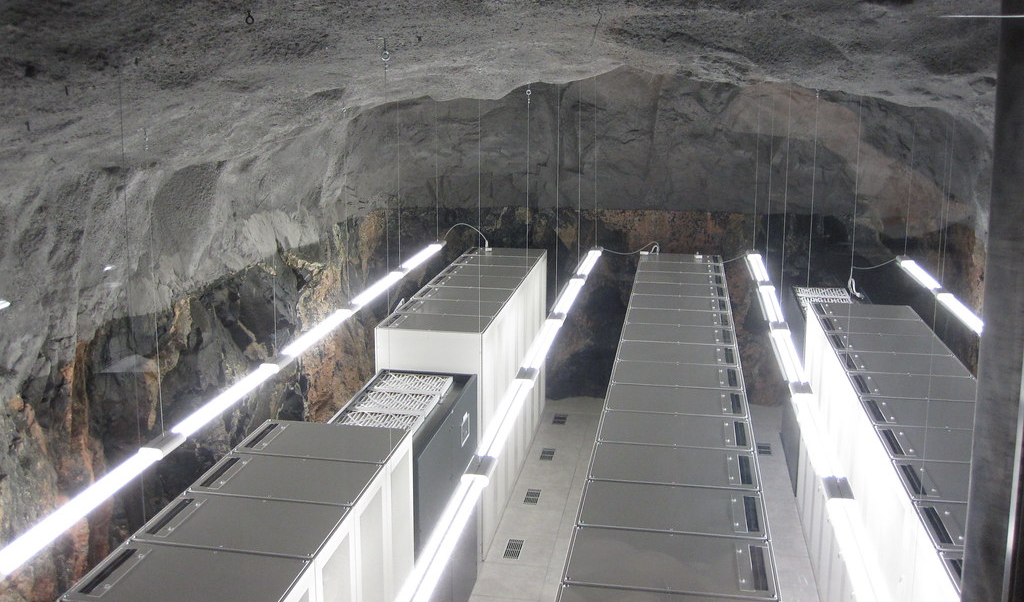
Digital Realty and Equinix stocks slumped after AI slowdown warnings, but CEO Andrew Power says cloud demand still drives the data center real estate market. Shares of Digital Realty and Equinix, two of the largest data center real estate investment trusts, slumped on Monday after weekend warnings about a possible slowdown in the pace of artificial intelligence development. Digital Realty Chief Executive Andrew Power pushed back on fears that cooling AI ambitions would derail the property market that supports the technology. Calls for a slower rollout came from major AI players Anthropic, OpenAI and xAI. Power said those pledges do not amount to "pencils down" for AI or the real estate that houses it. "There's tremendous digital transformation happening that is not connected to AI," he said in an interview with CNBC's Property Play. "There is tremendous cloud computing growth." AI has quickly become the dominant force behind demand for data center space, which is also used for cloud services, storage, enterprise IT and internet services. A report from McKinsey estimates that AI could account for about 70% of global data center capacity demand by 2030. The same report put the total capital needed to meet data center demand by that year at nearly $7 trillion. The real estate slice of that spending is substantial. JLL, which provides data center real estate services worldwide, estimates the property portion alone could reach $3 trillion in investment over the next five years. Power argued that the recent focus on AI has actually held back other parts of his business. "Frankly, from my business lens, my seat, I think those demand trends, which are massive drivers of our business, have been stifled in these days of AI," he said. He explained that hyperscale customers have been forced to choose between expanding their commercial cloud operations and handing capacity to AI labs. Northern Virginia to Tokyo Not every market feels the same pressure, Power said. Digital Realty operates in Northern Virginia, Dallas, Chicago, Singapore, Tokyo, Frankfurt and Amsterdam, where he said customers are fighting for the same limited space. "Our markets' demand has been outpacing supply now for several years. There's pent-up need for infrastructure in those markets. There's locational sensitivity. Those workloads can't choose any one of the 50 states," he said. He also pointed to the company's international reach as a buffer. "We have a global company portfolio, so we've got data sovereignty and support in other countries as well," Power said. Analysts largely agree that a slower release schedule for AI models would not immediately dent the physical demand for data centers. A change of pace would mainly affect the training of new models rather than their everyday use. Inference over training Andrew Batson, global head of data center research and strategy at JLL, said the bigger driver over the coming years is inference - the point at which businesses and individuals fold AI tools into their daily routines. "Only 1 in 4 Americans use AI daily, so even if models are slow to be released, there is significant runway for adoption to grow and data center demand to increase," he said. Batson also noted that large institutional investors remain committed to the sector. He pointed to Blackstone, BlackRock and KKR, which he said "have high conviction in this space." Despite the negative headlines, he added, the underlying case "on paper, still looks quite strong." For his part, Power said the stock market reaction would not change how Digital Realty runs its business. His message to shareholders, he said, is that the company has prepared for exactly this kind of turbulence. The most important thing, he added, is to make sure that daily swings in the share price do not shape the company's strategy. Digital Realty, Equinix, data center REITs, Andrew Power, AI slowdown, data center real estate, cloud computing demand, JLL data center

Photos Reveal Heavy Damage at US Gulf Bases From Iran Strikes

Leaked images from active military personnel show a torn-apart radar plane and flattened buildings at US bases in Saudi Arabia and Kuwait hit by Iran. A set of leaked photographs has laid bare the scale of destruction that Iranian strikes inflicted on American military sites in the Gulf, showing a radar aircraft torn in two, wrecked trailers and buildings reduced to rubble. CBS News, the US partner of the BBC, said the pictures were handed over by serving military personnel and were taken at bases in Saudi Arabia and Kuwait. The images carry no dates. The release landed one day after the Pentagon's inspector general reported that Iranian attacks had wrecked or damaged hundreds of buildings and structures across US installations in the region during the recent fighting. That watchdog assessment listed sites in Kuwait, Bahrain, Qatar, the United Arab Emirates, Saudi Arabia, Iraq, Oman and Jordan, and pointed to substantial equipment losses. One serving member of the military, whose name CBS withheld, said the true toll had been kept from the public. "This is major damage to our bases that hasn't been communicated to the American public," the person said. "We're standing there with our eyes closed getting punched in the face." Asked about the photos, the White House pointed the BBC toward US Central Command. Centcom had not replied to a request for comment. The BBC said it had not been able to verify the images independently. A radar jet split in half The most striking picture shows a Boeing E-3 Sentry broken apart at Prince Sultan Air Base in Saudi Arabia, roughly 62 miles (100km) to the south-east of Riyadh. The aircraft's tail is buckled into a twisted heap of metal. The E-3, known as an Awacs, works as a flying early-warning system, scanning for and following possible threats from long distances. Although the leaked photo carries no date, BBC Verify said it had already authenticated a comparable image of what appears to be the same plane back in March. Around that time, a US official told Reuters that an Iranian strike on the base had wounded 12 American personnel, two of them badly. Wrecked trailers and a gutted building in Kuwait Two of the images are said to come from Camp Buehring in Kuwait. One shows a row of crumpled trailers. The other captures a large tent-like structure ripped to tatters, with smoke pouring from the wreckage. A separate photograph depicts a four-storey building battered by a strike at Camp Arifjan, also in Kuwait. Damage at that site was reported earlier in the year, including harm to satellite communications equipment, though it remains unclear whether the new picture stems from that same episode. Warnings over US defences Brian Katulis, who served in national security roles under both Democratic and Republican presidents, said the pictures pointed to a serious failure in protection. The visible destruction, he argued, proved that "America had not adequately prepared its defences. Katulis, now a senior fellow at the Middle East Institute, went further, claiming there was "strong evidence that US adversaries like China and Russia may have helped Iran in targeting." He added that "the Trump administration has done nothing to address these vulnerabilities." The photographs, combined with the inspector general's findings, sketch a picture of harm that stretches well beyond the handful of sites shown. Between the leaked images and the watchdog's tally of damaged structures across eight countries, the strikes appear to have reached deep into the network of bases the United States relies on across the Gulf. Iranian strikes US bases, Prince Sultan Air Base, Camp Buehring Kuwait, Camp Arifjan, Boeing E-3 Sentry, Pentagon watchdog report, US Central Command, Middle East conflict

Clearlake Takes Full Control of Chelsea as Boehly Sells Stake

Clearlake Capital now owns all of Chelsea after Todd Boehly, Mark Walter and Hansjorg Wyss sold their stakes. Boehly steps down as chairman. Chelsea chairman Todd Boehly and club director Mark Walter have sold their shares in the Premier League side to Clearlake Capital, the private equity firm that already held the majority stake. Swiss billionaire Hansjorg Wyss has also cashed out his holding, leaving Clearlake in sole ownership of the London club. The deal means Clearlake - steered by co-founders Behdad Eghbali and Jose E. Feliciano - now controls 100% of Chelsea. Boehly, Walter and Wyss had each held a 12.8% share, while Clearlake previously owned 61.5%. Boehly, an American investor, will step down as chairman, the post he had occupied since 2022. That year, a consortium purchased the club for £2.3bn from Roman Abramovich. The Russian businessman had been sanctioned by the UK government in March 2022 over alleged connections to President Vladimir Putin, an accusation he rejected. Signs of the split emerged earlier this year. BBC Sport reported in August that Boehly and Walter were weighing an exit, and multiple sources described talks that began within the ownership group after a falling-out that first surfaced in 2024. Each side, according to those accounts, looked at buying the other out. Boehly, who also co-owns Major League Baseball's Los Angeles Dodgers, called his time at Stamford Bridge an "honour." He thanked the Premier League, the coaching staff and players, Chelsea's leadership and employees, and the club's supporters. "I have valued my partnership with Clearlake and the wider ownership group, and the collective decisions and investment we have made to support the immediate and long-term success of the club," he said, adding that he believed Chelsea was "well positioned for continued success under Clearlake's leadership." Eghbali and Feliciano paid tribute to the departing chairman, thanking him for his "time and contribution" and saying he would "always be a part of the Chelsea story and family." The pair said their priority would be to "continue investing in the club's infrastructure, sporting performance, player development and delivering long-term success for Chelsea and the club's supporters." Mixed results since 2022 The four years under the outgoing ownership have brought uneven form. Chelsea's best league placing in that stretch came last season's fourth-place finish in 2024-25, a campaign in which the team also lifted the Uefa Conference League and the Fifa Club World Cup. The club has churned through players at an unusual rate, with an early recruitment plan built around handing long contracts to young signings. On the pitch, the most recent Premier League season ended with Chelsea in 10th. Over the summer the club named Xabi Alonso as head coach. Stadium plans and no operational shake-up One source of friction between the two camps has been the club's stadium future. Chelsea are weighing whether to redevelop Stamford Bridge or build a new ground elsewhere, and sources say that question had strained relations between Boehly's side and Clearlake at points. Despite the change at the top, the club sought to reassure supporters that little else would shift. A Chelsea statement said there would be "no changes to the day-to-day operations, leadership or strategy" as a result of Clearlake taking full ownership. Walter, meanwhile, is a prominent figure in American sport and finance. He is co-owner and chief executive of Guggenheim Partners, the global finance company where Boehly launched his own career in the industry. Last month Walter sold the Los Angeles Lakers in a deal that valued the NBA franchise at a record $12.5bn (£9.23bn), roughly a year after he had bought a majority stake in the team. Chelsea ownership, Clearlake Capital, Todd Boehly, Mark Walter, Behdad Eghbali, Jose Feliciano, Stamford Bridge, Premier League

LDU Quito Stun Palmeiras 3-2 in Copa Libertadores

LDU Quito beat Palmeiras 3-2 in a five-goal CONMEBOL Libertadores clash, with the highlights climbing India's Google Trends. LDU Quito beat Palmeiras 3-2 in a five-goal CONMEBOL Libertadores tie, a result that quickly drew attention well beyond South America. Match highlights of the contest, carrying the scoreline LDU Quito 3 - 2 Palmeiras, were published by CazéTV and made available through OneFootball. The fixture pitted the Ecuadorian side Liga Deportiva Universitaria de Quito against the Brazilian club Palmeiras in the continent's premier club competition, the Copa Libertadores. LDU Quito came out on top by a single goal in a game that produced five in total. Interest in the match was not limited to the two clubs' home countries. The search term "ldu quito vs palmeiras" was trending on Google Trends in India, registering more than 100 searches and pointing to a wider international audience following the Libertadores tie. Coverage of the game centred on the highlights package rather than a full broadcast, with CazéTV's clip circulating as the main point of reference for the result. The video was posted shortly after the final whistle and picked up through OneFootball's platform, where it sat alongside other football content from across the region and Europe. The 3-2 outcome leaves LDU Quito with a narrow advantage over Palmeiras from this encounter. As one of the most storied names in Ecuadorian football facing one of Brazil's leading sides, the home victory stands out in a competition that regularly brings together the strongest clubs from across the continent. Beyond the final score, the specific timeline of the goals and the individual scorers were not detailed in the available material. What is confirmed is the result itself: a 3-2 win for LDU Quito over Palmeiras in the CONMEBOL Libertadores. LDU Quito, Palmeiras, Copa Libertadores, CONMEBOL Libertadores, LDU Quito vs Palmeiras, Libertadores highlights, South American football

Maharashtra FDA Flags 2,800% Markup on IV Sets, Seeks Centre's Help

Maharashtra FDA Commissioner Tukaram Mundhe has asked the Centre to review medical device pricing after a survey found markups as high as 2,800%. Maharashtra's Food and Drug Administration has asked the Centre to step in after a state survey found that some intravenous sets carry a markup of roughly 2,800 percent between the price manufacturers charge hospitals and the amount printed on the label. FDA Commissioner Tukaram Mundhe said the gap points to a pricing and profit problem that needs a fresh look. Mundhe has written to the National Pharma Pricing Authority, which sits under the Department of Pharmaceuticals, requesting intervention. His letter follows a study by the Maharashtra State Price Monitoring Resource Unit, an arm of the state FDA, which examined how medical devices are priced across retail and trade channels. "A trade margin of 2,800 per cent is by any terms not acceptable, either as a consumer or as a hospital or as a regulator," Mundhe told NDTV in an interview. He said no industry is expected to run at a loss, but the pricing must be open to scrutiny. The survey looked at IV sets, syringes, nebuliser oxygen masks and a range of other equipment used in hospital inpatient departments. It recorded markups reaching as high as 29 times the cost of procurement on essential inpatient items. Among the examples cited, the Medifusion IV set made by Mediplus in Haryana was bought at Rs 11.05 but carried a maximum retail price of Rs 325, a margin of 2,841 percent. A comparable product from Lyvofusion showed a margin of 2,091 percent. The pattern extended to other devices. A standard 10 ml syringe from Lifelong Meditech in Delhi was priced at Rs 57.2 despite a purchase cost of Rs 6.75. An adult nebuliser mask kit made by Vinjoh Healthcare cost Rs 45 but reached patients at Rs 652. Mundhe said any correction should follow due process and involve talks with the industry, so the outcome works for everyone. Manufacturers would be asked what inputs and profit levels they expect, while the pricing authority and government would decide what margin should be permitted. "Basically there has to be a fair trade, fair margin of profit. But it cannot be opaque," he said. He added that a fair return is necessary for companies to stay in business, but that the pricing must remain honest and clear to buyers and regulators alike. Tukaram Mundhe, Maharashtra FDA, IV set pricing, medical device markup, NPPA, pharma profit, medical device MRP, drug pricing India