

Language Settings
Select Website Language

GDPR Compliance

We use cookies to ensure you get the best experience on our website. By continuing to use our site, you accept our use of cookies, Privacy Policy, and Terms of Service.

Filters

Channels
Topics
Other Filters

209 Patients Harmed by Cambridge NHS Surgeon, Report Finds

A review at Addenbrooke's Hospital found 209 patients harmed under surgeon Kuldeep Stohr, with 41 severe cases and one death. Families demand a public inquiry. A mother whose teenage daughter was among more than 200 patients found to have been harmed by a now-suspended NHS orthopaedic surgeon says she no longer has any faith in the hospital that carried out the operation. Lynn, whose 13-year-old daughter Tammy was treated at Addenbrooke's Hospital in Cambridge, described the scale of the failures as "ridiculous". Figures made public on Monday show that 209 patients experienced harm while under the care of surgeon Kuldeep Stohr. Of those, 41 cases were graded as severe and one patient died. The numbers appeared in a report drawn up for the board of directors at Cambridge University Hospitals NHS Foundation Trust (CUH), which runs Addenbrooke's. The trust said it was "deeply sorry". Stohr has previously stated that she was fully co-operating with the investigation into her work. Screws placed in the wrong position Tammy's family was among the first to be given the results of an independent investigation last year. Her lawyers say the trust provided a written admission that the surgery fell below acceptable standards. Screws intended to be fixed into Tammy's hip joints to help her move more freely were positioned incorrectly and failed to attach properly to the bone. Lynn said the sheer number of affected patients could not be brushed aside. "One or two can be classed as a mistake, but this amount - no," she said. She added that the situation was especially hard for parents who had watched their children go back into theatre for further operations. She also questioned who had compiled the board report, saying relatives no longer believed what the hospital told them. More than 900 cases examined The wider review being carried out by CUH has so far assessed the treatment of over 900 patients. A large share of the cases involve children who were operated on by Stohr. The board report had been posted on the trust's website before a meeting scheduled for Wednesday. It was then taken down after journalists approached the trust for comment. The trust said a "confidential interim update" had been "shared by mistake in our public board papers". Stohr has been absent from work since March 2024. She was suspended by the hospital, with the trust initially citing personal reasons. Calls for a public inquiry Another parent, Natasha, is pressing for a public inquiry into how children treated by Stohr came to be injured. Her daughter Neave, aged 19, is among those affected. The trust expects to release its final conclusions in November. Chief executive Nicola Ayton said the findings would be given to patients and their families ahead of publication. Elizabeth Maliakal of Hudgell Solicitors, which acts for several of the families, said she anticipated the final report would be "damning". She said some of her clients, including children, had undergone significant operations they did not need - procedures that brought no benefit and left them in pain for years. "I expect the final report from the trust, once all the findings of the independent review panel are known, to be highly critical," she said, pointing out that fatal harm had already been confirmed in at least one instance, alongside many other injuries. Kuldeep Stohr, Addenbrooke's Hospital, Cambridge University Hospitals, NHS surgeon suspended, patient harm review, orthopaedic surgery children, public inquiry NHS, Hudgell Solicitors

iPhone 18 Pro Preorders Open, Prices Start at $1,199

Apple opens preorders for the iPhone 18 Pro and Pro Max ahead of a September 18 release, with prices from $1,199 and A20 Pro chips inside. Apple has opened preorders for the iPhone 18 Pro and iPhone 18 Pro Max, the two flagship handsets it revealed at its September 2026 "Sunrise and shine" event. Both models go on sale Friday, September 18th, and buyers can already reserve a specific color and storage size before stock is committed. The 6.3-inch iPhone 18 Pro carries a starting price of $1,199 for 256GB of storage, rising to $2,399 for the top 2TB configuration. The larger 6.9-inch iPhone 18 Pro Max begins at $1,299 for 256GB and reaches $2,499 for its 2TB version. Each phone comes in four finishes: deep black, silver, glacier, and burgundy. Inside both devices is Apple's new A20 Pro processor. The chip adds GPU muscle for graphics and packs additional neural cores aimed at handling AI workloads. Apple has also reworked the camera system on the two Pro models, though the phones were unveiled at the same event as the iPhone Duo and other new products. Where to place an order For now, Apple itself is the only place to reserve an unlocked iPhone 18 Pro or Pro Max. Other major retailers are starting the preorder window with carrier-tied units only. Best Buy is selling the 18 Pro through Verizon or AT&T and the Pro Max through the same two carriers. Walmart has a wider spread, listing the 18 Pro via Verizon, AT&T, and T-Mobile, and the Pro Max through T-Mobile, Verizon, or AT&T. Shoppers who would rather not hand over the full amount at once have several routes. Apple offers a financing plan spread across 36 monthly payments at zero percent APR, and the new phones qualify for the company's recently launched Apple Upgrade program. Trading in an older handset can knock as much as $885 off the bill, and carriers layer on extra credits of their own. What the carriers are offering AT&T will cover the cost of an iPhone 18 Pro through billing credits repaid over 36 months, provided customers trade in an iPhone 14 or a newer model and sign up for the AT&T Extra plan. Cheaper plans earn smaller discounts. These deals surface on Apple's checkout page, where buyers can choose to pay the $99 gap between the Pro and Pro Max themselves. T-Mobile is advertising the iPhone 18 Pro at no cost through bill credits when customers port in a number or trade in a qualifying device on its Experience Beyond plan. The terms are tighter for people already with the carrier, who need to trade in an iPhone 16 or newer to fully offset a new phone. Switchers get an offer close to what AT&T is presenting. Verizon's promotion is more direct. Its Simplicity Pro plan, priced at $80 a month for customers moving over from another network, bundles in a free iPhone 18 Pro and the ability to upgrade after a year. As with the rival deals, the "free" phone is settled through monthly bill credits, so buyers must stay with Verizon for three years to collect the full amount. Across all three networks, the pattern is the same: the phone is paid down over time rather than gifted upfront, and leaving early forfeits the remaining credits. For anyone set on a particular color or capacity, placing a preorder now is the surest way to secure it before the September 18th launch. iPhone 18 Pro, iPhone 18 Pro Max, iPhone 18 Pro preorder, Apple A20 Pro chip, iPhone 18 Pro price, iPhone 18 Pro colors, Apple September 2026 event, iPhone 18 Pro trade-in

Alstom to Build UK's First Battery Trains for Main Lines in Derby

Alstom will build 29 battery-electric TransPennine Express trains at its Derby factory under a near-£1bn deal, supporting more than 6,350 UK jobs. Britain's first battery-electric trains for long-distance main line services will be assembled at Alstom's Litchurch Lane plant in Derby, the Department for Transport has confirmed. Construction of the fleet is scheduled to start in 2028, with the first units expected to carry passengers in 2034. The order covers 29 Adessia Stream trains and is backed by an investment of close to £1bn. According to the government, the programme will sustain more than 350 roles at Alstom and around 6,000 further jobs across suppliers throughout the country. The trains will be purchased by rolling stock firm Rock Rail and then leased to operator TransPennine Express. Andy Burnham said the fleet would bring "faster, more reliable journeys to the north and thousands of British jobs for the next generation". He described the daily impact of unreliable services on passengers. "I've lost count of the number of times someone has stopped me to tell me about the train that never came," he said. "And when that happens, it means missed shifts, missed appointments, and missed opportunities. Today, that starts to change." Cutting journey times across the Pennines The new fleet forms part of the TransPennine Route Upgrade, which aims to raise capacity by 30% and add thousands of extra seats each day across the Pennines by the early to mid-2030s. The trains are due to run on routes linking Liverpool Lime Street with Scarborough, Manchester Airport with Saltburn, and Manchester Piccadilly with Hull. The Department for Transport said travel times would fall by as much as 10 minutes between Manchester and Leeds, and by up to 14 minutes between Manchester and York. Where the network has not been electrified and services currently rely on diesel power, the battery-electric units will be able to operate without producing emissions. Step-free boarding is also being promised across the fleet. A boost for Derby's rail heritage The agreement lands at a difficult moment for Alstom, which operates the largest rolling stock manufacturing site outside China. In 2024 the company won a £370m deal to build 10 trains for London's Elizabeth line. That contract came fewer than three months after a redundancy consultation placed 1,300 jobs at the Litchurch Lane site under threat. The factory has been making trains since 1876. Rob Whyte, Alstom's managing director in the UK, called the deal a "landmark moment for Britain's railway". He said the news mattered well beyond the company itself. "We're absolutely delighted. It's fantastic news for Alstom as a company but also for the city of Derby and the East Midlands," he said. "It's a great opportunity for us to continue our legacy." Whyte acknowledged a gap in production before the new work ramps up. "We have a period where new builds will stop until the TransPennine order starts, but we've already taken on some refurbishment works for CrossCountry and for ScotRail and we'll look to transfer as many people as we can into that area," he said. The Unite union welcomed the announcement. General secretary Sharon Graham said it would bring a "huge relief to Alstom's Derby workers and those in the supply chain", adding that "Unite's Alstom members have worked tirelessly in campaigning to ensure Derby's proud history of train making continues well into the future". Transport Secretary Heidi Alexander spoke to the BBC at the Alstom site, standing beside one of the new Elizabeth line trains. "It's fantastic news that a city like Derby, that's got such a proud railway heritage, is also going to be manufacturing that new fleet of trains for the north of England as well," she said. "It is good news." Alstom, battery-electric trains, Litchurch Lane Derby, TransPennine Express, TransPennine Route Upgrade, Adessia Stream, UK rail manufacturing, Rock Rail

Uganda Buries Boy-King Oyo as Rival Claims Split Tooro Throne

Uganda's King Oyo, once the world's youngest monarch, was buried in Fort Portal as his family and clan elders clash over who inherits the Tooro throne. King Oyo Nyimba Kabamba Iguru Rukidi IV, who took the throne of Uganda's Tooro kingdom as a three-year-old and once held the record as the world's youngest reigning monarch, was laid to rest on Saturday in Fort Portal in the country's west. He was 34. His burial came only days after a bitter dispute erupted over the question of who should now lead the kingdom. Oyo died last month in the United States, where he had been receiving treatment for cancer. Thousands of people crowded the roadsides as his casket travelled to the royal tombs, where a private ceremony was held. According to Guinness World Records, he was the youngest monarch in the world for the duration of his reign, which began when he was still a toddler. The succession has divided the palace. Clan elders selected Prince Edward Rukidi Kijanangoma, a 56-year-old television news presenter and a cousin of the late king, to take the throne. During the funeral, Kijanangoma is reported to have dropped nine coffee beans into Oyo's grave. The act is a customary gesture marking the close of one monarch's rule and the opening of the next. Oyo's relatives dispute the choice. His sister, Princess Ruth Komuntale, said her brother had drawn up a will in 2022 that named his own young son as the rightful successor. The child has not been publicly identified. The family formally rejected Kijanangoma in the days before the burial. The late king's mother, Queen Best Kemigisa, described the family's situation in stark terms. She said the guards who normally protect the palace had been pulled out and replaced by soldiers, a change she said confined the royals and blocked them from moving freely or welcoming guests. She called it "house arrest". Senior figures used the funeral to appeal for calm. Stephen Kazimba Mugalu, Archbishop of the Church of Uganda, warned mourners that anger voiced in a moment of loss could tear the kingdom apart. "Words spoken in grief can cause pain, division and conflict. It can even destroy the legacy of the king we are mourning," he said. President Yoweri Museveni also weighed in, urging those involved to settle the matter and to "favour unity over division". The clan responsible for managing the transition stood by its decision. Omusuuga Charles Karumasi, who heads the Babiito royal clan, insisted the process had followed established custom. "We have done everything in observance of the culture and traditions of Tooro," he said. "We must all preserve peace and serenity." Tooro is one of several traditional kingdoms in Uganda. The country's post-independence government abolished these monarchies in 1967. They were brought back in the 1990s during Museveni's presidency, but on a strictly cultural footing: their rulers are acknowledged as custodians of heritage and tradition rather than holders of political power. With the throne now contested between a clan-appointed monarch and a family pointing to a written will, the future of the kingdom's leadership remains unresolved even after Oyo has been buried. King Oyo, Tooro kingdom, Uganda, Prince Kijanangoma, Princess Ruth Komuntale, Fort Portal, royal succession, Yoweri Museveni

Browns Stick With Watson, Leaving Shedeur Sanders to Wait

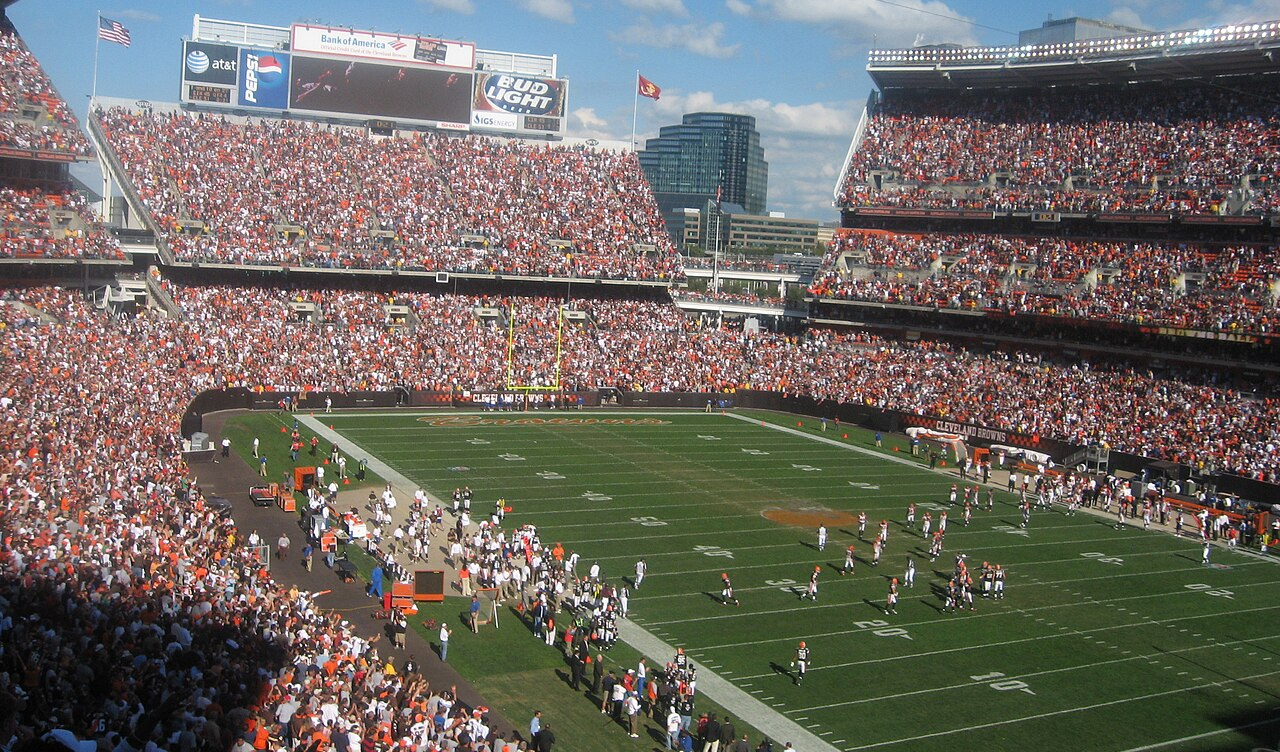
ESPN insider Jeremy Fowler says the Cleveland Browns plan to stay with Deshaun Watson and are not looking to start rookie Shedeur Sanders this season Cleveland Browns quarterback Shedeur Sanders is unlikely to see the field as a starter any time soon, according to ESPN NFL insider Jeremy Fowler, who said the team plans to commit to Deshaun Watson for the long term. Fowler discussed the situation on "SportsCenter" on Friday, one day before the Browns opened their season against the Jacksonville Jaguars. Watson is set to start under center for Cleveland, with Sanders positioned as a backup in a quarterback room the team has stocked with several options. Fowler said the Browns are not entering the new season believing they need to give Sanders any starts this year, and that the organization intends to give Watson time to settle back in. "Here's how the Browns are looking at this with how far and how many games based on what I know, they're going to base it on performance, like they would any player," Fowler said. "So, they're going to treat it as such." Fowler said the decision has nothing to do with Sanders' ability. Instead, it reflects the plan management has chosen to follow, built around patience with Watson rather than a quick change at the position. A major factor is the inexperience around Watson. Fowler noted that the Browns have six players on offense who are either rookies or in their second year, making the unit one of the youngest in the league. He said the team expects that youth to show early in the season. Watson's own layoff is another consideration. Fowler pointed out that the quarterback has not played football in roughly two years, and that the Browns are anticipating some rust as he works his way back into game action. He said the front office is prepared to extend "grace" as that adjustment plays out. Fowler described the mood inside the organization as hopeful. Management, he said, is "optimistic" about the season and "want this to go well" for Watson and the offense as a whole. The backing from the front office comes despite friction between Watson and the fan base. Watson was booed by Browns supporters during the offseason, a reaction that could make home games a tougher environment for him than road matchups early in the year. Sanders' path to the starting job, meanwhile, remains tied to how the season unfolds rather than any set timeline. Quarterback situations in the NFL can shift quickly, and a stretch of poor results can push decision-makers toward change. For now, though, the Browns have signaled they are serious about Watson and are not preparing for a rapid replacement. That message leaves Sanders waiting behind a starter the organization has publicly committed to. With performance set as the measuring stick and the team openly braced for early struggles from a young, rebuilt offense, the bar for a midseason switch appears high. Barring a significant change in circumstances, Sanders looks set to spend the opening stretch of the campaign on the sideline.. Shedeur Sanders, Cleveland Browns, Deshaun Watson, Jeremy Fowler, NFL Week 1, Jacksonville Jaguars, Browns quarterback, NFL 2026

England Sweep Pakistan 3-0 in Series Without a Single Century

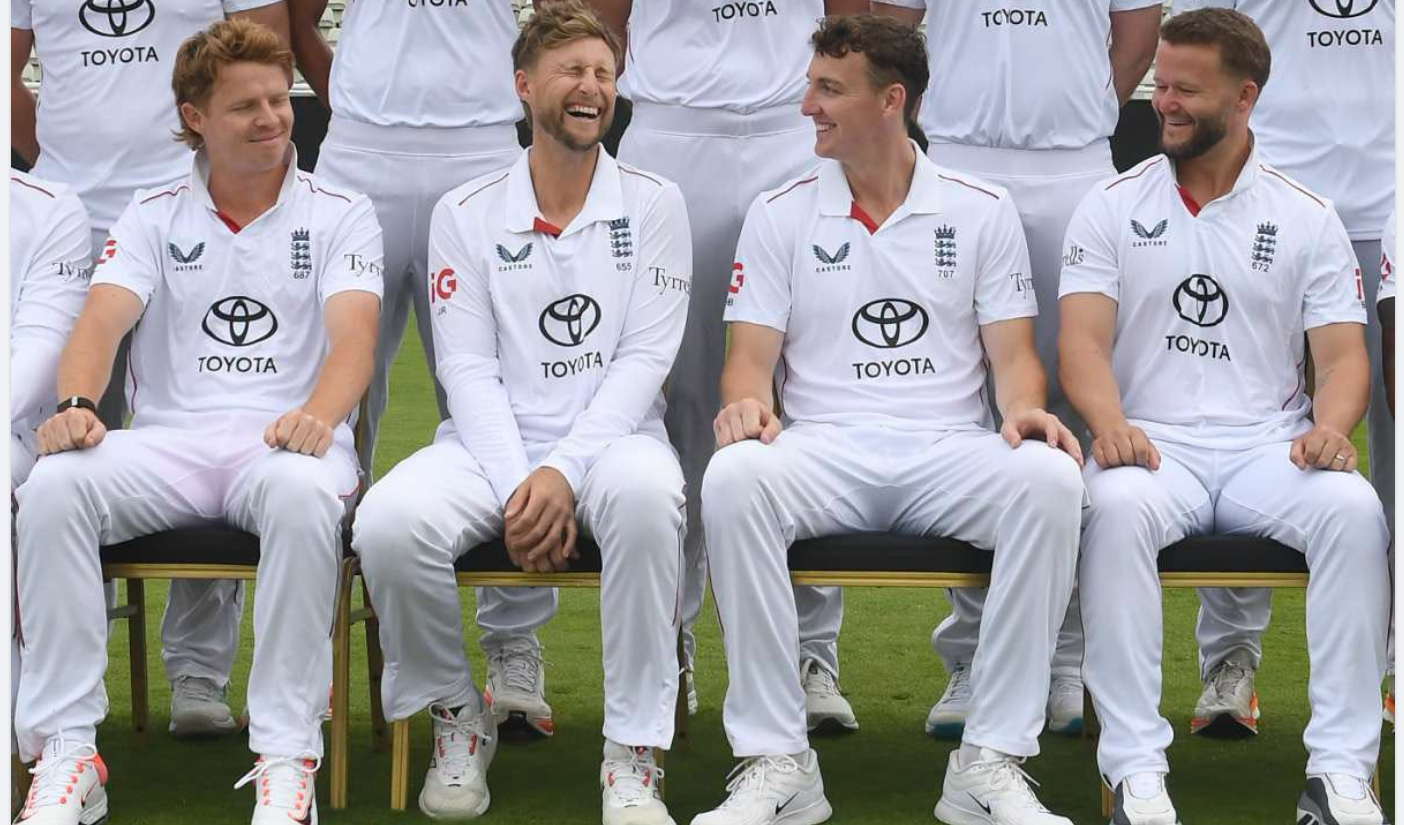
England beat Pakistan by eight wickets at Edgbaston to seal a 3-0 sweep, in only the eighth three-Test series with no individual hundred. England beat Pakistan by eight wickets at Edgbaston to wrap up the third and final Test, sealing a 3-0 series victory. Joe Root steered the chase with an unbeaten 62 and Jordan Cox stayed not out on 59 as the hosts knocked off a target of 130 inside 25 overs, losing only two wickets along the way. The win handed England their second 3-0 whitewash of Pakistan, following the same scoreline in the 2022/23 series, and their 15th sweep of a three-match Test rubber overall. For Pakistan it was an 11th series loss by a 3-0 margin. What set this series apart was a curious absence. Not one batter on either side reached three figures across the three matches. That made it only the eighth three-Test series in the game's history to end without an individual hundred, and just the second staged in England, the previous instance dating back to the 1888 Ashes, some 138 years ago. Root steadies a shaky chase England's pursuit began badly. Ben Duckett was out to the very first delivery for a duck, and Emilio Gay fell later in the same over from Mohammad Abbas, leaving the score at 2 for 2. Pakistan sensed an opening. Root refused to let it widen. He rode his luck early, bowled by Mohammad Ali for 23 only for the ball to be ruled a no-ball, Ali's 17th illegal delivery of the series. On 38, Root edged Abbas into the gap between first and second slip, but neither fielder moved and the chance went down. Those reprieves proved costly for the tourists. Root ticked past his 110th score of fifty or more in Tests, a tally that includes 41 centuries, and calmly guided England home alongside Cox, who provided assured support as the two batters took the game away from Pakistan. Robinson and the pace attack decide it Pakistan had fought back in the final Test after slipping 320 runs behind on first innings, but England's grip from the opening two matches meant the destination of the series was already settled. A sharper Pakistan earlier in the tour might have made for a tighter contest. The gap between the sides was written in the seam bowling. Ollie Robinson spearheaded the attack and closed the series with 21 wickets. Jofra Archer, Josh Tongue and Gus Atkinson chipped in as England's quicks exploited conditions that suited them. The batting was the weaker department, with no England player passing a hundred in the three matches. Razaullah lights up Edgbaston Pakistan's brightest moment belonged to debutant Razaullah, whose fearless counter-attack briefly stirred the third Test to life. He struck 81 from 63 balls to give the visitors a flicker of hope, but the flurry arrived too late to alter the series result. The defeat deepened a grim run for Pakistan, who have now lost 16 of their last 21 Tests. The tour triggered a shake-up: seven players were dropped from the squad after the second match, and coach Sarfaraz Ahmed and assistant Umar Gul were also let go. For England, the result marked a firm recovery after a difficult stretch that included setbacks against New Zealand and an Ashes loss. It also gave Root a winning end to his stint back in charge, a role he took on after Ben Stokes retired from international cricket. Interim red-ball head coach Marcus Trescothick, who stepped in following Brendon McCullum's exit, will now pass the reins to Stephen Fleming before England's three-Test tour of South Africa in December and January. England Pakistan Test series, Edgbaston Test, Joe Root, Jordan Cox, 3-0 clean sweep, Ollie Robinson wickets, Test cricket no century, Razaullah debut

Neymar and Gabigol Both Miss Santos vs Cruzeiro Clash

Neymar sits out with a grade 2 thigh injury and Gabigol is suspended as Santos host Cruzeiro at Vila Belmiro in the Brazilian championship. Santos faced Cruzeiro without two of their biggest attacking names on Saturday, the 12th, in the 27th round of the Campeonato Brasileiro. The match kicked off at 9 p.m. Brasília time at Vila Belmiro, with Neymar and Gabigol both ruled out for very different reasons. Neymar is sidelined by a muscle injury. He suffered a grade 2 tear in his right thigh during the match against Palmeiras on September 2. The problem is considered moderate, involving a partial rupture of muscle fibres, swelling and intense pain in the rectus femoris. The forward has already begun treatment. His recovery is estimated at six to eight weeks, a timeline that could keep him out of as many as 13 matches. The most optimistic projection points to a return at the end of October, while a more conservative reading suggests he may not play again until early November. Given Neymar's recent history of injuries, his camp has ruled out any attempt to bring him back early. The player's staff prefer to respect the full recovery window rather than risk a setback. Gabigol's absence stems from two separate issues. The striker picked up his third yellow card, triggering an automatic suspension that bars him from the 27th round. Even if he were clear on disciplinary grounds, he could not have played. Gabigol belongs to Cruzeiro and is on loan at Santos, and a contractual restriction prevents him from being fielded against his parent club. Unlike Neymar, Gabigol's return is straightforward. He will be available again as soon as his suspension is served, with no medical timeline to manage. Beyond the two forwards, Santos went into the game carrying further squad problems, leaving the hosts short of attacking options against Cruzeiro at Vila Belmiro. Neymar injury, Gabigol suspension, Santos vs Cruzeiro, Brasileirao, Vila Belmiro, Campeonato Brasileiro, Santos FC, Cruzeir

Mandaadi Hits Rs 29.43 Cr Worldwide as Sardar 2 Slows

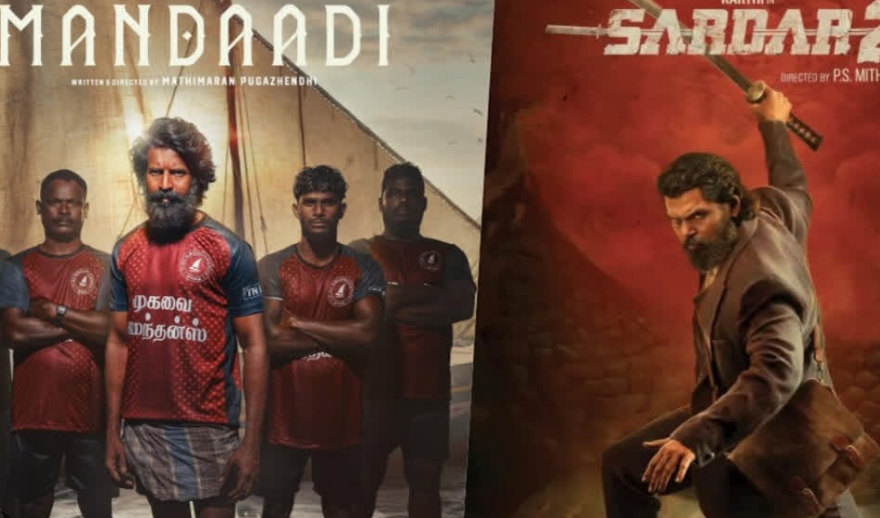
Soori's 'Mandaadi' earned Rs 9.25 cr on Day 3 for a worldwide gross of Rs 29.43 cr, while Karthi's 'Sardar 2' dipped to Rs 2.20 cr on its first Saturday. Soori's action drama 'Mandaadi' posted a sharp rise in earnings on its first Saturday, collecting Rs 9.25 crore in India net on Day 3, September 12, according to figures compiled by Sacnilk. The number marked a 38.1% jump over the Rs 6.70 crore the film earned on Day 2. The Day 3 total came from 3,354 shows and pushed the film's India net collection to Rs 20.80 crore. Its India gross now stands at Rs 24.43 crore. Overseas markets added Rs 2.50 crore on Saturday, taking the total overseas gross to Rs 5.00 crore. Combined, 'Mandaadi' has reached a worldwide gross of Rs 29.43 crore. The film opened on September 10 with Rs 4.85 crore from 2,953 shows and an overall occupancy of 32.7%. Business climbed on Friday to Rs 6.70 crore from 2,864 shows as occupancy rose to 44.9%. Saturday extended the upward run, with 3,354 shows lifting occupancy to 53.8%. Tamil version drives the numbers The Tamil version was the film's largest contributor on Day 3, taking in Rs 7.55 crore from 2,548 shows at an occupancy of 57.2%. The Telugu version added Rs 1.70 crore from 806 shows, with occupancy at 43.0%. Together the two versions account for the Rs 20.80 crore India net total. The strength of the Tamil release showed clearly across the day. Its 2D version recorded overall occupancy of 58.90% on Saturday, rising from 37.92% in morning shows to 60.62% in the afternoon, 62.46% in the evening and 74.62% at night. The Telugu 2D version posted 42.50% overall, moving from 33.27% in the morning to 34.00% in the afternoon, 41.55% in the evening and 53.91% at night. Tamil Nadu leads the states Tamil Nadu remained the film's biggest market by state. On September 12 it generated Rs 7.25 crore of the day's gross. Andhra Pradesh and Telangana together added Rs 2.00 crore, while Karnataka contributed Rs 1.15 crore. Kerala brought in Rs 35 lakh and the rest of India accounted for Rs 10 lakh. The state-wise gross for Day 3 totalled Rs 10.85 crore. 'Sardar 2' loses ground on Saturday Karthi's 'Sardar 2', which also opened on September 10, moved in the opposite direction. The film collected Rs 2.20 crore in India net on Day 3, a 10.2% fall from its Friday figure of Rs 2.45 crore, according to Sacnilk. The Saturday total came from 3,035 shows. The film's India net now stands at Rs 9.15 crore and its India gross at Rs 10.75 crore. Overseas markets added Rs 1.00 crore on Day 3, lifting the total overseas gross to Rs 3.50 crore and the worldwide gross to Rs 14.25 crore. 'Sardar 2' began with Rs 4.50 crore from 3,950 shows on its opening day, at 24.5% occupancy. Day 2 brought Rs 2.45 crore from 3,361 shows as occupancy slipped to 19.3%. On Day 3, occupancy edged up to 21.0% even as the day's earnings declined. By language, the Tamil version of 'Sardar 2' earned Rs 1.50 crore in India net on Day 3, playing across 2,014 shows at 22.0% occupancy. The Telugu version added Rs 70 lakh from 1,021 shows at 19.0% occupancy. The two versions together make up the film's Rs 9.15 crore India net total. With both films sharing a September 10 release, their first weekend has drawn a clear contrast: 'Mandaadi' building steadily day on day, and 'Sardar 2' easing back after its opening. All figures are approximate and may change as further studio and international market data are finalised. Mandaadi box office, Soori Mandaadi, Sardar 2 box office, Karthi Sardar 2, Tamil cinema, Telugu box office, Mandaadi collection, Sacnilk

US Moves to End 60-Day Job-Loss Grace Period for H-1B Holders

A Trump administration proposal would end the grace period letting laid-off H-1B and other work visa holders stay in the US, affecting many Indian workers. The Trump administration has moved to end the grace period of up to 60 days that lets H-1B workers and holders of several other employment-based visas stay in the United States after they lose their jobs. The Department of Homeland Security prepared the proposal for publication in the Federal Register on September 11, 2026. Under current rules, workers who are laid off get a short window to line up a new sponsoring employer or shift to another immigration status before they must go. The proposal would strip out that cushion. Categories affected include the E-1, E-2, E-3, H-1B, H-1B1, L-1, O-1 and TN classifications, along with the dependents of those visa holders. If the rule is finalised, a worker whose job or qualifying activity ends would generally be required to leave the country right away, unless they hold some other authorisation to stay. That would remove a buffer many rely on while searching for new work. DHS argued that the existing grace period breaks the link between a person's lawful status and the employment that justified granting the visa in the first place. The department framed the change as a return to an earlier approach, in which a visa holder was expected to depart once work with the sponsoring employer stopped. The agency also noted that the grace period was never a fixed entitlement. It is discretionary, meaning DHS can already trim or withdraw it. The change carries particular weight for Indian nationals, who make up a large share of H-1B recipients in the US technology sector. A shorter timeline to secure new sponsorship would raise the stakes for anyone caught in a round of layoffs. H-1B visa, 60-day grace period, Trump administration, DHS proposal, laid-off workers, employment visa, Indian tech workers, US immigration

Human Shouts Scare Deer Best But the Fear Fades Fast

A Canadian study finds human shouts and flashing lights drive deer and elk from crops, but the animals stop reacting within six weeks. A recorded human shout is the single most effective sound for driving deer and elk off farmland, but the animals quickly learn to ignore it, according to a 2025 study from the University of Alberta and King's University. The research, published in the journal Ecology and Evolution, tested audio and light devices on crops in British Columbia's Cowichan Valley and found that the fear response faded within six weeks. Between August 4 and September 17, 2023, the team fitted 15 crop fields with motion-triggered devices. When a Roosevelt elk or black-tailed deer approached, a device played one of several recordings: ordinary conversation, shouting, wolf and cougar calls, barking dogs, or local birdsong. Some fields also flashed LED lights. Across the trial the researchers logged 680 usable encounters with the two species, which routinely wander into fields and damage crops and fencing. Shouting beat wolf and cougar calls The loudness of the voice, not merely its presence, drove the animals off. Deer bolted from human shouts in 64% of encounters, but from calm talking only 46% of the time. Recorded predator calls sent deer running in 45% of cases, and dog sounds performed worse still. Elk reacted less across the board: they fled from shouts in 36% of encounters, compared with 13% for conversational speech, while predator calls, dog barks and birdsong each produced flight in roughly 16 to 18% of cases. That gap between talking and shouting suggests the animals were responding to the aggression in the sound rather than just recognising a human voice. Lights sharpened the effect Pairing sound with a flashing light made a clear difference. For elk, adding lights roughly doubled the share of encounters ending in flight, from 13% with audio alone to 26%. Measured overall, combining the two cues raised the odds of an animal fleeing by 4.7 times for elk and 1.8 times for deer. The lights did not, however, keep the animals on edge for any longer once the encounter was over. The researchers propose that a second warning signal may make a threat harder to shrug off, though they could not confirm whether the flashing itself read as a predator or simply amplified the alarm. Then they stopped running The deterrents' biggest weakness showed up over time. As the 45-day experiment wore on, both species grew calmer. Among elk, the predicted chance of staying alert dropped from 86.4% on the opening day to 55% by day 45 - a relative fall of about 36%. Deer alertness slid more gently, from 84.8% to 62.9%, a decline of roughly 26%. The animals, in effect, worked out that the noises and flashes carried no real danger. This learning process, called habituation, is a recurring obstacle for anyone trying to manage wildlife with artificial signals: a threat repeated often enough, with nothing behind it, eventually stops meaning anything. Busy landscapes sped up the learning For deer, the surrounding environment shaped how fast that happened. The animals tuned out the devices sooner at sites near clusters of houses and close to highways, hinting that deer already used to steady human activity are quicker to dismiss human-sounding alarms. The trend was murkier for elk; the researchers saw a possible link with highway proximity, but their strongest statistical model did not pin down a clear landscape effect. What it means for farmers Growers are increasingly turning to deterrents as a humane alternative to shooting animals or building costly exclusion fences. The study offers cautious support for that approach, showing that sound systems can work, especially when they use forceful human voices backed by a visual cue. But it also warns that a device left untouched in one spot will lose its bite. To keep animals guessing, the authors suggest rotating the types of stimuli and adding real consequences so the perceived threat is occasionally backed up. They stress the limits of their work - 15 sites over 45 days is a small sample - and note it cannot yet say whether the short-term changes in behaviour actually cut crop losses or affect wildlife numbers. The practical takeaway is blunt. A shouted warning may send a deer running today, but if the same sound keeps coming from the same box with nothing ever happening, the animal will eventually decide it can stay and feed. deer deterrents, elk crop damage, wildlife habituation, University of Alberta study, Cowichan Valley farming, non-lethal wildlife control, Roosevelt elk, black-tailed deer

France Lifts Champagne Alcohol Cap to 15% After Record Heat

French officials will let producers raise champagne's alcohol content to 15% for 2026 after record heatwaves created sweeter grapes and the earliest-ever harvest. French officials have cleared producers to raise the alcohol content of champagne to as much as 15% for the 2026 vintage, lifting the usual 13% ceiling for the first time after a summer of record heat left grapes packed with sugar. The Comité Champagne, the industry association that governs the region, said the change is exceptional and applies to this year only The decision follows a growing season marked by extreme heat and drought, which produced grapes with unusually high sugar levels. Because yeast converts sugar into alcohol during fermentation, that extra sweetness translates directly into stronger wine. During the second fermentation, the stage that gives champagne its bubbles, a small number of wines from the harvest were on track to edge past the regulatory limit. A spokeswoman for the Comité Champagne told the BBC that only a handful of wines are affected. Some "could have slightly exceeded the regulatory limit of 13%, reaching around 13.1% or 13.2%," she said, adding that officials chose "to exceptionally and temporarily increase the regulatory limit to 15% - only for this year." The weather also reshaped the calendar. The first grapes were cut in early August, and picking spread across the region by the middle of the month - the earliest harvest ever recorded in Champagne, according to the association. The 2026 season, it said, "will be remembered as one of the most unusual in Champagne's history, marked by severe spring frosts of historic intensity, an exceptionally early flowering period and five heatwaves throughout the summer." A new cycle for the vines Producers see the season as a turning point rather than a one-off. Stéphane Vignon, a grower in Verzenay, told the Times: "The Mediterranean climate is moving north. This is year one of a new cycle. It's unlikely to be every year, but it will happen again." Maxime Toubart, co-chair of the Comité Champagne, made a similar point to the AFP news agency. With hotter weather increasingly likely, he said, "this unusual harvest will probably become the norm in 10 to 15 years." The association echoed that timeline, warning that the early harvest could become standard within a decade to 15 years as the climate shifts. Stronger, but not necessarily better sellers A higher alcohol figure may not appeal to buyers. Jane Anson, a wine columnist and author based in Bordeaux, said stronger champagne is unlikely to work as a selling point because drinkers are moving the other way. "Today people increasingly prefer lower-alcohol," she told the Times, adding: "The battle between what consumers want and what nature provides must be very stressful for producers." Consumers will not be able to judge the results for some time. Champagne must age for at least 15 months, so the 2026 vintage is unlikely to reach shelves until 2028. The stronger bubbly is one small consequence of a punishing year for France, one of the European countries hit hardest by this summer's extreme weather, which fuelled large wildfires. Climate change is pushing up global average temperatures and making heatwaves more frequent and more intense. The effect has been especially sharp in Europe, which the Copernicus climate service describes as the fastest-warming continent, heating up at twice the global average rate. champagne alcohol content, France heatwave 2026, Comité Champagne, champagne harvest, climate change wine, 15% ABV champagne, Champagne region, early grape harves

2026 Maruti WagonR Facelift Spied Testing With New Engine

A camouflaged Maruti WagonR test mule has been spotted, pointing to a 1.2L 3-cylinder engine, possible underbody CNG and a launch later in 2026. Maruti Suzuki has been caught testing an updated version of the WagonR, with a heavily camouflaged test mule spotted running on public roads. The sighting points to a facelift arriving later in 2026, though the most meaningful changes appear to sit under the bonnet rather than on the surface. The WagonR currently sells from Rs 4.99 lakh to Rs 6.97 lakh, ex-showroom, across LXi, VXi, ZXi and ZXi Plus trims. It is offered with petrol and factory-fitted CNG options, paired with manual and AMT gearboxes. Those choices are expected to carry over to the updated car, and buyers should brace for a price rise when it goes on sale. Familiar Shape Under The Camouflage Despite the full-body wrap, the test car keeps the WagonR's tall-boy stance and overall silhouette, suggesting a modest update rather than a ground-up redesign. At the front, the headlamp placement looks unchanged, while the camouflage hides the grille and bumper. The side profile appears the same, and at the rear the model retains its signature vertically stacked tail lamps flanking the windscreen. The mule seen testing looks like a mid-spec variant. It runs on steel wheels, skips a rear wiper and fog lamps, and places its turn indicators on the front fenders instead of the wing mirrors. A brief look inside did not reveal any obvious cabin overhaul. Maruti may add features and equipment revisions with the facelift, but nothing on that front can be confirmed from the disguised vehicle. The Real Story Is The Engine The bigger change is expected to be mechanical. Maruti has been steadily swapping its older 1.2-litre four-cylinder petrol engine for the newer Z12E 1.2-litre three-cylinder unit. The Swift and Dzire have already moved to it, followed more recently by the Baleno facelift, and the WagonR looks set to be next in line. In the Baleno, the Z12E makes 83 hp and 112 Nm. Across the models that have made this switch, outright power has dropped while fuel efficiency has improved, and a similar trade-off can be expected here, though Maruti has not confirmed the WagonR's final numbers. The current car offers both 1.0-litre and 1.2-litre petrol engines, so how the company reshapes the engine lineup for the new model remains an open question. CNG Could Get A Packaging Rethink Both petrol and CNG versions are expected to continue with the new WagonR. The CNG variant may also see packaging improvements. One possibility is an underbody CNG tank, similar to the setup Maruti has already introduced on the Brezza CNG. Moving the cylinder beneath the floor would free up usable boot space compared with the conventional cylinder that currently sits in the luggage area. The spy shots, however, do not offer clear proof that the test car is running this arrangement, so it stays a possibility for now With testing under way, the updated WagonR is likely to reach showrooms later this year. Going by the disguised mule, the visual changes could be limited, leaving the powertrain update as the main talking point when the car finally launches. Maruti WagonR, WagonR facelift 2026, Z12E engine, WagonR CNG, Maruti Suzuki, 3-cylinder engine, WagonR price, underbody CNG

iPhone 17, Pixel 11, Galaxy S26 Lead Compact Phones in India

The iPhone 17, Google Pixel 11, Samsung Galaxy S26 and Vivo X300 FE bring flagship power to smaller bodies in India. Here are their specs and prices. Buyers in India who want a phone that fits comfortably in one hand now have a fuller shelf to choose from. Through 2026, several manufacturers have released smaller handsets that keep top-tier chips and cameras, including the iPhone 17, the Samsung Galaxy S26, the Google Pixel 11 and the Vivo X300 FE. The starting prices for this group run from Rs. 79,999 to Rs. 89,999. The trend runs against the broader market, where wide displays remain the norm. These models show that a smaller footprint no longer forces buyers to accept weaker performance. The Oppo Reno 15 Pro Mini 5G is also counted among the recent compact arrivals. iPhone 17: 6.3-inch screen, A19 chip Apple's iPhone 17 ranks among the smaller phones in its current range, even though its screen grew slightly over the previous model. It uses a 6.3-inch Super Retina XDR OLED panel with ProMotion and a refresh rate reaching 120Hz. The body measures 149.6 x 71.5 x 7.95 mm and weighs 177g, and it holds an IP68 rating against dust and water. Driving the phone is Apple's A19 chip running iOS 26, backed by 8GB of RAM. The rear camera pairs a 48-megapixel Fusion main sensor with a 48-megapixel Fusion ultrawide, while an 18-megapixel Centre Stage camera sits on the front. Apple lists video playback of up to 30 hours, and the phone charges at 40W. In India, the iPhone 17 begins at Rs. 82,900 for 256GB, with the 512GB version at Rs. 1,02,900. Colour choices are Lavender, Mist Blue, Sage, White and Black. Galaxy S26 and Pixel 11 The Samsung Galaxy S26 is the smallest handset in the company's current Galaxy S range. Its 6.3-inch Dynamic AMOLED 2X screen offers Full-HD+ resolution and a refresh rate up to 120Hz, protected by Corning Gorilla Armor 2. At 149.6 x 71.7 x 7.2 mm and 167g, it is the lightest option here. Samsung fits the S26 with the 2nm Exynos 2600 chip, 12GB of RAM and storage up to 512GB. The rear setup combines a 50-megapixel main camera, a 10-megapixel telephoto with 3x reach and a 12-megapixel ultrawide, alongside a 12-megapixel front camera. A 4,300mAh battery supports 25W wired charging. Pricing starts at Rs. 79,999 for 12GB and 256GB, rising to Rs. 99,999 for the 512GB model. Buyers can pick Sky Blue, Black, Cobalt Violet or White. The Google Pixel 11 keeps a modest frame around a 6.3-inch AMOLED display with Full-HD+ resolution, a 120Hz refresh rate and peak brightness of 3,000 nits. It measures 152.8 x 72 x 8.6 mm, weighs 197g and carries an IP68 rating. The Tensor G6 chip works with a Titan M3 security chip, 12GB of LPDDR5X RAM and up to 512GB of storage. Photography on the Pixel 11 comes from a triple rear array: a 48-megapixel main sensor, a 13-megapixel ultrawide and a 10.8-megapixel telephoto with 5x zoom, plus a 10.5-megapixel front camera. Its 4,985mAh battery accepts 30W wired charging and 25W Qi 2.2 Pixelsnap wireless charging. The phone opens at Rs. 89,999 for 256GB and reaches Rs. 1,04,999 for 512GB, in Pistachio, Hibiscus, Frost and Obsidian. Vivo X300 FE: biggest battery, fastest charging The Vivo X300 FE rounds out the list with a 6.31-inch AMOLED display on a narrow 71.76mm-wide body. Its full dimensions are 150.83 x 71.76 x 7.99 mm at roughly 191g. The screen runs at up to 120Hz and can reach 5,000 nits of peak brightness, and the phone holds both IP68 and IP69 ratings. Inside sits the Snapdragon 8 Gen 5 chip with 12GB of RAM and storage up to 512GB. Vivo tuned its cameras with Zeiss, fitting a 50-megapixel main sensor, a 50-megapixel telephoto and an 8-megapixel ultrawide, along with a 50-megapixel autofocus front camera. Its 6,500mAh battery - the largest in this group - supports 90W wired charging, also the fastest here. The X300 FE starts at Rs. 84,999 for 8GB of RAM and 256GB of storage. A 12GB and 256GB version costs Rs. 89,999, and the 12GB and 512GB configuration is listed at Rs. 99,999. compact smartphones India, iPhone 17 price India, Google Pixel 11, Samsung Galaxy S26, Vivo X300 FE, small flagship phones, compact flagship 2026

ITAT Deletes Rs 12.83 Lakh Penalty in UAE Treaty Tax Dispute

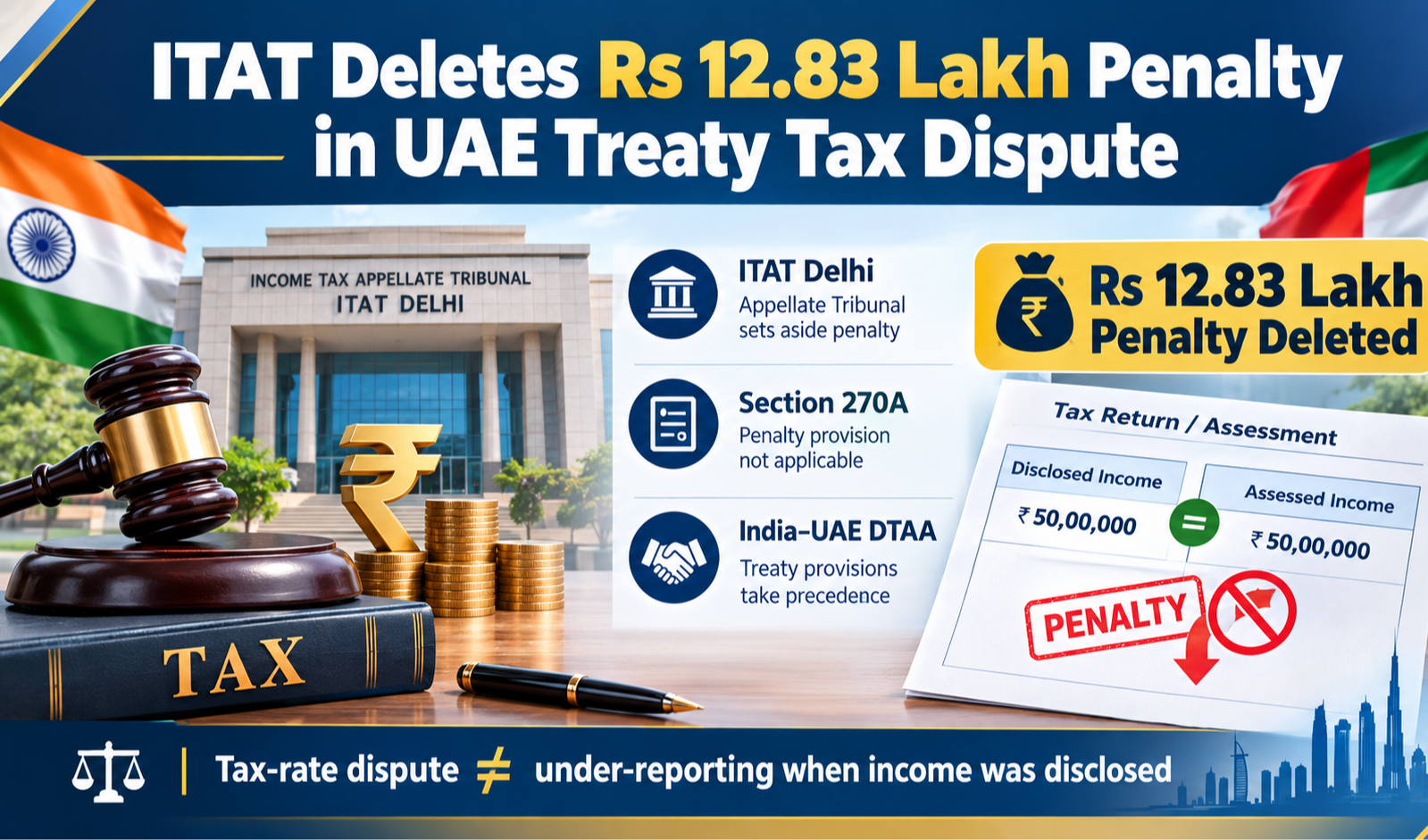
ITAT Delhi cancelled a Rs 12.83 lakh penalty on a Delhi taxpayer, ruling that a dispute over the India-UAE treaty rate is not under-reporting of income. The Income Tax Appellate Tribunal (ITAT) Delhi has cancelled a Rs 12.83 lakh penalty imposed on a New Delhi taxpayer, ruling that no penalty for under-reporting can apply when the income he declared matched the income the tax department finally assessed. The only real disagreement, the tribunal found, was over the tax rate the man could claim under the India-United Arab Emirates Double Taxation Avoidance Agreement (DTAA). The taxpayer, identified in the proceedings by the surname Lalwani, filed his income tax return on November 4, 2022, declaring total income of Rs 8.43 crore. The Assessing Officer (AO) at Jhandewalan reopened the case on March 22, 2025, and reworked the tax treatment of Rs 1.17 crore of interest income earned by his minor child. The officer clubbed that Rs 1.17 crore with the father's income and changed the rate applied to it. In doing so, the AO also refused to allow the lower rate of tax the man had claimed under the India-UAE treaty. Separately, the officer declined credit for Rs 2.62 lakh in tax deducted at source (TDS), on the ground that the related rental income had not been brought into the taxable total. On the same date, the AO invoked Section 270A of the Income-tax Act, 1961, and levied the Rs 12.83 lakh penalty for what it described as under-reporting of income. The Commissioner of Appeals (CIT-A) upheld that penalty. The taxpayer then took the matter to ITAT Delhi, which ruled in his favour on July 28, 2026, and ordered the penalty deleted. Why the tribunal struck down the penalty The central question before ITAT Delhi was whether a Section 270A penalty could stand when the income shown in the return and the income assessed by the officer were identical. Section 270A deals with cases of under-reporting or misreporting of income. The taxpayer argued there was no gap between what he declared and what was assessed, so there was nothing under-reported. He further contended that the fight over the Rs 1.17 crore was confined to the rate of tax under the India-UAE treaty, not to whether the income existed or had been disclosed. The tribunal accepted this. It noted that the disputed interest income had already appeared in his return and had also been carried into the assessed income. Chartered accountant Surana, quoted by ET, said the assessment "merely altered the tax treatment by denying the concessional treaty rate." On that basis, he said, ITAT Delhi treated the matter as a dispute about the rate of tax rather than the amount or the disclosure of income. The tribunal also examined the denied TDS credit of Rs 2.62 lakh. After reviewing the taxpayer's explanation as recorded in the assessment order, it found no significant defect in it. That issue, too, was held insufficient to brand his conduct as under-reporting or misreporting warranting a Section 270A penalty. According to Surana, the taxpayer prevailed because the reported and assessed income were the same, the Rs 1.17 crore interest had already been disclosed, and the core dispute was the treaty rate. How clubbing of a minor's income works The case turned in part on the clubbing provisions of the Income Tax Act, under which income belonging to one person is added to another taxpayer's total in defined situations. The aim is to stop tax avoidance by shifting income to someone else. These provisions apply to individuals, not to firms, Hindu Undivided Families or companies. As a general rule, a minor child's income is clubbed with the income of the parent who earns more. Once clubbed, it is taxed at the rate that applies to that parent, which can raise the overall bill if the income is moved to someone in a higher bracket. The law carves out exceptions. Income a minor earns through manual work or by using a special skill or knowledge is not clubbed. Where a minor's income is clubbed, Section 10(32) allows an exemption of Rs 1,500 per child. Income a spouse earns from their own personal skill or manual work, or from assets bought with their own independent funds, is also kept out of the clubbing net. Separately, income from assets transferred to a son's wife is taxed in the hands of the person who made the transfer. The ruling underlines a distinction that decided the case: a disagreement over whether taxable income exists, or how much of it there is, is not the same as a dispute over the rate applied to income that has already been fully disclosed. ITAT Delhi, Section 270A penalty, India-UAE DTAA, clubbing of income, minor child income tax, income tax appeal, TDS credit, under-reporting income

India Brokers BRICS Consensus on New Delhi Declaration

BRICS leaders adopted the New Delhi Declaration on Saturday, backing dialogue over conflict despite Iran-UAE divisions on West Asia. India secured a diplomatic win at the BRICS Summit on Saturday when member nations agreed on a joint declaration, overcoming a standoff between Iran and the United Arab Emirates over the crisis in West Asia. The final text steered clear of naming the war outright, resting instead on a call for dialogue and diplomacy to end conflicts. Prime Minister Narendra Modi announced the adoption of the BRICS New Delhi Declaration at the close of the first day's talks. Chinese President Xi Jinping, Russian President Vladimir Putin and Iranian President Masoud Pezeshkian were present. According to people familiar with the matter, negotiators settled the wording, particularly the paragraph on West Asia, late Saturday afternoon, just hours before the document went public around 4:30 pm. The agreement capped months of doubt. Sharp disagreements between Tehran and Abu Dhabi had stalled joint statements at several preparatory meetings. Because BRICS decisions rest on consensus, a single objection could have sunk the declaration entirely. The paragraph on West Asia voiced "deep concern over the continued escalation of tensions" and urged all sides to show maximum restraint and avoid steps that might worsen the situation. It made no mention of Iran by name, nor of the American and Israeli strikes on Iran in February that set off the conflict. The text also pressed for the protection of civilians and civilian infrastructure under the UN Charter, alongside respect for the sovereignty and territorial integrity of states. Leaders backed New Delhi's long-held view that talks and diplomacy are the only routes to settling disputes. They also called for coordinated efforts to keep global trade and energy moving. "We encourage increasing efforts, through dialogue and diplomacy, towards a long-term understanding that will contribute to lasting peace, security and stability in the region," the declaration stated, adding a stress on keeping supply chains and energy flows intact in line with international law. Why Iran and the UAE moved Several shifts made the compromise possible. Iran and the UAE dropped earlier demands that the document condemn attacks on their soil. Russia, meanwhile, pushed to soften language on conflicts that might read as a reference to Ukraine. Tehran also stepped up efforts to repair ties with major players across the region. That outreach was visible on the summit's sidelines. Pezeshkian met Abu Dhabi Crown Prince Khaled bin Mohamed bin Zayed Al Nahyan on Saturday. Iran is due to sit down with members of the Gulf Cooperation Council and Iraq in Oman on September 14 to discuss transit through the Strait of Hormuz - the first such gathering since the West Asia conflict began. Ajay Srivastava of the Global Trade Research Initiative said the declaration, by avoiding names, delivered a balanced signal: the United States and Israel should hold off on striking Iran, Iran should not hit back at Gulf neighbours such as the UAE, and every party must shield civilians, honour sovereignty and choose diplomacy. He described the reference to protecting trade and energy flows as a warning against military moves that could choke the Hormuz corridor. "Given BRICS' conflicting interests and internal constraints, securing consensus on such a clear position represents a diplomatic win for India," he said. A softer line than Rio Observers pointed out that the New Delhi text broke from recent BRICS documents. The 2024 summit in Russia and the 2025 gathering in Brazil both spoke more directly. The Rio de Janeiro Declaration had condemned the June 2025 strikes on Iran and recalled national positions on Ukraine; the New Delhi version referenced neither the Iran nor the Ukraine conflict head-on. On Gaza, the declaration was more pointed. It expressed deep concern at continued violence despite a ceasefire and urged all parties to uphold the truce and allow unhindered humanitarian access. It called for an end to any policy aimed at forcibly displacing Palestinians from the Gaza Strip and warned against arrangements that could undermine Palestinian rights or entrench occupation. The leaders reaffirmed support for a two-state solution, backing a sovereign, independent and viable Palestinian state with East Jerusalem as its capital, and said a lasting settlement could come only through peaceful means. BRICS also endorsed India's zero-tolerance stance on terrorism, rejected double standards in countering it, and condemned in the strongest terms the Pahalgam terror attack in Jammu and Kashmir. BRICS New Delhi Declaration, Narendra Modi BRICS, West Asia crisis, Iran UAE, Strait of Hormuz, India diplomacy, Palestine two-state solution, Pahalgam attack