

Language Settings
Select Website Language

GDPR Compliance

We use cookies to ensure you get the best experience on our website. By continuing to use our site, you accept our use of cookies, Privacy Policy, and Terms of Service.

Filters

Channels
Topics
Other Filters

Gold Slumps to $4,130 as US Yields Hit Multi-Year Highs

Gold sank near 4% to $4,130 on Monday as US 10-year yields hit a post-2007 high and the dollar firmed. Analyst Praveen Singh says rallies are selling chances. Gold prices are facing severe downside pressure, and any bounce should be treated as a chance to sell, according to Praveen Singh, Head of Currencies and Commodities at Mirae Asset ShareKhan. The metal slid to $4,130 on Monday night, carrying a daily loss of close to 4%, after touching $4,111 earlier in the session - its weakest level since August 5. The latest drop extends a run of losses. In the week that ended September 25, spot gold shed 2% to close at $4,286, weighed down by climbing US Treasury yields, a stronger dollar and firm oil prices. Singh links the current weakness to a sharp jump in real yields, a firmer greenback, strong US economic figures and a Federal Reserve that has stayed hawkish since its latest policy meeting. Much of the selling was tied to the standoff between Washington and Tehran over the Strait of Hormuz. US President Donald Trump turned down Iran's proposal for a seven-day window that would have paved the way toward a phased agreement to reopen the waterway. Gold pared some losses after CNN reported that Trump was willing to consider sanctions relief for Iran on nuclear matters, but the lack of firm detail kept buyers cautious. Iranian officials played down the odds of a breakthrough, saying a deal with the United States was unlikely before the November midterm elections and that an escalation after November 3 was highly probable. Qatari mediators were expected to meet with both sides on Monday or Tuesday, and Trump indicated talks could restart during the week. Yields and the dollar squeeze the metal The move in the bond market was the main driver behind gold's decline. Two-year Treasury yields spiked to a fresh cycle high of 4.95% on September 28 - the highest since May 30, 2024 - before easing to 4.93%, still up 1.64% on the day. Ten-year yields reached 5.27%, a level last seen in the middle of 2007, and hovered around 5.25%. Thirty-year yields climbed more than 1% to 5.56%, the highest since May 2024. The US Dollar Index added to the pressure, trading 0.20% higher at 101.15 as yields pushed up. Over the week ending September 25 the index rose 0.7% and settled at 100.97 on Friday, its strongest weekly finish since July 24. Rate expectations have swung firmly hawkish. Markets now price a 68% chance that the Fed raises rates at its October 28 meeting, and traders see the central bank tightening twice by January 2027 and close to four times over a year. Monday's sole US release, the Dallas Fed manufacturing activity index for September, came in at 9.8, beating the 7.8 estimate but down from a prior reading of 11.60. Oil steady, ETF demand holds firm Crude oil recovered from Friday's 2.13% fall, rising on Monday amid uncertainty over Hormuz before giving back intraday gains on the CNN report. Brent futures traded around $104.77, little changed, after an intraday peak of $108.83; the contract had closed the prior week at $104.45, up 0.6%. Saudi Arabia has restored most flows through its East-West pipeline, which was hit by drone attacks earlier in the month. About 3.5 million barrels per day now move through the line, against a nameplate capacity of 7 mbpd, of which 5 mbpd is earmarked for export. Despite the price slide, investor demand for gold-backed funds has stayed resilient. Total known global ETF holdings have climbed to 100.80 million ounces, up 58 tonnes so far this year and well above the cycle low of 96.16 million ounces reached on July 20. Holdings sit just 3.74 tonnes below the cycle peak of 100.92 million ounces recorded before the start of the Iran conflict. Speculators, however, have turned more cautious. CFTC data for the week ending September 22 showed money managers cutting bullish gold bets by 5,726 contracts to 131,334 lots, the least optimistic stance in eight weeks. Long-only positions dropped 6,530 lots to 139,307, while short-only bets fell 804 lots to 7,973 - the lowest in roughly 20 months. Elsewhere, Chinese President Xi Jinping's three-day state visit to the United States wrapped up on September 25 with little progress on artificial intelligence, geopolitics or technology. The two countries agreed to extend their trade truce by two months to January 10, 2027, and to cut tariffs on about $30 billion of goods each way. China's industrial profits rose 4.2% year-on-year in August, a sharp slowdown from July's 11.2% gain. With gold having broken below the key support band of $4,185 to $4,200, Singh warns the metal remains vulnerable to further losses. A packed data calendar lies ahead, including US consumer confidence and JOLTS job openings, ADP employment and the PCE price index, ISM manufacturing and the September nonfarm payrolls report due October 2. gold price outlook, gold price prediction, US Treasury yields, US Dollar Index, Praveen Singh Mirae Asset ShareKhan, Federal Reserve rate hike, Strait of Hormuz, gold ETF holdings

Sensex Sheds 633 Points as Oil, Yields and FII Exit Bite

Indian benchmarks fell over 0.8% on Tuesday as Brent crossed $107, the rupee hit a two-month low past 96, and foreign investors kept selling. India's headline share indices fell for a second straight day on Tuesday, sliding more than 0.8% as costlier crude, climbing bond yields and persistent foreign selling kept buyers on the sidelines. The drop followed a steep sell-off on Monday. By about 10:25 AM, the Nifty50 stood at 22,586.60, lower by 194 points or 0.85%. The BSE Sensex traded at 72,138.99, down 633 points or 0.87%. Within minutes of the opening bell, close to Rs 4 lakh crore was wiped from the combined value of BSE-listed firms, pulling the total market capitalisation down to Rs 474 lakh crore. Bajaj Finance ranked among the heaviest drags on the Sensex, shedding roughly 2%. The weakness reached beyond large caps, with both the Nifty Midcap 100 and the Nifty Smallcap 100 easing about 0.8% each. The pullback mirrored a grim mood overseas. On Wall Street, the previous session closed deep in the red: the Nasdaq gave up more than 0.9% and the S&P 500 lost around 0.8%. Asian trading offered no relief, as Japan's Nikkei slipped over 1% and Hong Kong's Hang Seng, South Korea's Kospi and other regional gauges each shed close to 1%. Crude and the Middle East keep investors on edge Events in the Middle East remained the dominant worry. US President Donald Trump rejected claims that he had dangled sanctions relief and access to frozen Iranian assets before Tehran in exchange for steps on its nuclear programme. On Monday, officials from both Washington and Iran held separate rounds of talks through mediators, part of a renewed push to end a conflict now in its seventh month. Energy prices tracked the tension higher. Brent crude futures pushed above $107 a barrel, while WTI futures crossed $94. The advance is a particular problem for India, a large net importer of energy, because pricier oil widens the import bill and strains the currency. Rupee slips past 96 as yields climb The rupee bore the brunt of that pressure, sinking beyond the 96-per-dollar level to a two-month low of 96.1450. Traders linked the weakness directly to the sustained rise in oil prices and the risk it poses to the economy. Government bond yields, meanwhile, extended their climb to fresh multi-year highs, an added weight on stocks. When fixed-income returns rise, debt becomes a more attractive parking spot for money, drawing funds away from equities. Foreign investors keep pulling out Overseas funds stayed on the sell side. According to provisional NSE figures, foreign institutional investors offloaded Indian shares worth more than Rs 5,353 crore on Monday. VK Vijayakumar, Chief Investment Strategist at Geojit Investments, noted that foreign portfolio flows had turned negative at the start of the month after two straight months of inflows in July and August. That reversal has been sustained. Vijayakumar said total equity outflows through the exchanges had reached Rs 25,682 crore so far this month through the previous week. Foreign investors have ended up as net sellers in 15 of the 19 sessions traded this month. Tuesday's session carried an extra source of turbulence: it marked the monthly expiry of Nifty futures and options contracts, a day that routinely brings sharper swings. Attention now turns to the Reserve Bank of India, whose Monetary Policy Committee meets next week from October 5 to October 7. Markets are positioning for an interest rate increase, in step with a wider global move toward tighter policy. The expectation comes on the heels of the US Federal Reserve's rate hike earlier this month, its first since 2023. Sensex crash, Nifty50, Brent crude oil, rupee two-month low, FII outflows, RBI MPC meeting, bond yields, Dalal Street

Tattoo on Victim's Hand Cracks Vijayawada Murder Case

Police in Vijayawada traced a woman's dismembered body to a butcher after relatives recognised a tattoo on her hand. Two men detained. A tattoo on a woman's hand became the breakthrough that allowed police in Vijayawada, Andhra Pradesh, to identify a victim whose dismembered body was recovered from a canal, and to trace the killing to a local butcher, officers said. The victim was named as Kalyani, and a man called Shafi has been detained over her death. The body was first discovered in pieces in the Ibrahimpatnam area. Unable to identify the remains, police shared the details on social media. Relatives of Kalyani spotted the tattoo on her hand, recognised her, and came forward to officers, giving investigators the identification they needed. That lead pointed police toward Shafi, who runs a small mutton shop in Bhavanipuram. Investigators found that he and Kalyani had known each other well and had clashed repeatedly over money. An earlier row involving Kalyani's son had further soured relations between them, police said. According to the investigation, Shafi brought Kalyani to his home in Bhavanipuram on September 17. Another argument over money broke out, and police allege that Shafi attacked her with a knife and cut her throat. Officers suspect he then severed the body into nine parts. They allege that a shop worker named Guruvulu helped move the remains, which were dumped in the Cooling Canal in the Gollapudi area. Both Shafi and Guruvulu have been detained and are being questioned. Investigators are still working to establish the precise motive, the separate roles played by the two men, and exactly how the remains were carried and disposed of. The case echoes a recent killing in Bengaluru, where a 32-year-old man from Odisha, Sagar Chandra Rawat, was arrested over the death of his wife, Anusuya. Police said the couple argued over finances on August 11, after which he allegedly assaulted and strangled her, causing her death by suffocation. Her highly decomposed body was found at a vacant plot in MS Nagar near Sampigehalli, and Rawat was held more than three weeks later. Vijayawada murder, Andhra Pradesh crime, tattoo identification, Cooling Canal body, Bhavanipuram butcher, Kalyani murder case, Ibrahimpatnam, Gollapudi

Nifty Posts Its Worst September Series in 25 Years

India's Nifty index recorded its weakest September derivatives series in 25 years, while gold prices eased and Tata group stocks declined. India's benchmark Nifty index closed out its weakest September series in 25 years, marking the worst performance for the month in a quarter of a century of trading. The stretch capped a difficult period for equity investors on the National Stock Exchange. The slide was broad. Tata group stocks were among the decliners, adding to pressure across the market during the series. At the same time, gold - often a refuge when equities wobble - lost ground, easing back after a strong run. The combination of a sinking headline index and softer gold left investors with few places to hide. A September series this weak has no parallel over the past 25 years, underscoring how sharply sentiment turned during the month. Tata stocks, spread across sectors from steel and autos to technology and consumer goods, carry heavy weight in Indian portfolios. Their decline during the series contributed to the wider drop and drew attention given the group's prominence on the exchange. Gold's retreat stood out because the metal is typically bought as a hedge when share prices fall. Its pullback during the same stretch signalled that the usual pattern of money rotating from stocks into bullion did not hold this time. Taken together, the three moves - a record-poor Nifty series, falling Tata shares and a slipping gold price - defined the close of September for Indian markets. The month now enters the record books as the worst September series the Nifty has seen in 25 years. Nifty September series, Indian stock market, Tata stocks, gold prices, NSE Nifty, Indian equities, F&O expiry, market decline

US Offers 40M-Barrel Oil Loan From Reserve as Prices Climb

Washington will lend energy firms 40 million barrels from its Strategic Petroleum Reserve as the Ukraine and Iran conflicts push oil prices higher. The United States said on Tuesday it would lend energy companies 40 million barrels of crude from its Strategic Petroleum Reserve, a step aimed at easing prices driven higher by the wars in Ukraine and the unresolved standoff with Iran. The offer completes a plan set out earlier in the year. In March, Washington pledged to release 172 million barrels from the reserve as its share of a coordinated effort by around 30 International Energy Agency members to put 400 million barrels onto the market. The Trump administration made the last 40 million barrels available in June. By the end of that month, though, officials revealed that companies had taken up only about 500,000 barrels. The latest move lands as the fighting between Russia and Ukraine intensifies and as the American confrontation with Iran remains without a clear outcome. Ukraine has stepped up strikes on Russian energy sites to choke off the revenue funding Moscow's campaign. On Sunday night, Ukrainian forces hit oil installations in Russia's Krasnodar region. "We are consistently using our long-range capabilities to respond to Russian strikes," President Volodymyr Zelenskyy wrote on X, urging Moscow to halt its escalation. India squeezed by falling Russian supply The pressure is being felt in India. Reuters reported on Tuesday that Indian refiners anticipate further drops in Russian crude deliveries through October and November. With Russian shipments thinning and Chinese buyers competing hard, Indian processors are turning to more expensive substitutes for the remainder of the year. "Demand from China has been really high. They were willing to book cargoes in advance and to pay firmer prices compared to Indian refiners," said a source involved in selling Russian crude. Analytics firm Kpler projects that Russian crude reaching India will slide to roughly 1.75 million barrels per day in September, the weakest showing since April. Trade figures already recorded a 16.5 per cent fall between July and August, when arrivals settled near 2.1 million bpd. Even so, Russia held its position as India's top supplier, ahead of the United Arab Emirates and Venezuela. Novorossiysk shipments cut in half The broader pool of Russian exports has narrowed, with the Black Sea port of Novorossiysk hit hardest. Loadings there have roughly halved after repeated drone attacks forced shipments to a stop. Strategic Petroleum Reserve, US oil loan, Russia-Ukraine war, Indian refiners Russian oil, Novorossiysk drone attacks, Kpler oil data, IEA oil release, China oil competition

Two Golds Push India Back Into Asian Games Top 10

India collected eight medals on Day 10 of the Asian Games, led by golds from Neeru Dhanda in trap shooting and the women's 4x400m relay squad. NEW DELHI: India returned to the top 10 of the Asian Games medal table on Tuesday, riding a pair of gold medals collected on Day 10. The country claimed eight medals across the day to lift its total to 53 - six gold, 21 silver and 26 bronze - enough to reach 10th place. The two victories came from shooting and track, ending a two-day drought at the top of the podium. India's previous gold had arrived on September 26, when both kabaddi teams triumphed. Neeru Dhanda broke the wait first, and the women's 4x400m relay quartet followed soon after. Dhanda's win carried extra weight. She became the first Indian to take Asian Games gold in the women's individual trap, and her medal was also the country's opening individual shooting gold of these Games. Steady rain cut into visibility during the final, but she held her nerve to record 28 hits, a mark that set a new Asian Games benchmark for the event. On the track, Kiran, Prachi Choudhary, MR Poovamma and Vithya Ramraj combined to win the women's 4x400m relay in 3:29.69. The result extended a long run of success for Poovamma, now 36, who had already been part of the gold-winning Indian relay squads in 2014 and 2018. For Ramraj, the relay gold capped a standout meet in which she had earlier surpassed PT Usha's national 400m hurdles record, a mark that had stood for more than 40 years. Bronze haul across athletics The wider athletics returns were uneven. Pooja Singh, 19, cleared 1.84m to earn bronze in the high jump. Gulveer Singh completed a three-medal run of his own, adding bronze in the 5000m to the silvers he had already taken in the 10,000m and the 1500m. India also finished third in the 4x100m mixed relay, where Gurindervir Singh, Sneha Sathyanarayana, Animesh Kujur and Harita Bhadra clocked a season-best 41.06 seconds. In the men's 4x400m relay, the team of Vishal TK, Dharamveer Choudhary, Jay Kumar and T Manu took bronze in 3:01.61 and could not retain the title they had won in Hangzhou. Shooting brought a further medal beyond Dhanda's gold, with silver in the women's trap team event. Boxing secured three medals for the country. Narender took bronze after a defeat in the 90+kg semifinal, while Parveen and Ankush Panghal both booked places in their finals, keeping the boxing tally open to more gold. China holds a commanding lead The day's two golds proved decisive in the overall order. India's 53 medals were enough to move it back into 10th, sitting just above the halfway mark of the standings by total count. At the front, China remained far clear of the field with 254 medals. Japan held second on 183, followed by South Korea on 95 and Uzbekistan on 44. India's climb was driven almost entirely by the trap and relay wins that carried its haul past 50. With boxing finals still to come and athletes continuing to compete across disciplines, India's tally looked set to grow further before the Games close. The immediate gain from Day 10 was the return to the top 10, a position the country had briefly slipped out of before Dhanda and the relay runners restored it. Asian Games, India medal tally, Neeru Dhanda, women's trap shooting, 4x400m relay, Vithya Ramraj, MR Poovamma, Indian athletics

Delhi Invokes ESMA to Halt DTC Bus Strike for Six Months

Delhi has banned strikes on DTC and Cluster bus services for six months under ESMA, easing a driver walkout that began September 16 over pay. The Delhi government has banned strikes and protests tied to Delhi Transport Corporation (DTC) and Cluster bus services for six months, easing a driver walkout that had cut bus operations across the capital since September 16. The order gives some respite to passengers who struggled with thinned-out services for close to two weeks. To impose the ban, the government invoked the Essential Services Maintenance Act (ESMA), classifying DTC and Cluster buses as essential transport through an official notification. A senior official said the restriction will stay in place for six months. The notification pointed to the repeated breakdown in bus services and the hardship caused to the public as grounds for acting in the public interest. The walkout began on September 16 when drivers hired through private agencies for DTC stopped work, pressing for better pay and social security cover. Union representatives said contractual drivers earn far less than permanent DTC staff. According to them, these drivers are paid Rs 747 a day, while the union is seeking a minimum daily wage of Rs 2,000. Manoj Sharma, general secretary of the DTC Karamchari Ekta Union, said the protest had weakened after the notification, but none of the drivers' demands had been met. He said the union is now working out its next steps. The drivers maintain that their central asks - higher wages along with medical and social security benefits - remain unresolved. The stoppage also hit private concessionaires that run DTC buses, with union members reporting a driver shortage during the strike. To keep buses on the road, DTC sent about 300 of its own drivers to work with the private operators. Many of those drivers had earlier been placed on non-driving assignments at various sites. Some had been helping the Transport Department with pollution checks, while others handled office work at DTC depots. As the concessionaires ran short of staff, these drivers were pulled off those tasks and put behind the wheel, union members said. The ban applies broadly, covering permanent employees as well as contractual and outsourced workers and staff hired by private concessionaires. All are now barred from striking or joining agitations linked to the two bus services. Delhi's public bus network runs a fleet of roughly 6,600 vehicles. That total includes close to 4,900 electric buses and about 1,750 CNG buses operated under DTC. DTC bus strike, Delhi bus services, ESMA Delhi, DTC drivers wages, Cluster buses Delhi, Essential Services Maintenance Act, DTC Karamchari Ekta Union, Delhi transport

NIA Arrests Six in Assam Over Cross-Border Terror Probe

The NIA arrested six men in Assam's Barpeta district and searched 16 sites across three states in the Imam Mahmuder Kafila terror investigation. The National Investigation Agency detained six men in Assam's Barpeta district on Tuesday and combed through 10 premises in the state as it pursues an alleged plot involving cross-border militancy and recruitment, a senior police officer said. The raids were part of a wider sweep that took investigators to 16 addresses in Assam, West Bengal and Kerala. The case centres on a group called Imam Mahmuder Kafila (IMK), which the NIA regards as a splinter faction of the outlawed Bangladeshi outfit Jama'atul Mujahideen Bangladesh (JMB). Police named the six people held in Barpeta as Mustafizur Rahman and Yakub Ali, both of Barpeta Road; Rakibul Islam of Howly; and Zakir Hussain, Chandbar Ali and Faruk Abdullah from the Sarbhog area. The agency had not released a formal statement on the detentions by the time the arrests were reported. Officers went through the homes of several of those taken into custody along with other locations, according to police. The operation began in the early hours in more than one instance. Families describe pre-dawn raids At Faruk Abdullah's house, relatives said a team arrived at about 2am and conducted a search. His father recounted that officials took away two mobile phones and inspected identity papers, among them Aadhaar and PAN cards. He said Abdullah, a graduate, has spent close to five years employed at a computer shop and is married. The father added that his son is the household's sole breadwinner and that the family was given no reason for his arrest. Rakibul Islam's relatives said they were first told he had been brought to a police station, only to discover afterwards that he had been formally detained. They said Islam had earned a living selling chicken in Arunachal Pradesh before coming back home roughly a year ago, and had been without work since his return. The agency also examined Mustafizur Rahman's residence at Azad Nagar in Barpeta Road and took his phone, his relatives said. According to the family, a team arrived around 5am on Tuesday and departed at 8.15am, seizing the device and detaining Rahman. A second arrest for Rahman Rahman, who runs a clothing shop in Barpeta Road, had already been through the justice system this year. His family said the Assam Police Special Task Force (STF) picked him up on March 14 in a matter linked to suspected jihadi activity. He was granted bail after spending about three months in Guwahati Central Jail. Relatives said that earlier detention stemmed from a social media group discovered on his phone. The latest action builds on a case the NIA inherited from state investigators. In December last year, the Assam STF led a multi-state drive that resulted in the arrest of 11 people during searches in Assam, Tripura and West Bengal. The central agency subsequently took charge of the matter. In June this year, the NIA filed a chargesheet against those 11 suspected JMB operatives. The agency said the accused had worked to spread the extremist doctrine of IMK, the JMB offshoot at the heart of the current probe. The chargesheet was submitted to the NIA special court in Guwahati under sections of the Bharatiya Nyaya Sanhita, 2023, and the Unlawful Activities (Prevention) Act, 1967. The fresh detentions in Barpeta extend that line of inquiry, with investigators focusing on how the network allegedly operated across state lines and beyond the border. The seized phones and documents are expected to feed into the ongoing examination of the group's contacts and activities. NIA Assam arrests, Imam Mahmuder Kafila, Barpeta terror probe, JMB India, cross-border terror conspiracy, UAPA NIA chargesheet, Assam radicalisation network

AAP Turns Bhagat Singh Anniversary Into Punjab Campaign Pitch

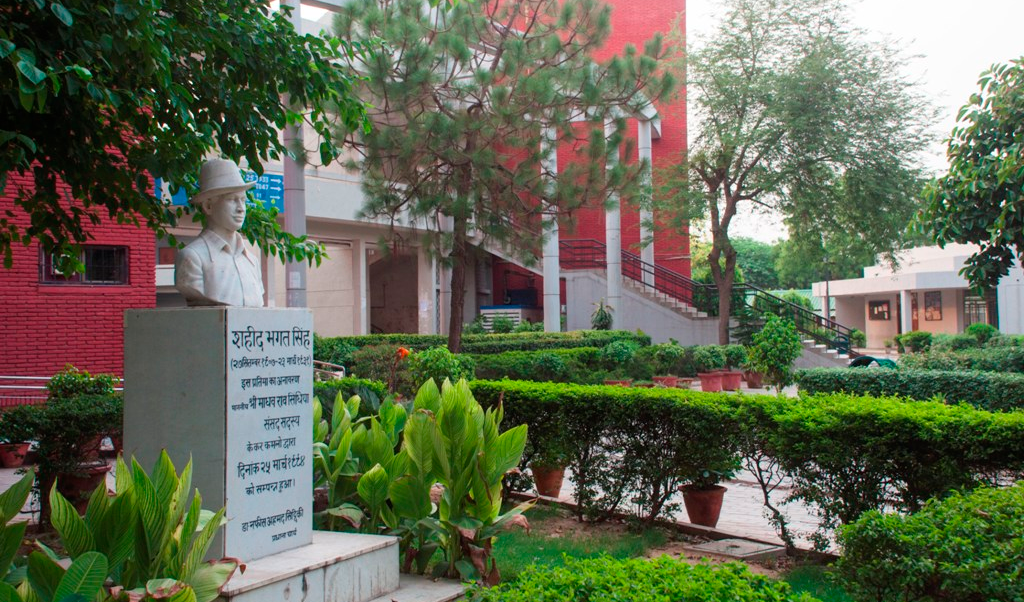
At 'Jashan-e-Inquilab' in Ludhiana, CM Bhagwant Mann tied Bhagat Singh's legacy to AAP's record ahead of Punjab's 2027 Assembly elections The Aam Aadmi Party has turned its governance message in Punjab into a broader political campaign, using the legacy of freedom fighter Bhagat Singh to rally youth, assert Punjab's identity and defend its record in office. The sharpest sign came in Ludhiana, where the AAP government held 'Jashan-e-Inquilab' at Punjab Agricultural University to mark Bhagat Singh's birth anniversary. The event drew a large gathering of young people and mixed music, theatre and cultural performances with an extended political address by Chief Minister Bhagwant Mann. Mann used the occasion to promote his government's work and to draw a direct line between the martyr's ideals and the state administration. Mann tied Bhagat Singh's legacy to his government's claims on education, healthcare, jobs, electricity, irrigation, women's welfare and the protection of Punjab's water. He contrasted his administration with earlier governments, accusing them of ignoring the ideals and sacrifices of the martyrs. The Chief Minister pointed to several projects as proof of the government's commitment to preserving Bhagat Singh's memory. These included the naming of the Mohali airport after the revolutionary, a 30-foot statue at Nishan-e-Inquilab Plaza and a ₹52-crore heritage complex at Khatkar Kalan. Mann linked these efforts to his pitch for a more equal, educated and welfare-focused Punjab. The anniversary allowed the party to fold together the themes it has been pushing at its events, including youth mobilisation, the anti-drug campaign, education, sports, water and development. By attaching these to Punjab's emotional connection with its most iconic revolutionary, the commemoration became less a conventional memorial function and more a political rally. With the 2027 Assembly elections approaching, AAP's messaging in the state is increasingly taking the shape of an organised campaign that pairs its governance claims with a wider narrative about Punjab's identity and future. AAP Punjab, Bhagwant Mann, Bhagat Singh, Jashan-e-Inquilab, Punjab 2027 elections, Khatkar Kalan, Punjab water, Ludhiana

INDIA Bloc Meets Today, Plans Nationwide Stir Against CEC

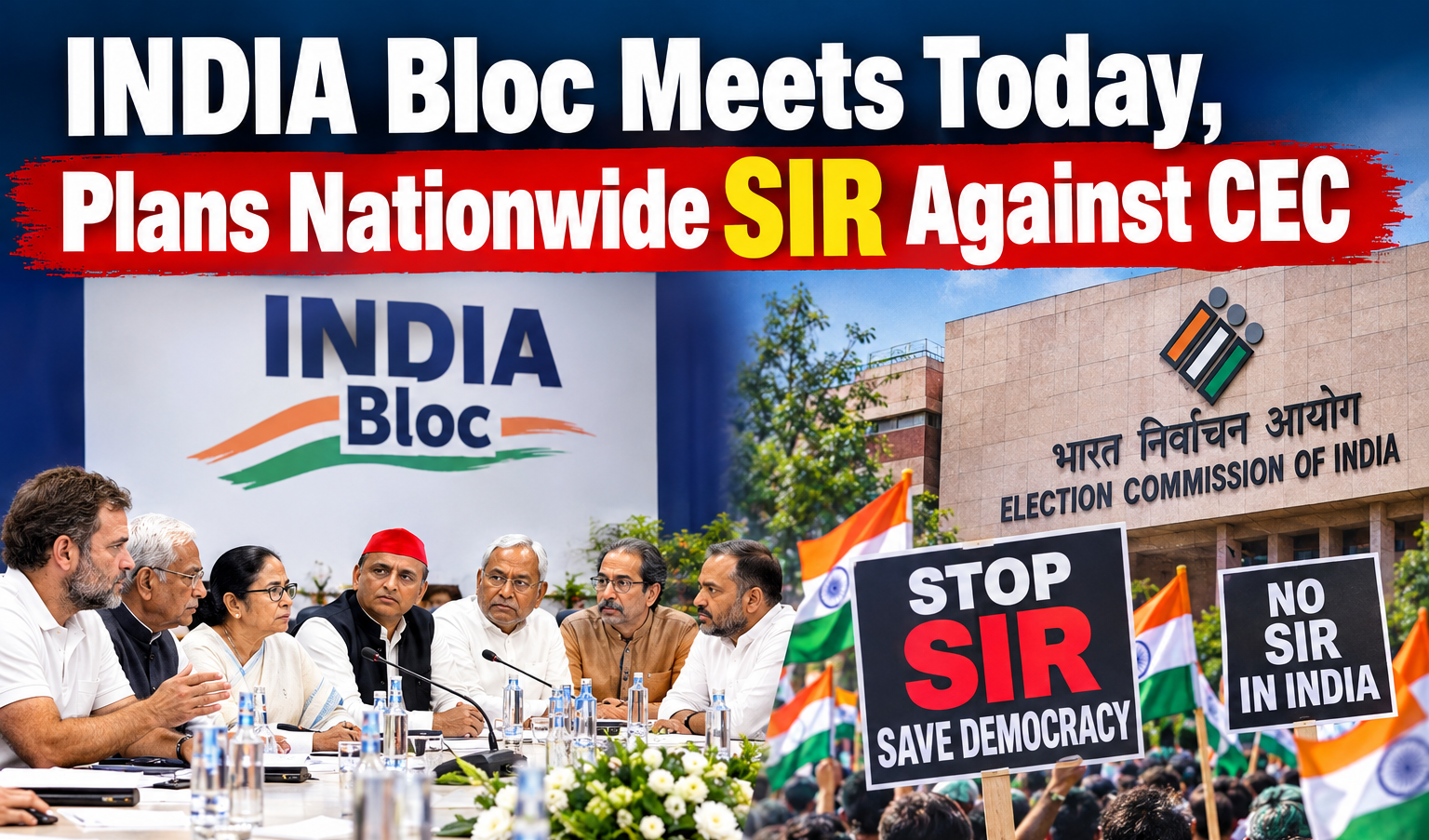
The INDIA alliance meets on September 30 to plan protests and a parliamentary impeachment push against Chief Election Commissioner Gyanesh Kumar. The INDIA alliance meets on Wednesday, September 30, to finalise a plan for a nationwide agitation against Chief Election Commissioner Gyanesh Kumar, with an impeachment motion set to be moved in Parliament and public rallies to follow across the country. The agenda for the meeting has been finalised and will broadly track the points raised at the Congress Working Committee, which met earlier and passed a resolution demanding Kumar's removal and calling for the resignation of Prime Minister Narendra Modi. The opposition plans to take its campaign to both the streets and Parliament. The protest drive is set to open with a rally at Delhi's Ramlila Maidan, followed by public meetings in various states. Sources said the INDIA Bloc may announce the date of that first rally at Wednesday's meeting. The row centres on reports that two Election Commissioners disagreed with Kumar on multiple occasions over revisions to voter lists and the inclusion of new names. Rahul Gandhi has alleged that Kumar acted only to help the BJP steal votes. The Congress believes the meeting will be historic, framing it as a step towards a united opposition confronting the government in the legislature and outside it. Who is attending The Congress will be represented by party chief Mallikarjun Kharge, Rahul Gandhi and Sonia Gandhi. The Trinamool Congress delegation includes Mamata Banerjee, Abhishek Banerjee, Kalyan Banerjee and Derek O'Brien. Leaders of all Left parties are also due to attend. Other leaders confirmed for the meeting include Jharkhand Mukti Morcha's Hemant Soren, RJD chief Tejashwi Yadav, NCP's Supriya Sule, National Conference chief Omar Abdullah and PDP's Mehbooba Mufti. Shiv Sena (UBT) chief Uddhav Thackeray will join virtually. Representatives from the Kerala Congress, VCK and MDMK, along with Rajasthan's RLP and BAP, will also take part. No representative from the Congress's Tamil Nadu ally TVK will attend. Independent Rajya Sabha MP Kapil Sibal has been invited to the meeting. Absences and seat-sharing questions Samajwadi Party chief Akhilesh Yadav will skip the meeting, with senior leader Harendra Malik attending in his place. Kharge and senior leader KC Venugopal spoke with Yadav, who said he was occupied with the filing of nominations for the Rajya Sabha election, due on Wednesday. His absence has been linked to seat-sharing talks between the Congress and the Samajwadi Party in Uttar Pradesh, but Venugopal has dismissed those reports as baseless. The Aam Aadmi Party is not attending, though it has said it will back the opposition's move to impeach the Chief Election Commissioner. The DMK, a former Congress ally that left the bloc after the alliance ended, has also said it cannot attend but supports the issue. Efforts are underway to widen the front. CPM general secretary MA Baby has pushed for expanding the INDIA alliance and has written to parties proposing the inclusion of anti-BJP outfits from various states. According to sources, no positive response has come from the Biju Janata Dal, the BRS or the YSR Congress. Beyond drawing up the protest strategy, the meeting is expected to formalise the twin-track approach agreed at the Congress Working Committee: sustained rallies against Kumar in Delhi and the states, and the impeachment motion in Parliament. INDIA bloc meeting, Gyanesh Kumar, Chief Election Commissioner, Congress Working Committee, Rahul Gandhi, impeachment motion, opposition rally Ramlila Maidan, voter list revision

Dali Koumbe "The Village of Quranic Learning in Mauritania”

Dali Koumbe The Mauritanian Village Where Blindness and Quranic Learning Shape a Unique Community MAURITANIA, WEST AFRICA — In a remote part of southeastern Mauritania lies a village that has attracted attention for an unusual combination of circumstances: a high prevalence of inherited blindness and a strong tradition of Quranic education. Known as Dali Koumbé, and also referred to in academic research as Dali Gimba, the isolated community is located about 60 kilometres from the town of Timbedra in southeastern Mauritania. Reports and research have documented generations of residents affected by blindness, while Quran memorisation remains an important part of community life. A Village Known for Generations of Blindness Dali Koumbé has long been associated with hereditary blindness. A 2015 report described the village as having a population of around 2,000 at the time and reported widespread congenital blindness among residents. Other reports have given considerably smaller population figures, illustrating how estimates have varied over time. A 2019 report by Al Ain News described the village as being around 60 kilometres from Timbedra and reported that more than half of the children were born without sight. The same report cited local and medical observations concerning a hereditary condition affecting several generations of the community. Researchers have also studied Dali Gimba as a community in which blindness has a significant social and cultural role. Anthropologist Saquib Usman's research at the University of Michigan examined how blindness and sight are understood within the village and surrounding region. Quran Memorisation Has a Special Place One of the most remarkable aspects of the village is its tradition of Quranic education. Academic research conducted in Dali Gimba documents groups of children gathering to memorise and recite portions of the Quran. The research describes Quranic study taking place at different times of the day, including early morning, afternoon, after sunset and late into the night. The same research says that Dali Gimba developed a reputation as a place for Quranic study partly because blind instructors were considered particularly strong listeners and examiners. Their memorisation abilities and knowledge of the Quran were highly respected within the community. This is an important distinction: blindness did not prevent members of the community from participating in religious education. In some cases, the skills developed through listening and memorisation became an important part of their role as teachers. Learning Without Sight For Quran students, memorisation depends heavily on repeated listening, recitation and correction. In Dali Gimba, these practices became particularly significant because blind teachers could rely on their exceptional auditory memory and familiarity with recitation. The academic account describes children repeatedly reading and reciting their daily portions from writing tablets, with Quranic learning continuing for several years during childhood. The tradition demonstrates how education can adapt to the circumstances of a community. Rather than treating blindness as an absolute barrier to learning, the village developed an educational culture in which listening, memorisation and oral transmission were especially important. A Community Living With a Serious Health Challenge Behind the inspirational stories, however, Dali Koumbé also faces serious social and medical challenges. Reports have described limited access to healthcare, education and other essential services. Residents have sought greater medical assistance and facilities, particularly because of the number of people affected by blindness. A 2019 report cited medical opinions linking the condition affecting many residents to hereditary genetic factors. It also discussed retinal disorders as one possible explanation for some cases. These medical explanations are important because the precise cause of the condition should not be reduced to folklore or religious interpretation without scientific evidence. Faith, Acceptance and Community Life Stories circulating online about Dali Koumbé often focus on the spiritual perspective of its blind residents. Some videos portray villagers as deeply content with their circumstances and emphasize their faith, Quran memorisation and hope of meeting their Creator. These themes reflect the religious interpretation presented in such material, but individual statements from videos should be attributed to the speakers rather than presented as independently established facts. What can be documented is that Quranic education has historically played a significant role in the community and that blind Quran teachers have held respected positions in the local educational tradition. More Than a Story About Blindness Dali Koumbé's story is therefore more complicated than the description of a "village of blind people." It is a story about education, faith, inherited disease, adaptation and community resilience. Residents have had to develop ways of navigating daily life in an environment where many people cannot see. At the same time, Quranic memorisation has provided an important educational and cultural tradition. The village's experience also raises broader questions about access to healthcare and education for remote communities affected by inherited conditions. What Dali Koumbé Teaches the Outside World The story of Dali Koumbé has attracted international attention partly because it challenges common assumptions about disability. Blindness can create enormous practical difficulties, particularly where medical services are limited. Yet the experience of the community also shows that people can develop alternative skills and social systems around their circumstances. For generations of Quran students, listening and memorisation became central educational tools. Blind teachers became valued for their ability to listen carefully and evaluate recitation. The result is a community where physical limitations and religious education have become closely intertwined. A Story of Faith, Education and Resilience Dali Koumbé remains one of the more unusual communities documented in Mauritania. Its history combines a serious hereditary health problem with a strong tradition of Quranic learning. The village should not simply be viewed as a curiosity or a "mystery." Its story involves real families, medical challenges, educational traditions and the everyday efforts of people adapting to circumstances that have shaped their community for generations. For those who encounter the story through social media videos, the most important lesson may not be about blindness itself. It is about how education, faith, community support and human adaptability can continue even in extremely difficult circumstances. Location: Dali Koumbé / Dali Gimba, southeastern Mauritania, West AfricaNearest reported town: TimbedraCountry: MauritaniaRegion: Sahel / Sahara region of West AfricaNotable feature: High prevalence of hereditary blindness and a documented tradition of Quranic education and memorisation. Sources and verification This article is based on published reporting and academic research concerning Dali Gimba/Dali Koumbé. The University of Michigan's research documentation records Quranic schooling and the role of blind Quran instructors in the community. Contemporary reporting has separately documented the village's hereditary blindness, healthcare challenges and residents' efforts to obtain assistance.

US Energy Paradox Oil Costs, Reserves and Petrodollar Power

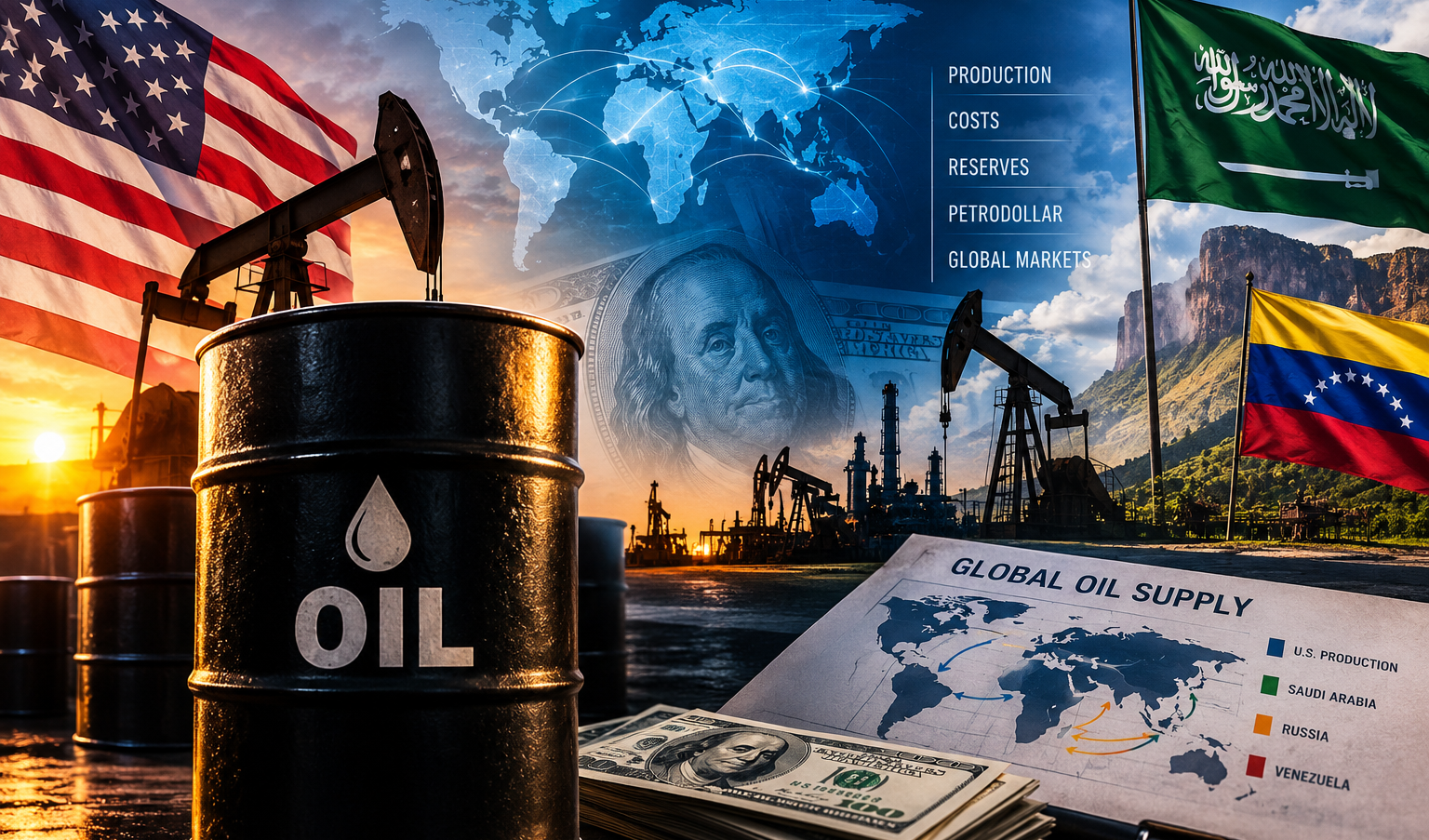
Explore the US energy paradox, comparing shale oil costs, Saudi production, Venezuela's reserves and the petrodollar's influence on global markets. The US Energy Paradox: How Oil Production, Extraction Costs and Petrodollar Power Shape Global Energy Markets Special Report | News National WASHINGTON / DUBAI — The United States occupies a unique position in the global energy landscape. It is the world's largest crude oil producer, yet its domestic oil industry faces production costs and geological challenges that differ significantly from those of major Middle Eastern exporters. Behind this contrast lies a complex relationship between energy security, international trade, strategic reserves and the global financial system. While the United States has expanded its shale oil production, countries such as Saudi Arabia continue to benefit from conventional oil fields that are generally cheaper to operate. At the same time, the US dollar remains central to international oil trading, reinforcing the connection between energy markets and American financial influence. These developments have prompted debate over whether the United States is positioning itself to preserve its own resources while relying on foreign supplies. However, the distinction between documented economic trends and interpretations of a deliberate long-term geopolitical strategy remains important. 1. US Oil Production Dominance: The Shale Revolution The United States produced an average of 13.6 million barrels of crude oil per day in 2025, setting a new annual record and maintaining its position as the world's leading crude oil producer, according to the US Energy Information Administration (EIA). The country's production growth has been driven substantially by technological improvements in horizontal drilling and hydraulic fracturing, commonly known as fracking. Major production regions include: Permian Basin: Located primarily in Texas and New Mexico, it is a major source of US shale oil. Bakken Formation: Located mainly in North Dakota and Montana, it has contributed significantly to American crude production. Eagle Ford Shale: A major oil and natural gas producing formation in South Texas. Unlike conventional oil fields, where petroleum can sometimes flow naturally under underground pressure, shale production requires operators to drill horizontally and fracture rock formations to release trapped hydrocarbons. This process involves substantial investment in drilling equipment, technology, water management, transportation and ongoing well maintenance. The United States had approximately 46 billion barrels of proved crude oil and lease condensate reserves at the end of 2024, according to the EIA. The combination of substantial production and relatively high development requirements creates an important economic distinction: being the world's largest producer does not automatically mean having the world's cheapest oil. 2. The Extraction Cost Gap: America Versus Saudi Arabia and Russia Oil production costs vary according to geology, technology, labour, infrastructure, taxation and the definition of cost being measured. Conventional oil fields in the Middle East generally benefit from geological conditions that allow companies to extract petroleum at lower operating costs than many shale projects. Saudi Arabia's large conventional fields have historically provided a significant cost advantage. However, the frequently quoted figures of just a few dollars per barrel generally refer to lifting costs, rather than the complete cost of exploration, development, transportation and government expenditure. US shale producers face a different economic structure. Their profitability depends on drilling productivity, well decline rates, capital expenditure, oil prices and access to pipelines and processing facilities. Russia also has a diverse production base, with costs varying considerably between mature fields, newer developments and remote regions. International sanctions, restrictions on technology access, shipping complications and insurance arrangements can increase the total cost of bringing Russian oil to international buyers. The central economic issue is that production cost and market price are not the same thing. A country may produce oil cheaply but still sell it at the prevailing international market price, while a higher-cost producer may remain profitable during periods of strong demand. 3. Venezuela: The World's Largest Oil Reserves, but Limited Production Venezuela presents one of the most striking contrasts in global energy economics. The country possesses approximately 303 billion barrels of proved crude oil reserves, making it the world's largest holder of proved oil reserves according to the EIA's 2023 assessment. Yet its production remains far below that of the United States, Saudi Arabia and Russia. The explanation involves several interconnected challenges. Extra-heavy crude oil A large proportion of Venezuela's petroleum is concentrated in the Orinoco Belt, where the oil is exceptionally thick and difficult to extract and process. Unlike lighter crude, extra-heavy oil often requires specialised production techniques, additional processing and, in some cases, blending with lighter hydrocarbons to make it suitable for transportation and refining. Deteriorating infrastructure Years of underinvestment, equipment deterioration, operational difficulties and shortages of technical expertise have affected the country's oil industry. Its state-owned oil company, Petróleos de Venezuela (PDVSA), has faced substantial financial and operational constraints. International sanctions US sanctions and restrictions on investment and technology access have further complicated Venezuela's ability to restore production capacity and attract international partners. The country's experience demonstrates that underground reserves alone do not guarantee energy dominance. Access to capital, technical expertise, functioning infrastructure and stable commercial arrangements are equally important. 4. The Strategic Debate: Is America Preserving Its Own Oil? One interpretation of US energy policy suggests that the country benefits from consuming or importing lower-cost foreign crude while preserving more expensive domestic shale resources for future use. The argument is based on a straightforward economic principle: if a country has access to cheaper supplies from international markets, it may have an incentive to avoid extracting higher-cost domestic resources until market conditions justify production. However, this should not be confused with a verified government strategy to deliberately exhaust foreign reserves before using American oil. US energy policy has involved multiple objectives, including domestic production, consumer affordability, energy security, exports, employment, environmental regulation and international trade. The United States also exports substantial quantities of crude oil and petroleum products, meaning its energy position cannot be explained simply as a policy of importing foreign oil while keeping domestic reserves untouched. Nevertheless, the debate highlights an important question for the future: how should major economies balance immediate energy demand against the long-term value of their natural resources? 5. The Persian Gulf and America's Security Relationships The Persian Gulf remains strategically important because of its concentration of major oil exporters and its role in international energy transportation. The United States maintains longstanding defence and security relationships with several Gulf countries, including Saudi Arabia and other regional partners. These relationships involve military cooperation, arms sales, intelligence sharing, maritime security and diplomatic engagement. The security arrangements developed over decades have also intersected with energy trade and financial relationships. For Gulf exporters, stable shipping routes and predictable international markets are important to maintaining oil revenues. For the United States and other major economies, uninterrupted energy supplies are important to economic stability. However, the relationship is not a simple exchange in which military protection is provided solely in return for dollar-denominated oil sales. Regional security, defence cooperation, investment, diplomacy and shared economic interests all contribute to these partnerships. 6. The Petrodollar System: How Oil Supports the Dollar's Global Role The term petrodollar describes US dollars earned through international petroleum sales and the broader financial relationships associated with those revenues. Since the 1970s, the dollar has played a central role in international oil pricing and settlement. This position creates several economic advantages for the United States. International demand for dollars: Countries and businesses involved in global energy trade frequently require access to dollar-based financial markets. Deep financial markets: The United States offers highly developed capital markets, including US Treasury securities, which international institutions use for investment and reserves. Currency network effects: When major commodities are priced in a widely used currency, businesses may continue using that currency because it simplifies contracts, financing and risk management. Investment flows: Oil-exporting countries can reinvest surplus revenues in international financial markets, including American assets. Nevertheless, the dollar's international position cannot be attributed to oil alone. The size of the US economy, the liquidity of its financial markets, institutional arrangements and its role in international trade are also important factors. Furthermore, dollar-denominated oil trading does not mean every oil transaction must be settled in dollars or that all oil exporters invest their proceeds in US government debt. The petrodollar system is therefore better understood as one component of a much larger international financial structure. 7. Can the US Dollar Remain Dominant as Energy Markets Change? The global energy landscape is evolving. China and India have become major participants in international energy trade, while several countries are exploring alternative payment arrangements to reduce their dependence on the dollar. Some Gulf exporters have also expressed interest in diversifying their commercial and financial relationships. These developments have generated discussion about alternative currencies, including the Chinese yuan, in energy transactions. However, diversification does not automatically mean the end of dollar dominance. The dollar continues to benefit from established financial infrastructure, liquidity and widespread international use. The future of the petrodollar will depend on several factors, including geopolitical relationships, financial-market developments, energy demand, trade patterns and the availability of credible alternatives. 8. The Future of Global Oil: Production, Reserves and Economic Power The US energy paradox reveals that oil power is determined by more than the volume of petroleum beneath a country's territory. A nation's influence in the energy market depends on its ability to extract resources economically, maintain production infrastructure, transport supplies, attract investment and participate in international financial systems. The United States has demonstrated how technological innovation can transform previously difficult-to-access resources into a major source of production. Saudi Arabia continues to benefit from large conventional fields and a different cost structure, while Venezuela illustrates the challenges of converting enormous geological reserves into reliable commercial output. Meanwhile, the dollar's role in international energy transactions reinforces the connection between oil markets and global finance. Whether these developments represent a coordinated long-term strategy or the combined outcome of economic incentives and geopolitical decisions remains a subject of debate. What is clear is that the future balance of global energy power will be shaped not only by who owns the oil, but also by who can produce it, finance it, transport it and trade it efficiently. Key Takeaways The United States produced a record 13.6 million barrels of crude oil per day in 2025. US shale production relies on capital-intensive drilling and hydraulic fracturing. Saudi Arabia benefits from a different geological and production-cost structure. Venezuela's enormous reserves have not translated into comparable production because of technical, financial and infrastructure challenges. The petrodollar system supports the dollar's role in global energy markets but is not the sole foundation of US financial influence. The theory that America deliberately preserves its oil while exhausting foreign reserves first remains an interpretation, not an established fact. Editorial Note: This report is an original analysis prepared for News National. Figures refer to the specific reporting periods identified in the article. Production costs vary by methodology and project, and geopolitical interpretations are presented as analysis rather than established government policy.

India’s AI Revolution Reliance, Adani and the Race for AI Infrastructure

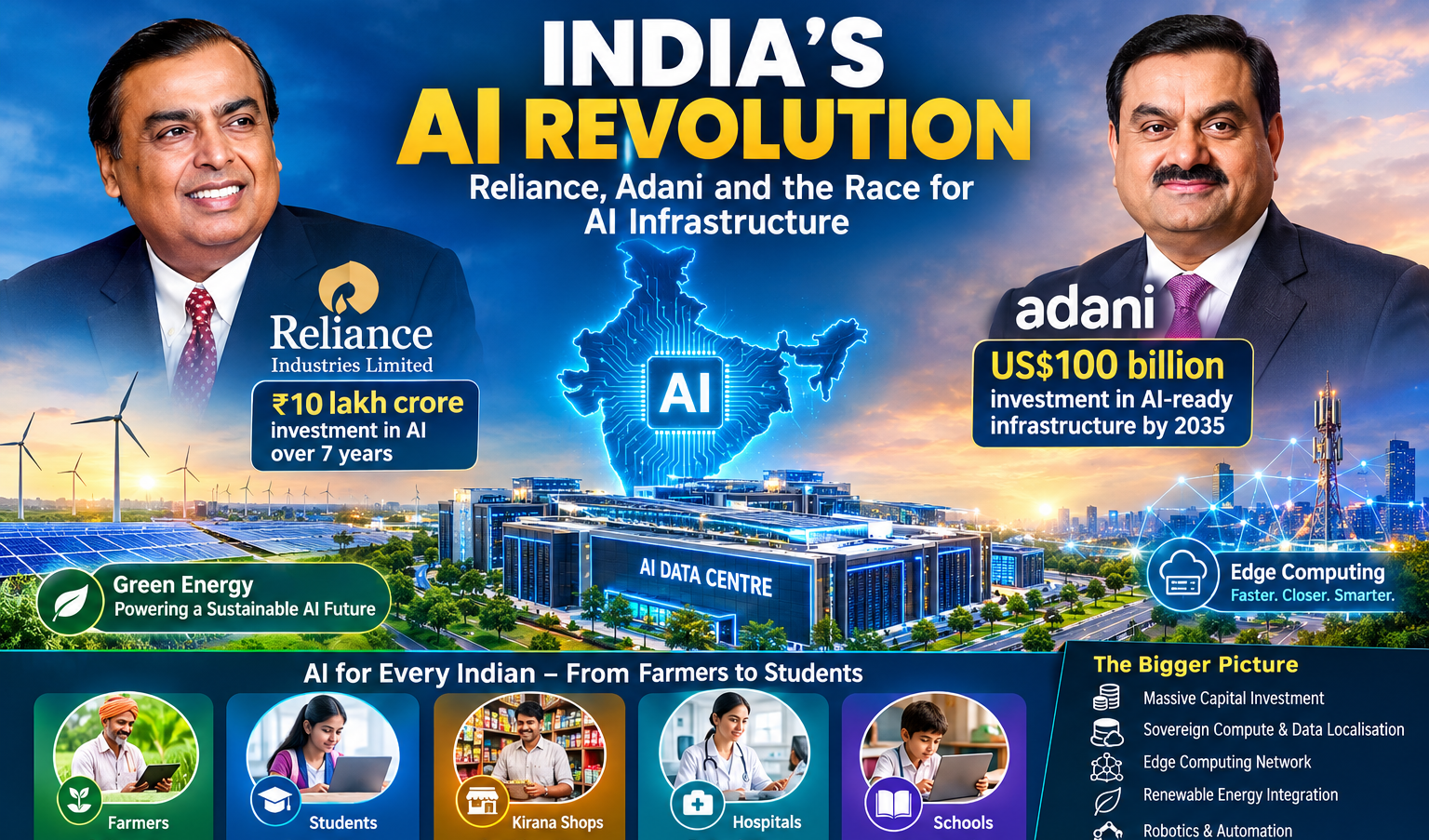
India’s AI revolution accelerates as Reliance and Adani invest billions in data centres, sovereign computing, green energy and AI infrastructure India’s AI Revolution Reliance and Adani Push the Country Toward the Intelligence Era India is entering a new phase of its technology journey as artificial intelligence moves from being primarily a software-industry technology to becoming a major infrastructure, energy, computing and business priority. The growing involvement of large Indian conglomerates, particularly Reliance Industries and the Adani Group, is adding significant private-sector capital to the country’s AI infrastructure ambitions. The development comes as India is simultaneously expanding government-backed AI computing capacity, domestic foundation models and semiconductor capabilities. In August 2026, the government said the IndiaAI Mission had expanded shared computing capacity to more than 45,000 GPUs, while indigenous foundation-model development was also progressing. Reliance and Adani Enter India’s AI Infrastructure Race For years, India was recognised as a major software and IT-services market, but much of the underlying AI computing infrastructure was concentrated outside the country. That equation is changing. Reliance is building AI computing infrastructure through its Reliance Intelligence initiative, while the Adani Group has announced an ambitious programme combining renewable energy and hyperscale data centres. These investments could influence several parts of the technology ecosystem, including: AI data centres GPU computing Cloud infrastructure Renewable-energy generation AI model development Edge computing Enterprise AI AI services for startups Robotics and industrial automation Data localisation and sovereign computing The result could be a shift from India being primarily an AI user and software-services provider toward becoming a larger builder of AI infrastructure. The “Jio Effect 2.0”: Making AI More Accessible Reliance is positioning its AI strategy around an idea similar to the transformation that took place in India's telecommunications industry after Jio's entry. The company has argued that AI should become affordable and widely accessible rather than remaining a technology available mainly to large corporations. At the India AI Impact Summit, Mukesh Ambani said Jio's objective was to connect India to the “intelligence era” and reduce the cost of access to AI in a way comparable to the reduction in the cost of mobile data. The potential target market is enormous. AI services could increasingly be used by: Farmers: crop analysis, weather information, market intelligence, agricultural advisory tools and automation. Students: personalised learning, tutoring, language translation and educational content. Small businesses: accounting, customer support, advertising, inventory management and business analytics. Kirana stores: inventory forecasting, digital marketing, customer management and local-language business tools. Hospitals: administrative automation, medical documentation and AI-assisted workflows, subject to applicable medical and privacy safeguards. Schools: educational content generation, administrative systems and language-learning applications. This does not mean every application will automatically become inexpensive or universally available. Cost, connectivity, computing capacity, regulation and the quality of AI systems will remain important factors. Reliance’s ₹10 Lakh Crore AI Commitment One of the biggest announcements came from Reliance. Mukesh Ambani announced that Jio and Reliance would invest ₹10 lakh crore over seven years, beginning in 2026, toward India's AI and intelligence infrastructure. That figure is substantially larger than the ₹1 lakh crore figure sometimes circulated online. The investment plan is intended to cover a broad AI infrastructure ecosystem rather than simply building a consumer chatbot. Reliance has described the programme as including: Gigawatt-scale AI data centres Sovereign computing infrastructure Nationwide edge computing AI services Connectivity infrastructure Green-energy integration AI computing for enterprises and developers The scale of the proposed investment highlights how computing infrastructure is becoming as strategically important as telecommunications infrastructure. Jamnagar Becomes an AI Infrastructure Centre One of the most important locations in Reliance's strategy is Jamnagar, Gujarat. Reliance says it has already begun developing multi-gigawatt AI-ready data-centre infrastructure in Jamnagar. The company's latest disclosures say the first 120 MW of its sovereign AI infrastructure is targeted for commissioning by the end of 2026. Reliance says this initial deployment will use advanced NVIDIA GB300 GPUs and that its computing capacity is designed to scale significantly. The significance of Jamnagar goes beyond computing. AI data centres require enormous quantities of electricity. By combining computing infrastructure with renewable-energy generation, Reliance is attempting to create an integrated energy-and-compute model. Reliance says the Jamnagar AI infrastructure will be powered by clean energy from its renewable-energy platform in Kutch. Meta Partnership Adds Global Dimension Reliance's Jamnagar plans have also attracted major international technology interest. In June 2026, Meta and Reliance announced an agreement for an AI-enabled data centre in Jamnagar. Meta said the facility will initially have 168 MW of capacity, which Meta plans to lease, with options to scale. The facility is intended to be supported by renewable energy and desalinated seawater cooling. The partnership is significant because it connects India's expanding data-centre infrastructure with the computing requirements of a global technology company. Reliance has also expanded its partnership with Google Cloud to develop AI-focused cloud infrastructure in Jamnagar. Together, these developments demonstrate that India's AI infrastructure is attracting both domestic investment and international technology partnerships. Adani’s $100 Billion AI Infrastructure Plan The Adani Group has also announced a major AI infrastructure programme. In February 2026, Adani announced a US$100 billion direct investment by 2035 to develop renewable-energy-powered, hyperscale AI-ready data centres. This is another figure that is important to report accurately. The announcement was US$100 billion, rather than ₹1 lakh crore. Adani said the investment could catalyse an additional US$150 billion across areas including server manufacturing, advanced electrical infrastructure, sovereign cloud platforms and supporting industries. The company therefore estimates that the broader AI infrastructure ecosystem could reach approximately US$250 billion over the decade. Adani's strategy links three major requirements of the AI economy: Energy + Computing + Data Centres This model reflects a growing reality of generative AI: advanced AI systems require enormous amounts of electricity and specialised computing infrastructure. Adani’s Data-Centre Expansion Adani's AI infrastructure programme builds on its existing data-centre business. The company said its AdaniConneX platform had a 2 GW national data-centre platform, with an expansion path toward 5 GW. It has also announced partnerships involving Google and other technology companies for large-scale AI infrastructure. The company has previously announced major data-centre plans in states including Maharashtra. In 2024, Adani announced a proposed ₹50,000 crore investment for 1 GW of hyperscale data-centre infrastructure in Maharashtra, with the planned infrastructure designed to use renewable energy. Sovereign AI: Why India Wants Its Own Compute The concept of sovereign AI is becoming increasingly important. Artificial intelligence requires more than software. Large AI models require: GPUs Data centres Electricity High-speed networks Cloud platforms Storage Semiconductor technology Skilled engineers Data If these capabilities are heavily dependent on overseas infrastructure, countries can face strategic and economic vulnerabilities. India's government has therefore been pursuing domestic AI computing and foundation models through the IndiaAI Mission. The government said in 2026 that its strategy was intended to strengthen technological self-reliance across computing infrastructure, foundation models, semiconductors and advanced research. The private-sector investments by Reliance and Adani add another layer to this effort. Edge Computing: Bringing AI Closer to Users Another major part of the AI infrastructure race is edge computing. Traditional cloud computing often sends data to centralised data centres for processing. Depending on the location and application, that can introduce delays. Edge computing moves some processing closer to the user or device. For example, an AI application operating through a mobile network could potentially process certain tasks at computing infrastructure located much closer to the user. This can be particularly important for applications involving: Autonomous machines Industrial automation Smart factories Connected vehicles Real-time translation Video analytics Gaming Healthcare systems Retail technology Smart-city infrastructure Reliance has specifically included a nationwide edge-computing layer integrated with its network in its AI strategy. The practical objective is to reduce latency and improve the responsiveness of AI services. Green Energy Becomes Critical for AI AI's computing requirements create another major challenge: electricity consumption. Training and operating advanced AI models can require large quantities of power, while hyperscale data centres operate continuously. This is why renewable energy has become an important part of India's AI infrastructure plans. Reliance says its Jamnagar AI infrastructure will use clean energy from its renewable-energy ecosystem in Kutch. Adani is also positioning renewable power as a central component of its AI data-centre strategy. Its announced US$100 billion programme specifically focuses on renewable-energy-powered AI-ready data centres. The combination of renewable energy and data centres could therefore become one of the defining characteristics of India's AI infrastructure expansion. What It Could Mean for Indian Businesses The development could create opportunities beyond the biggest technology companies. Indian startups could gain access to greater domestic computing capacity. Small and medium-sized businesses could increasingly use AI for: Customer service Marketing Sales Accounting Human resources Software development Translation Data analysis Cybersecurity Business forecasting Manufacturing companies could use AI alongside robotics and industrial automation. Banks and financial companies could deploy AI for customer service, fraud detection and internal operations while complying with financial regulations. The healthcare sector could use AI for administrative and analytical workloads, although medical applications require appropriate professional oversight. AI and the Future of Jobs The expansion of AI will also create a significant workforce challenge. Some repetitive tasks could increasingly be automated, while demand grows for workers who can operate, supervise and integrate AI systems. The impact is therefore unlikely to be limited to technology companies. AI literacy could become increasingly important for employees in: Finance Education Healthcare Manufacturing Retail Agriculture Transportation Media Marketing Government services Rather than treating AI only as a specialist technology, businesses and workers may increasingly need to understand how AI tools affect everyday workflows. From AI to Robotics and Automation The next stage of the technology cycle could extend beyond software. AI systems are increasingly being combined with robotics, sensors, industrial machinery and autonomous systems. This could lead to wider adoption of: Warehouse robots Agricultural robots Manufacturing automation AI-powered inspection systems Autonomous machines Delivery systems Smart industrial equipment However, the pace of adoption will depend on costs, safety standards, regulation, reliability and the availability of skilled workers. India’s AI Opportunity Comes With Challenges Large investments alone will not guarantee an AI transformation. India will also need to address several challenges. 1. Electricity Demand AI data centres require reliable and large-scale electricity supplies. 2. Water and Cooling Data centres generate significant heat and require sophisticated cooling systems. Water use and environmental impact will therefore require careful management. 3. Semiconductor Supply Advanced AI infrastructure depends heavily on specialised chips and global semiconductor supply chains. 4. Skilled Workforce India will need engineers, researchers, data scientists, AI infrastructure specialists and technicians. 5. Data Protection As more AI applications process personal and business information, privacy and data-protection requirements will become increasingly important. 6. Cybersecurity Large AI infrastructure platforms will become valuable targets for cyberattacks, making security a critical component of national and corporate infrastructure. 7. Responsible AI AI systems can produce inaccurate or biased outputs. High-impact applications will require appropriate testing, human oversight and accountability. India’s AI Competition Is Becoming an Infrastructure Race India's AI development is increasingly moving beyond the question of which company has the best AI model. The larger competition is becoming about who can build the infrastructure required to run AI at national scale. That includes: Compute → Data Centres → Energy → Networks → Chips → Models → Applications → Users Reliance is attempting to connect its telecommunications, energy and digital businesses to this emerging ecosystem. Adani is combining its energy, infrastructure and data-centre capabilities with an ambitious AI infrastructure programme. At the same time, India's government is expanding public AI computing capacity and supporting indigenous AI models. The Intelligence Era India's AI transformation is therefore developing on several fronts at once. The government is building national AI capacity. Reliance is investing in sovereign compute, edge infrastructure and AI services. Adani is investing in renewable-energy-powered data centres. Global technology companies such as Meta and Google are partnering with Indian companies to expand AI infrastructure. For Indian citizens and businesses, the most visible effect may eventually be simpler: AI becoming available through everyday applications at lower cost and with greater local-language support. The next few years will determine how quickly that infrastructure becomes useful at mass scale. India's AI story is no longer limited to software engineers in technology hubs. It is increasingly becoming a story about energy, computing, telecommunications, infrastructure, businesses, education, employment and everyday consumers. The transition from the internet era to what Reliance calls the “intelligence era” has begun — and the infrastructure being built today could shape India's technology economy for decades. Source note: Investment and infrastructure figures in this article have been cross-checked against Reliance, Adani, Meta and Government of India material. Figures and plans are company/government announcements and should not be interpreted as guarantees of future completion or economic outcomes.

Ohio Lawyer's $550 Zelle Mistake Spirals Into 3-Year Court Fight

A $550 Zelle payment sent to the wrong man in 2023 became a lawsuit, a bar grievance and an Ohio appeals ruling in 2026. Here's what happened. A $550 payment sent to the wrong person on Zelle has ended with a ruling from the Ohio Court of Appeals, three years after the money first left the wrong account. On September 4, 2026, the Second District Court of Appeals upheld a lower court's decision against Christine Baker, an Ohio lawyer who had sued the stranger who received her mistaken transfers. Baker made the two payments on September 19 and 20, 2023, intending to send $550 to her husband's bank account. The money instead went to Zachary W. Reynolds, an Illinois man she had never met. According to the appeals court opinion, the mix-up happened because Reynolds shared the same first and last name as Baker's husband, and their email addresses were nearly identical. Baker noticed the error the day after the second payment. She searched online for Reynolds, tracking down his contact details along with information for his wife and some of his co-workers. On September 22, she reached out to him by email, text message and LinkedIn. The court record states that some of those messages threatened legal action if the $550 was not returned within 24 hours. Reynolds did not send the money back right away. His bank had warned him about the situation, and he worried he was being set up in a financial scam. He told Baker the matter should be handled through his bank and suggested she contact Charles Schwab directly. Baker then contacted Reynolds's wife and several of his co-workers, and she emailed the Kettering Police Department about the payment. Reynolds hired an Illinois attorney to deal with her. From refund to lawsuit The $550 was returned to Baker on October 3, 2023, roughly two weeks after she first sent it. The refund did not settle the dispute. Reynolds filed a grievance against Baker with the Dayton Bar Association, citing what the court described as her aggressive conduct after the mistaken payment. Baker responded by suing Reynolds, bringing claims of conversion and defamation. The case was first moved to federal court, where Baker voluntarily dismissed it without prejudice in January 2024. That left the door open to refile, and she did. After the Dayton Bar Association notified her in September 2024 that it intended to pursue a formal disciplinary complaint, Baker refiled her civil case in Montgomery County Common Pleas Court in October 2024. The court's ruling Reynolds asked the trial court for summary judgment in July 2025, arguing that Baker's claims did not hold up as a matter of law. The court agreed and granted the motion on February 27, 2026. Baker appealed, arguing that unresolved questions of fact remained and that the trial court had misapplied privilege and other legal rules. The appeals court was not persuaded. In its September 4, 2026 decision, the panel found that Baker had offered no evidence to counter Reynolds's motion or to show that any genuine factual dispute existed in the record. On that basis, it upheld the trial court's judgment in Reynolds's favor. What began as a routine payment sent to the wrong name had, by the time the appeals court ruled, stretched into a legal fight lasting nearly three years. Zelle payment error, Christine Baker lawyer, Zachary Reynolds, Ohio Court of Appeals, Dayton Bar Association, mistaken payment lawsuit, conversion defamation, Charles Schwab dispute

OpenAI's DevDay Bet A New AI Agent Called Aeon

Rumors point to OpenAI launching a consumer AI agent, Aeon, at its 2026 DevDay, chasing rivals Meta's Muse and Google's Gemini Spark. OpenAI helped make the modern AI chatbot a household product, but heading into its 2026 DevDay on Tuesday, the company trails its rivals in one of the sector's fastest-growing areas: always-on, consumer-facing AI agents. Reports suggest OpenAI will use the event to launch its own entry, an agent said to be named Aeon. Little has been confirmed about Aeon. One detail that has surfaced is that OpenAI now employs Peter Steinberger, the creator of the open-source agent OpenClaw, who is widely expected to be contributing to the project. Aeon would join a crowded field that already includes Meta's Muse, SpaceX's Grok Bot, Google's Gemini Spark, the newer Instinct, and OpenClaw itself. AI agents are designed to carry out tasks on a user's behalf: booking travel, buying groceries, scheduling appointments, and assisting with work presentations, among others. By some accounts, competing agents are already filling out paperwork for doctor visits, canceling subscriptions, organizing group trips, booking activities, setting up DMV appointments, and paying bills. From demo to daily use OpenAI showed an agentic API feature at its 2024 DevDay and shipped early consumer-facing agents focused on computer use and research in mid-2025. The turning point for the category came late last year, when OpenClaw pushed agents past the proof-of-concept stage into practical use. The race has accelerated since, and OpenAI's visible progress has lagged. Meta now looks like OpenAI's main competitor in the space. Since its release earlier this month, Muse has climbed to the top of the App Store charts and reached 600,000 daily active users in the US, according to Apptopia. Early reviews describe it as useful but slightly unsettling. Instinct has drawn attention for how easy it is to use, letting people communicate with it over iMessage and many other chat apps. Google's Gemini Spark runs around the clock and connects to more than 30 external service partners, including Dropbox, Uber, and Spotify. To lead the pack, Aeon would need to combine strengths that are currently spread across those platforms: the usefulness of OpenClaw, the low cost and easy setup of Muse, and the conversational simplicity of Instinct. Security problems follow the agents As agents gain more autonomy, security concerns have grown. At least one known vulnerability, since patched, let attackers take over accounts. Users have also complained that Muse shared a home address without permission and read private messages, though such individual reports can be difficult to confirm. Any successful agent would have to address risks that have trailed the category since OpenClaw and continued with Muse. OpenAI has raised expectations for the announcements. It has been promoting its latest frontier model, GPT-6 Astra, as the point at which artificial general intelligence arrives. "I think it's not unreasonable to feel that we are now in the AGI era," OpenAI president Greg Brockman said at a press briefing earlier this month. Astra would likely power whatever agent the company unveils, which should make a system like Aeon stronger at cybersecurity tasks, software engineering, scientific research, and computer use. A gap in integrations OpenAI faces disadvantages in other areas. Muse plugs into Meta's services, which are used by billions of people, and Gemini Spark ties into Google's broad range of enterprise and personal tools. OpenAI has tried to close that gap before. At last year's event, it pushed the ChatGPT Apps SDK, which let controls for outside apps such as Zillow, Spotify, and Canva appear inside the chatbot. Aeon may be just one of several announcements on Tuesday. Other rumors point to updates on the AI hardware the company is building with former Apple designer Jony Ive, a possible step forward for GPT-6 such as an Astra 6.1, a hardware update, and further AGI claims. A continuously running agent could tie much of this together, which is part of why it is seen as OpenAI's next major bet as the company says it is done with "side quests." The open question is how OpenAI's agent will measure up against cheaper, more deeply integrated rivals, especially with the added pressure of the company's upcoming IPO. OpenAI Aeon, DevDay 2026, AI agents, Meta Muse, Gemini Spark, GPT-6 Astra, OpenClaw, consumer AI agent