

Language Settings
Select Website Language

GDPR Compliance

We use cookies to ensure you get the best experience on our website. By continuing to use our site, you accept our use of cookies, Privacy Policy, and Terms of Service.

Filters

Channels
Topics
Other Filters

US Senators Urge Trump to 'Stand With Taiwan' Before Xi Talks

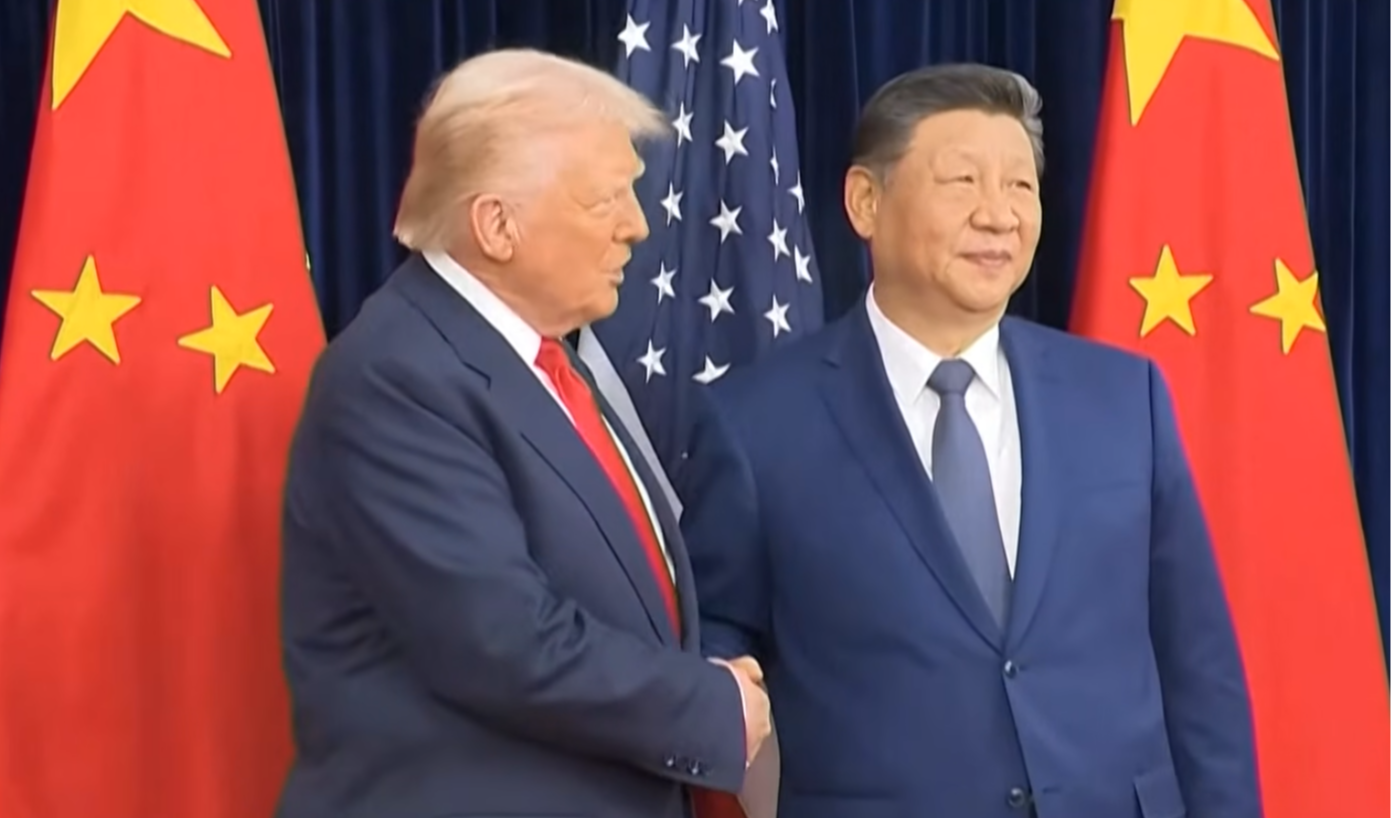
Seven Democratic senators pressed President Trump to hold firm on Taiwan's defense as Xi Jinping visits the US and a $14 billion arms package hangs in limbo. A group of seven US senators on Tuesday called on President Donald Trump to keep firm on Taiwan's defense and resist Chinese pressure to soften American support, issuing their appeal just before Trump's scheduled talks with Chinese President Xi Jinping (習近平) in Washington. All Democrats, the lawmakers warned that Trump must not allow Beijing to gain the upper hand during the visit. "We can't let President Xi leave stronger than when he arrived. That is not diplomacy, it's weakness," the senators wrote in a joint statement. Xi is in the US until Friday on a trip that includes his first stop in New York in 11 years. According to reports, arms sales to Taiwan, artificial intelligence and the war in Iran are among the topics the two leaders plan to raise. The statement was signed by Senate Foreign Relations Committee ranking member Jeanne Shaheen, Defense Appropriations ranking member Chris Coons, Appropriations Vice Chairwoman Patty Murray, Armed Services ranking member Jack Reed, Intelligence Committee Vice Chairman Mark Warner, Elizabeth Warren and Andy Kim. The senators described Beijing as a rising danger, saying "the People's Republic of China presents a greater threat to American security and prosperity than ever before." They pushed Trump to cut off China's access to advanced chips and manufacturing gear, to demand that Beijing stop backing Russian President Vladimir Putin's campaign in Ukraine, and to challenge Xi over Chinese support for Iran. They also faulted the administration's approach to Taipei directly. "The Chinese military continues its pressure campaign against our vital democratic partner Taiwan as President Trump has retreated from longstanding security commitments," the statement said. The $14 billion package on hold The timing matters because of two weapons deals. In December last year, Trump signed off on an $11 billion package for Taiwan, the biggest single approval on record. But after a trip to Beijing in May, he said a further $14 billion in sales had been paused. Xi is expected to lean on Trump to shelve the deals entirely during their meeting this week. Taiwan's Ministry of National Defense signaled it intends to keep the sales moving. Deputy spokesman Chiao Fu-chun (喬福駿), speaking to reporters in Tainan during a media tour, said Taipei would stay in regular touch with Washington to carry out the transfers as scheduled. He framed regional security as a shared goal, calling stability in the Indo-Pacific a "common interest of democratic nations." "The US government and Congress have repeatedly expressed their support for Taiwan's ability to defend itself," Chiao said. "We will continue to maintain close contact with the US Department of Defense and continue to promote the implementation of arms sales according to plan." President William Lai (賴清德) has backed Trump's demand that US partners raise their own defense spending. The US remains Taiwan's leading source of weapons, though the island also builds its own hardware, including submarines, fighter aircraft and long-range missiles. At the State Department, Chinese-language spokesman Jakob Lengacher told Voice of America that US policy toward Taiwan had not shifted. He said Washington still backs Taiwan's participation in international bodies such as APEC, opposes any one-sided move to alter the "status quo" by either side of the Taiwan Strait, and remains focused on keeping the region peaceful and stable. A Coast Guard vessel bound for Manila In a separate development, the Coast Guard Administration (CGA) said its vessels will sail to the Philippines in October next year, marking the first time a Taiwanese maritime law enforcement ship has made such a visit. The ships will carry the words "Taiwan Coast Guard" during the trip. The agency also confirmed it had handed over one of its retired patrol boats to the Philippines, an unusual transfer of a decommissioned vessel to a country with which Taiwan has no formal diplomatic ties. An official noted that the CGA's civilian, non-combat character makes it useful for managing sensitive situations without triggering diplomatic friction. The planned voyage stands out against a long gap in such contact. The last time a Republic of China navy ship made a comparable visit to the Philippines was in 1974, shortly before Manila severed official relations with Taipei. Taiwan arms sales, US senators Taiwan, Trump Xi Jinping meeting, Taiwan defense, China Taiwan tensions, Coast Guard Administration Philippines, William Lai, US Taiwan policy

G7 Demands Iran Halt Arms to Yemen's Houthis, Condemns Saudi Attacks

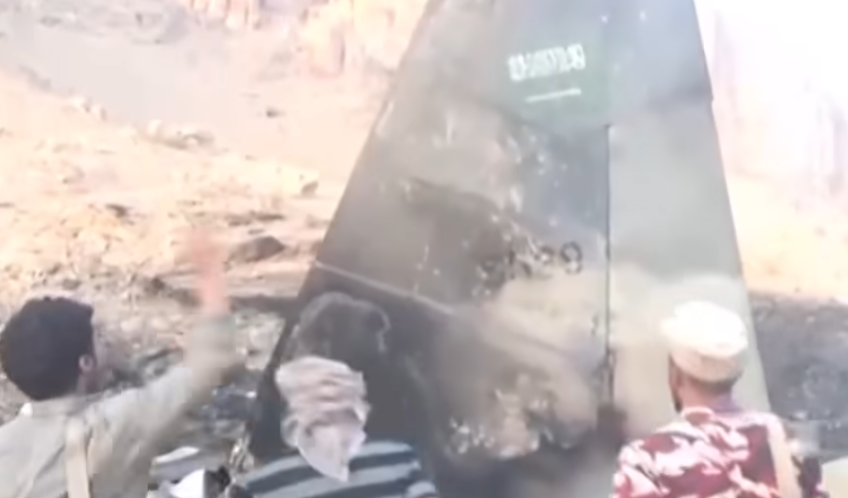
G7 foreign ministers urged Iran to stop supplying the Houthis and condemned attacks on Saudi Arabia as fighting displaces over 120,000 Yemenis. The foreign ministers of the G7 nations have called on Iran to halt its weapons supplies and backing for the Houthi movement in Yemen, in a joint statement released as world leaders gathered for the annual United Nations General Assembly in New York. The ministers of the United Kingdom, Canada, France, Germany, Italy, Japan and the United States issued the appeal after meeting on the sidelines of the summit. In the same statement, the group denounced Houthi strikes on Saudi Arabia in the sharpest possible terms and warned that the recent flare-up in fighting between the Iran-aligned movement and Saudi-supported government forces endangers energy supplies across the region and around the world. The ministers pressed the Houthis to halt every military operation, drop all threats against civilian vessels, and rejoin negotiations in earnest. The warning follows a sharp deterioration on the ground. Thousands of people have fled Yemen over the past several days after the Houthis captured stretches of the country's Red Sea coast, including areas close to the Bab al-Mandab Strait. The narrow waterway serves as an entry point to one of the world's busiest maritime trade routes, giving the fighting there wider economic significance. The G7 described the movement's conduct as a reckless spiral that could deepen the conflict, disrupt global commerce and destabilise the world economy. The ministers also pledged continued backing for Yemen's internationally recognised government and restated their support for the country's unity, sovereignty, independence and territorial integrity. Iran has long rejected accusations that it arms the Houthis, insisting its assistance is limited to political support. The G7 appeal arrived just before Iranian President Masoud Pezeshkian was scheduled to address the General Assembly. Air strikes and missile fire As the diplomatic pressure mounted, the Houthis leveled their own accusations against Riyadh, charging that Saudi air raids had struck civilians across territory the group controls. The Houthi-run Saba news agency reported that a pre-dawn attack on a residence in the Red Sea port of Mokha on Tuesday left six people dead, among them two children and a woman. Saba also said nine detainees were killed when an attack hit a prison in al-Hazm, in Jawf province, late on Monday. The Houthi health ministry reported additional deaths, saying two members of a single family died in a strike in Jawf on Monday and that one person was killed in Taiz. The Saudi-led coalition backing the Yemeni government had not responded to the claims. The violence has run in both directions. Government-aligned outlets reported that a Houthi missile struck a market in the Mudaribah wa al-Ara district of Lahj province, wounding civilians roughly 20 kilometres (12 miles) from the edge of Houthi-held ground. Verified surveillance footage captured a projectile slamming into a busy area filled with people and vehicles, setting off a powerful blast as crowds scattered through clouds of dust and smoke. There was no immediate response from the Houthis. More than 120,000 displaced The United Nations estimates that the abrupt intensification of combat along Yemen's Red Sea coastline has forced more than 120,000 people from their homes. The wave of displacement has accompanied a rapid Houthi advance; earlier this month the group had already taken control of most of Yemen's densely populated areas. The combination of a widening front, threats to shipping near a strategic chokepoint and mounting civilian casualties has pushed Yemen back toward the centre of international attention. With the General Assembly under way, the G7 statement placed the war and Iran's alleged role in it directly on the agenda of the gathering in New York. G7 Iran Houthis, Yemen war, Bab al-Mandab Strait, Houthi Saudi Arabia attacks, UN General Assembly, Yemen displacement, Red Sea shipping, Masoud Pezeshkian

US Sanctions Ground Iran Flights, Force Travellers Overland

New US sanctions have shut Iranian airlines out of much of the world's airspace, cancelling most flights and forcing civilians onto costly land routes. Air travel has become sharply harder for Iranian civilians after United States sanctions locked domestic airlines out of much of the world's airspace, forcing many people onto slower and more expensive overland routes. Wednesday, September 23, 2026, marked the end of a short wind-down period that had allowed neighbouring countries to keep servicing Iranian carriers, and its expiry triggered the cancellation of all but a handful of Iranian flights to Turkiye, the United Arab Emirates and China. The latest squeeze traces to September 8, when the US Department of the Treasury designated 27 airlines, covering the remaining Iranian carriers that Washington had not already sanctioned. Larger names such as Iran Air and Mahan Air were already under heavy sanctions but had kept limited operations running. The newer round widened the net beyond aircraft operators, targeting individuals and entities tied to aviation support and procurement in the UAE, Turkiye, China, India, the United Kingdom, Malaysia and other countries. Treasury Secretary Scott Bessent said on Monday that airports and companies supplying Iranian-operated planes with fuel, landing services or ticket sales now risk secondary US sanctions that could sever them from the American financial system. The measures are part of a broader effort to pressure Tehran into concessions during the US-Israel war on Iran. Neighbouring airspace closes The most immediate effect came from neighbouring aviation authorities that had continued to open their airspace and airport services to Iranian airlines and have now stopped. Oman, Azerbaijan and Georgia are among those that said they would no longer provide such services. In Iraq, Baghdad Airport was declared off-limits to Iranian carriers, though flights to Najaf Airport were still running on Wednesday. Many connections between Iran and the major transit hubs of Turkiye and the UAE had already been halted because of the war and earlier sanctions. International carriers have also pulled back almost entirely. Turkish Airlines has suspended its flights until at least March 2027, while Qatar Airways, Emirates and Lufthansa have all suspended operations to the country. That combination leaves Iranian travellers with few remaining air links and pushes many towards land crossings, which are cheaper to reach but longer and costlier overall for those who once relied on direct flights. A 'new level of sanctions' Mohammadreza Ebrahimpour, an Iran-based aviation and transit expert, said years of US sanctions had already pushed Iranian airlines to lean on third countries and smaller firms to secure fuel and services. Sourcing spare parts to keep the country's ageing fleet in the air has grown steadily harder over the same period. But the formal refusal of services by aviation authorities in neighbouring states, he said, amounted to "a new level of sanctions in action" that could carry longer-lasting consequences than the earlier restrictions. Unlike informal workarounds, official closures are harder to route around. Ebrahimpour added that the US had effectively barred international airlines from crossing Iranian airspace as well. Washington did so by suspending authorisations for some US-origin aircraft to fly to Iran and by limiting US-linked payments for overflights. He described the loss of overflight revenue as "a big blow," noting that such payments had been one of the most lucrative parts of Iran's aviation sector. The overflight restrictions matter beyond passenger convenience. Fees paid by foreign carriers to cross a country's airspace are a steady source of hard currency, and cutting that stream removes income that Iran had continued to earn even as its own airlines struggled. For now, the practical picture on the ground is stark: most scheduled international service into and out of Iran has stopped, the handful of surviving Iranian flights operate under tight limits, and travellers face the choice of long overland journeys or waiting for routes that may not return soon. Iran aviation sanctions, US Treasury Iran airlines, Iran Air Mahan sanctions, Scott Bessent, Iran flight cancellations, US-Israel war on Iran, Iranian airspace overflight, Imam Khomeini airport

Toyota India Sales Slip 3% in August as Glanza Volumes Collapse

Toyota sold 28,410 units in India in August 2026, down 3.04% year-on-year, slipping to sixth as Glanza fell 71% ahead of a facelift. Toyota shipped 28,410 vehicles across India in August 2026, a drop of 3.04% from the 29,302 units it sold in the same month a year earlier. The shortfall of 892 units left the carmaker in sixth place in the domestic sales table, one rung below Kia, which claimed fifth. The decline was sharper against the previous month. Toyota had moved 30,516 units in July 2026, so August volumes fell by 2,106 units, or 6.90%, on a sequential basis. The Urban Cruiser Hyryder remained the brand's biggest seller, with 8,234 units that made up 28.98% of the monthly total. The mid-size SUV lost ground over the year, slipping 9.52% from the 9,100 units logged in August 2025. It rebounded strongly month-on-month, however, adding 1,047 units over July's 7,187 for a 14.57% gain. The Innova Hycross held second position on 5,114 units, or 18% of the tally. Its numbers weakened on both counts, down 12.24% from 5,827 a year ago and 15.62% from 6,061 in July. The older Innova Crysta bucked the trend with 3,849 units, a 10.70% rise over the 3,477 sold in August 2025. Between them, the two Innova models delivered 8,963 units, roughly 31.55% of everything Toyota sold during the month. Fortuner and Taisor climb The Fortuner posted gains in both directions. Sales reached 3,504 units, a 39.71% jump over the 2,508 recorded last August and a 9.88% improvement on July's 3,189, an increase of 315 units. The SUV alone accounted for 12.33% of the brand's August business. The Taisor compact SUV coupe registered 2,863 units, up 6.71% from 2,683 a year earlier. Its month-on-month momentum was stronger still, rising 15.91% from 2,470 in July. The model contributed 10.08% of the total. The Rumion MPV reported 2,396 units against just 68 in August 2025, producing a year-on-year figure of 3,423.53% that reflects how little stock moved during the low base period. Measured against July's 2,632 units, though, sales eased 8.97%. Glanza slides ahead of facelift The Glanza recorded the steepest fall anywhere in the range. Volumes shrank to 1,480 units from 5,102 in August 2025, a loss of 3,622 units, or 70.99%. The drop points to an imminent refresh: the updated hatchback is expected to carry the same changes introduced on the recently revised Baleno. The Ebella found 372 buyers, a 31.45% rise over the 283 units sold in July. No figure was listed for the model in August 2025, and it accounted for 1.31% of the month's total. The Hilux pickup reached 285 units, up 9.62% from 260 a year earlier. The sequential comparison was distorted by a low starting point, with only 13 units sold in July lifting the month-on-month reading by 272 units, or 2,092.31%. Camry and the flagships Among the premium models, the Camry sedan sold 195 units, a 23.42% gain on the 158 units of August 2025, though volumes dipped 4.88% from July's 205. The Vellfire MPV managed 79 units, down 24.04% from 104 a year ago but up 9.72% over the 72 sold in July. The Land Cruiser 300 rounded out the line-up with 39 units, compared with 15 in August 2025 and 28 in July. That translated into growth of 160% year-on-year and 39.29% month-on-month. Toyota India sales August 2026, Toyota Hyryder sales, Toyota Glanza facelift, Toyota Fortuner sales, Innova Hycross Crysta, Toyota Rumion, Toyota Kirloskar Motor sales, India auto sales

Rare Ebola Cousin Bundibugyo Surges in Congo, WHO Reports

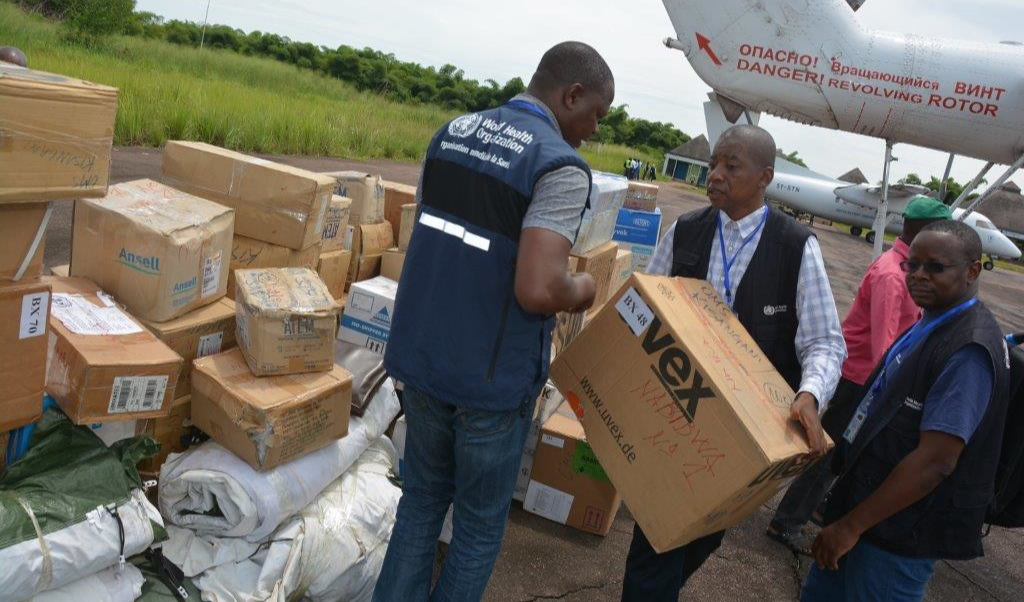
A Bundibugyo virus outbreak has caused 695 confirmed cases and 138 deaths in Congo and Uganda, exposing gaps in preparedness for rare pathogens. A rare member of the Ebola family is spreading rapidly across the Democratic Republic of Congo, and its scale has already eclipsed every previously documented outbreak of the pathogen. The World Health Organization recorded 695 confirmed cases and 138 confirmed deaths in the DRC and Uganda as of June 11, a toll that far exceeds the two earlier events tied to the Bundibugyo virus. The surge is the focus of a review published in the New England Journal of Medicine by Nancy Sullivan, a professor of biology, virology, immunology and microbiology at Boston University. Sullivan argues that the world's approach to dangerous diseases leans too heavily on the pathogens that generate the most headlines, leaving health systems exposed when an obscure virus returns without warning. A filovirus with only two prior outbreaks Bundibugyo sits within the filovirus family, the same group that produces the Ebola virus. Until now it had been linked to just two recognized outbreaks: one in Uganda in 2007 and a second in the DRC in 2012. The current episode has overtaken both, in the number of people infected and in how quickly it has moved. The present outbreak was formally identified only after a nurse died. That detail underscores how the virus reaches the people closest to the sick. It passes from person to person through direct contact with infected bodily fluids, which places relatives, caregivers and medical staff at heightened risk, particularly in hospital wards that lack strong infection control. The illness it produces is brutal. Bundibugyo can trigger a severe hemorrhagic fever marked by sweeping inflammation, injury and collapse of the cells that line blood vessels, bleeding that cannot be stopped, and the failure of several organs at once. Symptoms that mimic malaria One reason the virus is difficult to catch early is that its opening signs look like far more ordinary infections. Early symptoms shadow those of malaria, typhoid fever and other common conditions, so a firm diagnosis cannot be made at the bedside. Only laboratory testing can confirm that a patient carries the virus. Sullivan describes containment as a set of steps that must click into place together and fast: confirming infections quickly, separating patients who test positive, tracking down anyone they may have exposed, tightening infection control and delivering supportive care. Each of those actions grows harder when a region has few laboratories and thin testing capacity. In parts of the DRC, that capacity is exactly what is missing. Sullivan found that specimens often have to be carried long distances to reach national reference laboratories, turning what should be a fast test into a drawn-out process. "Delays in specimen collection, transportation and testing can postpone confirmation by days or weeks, which hinders the isolation of infected persons, contact tracing and the initiation of outbreak-control measures," Sullivan wrote. Every day lost to a slow result gives the virus more room. During an active outbreak, speed in identifying cases is what allows responders to wall off the infected and locate the exposed before the chain of transmission widens. No vaccine built for Bundibugyo The outbreak also highlights a blind spot in how the world stocks its medical arsenal. Researchers have made real headway on vaccines and treatments for the Ebola, Sudan and Marburg viruses. Bundibugyo has drawn no comparable effort. Because it strikes so seldom, no vaccine or therapy has ever been licensed to target it specifically. For decades the virus registered barely a flicker of recognized activity, which is part of Sullivan's point. Its sudden reappearance as a serious threat shows how hard it is to forecast which infectious agent will drive the next crisis. She contends that countermeasures should be developed across a far wider range of pathogens capable of causing severe illness or death, rather than being concentrated on the handful already known for frequent outbreaks. The Bundibugyo emergency, in her reading, is a test of whether preparedness can stretch beyond the familiar. Limited testing, a hospital-borne death that first exposed the outbreak, and the absence of any approved vaccine have combined to let a long-dormant virus climb past its own historical records - and to warn that the next surprise may come from a name few have heard. Bundibugyo virus, Ebola outbreak, Democratic Republic of Congo, filovirus, hemorrhagic fever, WHO outbreak, Nancy Sullivan, outbreak preparedness

England Still Carry World Cup 'Scar', Says Saka

Bukayo Saka says England remain scarred by their late World Cup semi-final loss to Argentina, as they host Spain at Wembley in the Nations League. England winger Bukayo Saka says his team are still carrying the "scar" of their World Cup semi-final defeat by Argentina, when they came within touching distance of a first men's final since 1966. Thomas Tuchel's side led before two late Argentina goals turned the tie, and England fell to a 2-1 loss. The defeat denied England the chance to reach the showpiece for the first time in nearly six decades. They responded with a 6-4 win over France in the bronze medal match, their best World Cup finish in 60 years, but the wait for a second world title continues. "Obviously, there is still a scar on us when you believed and everyone was so united and so confident we could do it," Saka said. "Not just us, but the whole country we felt." He added that the squad had tried to move past the result quickly, but that "a scar is a scar, it decides to heal when it heals itself." Saka started three of England's eight matches at the tournament. He now faces an immediate reminder of what slipped away, with England hosting world champions Spain at Wembley on Saturday at 19:45 BST. The fixture opens a run of four Nations League group matches over the next two weeks. "We are trying to draw a line under [the World Cup] now and focus on the new international season that we have coming up," Saka said. "We have got four massive, difficult group games to try and qualify us for the Nations League [knockouts] that we are really focused on." Saka backs teenager Dowman Saka also tipped his 16-year-old Arsenal team-mate Max Dowman to win a senior England call-up in the near future. "I think so," he said. "His talent is insane. It's up to him how far he is going to go in football. His talent is crazy." England Under-21 manager Lee Carsley agreed on the teenager's ability but said keeping Dowman with the under-19s during this international window was the better choice. "He is more than capable of playing in the under-21s," Carsley said, adding that dropping down would let the youngster "play the minutes" and "consolidate where he is in his career and play with his friends again and take that little bit of pressure off him." Carsley said he expected Dowman to join the under-21s in due course and wanted to discuss the path ahead directly with the player and his family. "That is something I am keen to have a conversation with him and his parents, on the way we see his pathway going, because he is an amazing talent and someone we are very lucky to have," he said. Bukayo Saka, England football, World Cup semi-final, Thomas Tuchel, Nations League, Spain Wembley, Max Dowman, Lee Carsley

Microsoft's Smaller Surface Pro and Laptop Get Snapdragon X2 Plus

Microsoft's 12-inch Surface Pro and 13-inch Surface Laptop return October 13 with six-core Snapdragon X2 Plus chips, 16GB minimum RAM and steep price jumps. Microsoft is updating its two most compact Surface machines, the 12-inch Surface Pro and the 13-inch Surface Laptop, with Qualcomm's six-core Snapdragon X2 Plus processors. Both models keep the same chassis, screens and ports as their predecessors and gain new silicon inside, along with noticeably steeper starting prices. The 12-inch Surface Pro goes on sale on October 13th, starting at $1,149.99. A year ago the same tablet opened at $799.99. The 13-inch Surface Laptop follows a similar path, climbing to $1,199.99 from its earlier $899.99 entry point. Part of that increase comes down to memory. Microsoft has dropped the entry-level 8GB configuration entirely. Every unit now ships with at least 16GB of RAM, and buyers can order up to 24GB. What the X2 Plus delivers Microsoft frames the Snapdragon X2 Plus mainly around efficiency and speed. Compared with the previous generation, the company says the chip offers up to 18 percent better battery efficiency, more than 60 percent quicker graphics, and as much as 95 percent faster on-device AI processing through the built-in neural processing unit. In practical terms, those figures translate into longer runtimes. Microsoft brands the updated tablet the Surface Pro 12-inch Second Edition and rates it for roughly 13 hours of web browsing, an hour more than before. The Surface Laptop 13-inch Second Edition gains two hours, reaching about 18 hours of browsing on a charge. Screens and connections stay familiar The displays carry over almost unchanged. The Surface Pro 12-inch uses a 2196 x 1464 LCD panel at 220 pixels per inch, refreshing at up to 90Hz. The Surface Laptop 13-inch keeps its 1920 x 1280 screen at 178 pixels per inch and a 60Hz refresh rate. The one meaningful tweak is brightness: both panels now peak at 500 nits, up from 400 nits. Connectivity is also a repeat of last year. Each device carries two USB-C 3.2 ports, and the Surface Laptop 13-inch adds a USB-A 3.2 port plus a 3.5mm headphone jack. Both machines support Wi-Fi 7 and Bluetooth 5.4. One omission stands out. Neither smaller Surface received a haptic trackpad, even though Windows 11 has added subtle haptic cues and the Surface Laptop Ultra already includes the feature. Separately, Microsoft is releasing a second-generation Surface Mouse with built-in haptics. Colors and configurations Buyers get a familiar palette with one addition: black returns for both models, joining platinum silver and violet. Microsoft is selling both devices to commercial customers as well, and the Surface Pro 12-inch can be ordered with an optional 5G configuration for cellular connectivity. The result is a straightforward internal upgrade. The look, the screens and the port layout are the same as the outgoing versions, while the new Qualcomm chips push battery life and performance forward and the higher memory floor pushes the price up with them. Microsoft Surface, Snapdragon X2 Plus, Surface Pro 12-inch, Surface Laptop 13-inch, Qualcomm, Windows 11 laptop, Surface price, Surface Second Edition

US Cancels 315,000 Obamacare Plans, Citing Fraud

CMS scrapped about 315,000 ACA marketplace enrollments covering 760,000 people, a move officials say will save $2.2 billion in subsidies. The Centers for Medicare and Medicaid Services said on Tuesday it had scrapped about 315,000 Affordable Care Act marketplace enrollments last month, plans that covered roughly 760,000 people, after concluding the sign-ups were not authorized. Vice President JD Vance described the problem as "rampant fraud." The agency said its action was driven by the White House Task Force to Eliminate Fraud, which Vance leads. The task force put the expected savings at around $2.2 billion in subsidies paid for by taxpayers. Alongside the cancellations, CMS said it is checking roughly 419,000 more enrollees to confirm they live in the United States legally and fall within the income limits needed to qualify for coverage on the public exchanges. Speaking at a briefing on Tuesday, Vance placed the blame on the previous administration, arguing that its rules let improper claims flow through unchecked. "You have a system where, on the one hand, brokers are paid money to feed patients into the system, while on the other hand, the government isn't even checking whether the people enrolled are actually eligible for the program," he said. "What do you have? Of course, rampant, rampant fraud." How many of the 315,000 canceled enrollments belonged to people who were never eligible remains unknown. It is also unclear whether the earlier administration had failed to confirm their eligibility before the coverage took effect. The move fits a broader pattern under President Donald Trump, whose administration has repeatedly alleged fraud across federal health programs and has tightened both funding and eligibility for Medicaid, the health plan jointly run by Washington and the states. CMS Administrator Dr. Mehmet Oz used the same briefing to argue that a large share of the marketplace population is not using its coverage. He said close to 35% of current enrollees have never filled a prescription or visited a doctor through the program. Under the ACA, most people are required to carry insurance, a rule meant partly to keep healthier, lower-cost members in the risk pool so premiums stay manageable. That requirement has lost its bite, however, because the federal fine for going uninsured has stood at zero dollars since 2019. The marketplace plans grew out of the Affordable Care Act signed by President Barack Obama, and they hand out subsidies scaled to a household's size and its expected annual earnings. Trump tried and failed to repeal the law during his first term. He has since floated changes that would trim the range of benefits the plans must cover. Oz tied the alleged abuse to the pandemic years, when federal outlays climbed sharply. He said the extra money drew bad actors into the system and pointed to the rise in sign-ups, from about 10 million before Covid-19 to roughly 22 million afterward. Weak controls and lax enforcement under the prior administration, he argued, allowed many of those enrollments to slip through improperly. What the June report found A report issued in June by the Office of the Assistant Secretary for Planning and Evaluation, the top policy adviser to the head of the Department of Health and Human Services, described "unprecedented enrollment growth from 2021 to 2024" in the marketplace plans. The report said that "nearly half" of that growth "was suspected to be improper, phantom, or fraudulent." It described improper or fraudulent sign-ups as cases in which people understated their income to unlock plans that cost them nothing. That surge followed the American Rescue Plan, the 2021 Covid-19 relief law that boosted the subsidies available to buyers as a way to hold down costs during the emergency. Lawmakers later extended the enlarged credits, but those enhancements ran out at the close of 2025, pushing premiums higher for many people who buy coverage on the exchanges. According to the same report, an estimated 19.2 million Americans are signed up for the plans today. Obamacare, Affordable Care Act, CMS, JD Vance, Mehmet Oz, healthcare fraud, ACA enrollment, Trump administration

Harvey Weinstein Handed 15-Year Sentence in Assault Case

A New York judge sentenced Harvey Weinstein to 15 years for a criminal sexual act against ex-assistant Miriam Haley, after a retrial reconviction. Harvey Weinstein has been ordered to serve 15 years behind bars after a New York jury last year found him guilty of committing a criminal sexual act against a woman who once worked as his assistant. Judge Curtis Farber delivered the sentence on Wednesday, telling the former film producer he had refused to answer for his conduct. "You took what you wanted by force and you have never accepted responsibility," the judge said. The case centred on Miriam Haley, who addressed the courtroom directly. In her victim-impact statement, she said the attack had left a "devastating effect on my life and sense of security that may never go away." Weinstein, 74, attended the hearing in a wheelchair. He rejected the accusations against him but offered an apology to "anyone I may have hurt by my actions." This marks the second time Weinstein has been sentenced over the same allegation. He was first found guilty and punished in 2020, but New York's top court threw out that conviction in 2024, ruling that he had not received a fair trial. The same decision also cancelled a separate conviction tied to actress Jessica Mann. Prosecutors put Weinstein on trial again, and jurors convicted him last year on a single count of a criminal sexual act involving Haley. Haley first gave evidence during the 2020 proceedings, telling the court that Weinstein had assaulted her in a bedroom of his Manhattan apartment in 2006. At the time, she was working as a production assistant on the television programme Project Runway. She returned to the witness stand for the retrial, later explaining that she felt she had no choice. "I just thought, I have to stand up for myself. I have to stand up for the truth," she said. The outcome of the retrial was mixed for prosecutors. While the jury convicted Weinstein over Haley, it could not agree on a verdict in the charges connected to Mann. He was cleared of a separate accusation brought by model Kaja Sokola. Weinstein has now faced three trials in New York over allegations of rape and abuse, and he has already spent several years in custody in the state. He is being held in a prison ward at Bellevue Hospital in New York, where he is being treated for a number of health problems that have emerged during his imprisonment. His legal troubles extend beyond New York. In a separate case in Los Angeles, a jury convicted him in 2022 of raping and sexually assaulting an actress in a hotel room in 2013. He has yet to be sentenced in that matter. An appeals court directed that he be re-sentenced there after the New York convictions were reversed. Weinstein rose to prominence as the driving force behind Miramax, the studio responsible for successes such as Shakespeare in Love. His standing collapsed in 2017, when the New York Times and the New Yorker published accounts from numerous women who accused him of sexual assault dating back decades. Those reports helped ignite the #MeToo movement, which encouraged people to speak publicly about sexual misconduct. Throughout the years of litigation, Weinstein has maintained his innocence and has said he expects to be cleared. Prosecutors, meanwhile, have had to work through repeated setbacks and reversals to secure and preserve convictions against him.Harvey Weinstein, Miriam Haley, sexual assault sentence, MeToo movement, Miramax, New York trial, Judge Curtis Farber, Weinstein retrial

Warner Bros Moves 'Dynamic Duo' and Untitled 'Gremlins' to Fall 2028

Warner Bros has revised its release calendar, sending 'Dynamic Duo' and an untitled 'Gremlins' film to fall 2028, as searches for 'Gremlins 3' spike. Warner Bros has reworked part of its release calendar, moving two of its films to fall 2028. The studio's "Dynamic Duo" and an untitled "Gremlins" project are the titles affected by the schedule changes. Both films now carry fall 2028 release windows following the adjustment. The shift places the two projects on the studio's slate for the same stretch of that year. The change landed as one of the titles drew fresh public attention online. Searches for "Gremlins 3" climbed on Google Trends in the United States, registering more than 500 searches and marking the term as a trending query in the country. The untitled "Gremlins" film sits at the center of that interest. It is one of the two Warner Bros titles repositioned in the studio's calendar, and its fall 2028 slot is now the target date for the project. "Dynamic Duo" rounds out the pair of Warner Bros films caught in the same set of date changes. Like the "Gremlins" project, it has been slotted into the fall 2028 frame under the revised schedule. Studios routinely revisit their release calendars, and Warner Bros's latest move groups these two projects into the later part of the decade. For now, the confirmed details are the titles involved - "Dynamic Duo" and the untitled "Gremlins" film - and their new fall 2028 destinations. The search spike around "Gremlins 3" underlines the appetite for news tied to the franchise. With the untitled "Gremlins" entry now aimed at fall 2028, that release window becomes the point of reference for audiences tracking the property. Warner Bros, Gremlins 3, Dynamic Duo, fall 2028 release, release date changes, untitled Gremlins film, movie schedule

Tecno Adds Custom EllaClaw Workflows for Journalists and Creators

Tecno and Digital Trends unveil four EllaClaw AI workflows covering research, scripting, writing style and social media risk checks for content professionals. Tecno has introduced a set of customised workflows for EllaClaw, its mobile AI agent, built in partnership with Digital Trends. The four workflows are aimed at technology journalists and other content professionals, and cover researching stories, planning scripts, matching a person's writing style, and vetting social media posts before they go live. The company presented the tools as a demonstration of how EllaClaw can be shaped around specific jobs instead of running a fixed list of features. Tecno also spelled out that people can review and sign off on anything the agent produces before it is published. The first workflow, News Background Research, is meant for building out a story. A user hands EllaClaw a subject, and the agent scans chosen news outlets and pulls the results together into a brief. That brief covers background, the main developments, the views of different parties involved, and links back to the sources. Users can store the summary in Notes or play it back as audio. That groundwork can then flow into Research-to-Script, which converts the gathered material into storyboards, script ideas in multiple languages, and accompanying creative pieces. The step moves a project from fact-finding into shaping the final content. A third tool, Personal Writing Style, tailors the agent's output to how an individual writes. It creates a profile from samples the user supplies and draws on it when producing content for various platforms. Fresh samples and feedback can be fed in later to sharpen the profile. For posts headed to social platforms, the Risk-Word Check scans text for terms and phrases that might trip up publishing rules on different services. Tecno says the feature can flag these trouble spots without altering the message the user wants to send. While the four workflows were assembled with content professionals in mind, Tecno said the same method could apply to other kinds of work and everyday situations. The company stressed that people stay in charge of checking, editing and approving anything the agent generates, and pointed to user control, transparency and privacy as core parts of the EllaClaw experience. The EllaClaw showcase comes as Tecno continues to expand its device line-up. The Tecno Pova 8 recently went on sale in India at a starting price of Rs. 29,999. Tecno EllaClaw, Tecno AI agent, Digital Trends, AI workflows for journalists, content creation AI, multilingual scripts, Tecno Pova 8, mobile AI agent

Sitharaman Urges BRICS to Unite on Transfer Pricing

At a BRICS tax meeting in New Delhi, Finance Minister Nirmala Sitharaman said transfer pricing disputes fall hardest on developing nations. Finance Minister Nirmala Sitharaman on Wednesday called on BRICS nations to pool their experience on treaty interpretation and multilateral tax negotiations, warning that global transfer pricing disputes fall "disproportionately" on developing countries. She was addressing a meeting of BRICS heads of tax authorities in New Delhi. Sitharaman said India has proposed setting up two new working groups within the bloc: one on International Taxation and Transfer Pricing, and another on Revenue Statistics. The proposals come as the rules governing cross-border taxation are being rewritten. "The rules of international taxation are being renegotiated," she said. "There are several multilateral tax issues, including the UN Framework Convention on International Tax Cooperation, under active negotiation. The decisions made in these processes over the next few years will shape cross-border taxation for a generation." She argued that BRICS members bring a distinct viewpoint to those talks because of their position in the global economy. "BRICS economies, as source jurisdictions, as large developing economies, as countries that have built significant domestic tax capacity from a low base, have a perspective on those negotiations that is essential to their fairness and their durability," Sitharaman said. Her remarks tied the case for coordination directly to the burden that transfer pricing disputes place on developing economies, which she said carry an outsized share of the cost. By sharing how each country handles treaty interpretation and negotiation, she suggested, the group could strengthen its hand as the international system is reshaped. The minister framed the current negotiations as a rare window, with outcomes expected to hold for years to come. India's push for the two working groups is aimed at giving BRECS members a more organized platform to compare approaches on taxation and revenue data. Nirmala Sitharaman, BRICS transfer pricing, international taxation, UN tax convention, developing countries tax, transfer pricing disputes, India tax policy, multilateral tax negotiations

Red Alert for 4 Odisha Districts as Deep Depression Nears Coast Kalahandi, Koraput, Nabarangpur and Malkangiri

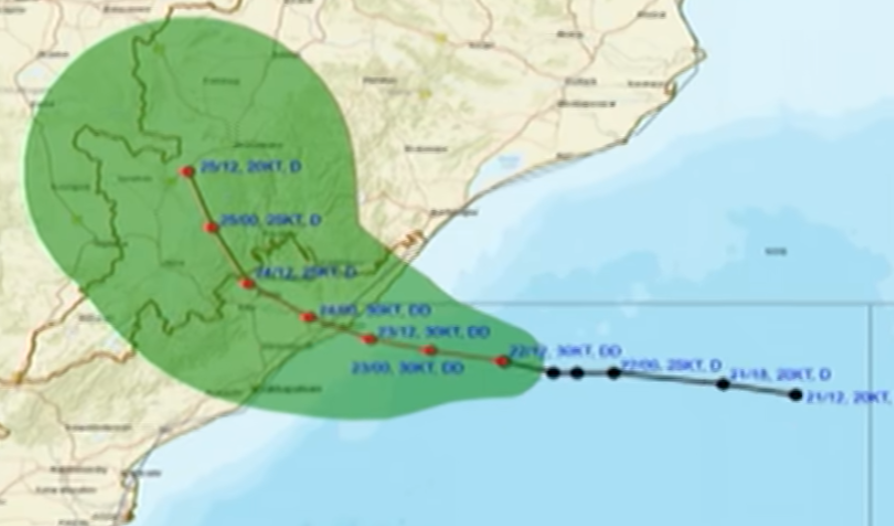
Odisha deploys 33 ODRAF units and evacuates over 3,500 people as a deep depression brings heavy rain to Kalahandi, Koraput, Nabarangpur and Malkangiri. The Odisha government positioned disaster response forces across southern and western districts on Wednesday (September 23, 2026) as heavy rain driven by a deep depression caused water-logging and landslides in several areas. The India Meteorological Department issued a heavy-rain warning for four districts - Kalahandi, Nabarangpur, Koraput and Malkangiri. The deep depression lay over the west-central and adjoining northwest Bay of Bengal and was moving slowly. It was expected to cross the north Andhra Pradesh and south Odisha coasts close to Kalingapatnam on Wednesday night. Officials said there was no possibility of a cyclone, but the administration was told to keep the highest level of preparedness and take all precautionary measures. Chief Minister Mohan Charan Majhi reviewed the situation and directed all departments to work in coordination and ensure zero casualties. He said officials had been asked to move people out of waterlogged areas to safer locations and to provide them with relief. More than 3,500 people had already been evacuated to safer places. 33 ODRAF units deployed A total of 33 units of the Odisha Disaster Rapid Action Force were sent to the affected districts, according to government sources. Six teams were deployed in Ganjam, six in Koraput, three each in Gajapati, Malkangiri and Rayagada, two in Kalahandi and one in Balangir. In addition, nine ODRAF teams stationed at Chhatrapur in Ganjam were kept in reserve. The deployment concentrated forces in the districts flagged by the IMD and in coastal and southern areas expected to feel the strongest effects as the system approached land. The reserve teams gave the administration a buffer to respond quickly if conditions worsened after the system crossed the coast. Where the rain fell hardest The state recorded widespread rain during the day. Baleshwar district saw the highest fall, 126.4 mm in the 24 hours ending at 8.30 a.m. on Wednesday. Paralakhemundi followed with 119.4 mm and Koraput with 116.4 mm. Koraput was among the four districts under the IMD warning and also carried a heavy share of the response effort, with six ODRAF teams assigned to it. Berhampur, a town in southern Odisha, witnessed water-logging as the heavy rain came down. The combination of steady rainfall and the slow-moving system raised the risk of further inundation and landslides in low-lying and hilly parts of the affected belt. The warning districts of Kalahandi, Nabarangpur, Koraput and Malkangiri sit across southern and western Odisha, the same zone where the government focused its evacuations and rescue teams. With the depression forecast to make its closest approach to the coast overnight, the administration held its forces in place to manage flooding, clear affected areas and shift residents to safety.Odisha deep depression, Odisha red warning, IMD heavy rain Odisha, Mohan Charan Majhi, ODRAF deployment, Bay of Bengal depression, Koraput rainfall, Odisha flooding 2026

Students Build $100 Handheld Muon Detector for Space Particles

CosmicWatch, a $100 handheld detector built by physicist Spencer Axani, lets students track muons from cosmic rays and could seed a global science network. Detecting particles that fall to Earth from space has long been the work of costly, room-sized instruments. A palm-sized device created by physicist Spencer Axani challenges that assumption. Built for roughly $100 in parts, the detector began as a student side project and now serves particle-physics research, classroom teaching and experiments carried to the edge of the atmosphere. The University of Delaware laid out its most recent progress in September, following earlier reporting in Physics Today and Symmetry, the magazine run by Fermilab and SLAC, which traced the tool's growth from Axani's time at MIT into a wider effort known as CosmicWatch. The instrument targets muons, fleeting subatomic particles created when high-energy cosmic rays strike atoms in the upper atmosphere. Each strike sets off a shower of secondary particles, and some of them reach ground level, slipping through walls, stone and living tissue. Muons move at nearly the speed of light, which makes them useful signals of what unfolds when cosmic radiation meets the air above us. They leave no visible trace, so CosmicWatch translates each one's passage into an electrical pulse that can be recorded. How the $100 build works CosmicWatch fits in one hand. At its core sits a plastic scintillator paired with a silicon photomultiplier, backed by electronics that read the faint flashes of light a muon produces as it dumps energy inside the detector. The newest model, called v3X, saves each event to a microSD card or sends readings over USB. It also tracks temperature, pressure and acceleration alongside the particle counts. The low cost matters because standard detectors tend to be bulky and expensive. The original research paper described the unit as a self-contained, portable instrument that students could put together on their own, with a first-time builder finishing in about four hours. Once assembled, a student can gather data and study how muon counts shift with altitude, with shielding placed around the device, or with other surrounding conditions. From a neutrino problem to a teaching tool Axani started the work as a graduate student at MIT. His early aim connected to large neutrino experiments, where spotting atmospheric muons helps researchers separate them from the neutrinos they actually want to measure. The effort then took a turn. Rather than adding another pricey machine for a single specialised lab, Axani and his colleagues designed a version cheap enough for students and modest research budgets. That design became CosmicWatch and has kept advancing. The v3X release adds environmental sensors, better data handling and coincidence features, which let several detectors run together to filter out stray background signals. Why muons are worth measuring Muons do more than confirm that cosmic radiation is streaming overhead. Because they carry high energy and pass through matter readily, they open a window on both cosmic-ray behaviour and the makeup of objects on the ground. Measuring them helps scientists examine the particle showers that cosmic rays trigger and work out the traits of whatever set the shower in motion. The same idea powers muography, a method that forms images by counting how many muons make it through a given object. Its uses span archaeology and geology. Since muons can push through thick material, they help where ordinary imaging cannot reach inside a dense structure. Reaching altitudes labs cannot Portability is one of CosmicWatch's strongest features. Detectors like it have already flown on high-altitude balloons, letting researchers watch cosmic-ray activity shift as the payload rises. Independent balloon flights have carried CosmicWatch units past 60,000 feet. The University of Delaware has described a newer flight in which a modified detector climbed to roughly 100,000 feet, where the shifting atmosphere offers a chance to chart how particle rates change with height. The hardware is also being applied in laboratory research, including experiments hunting rare particles and dark matter. A later version is under study for measuring primary cosmic rays aboard rockets and spacecraft. The project points toward something larger still: a spread-out network of cheap detectors feeding a shared database, rather than readings drawn from a few select facilities. Such a setup could resemble a citizen-science network, letting students and researchers across regions line up their cosmic-ray data for comparison. The device's value, then, goes beyond cutting the price of detection. Its small footprint lowers the entry barrier to a corner of physics that usually feels out of reach, putting particle detection on an ordinary desk. CosmicWatch detector, muon detector, Spencer Axani, cosmic rays, citizen science physics, particle detection, MIT physics project, muography

'Perfect storm' threatens rubbish pile-up on Scotland's streets

Shrinking landfill space and the shutdown of Glasgow's Polmadie incinerator have left Scotland's waste sector facing crisis, industry experts warn. Scotland's waste industry is approaching a breaking point that could leave uncollected rubbish sitting on streets, specialists have warned. They point to two problems arriving at once: a sharp fall in available landfill space and the failure of Glasgow's largest incinerator, a combination one figure described as a "perfect storm." David Balmer, an industry representative, warned that discarded waste will shortly have nowhere left to go and will end up abandoned across Scotland. Sector representatives are scheduled to meet Scottish ministers to raise their concerns, but say no quick fix is available to head off the situation. The Scottish government said it was engaging with stakeholders to keep the system resilient and to work out contingency plans if they become necessary. The amount of space left to bury waste has been falling as site operators run down their businesses ahead of a planned ban on sending black bag rubbish to landfill. That ban was originally set to begin at the start of this year but has been pushed back to January 2028. The delay followed a Disclosure investigation, which found that meeting the deadline would have required around 100 lorry loads of waste to be driven to England every day. The scale of the contraction is stark. In the previous year, ten facilities handled the bulk of Scotland's residual waste - what remains once recyclable and compostable material has been taken out. That number has since dropped to three, and one of those is in administration. Polmadie shutdown pushes waste to Mount Vernon The strain has been made worse by the collapse of Glasgow's principal incinerator at Polmadie, which has stood idle since April. Routine inspections uncovered cracks in welding at the plant, and it is not expected to return to service until March next year. With the incinerator down, much of Glasgow's household rubbish is now being sent to the sizeable Mount Vernon landfill. Its operator, Patersons, says only a few months of burial space remains there. The volume arriving has jumped from roughly 2,000 tonnes each week to about 5,000 tonnes. A bid to enlarge the site was turned down on appeal by the Scottish government, and the operator expects it to be completely full by the close of the year. Recycling rates stall as incinerators sit half-used The landfill ban was intended to drive up recycling. Under the plan, leftover waste would go to incinerators instead, where burning it generates electricity. That prospect triggered a surge of proposals for new waste-to-energy plants. By 2022, the volume of applications prompted a freeze on new ones, over fears that Scotland could build more burners than it would need - especially if recycling climbed. But recycling has not climbed. The share of household waste being recycled has stayed almost flat over the past ten years. A report issued last month by Zero Waste Scotland found that most incinerators are running well under their full capacity, raising the possibility that the projected shortfall in disposal capacity was overestimated. More plants are being built, among them the South Clyde Energy Centre at North Cardonald. None, however, are expected to come online soon enough to relieve the immediate pressure. Options for shifting the overflow elsewhere have also narrowed. Several facilities in the north of England - some understood to have taken in waste from Scotland - have been closed down by the Environment Agency, cutting off a route that operators had relied on. Scotland waste crisis, Polmadie incinerator, Mount Vernon landfill, black bag waste ban, Zero Waste Scotland, Glasgow rubbish, landfill capacity, waste to energy