

Language Settings
Select Website Language

Filters

Channels
Topics
Other Filters

India EV Sales August 2026 Tata, Mahindra Take 64% Share

India registered 30,696 electric cars in August 2026, up 51.89% YoY. Tata led with 13,158 units as Tata and Mahindra took nearly 64% of the market. India registered 30,696 electric cars in August 2026, a 51.89% jump over the 20,210 units recorded in August 2025. The month added 10,486 EVs compared with a year earlier, and two companies - Tata Motors and Mahindra - accounted for nearly 64% of all electric car registrations. Tata Motors held a commanding lead with 13,158 units, up 63.17% from 8,064 units a year ago. The company took 42.87% of the market, meaning more than four in every ten electric cars registered during August came from Tata. Mahindra ranked second with 6,464 units, a 56.17% rise from 4,139 units in August 2025, giving it a 21.06% share. Despite the strong annual growth, EV sales slipped month on month. July 2026 registrations stood at 32,928 units, so August marked a 6.78% sequential decline. Tata itself fell 3.80% from 13,678 units in July, while Mahindra dropped 16.51% from 7,742 units. Electric vehicles made up 7.63% of the overall car market in August, easing from 7.90% in July. Even so, EV penetration stayed well ahead of the 5.83% share recorded in August 2025 - an improvement of 1.80 percentage points year on year. MG Slips, VinFast Climbs to Fourth JSW MG Motor took third place with 4,622 registrations, but unlike Tata and Mahindra it posted an annual decline. Sales fell 17.77% from 5,621 units a year earlier and dropped 18.76% from 5,689 units in July. MG's market share stood at 15.06%. VinFast was among the month's standout performers. The company registered 2,199 units and moved into fourth position, a 48.38% increase over July. The growth followed VinFast's denial earlier in the month of reports that it had paused its India expansion, with the automaker restating its commitment to the market. Maruti followed with 1,412 EV registrations for a 4.60% share, down 11.75% from 1,600 units in July. Hyundai and Kia Post Sharp Monthly Gains Hyundai registered 803 electric cars, up 17.06% year on year and 41.87% month on month, for a 2.62% market share. The company is set to enter the compact EV SUV segment later this year with a made-in-India electric SUV, a move expected to lift its EV volumes. Kia sold 645 units, up 28.74% year on year and 37.23% month on month, helped by the launch of its new Syros EV. BYD registered 543 units, down 6.54% year on year and 27.50% month on month. Among the premium and remaining brands, BMW recorded 274 units, Toyota 161, Tesla 116 and Mercedes-Benz 114. Citroen registered 44 electric cars and Volvo 33. Cleaner Fuels Edge Past Petrol The wider fuel mix showed a clear shift away from conventional petrol. In August 2026, petrol and ethanol vehicles made up 40.85% of car retail sales, CNG and LPG reached 25.28%, diesel stood at 17.21%, hybrids at 9.04% and EVs at 7.63%. Taken together, CNG and LPG, hybrids and EVs accounted for 41.95% of car retail - marginally ahead of the 40.85% held by petrol and ethanol. Within that changing mix, electric cars kept gaining ground, with August registrations growing close to 52% over the same month last year. India electric car sales August 2026, Tata Motors EV sales, Mahindra EV sales, VinFast India, EV market share India, JSW MG Motor, Hyundai Kia EV, electric car registrations India

Avore Electric Enters India With EX Series Motorcycles

Gujarat startup Avore Electric launches its EX1, EX2 and EX2S electric motorcycles in India, priced from Rs 1.24 lakh with bookings open at Rs 799. Gujarat-based EV startup Avore Electric has made its debut in India's electric motorcycle market with the EX series, a three-model range launched at introductory prices starting from Rs 1.24 lakh, ex-showroom. The line-up covers the EX1, EX2 and EX2S. Bookings are open for Rs 799, and the company plans to start deliveries in about two months. The launch pricing applies only to the first 10,000 buyers. After that, the starting price rises to Rs 1.34 lakh. The entry model, the EX1, carries a Rs 1.24 lakh tag and runs a 3.24 kWh battery pack. Avore claims an IDC range of 160 km and a top speed of 100 kmph, with a 0-40 kmph time of 3.2 seconds. It comes with a 7-inch segmented screen, LED lighting, four ride modes, an onboard charger, and 4G, Bluetooth, GPS and Wi-Fi connectivity. The battery carries a five-year warranty. At Rs 1.49 lakh, the EX2 steps up to a 5 kWh pack that pushes the claimed range to 255 km, though top speed remains 100 kmph. Its onboard charger can take the battery from 20 to 80 percent in roughly two hours. The EX2 adds a 7-inch digital display, LED headlamp, four ride modes, CBS with disc brakes, the same suite of connectivity features and a five-year battery warranty. The range-topping EX2S is priced at Rs 1.69 lakh. It shares the 5 kWh battery but stretches the claimed IDC range to 260 km and raises top speed to 114 kmph, with a 0-40 kmph sprint of 2.8 seconds. It gains a 7-inch display with AI features, six ride modes, and matches the two-hour 20-80 percent charging time. Avore says the EX2S and EX2 make up to 10.5 kW of peak power, while all three models produce 250 Nm of peak wheel torque. Common engineering across the range includes an integrated motor and swingarm design, a 1,500W onboard charger that plugs into a standard household socket, and a rare-earth-free permanent magnet synchronous motor. The motorcycles also run Avore's own software and connected systems. These include the AVORE SENSE operating system, AVA vehicle assistance, an AI companion called Avore Synapse, a manual gear mode, park assist, automatic indicator cut-off and guide-me-home lights. Avore Electric, Avore EX series, electric motorcycle India, Avore EX2S, EV startup Gujarat, Avore EX1 price, electric bike range

Wasim Akram Voices Fear Over Imran Khan's Health in Jail

Wasim Akram says his jailed friend Imran Khan's health must not be compromised, joining 22 international captains urging humane treatment. Former Pakistan fast bowler Wasim Akram has publicly raised the alarm over the wellbeing of Imran Khan, the ex-prime minister and 1992 World Cup-winning captain who has been held in prison since 2022. Akram argued that whatever happens in the courts, nothing should be allowed to endanger his old captain's health. Imran, 73, was jailed after being found guilty in several corruption cases, allegations he continues to reject. Speaking to The Athletic, Akram said he had not been in contact with his former mentor for three years and described the situation as deeply distressing. "The court of law is the court of law," Akram said. "But as far as his health is concerned, there can be no compromise on that." He stressed that his words came from friendship rather than any political stance, saying he was worried about Imran "as a person" regardless of the verdict against him or his time behind bars. "We need to safeguard his health," he added. "I miss him a lot." Akram said the government had insisted that Imran was in good condition, but he remained unconvinced. "We don't know what's happening," he said. "I'm worried." Doubts about the response inside Pakistan The bowler suggested that pressure to improve Imran's circumstances was coming largely from abroad rather than at home. "There's a movement in England and elsewhere," he said, "but here, I'm not so sure." His remarks land amid mounting international unease about the care Imran is receiving. A group of 22 international captains has signed an open letter to Prime Minister Shehbaz Sharif, pressing for proper medical attention and humane conditions for the former leader. Australia captain Pat Cummins has added his voice to those calls. So has West Indies batting great Brian Lara, who last week called Imran "a legend of our game" and said he was owed "basic humanity." Pakistan's own former players have also weighed in. Javed Miandad delivered an emotional appeal for Imran's release and urged both sides to settle their disputes, while Moin Khan and Ramiz Raja have each aired worries about his condition. Sons' fears and a court order Akram pointed to a recent interview with Imran's sons, Sulaiman and Kasim, given during the current England-Pakistan series, in which the pair said they feared for their father's safety in custody. The comments stirred controversy in Pakistan. Akram said the authorities responded by publishing figures on Imran's visits and phone calls, but he found the accounting hard to accept. "It's difficult to believe," he said, "and hard to know what to believe right now." His intervention follows a court ruling directing that Imran be admitted to a named hospital and granted access to his personal doctor and his sister. Wasim Akram, Imran Khan, Imran Khan health, Pakistan cricket, Imran Khan jail, Brian Lara, Pat Cummins, Shehbaz Sharif

Godzilla Minus Zero and Ramayana Set Up November 6 Clash

The Godzilla Minus Zero trailer teases King Ghidorah and confirms a November 6 box office face-off with India's Ramayana Part 1. The first trailer for "Godzilla Minus Zero" has arrived online, and it has set two of the year's biggest films on a collision course. The Japanese monster movie and India's "Ramayana: Part 1" are both booked for November 6, turning a single date into a head-to-head contest that fans have already begun dissecting. Directed by Takashi Yamazaki, "Godzilla Minus Zero" follows his 2023 hit "Godzilla Minus One," which won the Academy Award for Best Visual Effects. The story picks up in 1949, two years after the earlier film, with Japan still rebuilding from the war and from Godzilla's rampage. The trailer opens on a grim note, with the line, "We didn't finish the job like we thought." Ryunosuke Kamiki reprises his role as Koichi Shikishima, the former kamikaze pilot who seemed to have brought Godzilla down in the previous installment. The new footage makes clear that the creature's threat never ended. It also introduces a fresh menace: King Ghidorah, the three-headed monster, appears to join the fight. The filmmakers have kept Ghidorah's full design hidden, but the trailer shows him dominating Godzilla and knocking the King of the Monsters to the ground in one large-scale action sequence. A record IMAX shoot "Godzilla Minus Zero" carries a technical distinction. It is the first Japanese production shot with IMAX cameras, and it is being positioned for an IMAX release. The film will have its debut at the New York Film Festival on September 26, followed by its Japanese opening on November 3. It reaches North American theaters on November 6. That final date is what places it opposite Nitesh Tiwari's "Ramayana." The Indian epic is scheduled for a worldwide release on the same day and is also aiming for IMAX screens. It stars Ranbir Kapoor as Lord Rama, Sai Pallavi as Sita and Yash as Ravana, and is being presented as an Indian mythological story built on a global scale. Gods, monsters and very different budgets The overlap has fueled a wave of online discussion in India, where fans have lined up the two films against each other on scale, visual effects and mythological imagery. The comparison pits a creature spectacle against a retelling of one of India's foundational epics, and social media has framed it as a meeting of gods and monsters. The money behind the two projects tells a very different story. "Ramayana" has been widely reported as a two-part production costing around Rs 4,000 crore. "Godzilla Minus Zero" is working with far less, with estimates placing its budget between USD 30 million and USD 50 million. The gap is even starker against the track record of the earlier Godzilla film. "Godzilla Minus One" was reportedly made for roughly USD 15 million, yet it went on to gross more than USD 116 million around the world while also taking home the visual effects Oscar. That result is part of why the smaller-budget sequel is drawing attention against a production many times its size. For now, the trailer has done its job of raising expectations on two fronts at once. It has confirmed that this chapter of the Godzilla saga intends to end on a large note, with King Ghidorah driving the escalation. And it has cemented the November 6 date as a shared arrival point for two films chasing IMAX audiences with very different ambitions and resources. Both productions are betting on spectacle. "Godzilla Minus Zero" leans on the monster-movie craft that earned its predecessor an Oscar, while "Ramayana" is being built as an Indian epic aimed at viewers across the world. With their release dates locked, the contest now moves from trailers and forecasts to the box office. Godzilla Minus Zero, Ramayana Part 1, King Ghidorah, Takashi Yamazaki, Nitesh Tiwari, November 6 release, IMAX, Ranbir Kapoor

PM Modi opened three Western Dedicated Freight Corridor sections spanning 326 km at over Rs 20,700 crore, completing India's full DFC network.

India Completes Dedicated Freight Corridor Network Prime Minister Narendra Modi on Tuesday opened three new stretches of the Western Dedicated Freight Corridor (WDFC), completing India's dedicated freight rail network along its entire planned length. The three sections span 326 route kilometres and were built at a cost of more than Rs 20,700 crore. The newly commissioned stretches are New Sanand (North) to New Makarpura, New Umbergaon to New Saphale, and New Saphale to New JNPT. Modi also flagged off freight train services from New Sanand (North), New Makarpura, New Umbergaon and New JNPT in Mumbai. With these sections now running, both of the country's freight corridors are fully operational. The Ministry of Railways built two such corridors. The Eastern Dedicated Freight Corridor (EDFC) stretches 1,337 km from Ludhiana to Sonnagar. The Western corridor covers 1,506 km, linking Dadri to the Jawaharlal Nehru Port Terminal (JNPT). The direct rail connection to the Jawaharlal Nehru Port Authority (JNPA) is meant to quicken the flow of export and import cargo, tie industrial centres more closely to ports, lower logistics costs and relieve pressure on Mumbai's crowded suburban rail lines. Railways officials expect the wider corridor system to sharpen multimodal links, shorten transit times and let goods travel more smoothly between regions. 443 trains a day and rising freight volumes Before the latest sections opened, the two corridors were already carrying an average of about 443 trains every day, according to the Ministry of Railways. The ministry said performance on the corridors has held up well, with freight tonnage climbing, average speeds increasing, turnaround times falling and reliability improving. Those gains sit within a longer rise in overall rail freight. Indian Railways loaded 1,098 million tonnes in 2014-15. The figure climbed to 1,223 MT in 2018-19, dipped slightly during the pandemic years, then rebounded to 1,418 MT in 2021-22 and kept growing to 1,591 MT in 2023-24. Loading reached 1,670 MT in 2025-26, a level the ministry says makes Indian Railways the world's second-largest freight-carrying rail system. By diverting goods trains onto the two corridors, the network has released space on the conventional rail system. That freed capacity has let the Railways run additional freight and passenger services elsewhere. The dedicated lines also support Double Stack Container (DSC) trains and higher axle-load wagons, and they open a faster route from the northern interior to western ports. A new east-west corridor from Dankuni to Surat The network is set to grow further. The Union Budget for 2026 announced a fresh corridor connecting Dankuni in eastern India with Surat in the west. Work on preparing and updating the Detailed Project Report for that route has already begun. Beyond the corridors, the Railways is pursuing several measures to lift its share of the country's freight traffic and build stronger first- and last-mile links. Under the Gati Shakti Multi-Modal Cargo Terminal (GCT) policy, it is encouraging modern rail freight terminals while also upgrading its own goods sheds. To draw private money into rolling stock, the Railways has rolled out wagon investment schemes, including specialised wagons for commodities such as cement, oil, steel and fly-ash. The Joint Parcel Product-Rapid Cargo Service (JPP-RCS) scheme offers tailored logistics, including door-to-door parcel delivery, and lets customers book parcel space online through aggregators and India Post via a Virtual Aggregation Platform (VAP). CONCOR, a public sector company under the Ministry of Railways, is using the JPP-RCS scheme to run door-to-door parcel services on the Delhi-Kolkata and Mumbai-Kolkata routes. It is also testing door-to-door logistics through a pilot at the Sonik Goods Shed. The ministry said these steps together have pushed up both freight loading and revenue for the national carrier over recent years. Dedicated Freight Corridor, Western Dedicated Freight Corridor, Indian Railways, JNPT, Narendra Modi, freight loading, EXIM cargo, Dankuni Surat corridor

India Inc Confidence Jumps in Q2 FY27, CII Survey Shows

CII's Business Confidence Index climbed to 66.0 in April-June from 60.8, as Indian firms expect stronger demand, more hiring and higher output. Confidence among Indian companies climbed steeply in the April-June quarter of FY27, according to a survey by the Confederation of Indian Industry (CII), with businesses forecasting firmer demand, fuller factories and more hiring even as global risks linger. The CII Business Confidence Index moved up to 66.0 from 60.8 in the preceding three months. Much of the lift came from how firms view the road ahead. The Expectation Index, which gauges the outlook for the next quarter, leapt to 67.7 from 60.6. The Current Situation Index edged higher to 62.6 from 61.2, a gap showing that hopes for the future are advancing more quickly than judgements of present conditions. The results draw on the 136th round of CII's Quarterly Business Outlook Survey, which gathered replies from over 240 companies spanning sectors, regions and firm sizes. Demand and hiring lead the shift Appetite for goods and services underpins the brighter mood. Roughly 61% of those polled expect demand to strengthen in the quarter, against just 9.6% who see it slipping. The slice anticipating growth above 20% widened to 16%, up from 12.9% three months earlier. That pull is prompting plans for heavier output. The share of firms expecting capacity utilisation to top 80% in the closing half of 2026 rose to 51.6%, compared with 36.6% for the opening half. CII noted that keeping utilisation elevated for a stretch could draw fresh private investment in the quarters ahead. Job creation tracks the same direction. Some 53% of respondents said they plan to add staff during the quarter, another marker of quickening activity. Growth backdrop and remaining risks The findings land alongside an economy that has outpaced forecasts. Real GDP grew 7.8% in Q1FY27, up from 6.9% a year earlier, MoSPI data showed. Manufacturing advanced 9.2% and services expanded 10%. "The optimism shown by businesses, as reflected in the BCI, is a clear testament to the inherent resilience of the Indian economy even as the geopolitical uncertainty continues," said Chandrajit Banerjee, Director General of CII. He added that steady activity, sturdy domestic demand and stable macroeconomic readings reinforce the view that government policy will back faster growth in output and orders, opening openings for firms at home and overseas. Relief also appeared on the cost front. The proportion of companies bracing for higher input costs eased to 61.1%, down from close to two-thirds a quarter before, a shift that could take some pressure off profit margins. Caution has not vanished, however. Respondents flagged global trade uncertainty as the single largest threat over the next six months, with swings in commodity prices ranked next. "Industry sentiment has turned a corner, and this is no coincidence," Banerjee said. He argued that when confidence, macroeconomic figures and on-the-ground activity align, they signal a growth cycle that is becoming broader, more durable and more sustainable. Taken together, the survey depicts firming assurance across corporate India, with solid demand, investment intentions and recruitment plans propping up the outlook even as trade and commodity risks stay in view. CII Business Confidence Index, India Inc Q2 FY27, Indian economy, domestic demand, capacity utilisation, GDP growth India, Chandrajit Banerjee, corporate hiring plans

iQOO Pad Ultra Leak: 8.8-Inch OLED and Snapdragon 8 Elite Gen 6

The iQOO Pad Ultra mini tablet is tipped to launch in H2 2026 with an 8.8-inch OLED display, a 2nm Snapdragon 8 Elite Gen 6 chip and a cooling fan. iQOO is preparing a new tablet called the iQOO Pad Ultra, according to a leak from tipster Digital Chat Station. In a post on the Chinese social platform Weibo, the tipster named the previously unknown device and said it will be a compact, performance-focused mini tablet aimed at gamers. The iQOO Pad Ultra is expected to launch in the second half of 2026. The headline feature is an 8.8-inch OLED display with a centred hole-punch camera and narrow borders on all four sides. That marks a sharp shift toward a smaller form factor for the brand, whose Pad 5c shipped with a 12.1-inch 2.8K screen. Unusually for a tablet, the device is said to include active cooling. The tipster describes a square decorative vent paired with an internal cooling fan, a design choice pitched at sustained gaming performance. iQOO is reportedly planning to sell the tablet with several accessories intended to improve the gaming experience. Inside, the iQOO Pad Ultra is tipped to run a Qualcomm Snapdragon 8 Elite Gen 6 series processor built on a 2nm node. Earlier leaks pointed to the same 2nm chipset. The processor is expected to use a deca-core layout and to come in a standard version for regular flagships and a Pro or extreme version for ultra-premium devices. The tipster did not say which variant the tablet will carry. A recent report claimed the Pro version of the chip scored 48,35,412 points on the AnTuTu benchmark. The tablet is said to be powered by a battery rated above 9,000mAh. It will reportedly be offered in two finishes, Ender Black and Star Silver. The device has also surfaced on Chinese certification sites, with Gizmo China noting listings on the SRRC and 3C databases under the model number iPA2691. Those filings suggest support for 66W wired charging and indicate the tablet may launch as a Wi-Fi-only model. iQOO Pad Ultra, iQOO tablet, Snapdragon 8 Elite Gen 6, 8.8-inch OLED tablet, gaming tablet, 2nm chipset, iQOO Pad Ultra specifications

Santner Braces for Kohli, Rohit as India Tour NZ in October

New Zealand captain Mitchell Santner says beating India in the home ODI series is the first goal as Virat Kohli and Rohit Sharma return in October 2026. New Zealand captain Mitchell Santner expects a hard fight when Virat Kohli and Rohit Sharma arrive for India's tour in October and November 2026. The two batters, who have stepped back to play only one-day cricket, will feature as India play five T20Is, five ODIs and two Tests across the country. Speaking to PTI, Santner said his first goal is clear: win the home ODI series against India. He called that a prize worth chasing before the Blackcaps turn their attention to building a squad for the 50-over World Cup, which follows in October 2027. "It is going to be a challenge. They are still very good players, as we have seen for a long time - masters of the ODI game," Santner said of Kohli and Rohit. He noted that both men have scored freely on New Zealand grounds before and said he hoped that record would not continue on this visit. The ODIs form part of a busy stretch for New Zealand. After the five matches against India, the side hosts Sri Lanka for three more one-dayers. The team then flies to England in September 2027 for a final block of preparation ahead of the World Cup. "It is all a lead-up for the World Cup next year," Santner said. "Everyone is trying to figure out their best team, what that might look like for October next year with limited games." He added that securing a series win over India at home would be "an awesome thing" before the selectors settle on their combination. The tour schedule The visit opens with the T20Is. India play the first two on October 22 and October 24 at Hagley Oval in Christchurch, followed by matches at Sky Stadium in Wellington on October 27, Eden Park in Auckland on October 30, and Seddon Park in Hamilton on November 1. The one-day leg begins at Eden Park on November 4. Wellington hosts the second ODI on November 7 and Hamilton the third on November 10, before Bay Oval in Mount Maunganui stages the final two on November 13 and November 15. The two Tests close the tour, the first at the Basin Reserve in Wellington from November 19, and the second at Hagley Oval from November 27. Fresh in the memory The last time the sides met in Tests, New Zealand pulled off a 3-0 sweep in India. The result ended a home run for the hosts that had stood for more than 12 years and 18 series. Santner played a central role, taking 7 for 53 and 6 for 104 in the second Test at Pune to seal the series. He believes the return fixtures could test India's changing side. "For a new-look India, it is probably going to be the first time some players have played red-ball cricket in New Zealand, where the pitches will be a little bit foreign," he said, adding that the surfaces tend to offer more than the players are used to at home. Even so, Santner rated the touring squad highly, describing it as "well-rounded" and "shaping up nicely." He pointed to Jasprit Bumrah returning to a pace attack that also holds Mohammed Siraj and Prasidh Krishna, spin options in Ravindra Jadeja and Manav Suthar, and room for a fourth seamer. On how the Tests might unfold, Santner spoke of matching aggression with aggression. "It could be trying to fight fire with fire, playing your shots," he said. He also expected patient spells, with batters at times letting the bowlers run in and waiting for the shine to wear off the new ball. Only two Tests Asked why the red-ball series runs to just two matches, Santner cited both tradition and cost. New Zealand has long played shorter Test series, he said, and the finances weigh heavily. Test cricket is expensive to stage, while white-ball games draw the crowds and the revenue - the reason, he explained, for the 10-2 split between limited-overs and Test fixtures on this tour. A shorter series does nothing to lower the stakes for him. "Whenever India come, even if it is only two Test matches, it is going to be exciting," Santner said. "Everyone wants to challenge themselves against the best in the world, and they are up there." He added that the World Test Championship points on offer make the contest important for both teams. India New Zealand series 2026, Mitchell Santner, Virat Kohli ODI, Rohit Sharma, Blackcaps India ODIs, India tour of New Zealand schedule, New Zealand cricket, World Test Championship  

Suvendu Adhikari Ends Durga Puja Grants, Declares Ashtami Dry Day

Suvendu Adhikari scraps state Durga Puja grants for big committees, declares a dry day on Ashtami and bars DJ music, roadblocks and highway closures. Chief Minister Suvendu Adhikari has rolled out a sweeping set of rules for West Bengal's Durga Puja, ending the state grants that big puja committees received under the previous Trinamool Congress government and declaring a dry day on Ashtami, the festival's most important day. He laid out the changes at a meeting with puja organisers. The biggest financial shift is the removal of state money for large-budget pujas. Last year, the Trinamool administration handed Rs 1.10 lakh to each puja committee. Adhikari said he would not use public funds to pay for a religious festival. "Big budget pujas please don't take government aid. I will thank you separately," he told organisers, adding that committees which genuinely cannot function without money would each receive Rs 1 lakh after scrutiny. Alongside the grant cut, Adhikari announced a string of restrictions. National highways may not be blocked for the festival, and 14 designated roads in Kolkata cannot be closed. DJ music is barred for both the puja and the immersion procession. "I urge all puja committees to follow these guidelines," he said. The measures also carry some relief for organisers. Committees will pay nothing for electricity used during the celebrations, and fire licences will be issued free of charge. Adhikari further reshaped how the government itself marks the season. In place of the carnival the Trinamool government staged, the BJP will hold a four-hour event at Eden Gardens on Mahalaya, featuring drones and fireworks, along with roadshows. He said Prime Minister Narendra Modi would attend, describing it as the state's largest such programme. The announcements came while the BJP faces criticism over an advertisement promoting the Mahalaya event. The advertisement carried an image of an idol with eleven arms, which the Trinamool Congress seized on, accusing the government of trivialising the Goddess and the state's culture. Adhikari opened the meeting with puja committees by offering an apology. The new framework marks a clear break from the approach followed for much of the past 15 years under former Chief Minister Mamata Banerjee, whose government routinely funded large pujas across Bengal. The dry day on Ashtami is likely to be the change most keenly felt by ordinary festival-goers. Durga Puja, Suvendu Adhikari, West Bengal BJP, Ashtami dry day, puja committee grants, Mahalaya Eden Gardens, Narendra Modi, Trinamool Congress  

2026 Maruti Brezza Full Price List All Variants From Rs 7.40 Lakh

Maruti Suzuki's updated Brezza is now on sale in India from Rs 7.40 lakh, with a new turbo-petrol engine, CNG option and six airbags as standard. Maruti Suzuki has published the complete variant-wise pricing for its updated Brezza, the compact SUV that launched in India starting at Rs 7.40 lakh (ex-showroom). The refreshed model arrives with new styling, a reworked cabin and a fresh turbo-petrol engine, and it is offered in four trim levels: LXi, VXi, ZXi and ZXi+. Buyers now have three fuel and gearbox routes to choose from. The new 1.0-litre Boosterjet turbo-petrol runs from Rs 7.40 lakh to Rs 11.16 lakh. The 1.5-litre naturally aspirated petrol opens at Rs 8.30 lakh with a manual gearbox, while its automatic versions start at Rs 10.61 lakh. A factory-fitted CNG option begins at Rs 9.30 lakh and tops out at Rs 11.50 lakh. All figures are ex-showroom. On the turbo-petrol manual, the LXi is priced at Rs 7.40 lakh, the VXi at Rs 8.55 lakh, the ZXi at Rs 9.85 lakh and the ZXi+ at Rs 11.16 lakh. The 1.5-litre manual line-up lists the LXi at Rs 8.30 lakh, the VXi at Rs 9.26 lakh and the ZXi at Rs 10.50 lakh. For the 1.5-litre automatic, the VXi costs Rs 10.61 lakh, the ZXi Rs 11.85 lakh and the ZXi+ Rs 13.55 lakh, making the range-topping automatic the most expensive Brezza on the list. The CNG variants are pegged at Rs 9.30 lakh for the LXi, Rs 9.99 lakh for the VXi and Rs 11.50 lakh for the ZXi. Inside, the updated SUV gains a larger touchscreen infotainment system, wireless smartphone connectivity and an electric sunroof on higher trims. Better-equipped variants also add ventilated seats and a 360-degree camera. Safety equipment has been expanded, with six airbags fitted as standard across the range. Select trims carry ADAS driver aids, including Blind Spot Monitor, Rear Cross Traffic Alert and Safe Exit Warning. The Brezza continues to compete in one of India's busiest segments, lining up against the Tata Nexon, Hyundai Venue, Kia Sonet, Mahindra XUV 3XO and Skoda Kylaq. Maruti Brezza 2026, Brezza price list, Brezza variants, Maruti Suzuki compact SUV, Brezza turbo-petrol, Brezza CNG, Brezza ex-showroom price, compact SUV India

BMW i5 Long Wheelbase Launched in India at Rs 79.60 Lakh

BMW's first India-assembled electric sedan, the i5 LWB, arrives at Rs 79.60 lakh with a 81.6 kWh battery and 669 km claimed range. Deliveries have begun. BMW India has priced its new i5 Long Wheelbase (LWB) at an introductory Rs 79.60 lakh, ex-showroom. The car is the company's first electric sedan to be put together on Indian soil, rolling out of the BMW Group Plant in Chennai. Customer handovers have started right away. The model reaches showrooms in a single eDrive35L M Sport trim. Alongside it, BMW offered a limited First Edition carrying the same Rs 79.60 lakh sticker. Demand was quick: every one of the 99 First Edition cars found a buyer even before the model was formally unveiled. For context, the petrol-only BMW 5 Series, sold here as the 2.0-litre 530 Li, retails at Rs 76.60 lakh, ex-showroom. Stretched for rear-seat passengers The i5 LWB measures 5,175 mm from nose to tail, stands 2,156 mm across and 1,520 mm tall, riding on a 3,105 mm wheelbase. BMW describes it as the biggest car in its class, and says the extra length and stretched wheelbase free up more room for those seated at the back. Styling touches include the illuminated BMW Iconic Glow surround on the kidney grille, adaptive LED headlamps, door handles that sit flush with the bodywork and 20-inch M alloy wheels. The reworked Hofmeister kink carries an embossed '5', and the tail lamps use a slim LED signature. Buyers can pick from four paint options: Mineral White, Phytonic Blue, Carbon Black and Oxide Grey. Two changes were made specifically for the local market. The sedan gets adaptive rear-axle air suspension to smooth out the ride, and its ground clearance has been raised to cope better with Indian roads. 81.6 kWh battery, 669 km claimed range Driving the rear wheels is an electric motor rated at 268 hp and 410 Nm. The sprint from standstill to 100 km/h takes a claimed 6.7 seconds, and the car tops out at 195 km/h. Energy comes from an 81.6 kWh battery, which BMW says returns up to 669 km on the MIDC cycle. That pairing of a chauffeur-focused long-wheelbase body with a lengthy claimed range is one of the model's central selling points. The battery accepts DC fast charging at rates up to 160 kW, taking it from 10 to 80 percent in a claimed 33 minutes. Each car ships with an 11 kW BMW Wallbox charger, with installation covered. Cabin technology and comfort Inside, the driver faces the BMW Curved Display, which pairs a 12.3-inch digital cluster with a 14.9-inch touchscreen. The system runs BMW Operating System 8.5 and supports wireless Android Auto and Apple CarPlay, Digital Key Plus and connected-car services. Further equipment covers ventilated front comfort seats, four-zone climate control, Veganza vegan-leather upholstery, the Sky Lounge panoramic glass roof, CraftedClarity crystal controls and a Bowers & Wilkins surround-sound setup. Wireless charging pads sit up front and in the rear armrest. The back seats, the model's priority, add extra padding and more legroom for owners who are driven rather than driving. The sold-out First Edition layers on a rear-seat entertainment kit with a tablet and holder, BMW Individual Silver Bronze trim, open-pore wood inlays and 'FIRST EDITION' engraving. It wears Carbon Black Metallic paint set off by Titanium Bronze exterior detailing. Safety kit The i5 LWB carries eight airbags and a full suite of driver-assistance systems. These include Active Cruise Control with Stop & Go, Parking Assistant Professional, smartphone-operated Remote Parking, Lane Change Warning, Cross Traffic Warning, Front and Rear Collision Warning and Exit Warning. BMW already builds a range of luxury cars and SUVs locally in India, and the i5 LWB extends that list to become its first domestically produced electric sedan. At Rs 79.60 lakh, the car also carries BMW's long-wheelbase approach into the electric executive segment, matching its 3,105 mm wheelbase and rear air suspension with a claimed 669 km of range. BMW i5 LWB, BMW i5 India price, BMW electric sedan, BMW i5 eDrive35L, i5 range, BMW Chennai plant, luxury EV India, long wheelbase EV

Simple Wave Electric Scooter Launched From Rs 1.1 Lakh

Simple Energy's first family electric scooter, the Simple Wave, starts at Rs 1.1 lakh and offers India's largest 70L boot. Here's a detailed first look. Simple Energy has entered the family scooter segment with the Simple Wave, its first family-oriented electric scooter, priced from Rs 1.1 lakh (ex-showroom, effective). The company showcased the model at a national media ride event in Bengaluru, where it was sampled across varied road conditions and terrains. The Wave is offered in six colours, with the Pearl White shade on display at the event. Simple says the design takes inspiration from a dolphin, aiming for a friendly, approachable look pitched at mass-market buyers. The scooter enters a crowded field, going up against the Ather Rizta and Konarc, the TVS iQube and the Bajaj Chetak. The Wave arrives after the Simple One and the announced Simple One Ultra, the latter claiming a range of up to 400 km. It marks the brand's push into a segment where established players such as Bajaj and TVS already hold ground and where startups like Ather have expanded their line-ups. Design and storage The styling is deliberately understated, with no sharp edges. The headlights sit in the apron and give the scooter a sunglasses-like face, while the handlebar cowl carries turn indicators the company calls Dolphin-eyes. The outside rear-view mirrors are hinged unusually and use cast metal stalks. The 12-inch wheels get a dual-tone machined finish as standard, and the rear features LED tail lights with integrated LED turn indicators. The seat measures 920 mm, and the floor is flat. The single-piece grab rail offers no adjustment. Practicality is the Wave's strongest suit. It carries what Simple describes as the country's largest underseat boot at 70 litres, big enough to swallow an XL full-face ADV-style helmet and still leave room for the off-board charger and a backpack, with the seat closing properly. A LED boot light sits under the seat, and there is a large glove compartment behind the apron. Adding to storage is a feature Simple calls Pill storage, a 4-litre concealed compartment on the left side that opens without the rider getting off. It suits items like a power bank, phone, sunglasses case or wallet. The flat floorboard is roomy, tested with EU45 boots, and includes a retractable hook rated for up to 3 kg, a charging port and a Type-A port. The seat is long, spacious and supportive, comfortable for two adults with room to fit a child in the middle. A six-foot rider found the posture comfortable, though the floorboard-mounted battery pushes the knees slightly up, and during full lock-to-lock steering the handlebar makes contact with the knees. Kerb weight ranges between 120 kg and 128 kg, and the scooter feels easy to move by hand. Features and controls The Wave runs a non-touch TFT instrument cluster operated by a 5-way joystick. It offers Bluetooth connectivity with music control, turn-by-turn navigation and notifications, including from third-party apps. The screen also displays TPMS data with individual tyre pressure readouts. Deeper in the menus sit functions including SuperHold, Traction Control, welcome lights, exit lights, DropSafe, theft alert, tow alert and live location sharing. SuperHold acts as a hill-assist system, with the motor helping on inclines and declines. DropSafe cuts motor power when it detects a fall. Traction control can be switched off. Not everything lands. The joystick feels low in quality, with presses that are not always positive and a shape that leaves the thumbs aching; a D-pad with a centre button would have served better. Welcome lights are largely pointless, since the scooter has no keyless or remote key, meaning the rider is already seated when the lights activate. The mode slider needs only a single swipe, except EcoX mode, which requires a slide-and-hold gesture. The motor starter is tied only to the left brake lever, an awkward choice for a family scooter when the rider may need to start it using the right hand. The wide, well-shaped ORVMs, however, offer strong rearward visibility. Trims The Simple Wave comes in three broad trims: Wave S, Wave and Wave+. On features alone it does not match the Ather Konarc, but its edge lies clearly in space and everyday usability. Simple Wave, Simple Energy, electric scooter, family scooter, Ather Rizta, TVS iQube, Bajaj Chetak, 2W EV India

Eiffel Tower Shuts as Staff Protest Sidelining of Women

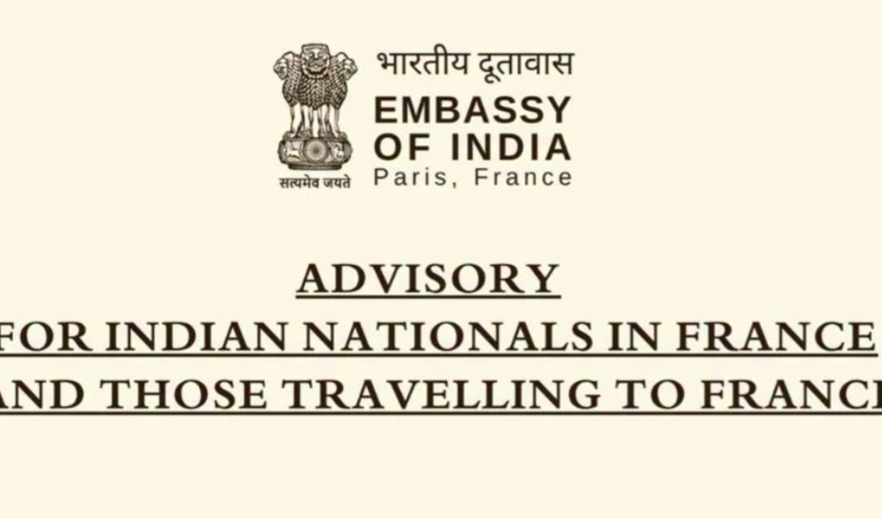
The Eiffel Tower closed Monday after staff walked out over claims female workers were moved aside during a BAPS Hindu delegation's Saturday visit. The Eiffel Tower did not open to the public on Monday after employees walked off the job over claims that women had been pushed out of view during a visit by a Hindu religious delegation two days earlier. The monument's operating company, SETE, blamed the shutdown on "exceptional circumstances." The dispute centres on a Saturday visit by roughly 100 people connected to the Bochasanwasi Akshar Purushottam Swaminarayan Sanstha, better known as BAPS, the movement that had just opened a new temple in France over the weekend. Diane Davoine, a union representative, told French television that female staff were "moved away from their workstations as the delegation passed by." Workers at the Paris landmark said management had issued directions that pushed women out of sight during the tour. They described the effect as female employees being sidelined, swapped out and rendered invisible purely because of their sex. SETE confirmed that the visiting group had asked for the tour to be set up in a way that would keep contact with women to a minimum. The operator added that agreeing to those terms had been a mistake and that such conditions should never have been accepted. BAPS temple offers apology The BAPS Hindu temple in Paris responded on Monday evening, saying it treated the complaints "very seriously" and offering an apology for any distress or disruption. The temple said the large size of the delegation had prompted staff to schedule the outing with the Eiffel Tower's own team, timed for the start of the day's opening hours so that other visitors would not be held up. The temple also stated that, as far as it was aware, no one had been barred from entering the monument at any stage. It said the organisation stood by "universal values of mutual respect and service." French officials call it unacceptable Paris mayor Emmanuel Gregoire weighed in on X, writing that he had learned of the anger among Eiffel Tower staff and that accepting such arrangements was "unacceptable." He said the terms clashed with his own principles and with what the monument should represent, insisting that everyone must be free to move and work there without any separation of women and men. He announced that an inquiry into what happened would be opened. National assembly president Yael Braun-Pivet also spoke out against the episode. "I refuse to accept that women should be told to step aside to meet the demands of foreign visitors," she said. She added that hospitality should never come at the cost of the country's principles, noting that women take a full part in French public life and that no one should be asked to disappear from it. The row broke out just after BAPS inaugurated its first large Hindu temple in France, a milestone for the country's Hindu community. Prime Minister Narendra Modi addressed the opening of the Swaminarayan temple in Paris on Sunday, praising the ties between India and France and describing the partnership as unusually close because of deep-rooted cultural and political links. Modi said he hoped the temple would endure for hundreds of years as a marker of shared cooperation and opportunity between the two nations. He added that relations had climbed to new heights in recent years, saying that alongside President Emmanuel Macron the two countries were forging what he called a Special Global Strategic Partnership. Eiffel Tower closure, BAPS temple France, female employees sidelined, SETE, Paris landmark protest, Yael Braun-Pivet, Swaminarayan temple Paris, women in public life France

Jared Leto Sells Former Air Force Compound for $12 Million

Jared Leto has sold his 14,649-sq-ft former Los Angeles Air Force compound for $12 million, more than double the $5 million he paid in 2015. Jared Leto has parted with one of Los Angeles' strangest celebrity homes, selling a former United States Air Force compound for $12 million after owning it for close to ten years. According to TMZ, the actor and Thirty Seconds to Mars singer closed the deal in May. Leto had bought the estate for $5 million in 2015, meaning the sale more than doubled his outlay on the property. The buyer's identity has not been made public, and Leto has given no stated reason for letting the site go. The 14,649-square-foot estate stretches over roughly 1.4 acres and holds six bedrooms and five bathrooms. What sets it apart from other Hollywood residences is its past life as a government facility with links to the American atomic weapons programme. From radar station to secret film studio The grounds once housed the Lookout Mountain Air Force Station. Builders first put up the structure in 1941 as a radar post, and it was later converted into a classified film studio run by the Air Force's 1352nd Photographic Group. Between 1947 and 1969, crews working there shot footage of nuclear weapons tests, made training films for the armed forces and assembled Cold War newsreels. The work drew well-known Hollywood figures to the site. Bob Hope, Jimmy Stewart, James Garner, Kim Novak, Gregory Peck and Ronald Reagan all took part in or provided narration for productions filmed at the compound. Engineering from that secretive era remains visible in the building. It has heavy concrete walls and blast-resistant doors, along with leftover pieces of the equipment and layout that once made it a secure federal outpost. Three screening rooms and a soundstage After its military service ended, the property was rebuilt as a private home that doubled as a creative base. While Leto owned it, the compound also functioned as the operating hub for Thirty Seconds to Mars. The residence carries three 35-millimetre screening rooms, film vaults kept at controlled temperatures and a working soundstage. That blend of living quarters and full production facilities gave Leto a house and a studio in one location, an arrangement that made the estate unusual even by celebrity standards. Sale lands amid misconduct claims The transaction was completed during a difficult stretch for the actor. Roughly two months after the reported closing, the BBC put out a documentary titled *Jared Leto: Hollywood's Dark Secret*, which gathered the accounts of 10 women describing alleged interactions with Leto between 2002 and 2016. Four of those women accused Leto of conduct they said could rise to the level of crimes, among them sexual assault, coercion and statutory rape, according to the BBC. The broadcaster stated that it had backed up parts of several of the accounts through conversations with the women's friends and relatives and through photographs and messages. The film came after a 2025 report in Air Mail in which nine women said Leto had behaved inappropriately toward them in a sexual manner. Some of those women said they had been under the legal age when the alleged incidents occurred. Leto has rejected the accusations. Responding to the BBC documentary, he said, "I have never sexually assaulted anyone in my entire life. These claims are absolutely and categorically false." The attention around the sale has been sharpened by its overlap with the allegations, though no connection between the two has been established. Leto, who won an Academy Award for his acting, has kept the reasons behind the deal to himself. Jared Leto, Lookout Mountain Air Force Station, celebrity real estate, Thirty Seconds to Mars, Los Angeles mansion, BBC documentary, Jared Leto allegations

Learner Tien Faces Karen Khachanov in US Open Round 4

Learner Tien and Karen Khachanov are set to meet in the fourth round of the 2026 US Open on Monday. Learner Tien and Karen Khachanov will meet in the fourth round of the 2026 US Open. The match is scheduled for Monday. The fourth-round clash pits the two players against each other for a place in the tournament's later stages. Both advanced through the earlier rounds to set up the Monday meeting in the men's singles draw. The US Open is the final Grand Slam of the tennis season and is held in New York. Its 2026 edition has drawn heavy interest, with Khachanov's name trending among search users in India ahead of the round. Further details on the match time and outcome were not available. Learner Tien, Karen Khachanov, 2026 US Open, US Open Round 4, US Open tennis, US Open Monday, tennis